
Jim Gilmore is the 68th Governor of Virginia. Before that he was an elected chief prosecutor, serving six years as a Commonwealth's Attorney, and then Attorney General of Virginia. He went on to chair the Republican National Committee, to chair the National Commission on Homeland Security for five years, and to serve as United States Ambassador to the Organization for Security and Cooperation in Europe. He is a trial lawyer by training and served overseas as a soldier in Germany.
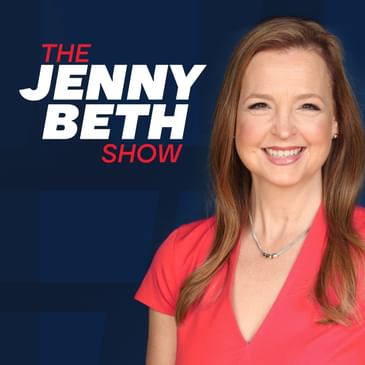
Jenny Beth Martin is co-founder of the Tea Party movement and Chairman of Tea Party Patriots Action. She hosts The Jenny Beth Show, which airs Monday through Friday at 1:00 PM ET.
Key topics:
The red light camera bill he vetoed as governor, and the sentence he put in the veto message
The override, and what he says it opened the door to
Flock cameras, artificial intelligence, and the police reaching for every technology available
The Fourth Amendment question behind constant monitoring, and innocent until proven guilty
September 11 as the watershed that made America a security society
Why he says you cannot be completely secure and be free at the same time
Why he is not worried about socialism as a movement, and why affordability is the frustration socialist candidates are exploiting
Monticello, a naturalization ceremony, and the 250th anniversary of the Declaration of Independence
Why he calls Europe the pivot of the twenty first century
What Ukrainian cabinet ministers told him in 2022, and the book he says everyone should read
Timestamps:
00:00 — Cold open: a past governor of Virginia joins the show
00:31 — Entering politics at 17, and what made him a conservative
02:18 — What it means to be a Reagan conservative
03:16 — Flock cameras, artificial intelligence, and the state watching everyone
04:07 — Foreign policy, alliances, and why he rejects the neoconservative approach
05:30 — The three way tug of war between freedom, power, and security
06:40 — The red light camera bill he vetoed as governor
06:49 — How far the country has come since that veto
08:54 — Teaching a post September 11 generation about Marxism and communism
11:01 — History as a powerful teacher: Nazi Germany and Bolshevism
12:07 — Why he is not worried about socialism as a movement
12:40 — Affordability as the frustration socialist candidates are exploiting
13:49 — The lockdowns, fear, and how Americans came back to liberty
14:43 — A medical curfew in Vienna, and a note from the ambassador
15:23 — The National Commission on Homeland Security and weapons of mass destruction
16:18 — The watershed that made America a security society
18:26 — You cannot be completely secure and be free at the same time
18:52 — Saying goodbye at the airport gate, and officials drunk on their power
20:42 — A country of 340 million and the handful the whole system is built around
22:23 — Back to flock cameras: the police reach for every technology
23:30 — The red light law, the veto message, and the override
24:07 — The bill he would file today to ban community camera surveillance
24:20 — Innocent until proven guilty, and the Fourth Amendment
26:06 — The 250th anniversary of the Declaration of Independence
26:35 — Monticello, a naturalization ceremony, and a very hot day
28:20 — The individual against the power of the state, and China's cameras
29:36 — Why he calls the European war the pivot of the twenty first century
30:25 — Is Europe essential to the safety and security of the United States
35:50 — Isolationists in the conservative movement, and Reagan's alliances
37:19 — Putin's essay, the Tucker Carlson interview, and what he concluded
40:33 — 2014, 2022, and the end of his diplomatic posting
41:21 — A train to Mariupol and what Ukrainian cabinet ministers told him
41:43 — Stalin, the Holodomor, and the book Red Famine
42:29 — Where he says the fighting stands now
43:27 — Drones, exercises with Ukraine, and what America is learning
44:27 — Like, subscribe, and where to find the show
Links: jennybethshow.com and teapartypatriots.org
[00:00:00] Today we have a very special interview with Jim Gilmore, who is a past governor of the Commonwealth of Virginia and also a past chairman of the Republican National Committee. I'm Jenny Beth Martin. Welcome to The Jenny Beth Show. Welcome to The Jenny Beth Show.
[00:00:30] Jim Gilmore, thank you so much for joining me today. Jenny Beth, I'm glad to see you. Thank you for the opportunity to be on your show. So give everyone a little bit of a background about who you are. Jim Gilmore, I think people know me as the 68th Governor of Virginia, where I served in the Capitol Square from 99 to 2002.
[00:00:51] And then went to Washington and worked with the Free Congress Foundation, a conservative think tank until I was appointed to be United States Ambassador by Donald Trump to go to an international organization in Vienna, Austria called the OSCE, the Organization for Security and Cooperation in Europe. And those are my signature cards right now in politics. But the truth is, Jenny Beth, that I actually entered politics when I was 17 years old.
[00:01:21] I got interested in it as a senior in high school, went directly to the University of Virginia and joined the Young Republicans, which is highly conservative at that time. And I've been a conservative ever since. And that means to me is resisting state power, resisting socialism, allowing for the free markets, allowing for free enterprise.
[00:01:46] And also, I am a person who believes in America's position and role in the world and the alliances that make that possible. These are all, I think, tenets of good, solid conservatism that I joined up in when I was supporting Nixon, when I was supporting Goldwater, when I was really being a conservative in early days. And I have become a Reagan conservative and I still am.
[00:02:12] Okay. And let's elaborate on what Reagan conservative means and just would I know that you were just talking about resisting the state control, free markets, free enterprise are America's role in the world and the alliances that we have. What else does it mean to be conservative? I think it means that that you don't want to allow the state to take over the lives of individual people. And they can do that in a variety of ways.
[00:02:41] And one of the ways that I've always thought was if the state is overtaxing, they're really taking away the capacity of people to be free and independent. And so when I was governor of Virginia, I was elected on and implemented as governor a major tax cut, which gathered in the support of people all across Virginia. And I was really happy about that because we were rallying the people of Virginia to the conservative cause.
[00:03:09] And that, I think, is the fundamental point is to watch things that are trying to control people. I'll give you just a quick example. There's a lot of discussion right now about flock cameras, which are there to observe everybody everywhere in the community at all times. And this is effective law enforcement. The police love this kind of thing because the police are obviously trying to do a good job. And so a flock camera, for example, allows them to monitor everything that's going on.
[00:03:39] If you add artificial intelligence to that, I think you begin to create a dangerous ability for the state to really view you all the time. So there's a conflict here. Do you support complete law enforcement or do you try to liberate people to live as independently as possible? That's constant tension. We as conservatives are the only people who really understand that conflict and work very hard to keep people free.
[00:04:06] Now, the other point that I want to emphasize today, though, is foreign policy. I know a lot about foreign policy. I've studied it all my life. I've lived overseas as a soldier in Germany. I've been overseas as a diplomat in an international organization dealing with the entire Northern Hemisphere as ambassadors. And I think I understand the role of the United States in the world.
[00:04:30] And I believe that the United States can not only be free people at home, but also that we can stand for liberty across the world. It does not mean, as neocons do, that you use military power to go conquer another country and make it free under American auspices. I think that will happen naturally, frankly, because we are the people who have the right message and the right idea.
[00:04:56] But I believe that in terms of national security, which is the other parallel part, and our safety and security is built not only up by our strength at home, our superior military, and our allies. I think that we have to have good allies, and frankly, we do. And I oppose any effort to dismantle our alliances, even though we do, of course, want to hold our friends across the world accountable for their participation and partnership with us.
[00:05:25] So when it comes to flock cameras and even national security, so that riff, I think of it sort of as a three-way tug of war, where you've got people who want to be free, people who want power, and people who want to be secure. And they're always pulling at one another.
[00:05:51] What do you see to people in your experience? And you have been successful in sharing your ideas. You've been a governor. You've been elected to office. How do you explain to people that sense of security that they are seeking, they're actually making themselves more vulnerable when they give up freedom? See, that's a really good topic.
[00:06:15] So let me just say in passing that when I was governor, the legislature brought forward a bill that extended red light cameras across Virginia. And the purpose of that was to catch people with traffic violations and then find them, which was to add revenue. The purpose was not safety and security or traffic control. It was to get money to go to the localities. I vetoed that legislation because I, and I said in my veto message,
[00:06:44] I didn't want young Virginians growing up feeling they were being watched all the time. Now, of course, we've come a long way since then. And I would say to your viewers that the 9-11 attack was a watershed. Now, I was governor during the 9-11 attack at the World Trade Center, and I could tell you stories surrounding that. But my duty at that time was to respond to the attack and to keep Virginia as safe as possible during that time and after that time.
[00:07:14] But I have discovered over the years that America has a duality, if you will. We want to be powerful people. We want to keep our people safe and secure. There are arguments, even among conservatives, about the best ways to do that. But we wanted to be a powerful nation and to keep America secure by doing that. But we have a duality. America's strongest courage, Jenny Beth.
[00:07:41] The strongest power that we have is the power of our values and our ideas and our principles. Our principles of freedom and liberty and opportunity for people, law enforcement, but also an opportunity for people to thrive and be successful in a free society. The principles of the Declaration of Independence, which is the most powerful document ever written. These are a duality.
[00:08:07] Americans can be powerful, but not advocating for freedom amongst ourselves or anyplace else in the world. But that's not America. America has a duality in that we speak on behalf of the liberty and freedom of the human being, both in home and abroad. Once again, it does not mean that that means that we conquer the entire world militarily in order to force people to do what we say. But frankly, the power of our ideas will, in fact, spread across the world.
[00:08:34] That is, by the way, why Vladimir Putin and Chairman Xi and the rest of these people around the world cannot live side by side with us because we are the people who stand for those principles. They know that. And ultimately means liberation of their own people, which they cannot stand. OK, since you brought up Putin and Xi and you also mentioned 9-11, something that's been on my mind a lot lately.
[00:08:59] And I've been going back and studying more about communism and Marxism and socialism because we're seeing the rise of it so much in America. And I feel like I can always learn more. We we have people right now today who are voting and have been voting in our country for five, six, seven years. Maybe this will be the seventh year they're eligible to vote. Who.
[00:09:29] Who. We're not alive on 9-11. I know one of my daughter's friends, her she's married. The friend is married, has a little baby and her husband was born on 9-11 in 2001. And I was I realized that the other day and I just was thinking they've grown up in a world post 9-11. And they don't.
[00:09:55] Communism and socialism and Marxism and the Soviet Union are just they're foreign concepts. They're not something they lived under. They're not something that they have experienced. And we know that China is communist, but we seem to have had such a friendly relationship with the CCP as a country that I think they don't see the harm in Marxism and communism.
[00:10:19] So based on what what you know about the world in your experience studying politics since you were 17 years old, what are the kind of things that you think we need to be teaching the younger generation who are now adults and voting? So I'm not talking about college and high school and in elementary school, which has its own problems.
[00:10:43] But how do we convey the importance and the danger of like the importance of understanding what we're up against in the danger of what we're up against as we see this rise of Marxism in America? Well, I guess I'm going to double back.
[00:10:59] But, you know, I think that history is a powerful teacher and people need to understand history and they need to be educated about what happens when the individual gives up their their individual freedom on behalf of the state. And it's been all the way down through history.
[00:11:17] But the 20th century is a powerful example of what happens when, for example, in Nazi Germany, they gave up all of their freedoms because of their economic and international security issues. We've seen the rise of Bolshevism in the 20th century and what that did.
[00:11:34] And the truth is that when the state decides it's going to be remaking the individual in their image, there are certain things that human beings want, in my view, and that is always to be free. But the authoritarians can't carry their mission or be in control without stamping all that out. So they have to they have to start to control people. I'm not in favor of that.
[00:12:00] So, I mean, I think the kids need to to be taught what has happened. And then I'm not very worried about this this so-called rise of socialism in the United States. Jenny Beth, it's so alien. I don't think that it's going to be an actual movement. I do, however, as a matter of fact, when this is the Democrats started to elect some of these nutcases to to be their nominees and maybe some of them would be elected in individual places.
[00:12:29] I don't have been taking it very seriously. But as I put a lot of thought into it, I think that it is true that if we watch contemporary politics today, we see that the affordability has become the issue. What does that mean? It means that working people across the United States and frankly, in other countries as well are not able to make ends meet. And they're very frustrated. And as a result, you see, for example, Governor Spanberg in Virginia just got elected on the issue of affordability.
[00:12:58] And she has no ability to deliver anything regarding affordability. But the fact is that as a politician, she appealed to it. And we see that across America as well. So these so-called socialists are exploiting that frustration and using that to propel themselves into office when they not only can't really deliver on that kind of thing. The socialism is a is the wrong turn.
[00:13:23] It's the way of controlling people because ultimately government has to try to control people to carry their wishes. But people like you and I are more interested in the liberation of people and the freedom of people, which I think is the natural state of humankind. OK, that is very helpful information. And you're right. I think that most people do your yearn to be free.
[00:13:49] When we were experiencing the lockdowns, there were people definitely who were terrified of COVID and absolutely paralyzed by their fear. And they wanted security very much during that time when they were very, very afraid. And at some point, those of us who were less afraid and more willing and really wanted a lot of freedom and were willing to go show that you could live your life.
[00:14:16] The people who were living under the lockdowns and complying with every single thing the government was saying started shedding that and didn't want that. They wanted to they still wanted to be free. And so the the fact that Americans chose the right thing in the end and that they chose liberty in the end in recent history gives me me hope in the American people. I was United States ambassador to Vienna during the COVID epidemic.
[00:14:46] And I still remember one of my staff people came to me at the embassy and she was getting ready to go home for the evening. It was after dark in Vienna. And she said, you have to write me a note because if I go in my car right on the streets, the Austrian police will arrest me and stop me because I'm in violation of a medical curfew. But if I had your letter, ambassador, I'll be OK. I still remember that very, very well. But I want to talk about Jenny Beth. I want to be responsive to you in two ways. A.
[00:15:16] A international pandemic is a different kind of threat. But when I chaired the National Commission on Homeland Security for the United States for five years, we were asked to talk about weapons of mass destruction. Now, ultimately, I warned in those reports, our committee warned in those reports, which your viewers can find on the Rand Corporation Web page. Just put up Gilmore Commission. You can look at it.
[00:15:42] And we were evaluating weapons of mass destruction. And ultimately, we decided that the more likely attack was going to be a conventional attack, which did occur on 9-11, 2001. But we recognized at that time that the introduction of disease as a weapon was much worse than a nuclear weapon because it was not in any way controllable. And that's exactly what we saw during COVID.
[00:16:09] So the point is, I think I would divide a difference between the pandemic and what I believe was much more fundamental. And that was the 9-11 attack. The truth is that the 9-11 attack was a watershed in American life. That injected fear and anxiety into the American people. And now we have become much more of a security society than we used to be.
[00:16:32] Jenny Beth, I don't know if you recall or not, you're younger than I am, but there was a time when you could just walk around a city and not worry about being viewed. If you wanted to go and visit an office, you just walked into the building and hit the elevator button. You know, if you wanted to get on an airplane, you just went on and got on an airplane. I still remember El Al giving me quizzes about trying to get on an El Al airplane. We thought that was exotic because Israel was such under attack, but we certainly weren't.
[00:17:00] Well, the Osama bin Laden and the 9-11 attack transformed American society fundamentally. Now you can't go anywhere without thinking about being watched or without having to present your credentials or your IDs, these kinds of things in order to get around now in American society. This is very bad. I put a lot of thought into how it could be corrected. And Frank, this could be very difficult to do in the modern world because of transportation and communications.
[00:17:27] I was governor of Virginia during the 9-11 attack, Jenny Beth, and I consider it to be a watershed that has transformed America and indeed much of the world into being a more authoritarian world in terms of the state imposing itself on the individual. And how do you think that it could be turned around and unwound?
[00:17:49] I don't have any magic answers that other people haven't thought about, but I'll just give you my thoughts. As long as there's a political conflict in the world, which is permanent, and the capacity to use modern technology or transportation, explosives, and weapons, we're going to have these kinds of problems. So the American people have to decide how much of their liberty are they prepared to give up so that they're going to be secure.
[00:18:18] And that is a debate that really we're not having right now. We've decided that we just want to be completely secure. You cannot be completely secure and be free at the same time. You have to make somewhat of a tradeoff, and I think we conservatives are not doing very well in discussing that with the American people or any people anywhere. But 9-11 was transformative, in my view, and we are less free people because of that attack. Yeah, I think that you are exactly right.
[00:18:47] I remember when you could go to the airport and walk with your friend or your loved one to the gate and see them off at the gate and say goodbye to them when they walked into the plane. And now you just drop them at the curb and hope they get through security without getting arrested. So I'm exaggerating a little bit. No, you're not. You drop them at the curb and see them off.
[00:19:13] And I fly all of the time. And there have been a few times when I've gone through security, and it hasn't happened in a while. But there have been a few times when I've thought, they're going to pull me aside just because I didn't want to go through the scanner or I didn't do something exactly the way they wanted it done. Every once in a while, you just get a TSA agent who is really drunk on their power.
[00:19:41] And when you have too much of society that has that kind of control, where government officials have that much control, you're going to wind up with officials who are completely drunk on their power, and they use that to intimidate and coerce people, which is part of what you're saying, where you wind up not being free and you're giving up a lot of liberty for the illusion of security.
[00:20:11] Well, in this interview, we have to be thoughtful about being confused about people looking at it and saying, oh, well, Jim and Ginny Beth don't want there to be any TSA anymore. And it is true that we live in a world in which there are disturbed people. And the media is so ever-present today that they can focus on these disturbed people and then universalize that as a general threat to all the people.
[00:20:41] And I've thought about that a lot. We have 340 million people in the United States of America. You're going to have a handful of people who are nutcases and want to do damage to people just because they can. What do you do? You transform the entire society to address those people. And I think we have not decided to maximize people's freedoms while being secure. I don't think we've actually figured that out. But as Americans, we're now programmed into it.
[00:21:10] The example we're using, just an example, I actually prefer the example of the security desks at office buildings across the world and how you can't just go into those buildings anymore without checking in at the security desk and proving who you are and what your business is before you can go conduct your business. I prefer that example. But let's go back to the airport thing.
[00:21:35] People have decided they want the security of understanding if they get on an airplane, that airplane won't be blown up. That is a direct harking back to the 9-11 attack. And so we've decided now that we're willing to put up with all these things you're talking about. And I must say, I think that the last several times I've been through TSA, including just in the last several weeks,
[00:22:00] I have found those agents to be pleasant and cooperative and non-threatening. But nonetheless, they're living in a system where the individual is frisked and being subjected to questioning and all that kind of thing. So we're less free and we accept that at airports and transportation.
[00:22:22] But the example that I was giving earlier of flock cameras, where the people are now being trained to be watched all the time in order to enhance law enforcement. Now, let me be clear. I've always been a law enforcement guy. I was, by the way, trained as a lawyer, a trial lawyer. And I understand constitutional rights, the Bill of Rights, and I understand the rules that protect individual citizens.
[00:22:50] But the police, of course, are people that I've always supported, not to confuse myself with another candidate. But I was an elected chief prosecutor, the Commonwealth's attorney. And for six years, I worked hand in glove with the police in order to keep my community safe. Then I became the attorney general of Virginia. So I know what law enforcement is really all about.
[00:23:14] But the police will reach for every technology to do the best job that they can and to carry what they believe are their duties with regard to concern about whether they're actually transforming society. So when I was governor, the legislature passed a red light law. A camera was going to be attached to certain red lights and they were going to take photographs and send people a ticket in the mail. And it was really a revenue bill.
[00:23:42] The goal there was to get money out of drivers for the locality. I vetoed the bill. I vetoed the bill. And in my message, I said, I don't think young Virginians ought to grow up believing that they're being watched all the time by a camera. Legislature passed it over my veto. And it was small potatoes at that time. But look where we are now. Now we have flock cameras everywhere that's watching everything all the time.
[00:24:04] If I were governor, I would propose a bill to ban and abolish that kind of camera surveillance within the community and get people once again used to the fact that they can go where they want to go and do what they want to do in privacy and not be watched all the time. Well, it's in privacy and it's also giving people the benefit of innocent until proven guilty.
[00:24:29] When when you have flock cameras and you've got police always watching the it seems to me that they are expecting people to commit a crime and they're just watching to to catch catch you. So they assume that you're guilty rather than being treated as if you're innocent until proven guilty. Plus, you've got do you have no no privacy? And it sure feels like a Fourth Amendment violation.
[00:24:56] Back to what we're saying about TSA agents, to be very clear. Yes, I I'm not saying that we should get rid of of TSA agents at all. And and we we were standing for trying to get the government open and Department of Homeland Security funded. So they because they were still working and not getting paid. And we thought that was just absolutely wrong. Absolutely wrong.
[00:25:21] The point there I was trying to make is just that when you when you give up liberty for security, then the third prong that I mentioned before, the people who have power, you're always going to wind up with people who want more power and abuse that power. It doesn't mean they all do. Sometimes you just have a bad actor and in a group and you've got bad actors and in every every group everywhere.
[00:25:46] There's going to be somebody who does something that doesn't reflect well for the organization. The you are from Virginia. And we're a governor of Virginia and went to the University of Virginia. And we have now celebrated our 250th anniversary of the Declaration of Independence as a Virginian, as well as an American. How how did that feel?
[00:26:15] What what kind of emotions did did you have with that and what kind of reflections did you have? And how did it compare to what you remember about the bicentennial celebrations? Well, I think that what I really want to do is address the current 250. I was actually at Monticello, Jefferson's home for the naturalization of people that day.
[00:26:42] And there was a very hot day under a tent in Charlottesville. And it's come home to me over a period of time, the significance of the American Declaration of Independence and how new it was at the time that it was written and how radically different it was. The individual was being celebrated, the liberties of people. And it was a declaration of war on King George, but it was based on principle. It was a notion of not being imposed upon.
[00:27:11] And it was really a riff off of the indictment of George III and over to a general philosophical position of what the world and America should look like. It's a profound thing. In law school, you learn that the Constitution is the actual law, not the Declaration. But the philosophical point that's made in the Declaration, which preceded the Constitution, is profound. And it should be read today.
[00:27:36] Notice when you read it that Jefferson and his peers are responding to the imposition of control over people. They're responding to that, and they're very, very specific. But they riff off into a general philosophical position of people like you and I believe in to this very day and think that we ought to be responding to the rights of human beings every day.
[00:28:01] So, you know, to me, the 250 is a profound opportunity to hearken back to the Declaration and to the founding of this nation and to reassert those principles even to this day, even against all the pressures and challenges that we face in the world today. And, you know, at some point, we really ought to talk about the international challenges that we're facing as Americans and what our proper response to that ought to be.
[00:28:27] But in the end, there's always a struggle in the world of the freedom of the individual versus the power of the state to impose order. And, of course, with authoritarian countries like Russia and China, especially China, which uses cameras everywhere, by the way, to control people, that's the constant tension. And I think we Americans have a historic role.
[00:28:51] So, to jump to my final conclusion to make sure I don't lose it, in the end, the people of the world are with us, not with them. The people of the world want to be free people, and they're prepared to make sacrifices in order to be free people. The Ukrainian rebellion is the best example of that. They simply were not willing in Ukraine to go back and be subsumed into the Russian Empire with the loss of all their freedoms and liberty. And they were prepared to take chances. I've been to Kiev.
[00:29:21] I've seen their memorials. People were shot down that day. And the result, of course, has been a free Ukraine, which is now under attack, which is where I spend most of my time, Jenny Beth, talking about foreign policy and especially the European war, which I consider to be the pivot of the 21st century. Why do you see it as the pivot of the 21st century? Thank you. We'll get over, I guess, maybe into some foreign policy.
[00:29:46] I absolutely fundamentally believe that the United States can play its role in the world, not simply for its own security, but to be a beacon of liberty on behalf of humankind. And I believe that people everywhere want to be free people. They want to work and be successful and have a good quality of life, to be sure. And the capitalist does enable that. Free trade enables that.
[00:30:10] But, you know, politically, what we found was the Ukrainians were not willing to subsume themselves into an authoritarian empire of the Russians. Now, to come to the answer, I believe that the European war is the pivot of the 21st century.
[00:30:29] If the Russians are able to prevail, even the short or the long run, over the Ukrainians, that will be a position where they're able to impose their authority or at least their influence over all of Eastern Europe, where I spent a great deal of my time, and even over Western Europe and the politics of Western Europe. So I think the fundamental question that Americans have to ask, and you and my friends do not ask this enough, is Europe essential to the safety and security of the United States of America?
[00:31:00] The 20th century and the World War II demonstrated that it is. Europe is essential to the safety and security of the United States of America. If Europe is imposed upon by Russia and compromised and becomes at least neutral or if not hostile to the United States, our safety and security is threatened. And I believe that the Ukrainian war is key to that. If the Ukrainians succeed, Europe is going to be safe and secure, probably forever.
[00:31:29] And as a result of that, America will be safer and more secure. Now, I'm not ignoring the Middle East or the Pacific. I'm not ignoring any of that. Frankly, I think that we've gotten into a war in the Middle East that is a diversion away from the critical, pivotal point, which is Europe. And this is a real problem right now. But we also, of course, have to keep our eyes on the Pacific.
[00:31:53] We're lucky in a way that China really is not really able to do what all their mouthing is all about, which is the conquest of Taiwan and the control of the Eastern Pacific or the Western Pacific. And East Asia, they're not really ready to do all that, but they want to do it. And the only way to keep America secure, as we learned from the Japanese war, is to not allow that country to dominate the Western Pacific.
[00:32:21] So America has a lot to do, but we're the people who are able to do it if we keep our eyes on the ball and we keep our alliances secure. Could we talk a little bit more about Ukraine and Russia?
[00:32:39] There are a lot of people who are – I think that you and I both would agree that we always have a reason and we should be debating how much money and financial support we are giving to anything that the government is spending money on, including when it comes to supporting foreign countries in wars such as the Ukraine-Russia war.
[00:33:07] So we're not saying that America should be in endless supply printing off endless money to Ukraine. And I think that a lot of the frustration that people have online is partly just due to how much money are we spending and why are we spending so much money? So you and I are just taking that argument off the table and saying we agree we should always be debating how much we spend.
[00:33:35] When it comes to Ukraine and Russia, I think that there's been a lot of information online that maybe isn't trustworthy or it's coming from foreign sources that are influencing American thinking. And I can't necessarily prove that some of it, I think, when I think where did this stem from who is saying this, I think about who benefits.
[00:34:01] And oftentimes it seems to me that Russia benefits from whatever the line might be that people are grabbing onto. And when I saw what was happening in Ukraine and Russia, I'm not a foreign affairs expert at all. When I saw it, to me, it came down to a very basic principle.
[00:34:21] When you go into a place and you say as a country and you say, I'm moving my borders and I'm taking over your land and I'm claiming that as my country's border. Now, that is a very aggressive act. It is an act of war. If Canada or Mexico said, well, we're just going to come in all the way across the border. It doesn't even have to be all the way across the border. Let's just say we're going to come into Maine and take 60 miles of Maine.
[00:34:51] We wouldn't be OK with that. We would not be OK with that as a country. And I think that a lot of people. That got lost, like the beginning of this conflict got lost. So could you go back and explain what happened at the beginning of it and how and why Ukraine responded the way that they did? You know, your comments have raised just a lot of questions for me.
[00:35:16] You began to assert your leadership through the Tea Party patriots because of the wrong spending of money here domestically because of the bank bailouts and so on, which really made me very mad on behalf of the taxpayer. And now and that is, I think, sound approach on conservatism. I think that the debate is going on right now about what proper foreign policy is for the United States.
[00:35:44] There are members of our movement, of our conservative movement, who are semi-isolationist, maybe pure isolationists, who believe we should just simply draw back in and not participate in any way. Now, I want to and I reject that. Again, Ronald Reagan won the Cold War, but he didn't do it alone. He had a lot of support and he was very careful to cultivate his allies in the appropriate way.
[00:36:10] So, I mean, I've got a lot of thoughts about this, but let me start with fundamentals. The fundamental is we have to analyze what Putin and Russia are trying to do. What is their ultimate goal? And I've taken a lot of time thinking about this because sometimes you hear conservatives say, well, it's really not our business. Just stay away from this kind of thing and come home and deal with our safety and security here at home.
[00:36:38] I believe that a person like Putin is dangerous to the entire world and specifically to the United States. If he can simply bald-faced conquer another country, and that's what he was trying to do and still is trying to do. Then he disrupts any concept of right or wrong international law and creates a world certain to be at war.
[00:37:01] I think we actually are at war, but, you know, what I want to do is I want to come back to this. What is Putin trying to do? Is his goal actually innocent and really is none of our business, or is it a danger to the United States? Jenny Beth, I watch closely the Putin-Tucker Carlson interview and then also the essay that Putin wrote about what his ultimate goals are. And I would suggest your listeners do those two things.
[00:37:31] Read the Putin essay and watch the Tucker Carlson interview. And at the end of the interview, I asked myself when he put forward his ideas about, you know, Russian great, great empire and so on back to the Middle Ages, I asked myself the question, does Putin actually believe this crap? Or is this something that is just a facade? And I concluded he does believe it.
[00:37:57] And so then the second question is, is this in the American national interest or not? Is the American safety and security, not to mention our beacon for human rights across the world and individual liberty for everybody, including and especially Americans, are our goals and our position threatened by Putin's goals?
[00:38:21] And I believe, based on my experience or professionally and on behalf of the United States, I am and based on my readings of history, there's no doubt in my mind that Europe is the key. Now, it can, the Pacific can become the key pretty quick, but it isn't today. The key is Europe today.
[00:38:42] And if Ukraine is conquered, the door is open for Putin to impose and intimidate the rest of Europe. If Europe becomes less of an alliance and a friend to the United States, the safety and security of our country is in jeopardy. That is my view.
[00:39:02] So based upon that, we need, if we do anything to support Ukraine, which is the flashpoint that Putin has created, we're doing the right thing for our country. Now, I want to hasten to say that while I disagree with much of what President Trump is doing in foreign policy, I reject much of what President Trump is doing in foreign policy. He was right about trying to get our allies to step up to the plate and stop being free riders on the United States taxpayer. The president was correct about that.
[00:39:32] And he has succeeded in that in very large measure. And there will be more success in the future if we stay the course. But it is essential that Russia not be able to succeed in their ultimate goals. And if that is the case, America will be safer and more secure. And when, okay, so when Putin, I watched the interview with Tucker. I didn't, I haven't read the essay.
[00:40:02] So that's, I'm making a note that that's something I need to go back and do. When he first went into Ukraine, what happened then? Can you just remind people of what happened to begin this? And then one, I want to come back to one other thing I've been thinking a lot about when you finish this. I'll make a note just about drones and what we're learning from the Ukrainians while they're fighting this war.
[00:40:30] Well, there was a previous invasion of Ukraine. I think it was back in 2014. But I'm going to put that aside. That ended up with a tentative diplomatic solution that was not in Ukraine's favor because the Ukrainians were not prepared to resist the Russian onslaught at that time.
[00:40:51] But in the attack that happened in 2022, I ended my diplomatic position when Biden pulled back every Republican worldwide, including me. And as soon as I came back, I was invited by the American Foreign Policy Council to go with them to Ukraine, which I did. And I talked to at least 12 cabinet ministers.
[00:41:20] We took a train down to a place called Mariupol, which is now behind Russian lines and an occupation by Russia. And at that time, I asked all the Ukrainians, I said, what are you going to do? The Russians right next to you. They have a big army. What are you going to do if they invade you? And the Ukrainians said, we understand what happens if we are conquered by the Russians. We know the history under Stalin. The Russians almost destroyed the people of Ukraine during that time, starved them to death, something called the Hull of the Moor.
[00:41:50] Worth reading about, by the way, there's a scary book written by Ann Applebaum called Red Famine that everybody ought to read. It explains exactly what the Ukrainians understand, which is if they are conquered by Russia, they will be murdered. All of their leadership will be murdered. Their people will be subsumed into the Russian Empire. And Putin will then have more people to carry out his mission. So that's what's really at stake.
[00:42:16] But the Ukrainians have taken every resource that has been provided to them by the West in order to resist this war. And they are winning. Now, today, while you and I conduct this interview, the Ukrainians not only are defending themselves, but they are on the attack in Russia in order to try to bring home the war to the Russian people, who I believe are complicit in this war crime. So things are moving in the right direction.
[00:42:46] But it's still in doubt as to exactly how this is going to come out. I repeat for the second time. I believe that the ultimate political safety and security of Europe is essential to the safety and security of the United States. If you have that touchstone, you know how to react to Putin and what he's doing. And you know what our policy ought to be.
[00:43:06] But I agree with you and with the president that we should not be the sole people to provide for the safety and security of Ukraine or Europe as a whole. Yes. And I appreciate the fact that the president has made that clear. As we're recording this, we've seen over the last few weeks our military has engaged in war games with Ukraine. And we didn't do so well because it was with drones and what we found.
[00:43:37] But we're learning from that and we're we're learning and we're going to be able to improve our military and do better because we're able to learn from the lessons that Ukraine has has learned. And I think that's something that two or three years ago is this war. Well, I guess 2022 would be four years ago as this war began. I don't think that most Americans who are complaining about it considered that there there may be lessons that we could learn.
[00:44:06] So that without us actually being at war ourselves, it will help us improve militarily. And and I'm glad to see that's happening right now. Jim Gilmore, thank you so much for joining me today. I really enjoyed this conversation. Thank you for the opportunity, Jenny Beth. If you enjoyed today's conversation, go ahead and hit like and subscribe. It really helps us reach more people who care about liberty and the Constitution.
[00:44:31] You can find this and other episodes at JennyBethShow.com, as well as Facebook, YouTube, Rumble, Instagram, X and your favorite podcast platform. The Jenny Beth Show is hosted by Jenny Beth Martin. The Jenny Beth Show is a production of Tea Party Patriots Action. For more information, visit TeaPartyPatriots.org.