
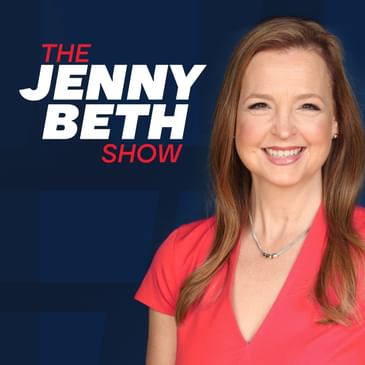
Guest: Father Frank Pavone is the founder of Priests for Life and of Pro-Life Vote, its election resource arm, which hosts monthly Zoom calls for citizens who want to motivate voters in their communities. He knew Mother Teresa personally in the last three years of her life and has distributed her 1994 National Prayer Breakfast speech at her request for thirty years. He is a returning guest on The Jenny Beth Show.
Key topics:
• Why the 2026 midterms are part two of the 2024 vote, and why midterm turnout is the problem to beat
• Massachusetts removes abortion limits in the seventh, eighth and ninth months; Virginia, Idaho and Nevada put abortion amendments on the ballot
• The Lindsey Clancy trial and why so many are making excuses for a mother who took the lives of her three children
• Mother Teresa's 1994 National Prayer Breakfast question, asked with Bill Clinton in the room
• The psychology of justifying abortion, from the ministry that runs post-abortion healing
• Jenny Beth Martin on twins, postpartum reality, and what can never be normalized
• Why the same movement that will not name late-term abortion will not name a riot, an invasion or terrorism
• The Declaration of Independence at 250: a litany of named evils, preached first from the pulpits
• Ed Sheeran, Macklemore and Pink: standing with a pro-choice artist who called out antisemitism
• Two reasons Christians must stand with Israel
• Why Father Pavone expects a historic midterm victory and ignores the polls
• Pro-Life Vote's Mother Teresa ads in about a dozen swing districts with large Catholic populations
• Face to face beats a million dollar ad buy: door-knocking and phone calls in a handful of decisive races
• How to connect: prolifevote.com, the monthly Zoom call, and reading the Declaration of Independence today
Timestamps:
00:00 — Cold open: Father Frank Pavone on life, culture and the 2026 vote
00:44 — Pro-Life Vote: the midterms are part two of 2024
02:38 — Confidence and optimism against the midterm trend
03:25 — Massachusetts, Virginia, Idaho and Nevada: the 20 side of an 80-20 issue
04:57 — The Lindsey Clancy trial and the loss of respect for life
06:54 — Mother Teresa's 1994 question, and the psychology of justifying
09:28 — Judging, compassion and the women making excuses online
14:22 — Twins, postpartum, and what can never be normalized
16:56 — Soft on evil: borders, riots, terrorism and the courage to name it
21:02 — The Declaration of Independence at 250: a litany of named evils
23:04 — Ed Sheeran, Macklemore and Pink
29:22 — Two reasons Christians must stand with Israel
34:10 — Why Father Pavone expects a historic midterm victory
38:18 — Throw the polling in the garbage
39:11 — 21 swing seats and a few thousand votes
39:56 — Mother Teresa in Calcutta, and the swing-district ads
41:19 — Face to face beats a million dollar ad buy
42:53 — How to connect: prolifevote.com
44:26 — Closing
Links mentioned:
prolifevote.com
jennybethshow.com
teapartypatriots.org
[00:00:00] Today, I have a returning guest, Fr. Frank Pavone, who is the founder of Priests for Life, and he also has another organization called Pro-Life Vote. He's going to be talking about what he's doing to help get out the vote, and we're also going to be talking about some of the cultural issues of today and how the value for human life makes a difference in those cultural issues. I'm Jenny Beth Martin, and this is The Jenny Beth Show.
[00:00:39] Welcome to The Jenny Beth Show. Fr. Frank Pavone, thank you so much for joining me today. It's a great pleasure, Jenny Beth. Thank you for having me. So tell everyone what you are working on as we head into the election, and what issues and values is it that you are seeing that people you're talking to are most concerned about?
[00:01:01] Well, Jenny Beth, overall, we have an entity called Pro-Life Vote. It's the election resource arm of Priests for Life. And like everybody else, we're emphasizing to people that getting out in the midterms this year is just as important as it was to get out for the election in 2024, which our people did. When I say our people, people who believe in America, conservative values, family, life, freedom.
[00:01:31] We tend to have obviously a lower turnout during midterms. We all deal with that problem, but we have got to help people understand that this is part two of the vote that they cast in 2024. Because when we're voting, we're voting for an agenda. Obviously, we're voting for candidates, but we're voting for an agenda. And that agenda could be very slowed down right now if we don't elect the right people this year.
[00:01:59] So first of all, getting that message across about the necessity of turning out and linking it to the same motivation voters had in 2024. Jenny Beth, we have monthly election Zoom calls that these are just ordinary citizens who want to make a difference in their communities. We gather them together and we talk about the talking points for motivating voters. And then, of course, issues that are key.
[00:02:26] A second point that we're emphasizing right now in our educational efforts, our Zoom calls, our broadcasts, our articles and our publications is the importance of confidence and optimism. I'm among those at this point that believe that we can buck the trend that we all know is common in American politics, that we would lose seats in this midterm election.
[00:02:52] Right. And because the margins are so close in the House and the Senate that we could see either chamber or both flip over to the Democrats, which would be a disaster. However, there are various reasons for confidence this year that we could in fact have a stunning victory. And I think that the reasons for that are manifold. We can talk about that.
[00:03:18] But we've been educating people about why we should look at this with confidence. A third thing, of course, is we are called pro-life vote.
[00:03:28] And while most voters don't see abortion as a priority issue in their vote, nevertheless, the Democrats are giving us a whole lot of reasons to add abortion to the list of the just the extreme, radical, ridiculous policies that they are doubling down on.
[00:03:50] And what I mean is particularly in Massachusetts, where the Democrat governor just signed a bill that takes away even the most minimal restrictions on abortion, even in the seventh, eighth and ninth months of pregnancy. Healthy babies, healthy mothers. And then, of course, in Virginia, in Idaho, in Nevada, there are amendments on the ballot to put a right to unrestricted abortion in the state constitutions.
[00:04:19] So we're working a lot, Jenny Beth, on helping people understand that, hey, listen, abortion may not be the dominant concern that people have. But let's make sure we're waking people up about when we talk about the extremists and the Democrats, how they go to the 20 side of every 80-20 issue and they don't seem to care. This is one of them. You know, late term abortion, healthy babies. What are we doing? And yet they are unapologetically pushing for exactly that.
[00:04:49] OK, Frank, I want to talk to you. I want to break down a couple of things that you just were saying. Let's start with your your main core issue, which, of course, is the pro-life issue. And I want to talk to you about the.
[00:05:09] So oftentimes we think of pro-life, we think of it in terms of abortion versus protecting protecting life at birth and in the womb.
[00:05:20] Well, what we've seen recently from many women across this country, especially with the Lindsay Clancy trial, is that there is a there's a loss of respect for life, period, in this country, whether it is in the womb or small children or later in in in life.
[00:05:40] And I would like you to just talk a bit about how not respecting life early in life can affect the the way people respect or lack respect for life for people who are older than than pre-born or just born. You know, I'm glad you bring this up, Jenny Bethel.
[00:06:04] The Lindsay Clancy trial has a lot of people scratching their heads about, you know, how much evil are we going to keep making excuses for and justifying? Doesn't mean we don't have compassion for people who have terrible stress in their life, mental illness, whatever it might be. But that still doesn't justify taking the actions she obviously took, killing these three children.
[00:06:27] And so so so people are starting to make these connections is maybe it's because people keep justifying, you know, killing tens of millions of babies in the womb. A human life is a human life. Those children were in her in her womb at one point. Had she had she had she killed them, then people would be making all sorts of justifications for that and telling her, hey, you're exercising your freedom.
[00:06:49] And can we rationally think that that has no effect at all on the way we treat children later? That there's a moral connection, but there's also a psychological connection. The moral connection Mother Teresa actually spoke about back in 1994. She spoke at the National Prayer Breakfast in Washington. And here's what she said. She said, if we say that a mother can kill her own child, how can we tell other people not to kill each other?
[00:07:14] And that was a profound question she put before America at that National Prayer Breakfast. Bill Clinton was in office at the time, and he was one of the only people in the room not applauding when she when she said that.
[00:07:28] The psychological connection, though, is fascinating and could could play in, could play in to why so many around the country strangely are just keep going out of their way to keep justifying what Lindsay did.
[00:07:45] And that is that when you have the pain of the psychological pain that comes from knowing either that you were involved in abortion in some way or or or or or that you justify it, knowing deep down that it is wrong. You can't any longer face it directly. You can't.
[00:08:09] The people that have had abortions, we're talking from the experience of running the largest ministry in the world for healing people after abortion. The wounds are multifaceted. And one of them leads people to instead of facing the guilt, the pain and the shame. Justifying what other people do and making other people the bad guy. So justifying the evil that's done and then instead of blaming themselves, finding somebody else to do it. It's a common psychological mechanism.
[00:08:39] And I think that could be what's happening here, because it's like, OK, if we hold her guilty of what she did, what does that say about the rest of us who killed children earlier on in their life? Now, obviously, we know the legal differences, but it's the same ultimately in the human mind and heart and conscience. It is the same thing. Killing a child is killing a child. So fascinating stuff here.
[00:09:04] And I think that the as time goes on and people are honest enough to assess what's going on, we're going to come to the conclusion that, hey, listen, until we stop until we stop killing children and giving all sorts of excuses for it. We're going to see strange things happen with people making excuses for other forms of killing. Yeah, I think that's so right. And, Frank, I think there are a couple I want to elaborate on this for for a minute.
[00:09:32] So I think there are a few things it's easy sometimes for us as Christians to fall into sin and judge people who've had abortions and talk about how wrong it is. And and we become God and our role isn't necessarily to judge. And I mean, of course, we are judging the act of abortion. And we're trying to urge people not to have abortions.
[00:10:01] Once they they've had an abortion, what you're doing and you're talking about helping them find forgiveness of their sins, helping them learn to to live with that pain and that guilt and to understand that God can forgive anything. Even if we don't understand how it's possible as a human to forgive anything, God is able to do that if we accept his love. And that that's what you you're working so hard to do.
[00:10:28] And you're doing it out of compassion and a Christian compassion for for our fellow humans and working to try to bring them closer to Christ. But sometimes we we can point fingers and go, oh, you know, that it's bad or or whatever we we may be doing as we're judging those people.
[00:10:49] What I think is so important in what so many people who've had abortions, that pain that you're talking about, many of them don't know how to deal with it. And I think you're exactly right. As I watch some of these women online and they were finding all sorts of. Convolute it didn't there was no logical sense for it. They were just twisting themselves in pretzels trying to justify and make excuses for Clancy.
[00:11:19] I watch some of them and I thought they're they're saying, oh, I can put myself in their shoes and are in her shoes. And I just was thinking, yeah, but if you have children and you haven't killed your children, how can you put yourself in your shoes? Are you saying you can envision actually killing your child? Is that what you're telling your living child right now? And I think that as I watched it, I thought, I think some of these people have just they've had abortions and they're trying to figure out how to make excuses for it. And I'm I'm judging.
[00:11:48] I'm I'm guilty of of that myself because I was looking at them just going, I don't understand what you're doing and why you're doing. Why you're saying these things. And I was trying to understand where they're coming from. But what you're saying is what I was thinking, but wasn't able to articulate as I watched so many of these videos. And I well, I pray for those people because I think they're hurting. Jenny Beth, let's put it very simply because you're hitting the nail on the head.
[00:12:15] The reason some now we wouldn't judge any particular individual at all. Maybe some of them, however, do want to admit that they did this. But putting aside particular judgment of a particular people, what we can say very simply is this. The reason some people are making excuses now for the killing of children is that they've been doing it for years. They have been making excuses for the killing of children their own.
[00:12:42] Or maybe they were the friend who advised someone else to have an abortion or maybe just in general, their approachless advocate. If you're approachless advocate, you know, and again, this is not to you know, we reject abortion do not reject those who've had abortions. We're making that very clear, obviously, both of us. But the fact of the matter is that if you're a pro-choice advocate, making excuses for killing children is exactly what you're doing.
[00:13:07] And this is where I think, Jenny Beth, even in our in our in our political discourse, we know. And it's this, too, is understandable that a lot of candidates, a lot of campaigns, even the party itself are iffy about this issue. And we don't want to get too close to it. And I can even understand, you know, politically speaking, you don't have to go running in there. And, you know, the first thing you say in every speech is about the killing of children by abortion. I understand all that and respect all that.
[00:13:37] But the fact of the matter is at some point somewhere, we've got to say, when are we going to solve this problem? That we have laws and court decisions literally justifying the killing of children. Because I think, Jenny Beth, ultimately, and we see this in human life and we see this in human history. If there's an unresolved problem that I decide to just push under the rug or lock in a closet.
[00:14:04] The fact that it's unresolved is going to create some other problem popping up later that is going to cause me to scratch my head and say, how in the world did we get here? What in the world is the explanation for this? And I think that that is exactly what we're seeing with the Lindsay Clancy case. Yeah, I think that that is that is right.
[00:14:25] And if if she truly had mental illness that led her to to commit commit this. I'm not a doctor. I haven't followed every single thing about the case. And I don't know the ins and outs of the laws that apply to it. What I do know is we can't we can't make this OK in our society. It's not OK.
[00:14:53] Yeah, I had Frank, you know, this I have twins are 23 years old right right now. And one of the things that I learned after having twins is that almost everyone who has a multiple birth. So if they have more than one one child, they go through some sort of postpartum issue because the hormones are so enormous. When you have when you're when you're giving birth to when you're giving birth to one, it's a lot.
[00:15:21] But when you're giving birth to two or more, it it really just wreaks havoc on on the mother's body. And in fact, I know a lady who adopted twins and she was going through issues and she didn't even she didn't even give birth. But you're going through crying. Not you just you don't get any sleep. There's just no sleep whatsoever.
[00:15:47] And the the when you have a newborn, but when you have two or more, you really don't get any sleep. So my point is there are postpartum issues and there are issues just mentally, whether you've got the hormones going through or not. When you've got more than one, I imagine it would be the same if you had three that are not all at one one time. It's difficult. But never once in the middle of any of that did I think, well, my life would just be so much better off if I didn't have these children or I would be.
[00:16:17] I just and let me go in in their life. I don't to go from hormonal issues to murder into killing your own child. And it's a step two for our society can't be OK with we cannot allow that to be OK. We just can't. That's not good for for our country. It's not good for the the world. And I understand the issues that we have with abortion and that that's happening already.
[00:16:46] We can't normalize what this woman did outside the womb. We can't we can't let that become the norm. And, you know, when you think about thinking about this at this moment in time, when we're in the midst of this heated midterm election, I keep thinking of how soft. Maybe soft is the wrong word, but how soft the left is against any kind of of of punishment of evil or even acknowledgement of evil.
[00:17:14] It's just all of a all of a big one piece, isn't it? I mean, all these things are interrelated. You know, I often say to people, again, when I'm speaking on this abortion issue, I say, well, you know, look how the same political group of people who say they can't they can't tell the difference between reproductive rights and an act of violence against the baby.
[00:17:38] These are the same people who can't tell the difference between a secure border and an invasion, a peaceful protest and a violent riot with buildings burning down behind them. A an honorable and right, rightly done withdrawal from a nation versus a disaster. They can't they want to abolish police, abolish prisons, get rid of the Pentagon, get rid of ICE.
[00:18:07] They don't want the existing laws enforced. People who enforce the existing laws with immigration from the president on down, you know, oh, no, no, no, no, no. They're the bad guy. And they come in and they don't enforce the existing laws. Isn't this all connected? Is there some kind of mental and moral defect here where we don't want to, A, identify evil clearly? I mean, look at terrorism. Now you've got these people making excuses for terrorism. You saw the whole thing.
[00:18:37] Obviously, I'm sure you've talked about it in other places about how, you know, when we went when we had the 25th anniversary just recently of 9-11. Folks on the left saying, oh, well, you know, don't call it terrorism. Don't call it terrorism. And of course, so many politicians, they don't want to say the word Islamic terrorism. How are we going to fight these things if we can't even name them? And this all to me is all of a piece.
[00:18:59] And there's this weird kind of, you know, vagueness now about whatever is right or is wrong and what we should do to eliminate. Then contrast that with President Trump, his administration, all the people you and I are trying to elect. And it's like, hey, there's the bad guy. Get rid of him. You know, wiping terrorism off the face of the earth. Hey, we got people coming over the border not supposed to be here. Shut it down.
[00:19:26] You know, I mean, the decisiveness to act against evil has got to be preceded by a moral clarity whereby we understand it, we name it, and then we have the courage to do something about it. That's what's lacking. And all of this is just part of that big, big, that big pattern. I think that you are exactly right with what you just were saying there.
[00:19:55] They are soft on evil. And I don't know. I don't know. I don't understand. The way that you just said it and me repeating back what you said, it's hard to understand how you can be soft on evil. But they are. And they are lacking that courage to name what is evil. And maybe part of it is just they see themselves as imperfect human beings. We are all capable of evil. Every single one of us.
[00:20:25] We're all fallen. You and I both know that. And our sinful nature is evil. Maybe it isn't as evil as a terrorist attack. But we're all capable of very bad things. And maybe they just think, well, I'm capable of something bad, so I don't want to call out somebody else. And somehow they think that's a nice thing to do. But you don't have to call someone else out.
[00:20:52] And you can still call out what is wrong and call out what is evil. And I think having the courage to do that is often very difficult for people. And I think that's part of what's going on on the left right now. Well, Jenny Beth, you know what I'm thinking as you're talking? We just had the 250th anniversary of the Declaration of Independence, right? The birth certificate of our nation. And we all know, of course, people quote the most famous lines of that declaration.
[00:21:21] But if people go back and read it, I mean, it's not a long document. And I think we should invite our listeners to just take some time to do that today. Hopefully they all have one of those pocket versions, right, of the Declaration and the Constitution. But sit down for a few minutes, because that's all it'll take, and read the Declaration. You know Jenny, Beth, as well as I. It is a litany of naming and calling out evils.
[00:21:49] That's what the Declaration is. It's a list of complaints. And by the way, those complaints put into that Declaration, that wasn't coming off the top of the heads of our founders. Those things were being preached in the pulpits of this newly emerging nation. People were believers were saying, what this king is doing is wrong. This is against human life. It's against morals. It's against freedom. It's against fair electoral and legislative processes.
[00:22:19] He's burning our towns and our cities. What is going on here? But if people didn't have the courage to see, name, call out, and do something about evils like that, we wouldn't be sitting here right now. We wouldn't have the United States of America. So that's why we keep saying, you know, the left is just so un-American. It's so drifted so far. And that's one of the reasons why then they will go back and distort our history.
[00:22:43] They don't want our students to learn the history because when they learn the history, they say, wow, these guys weren't afraid to confront evil. Why are you? Yeah. Yeah. You are so right about that. They saw it. They named it. They called it. And they did something. I've got my execution, Declaration of Independence right here. Okay. I want to, on these same lines, there was another topic I wanted to talk to you about. And I think there's a way to segue into this with a current event.
[00:23:11] Now, we're pre-recording this. So by the time that this airs, what we're talking about will be a week old. It is the, and I don't know if you've been following this or not, so I'll give a little bit of background. Ed Sheeran, who is a musician, there is, has been controversy around his, his concerts in America.
[00:23:33] Now, I have had the privilege of going to two of Ed Sharon's shows because my daughter might be one of his biggest fans. And, or at least she certainly wasn't in high school and college. Um, so I've seen him. He's quite talented. And his concerts, I've been to, because I've been to two, I can affirmatively say this. It is all about the music. There is no politics. I've been to U2 concerts. I love U2.
[00:24:01] And when Bono starts going off on all the political stuff, I just sit down and have to go, I don't want to hear this because I disagree with, with you. I just want your music. At Ed Sharon's concert, you never feel that way because it's just about the music. Well, he had some additional musicians performing with them. And one of them, um, Macklemore is a rapper. And he was at a concert in New York and started talking about free Palestine.
[00:24:28] And this is on top of some things that he has done previously in his life, where in 2014, he dressed up with a hook nose and a bowl cut and, and a hat. Just very, um, anti-Semitic looking costume. Something that, that looks like an anti-Semitic trope of Jewish people.
[00:24:53] And he said, oh, I only did it because it's a cute costume and, and tried to make excuses for it and apologized. But now you've got this pattern where he's doing things that are against Israel and seemingly a bit anti-Semitic. And he's saying he cares about, uh, Palestine and the, the atrocities in, in Gaza, just completely ignoring October 7th.
[00:25:18] So, um, Ken Griffin, who owns the, uh, a stadium had said, nope, he, this man is not going to perform at my NFL stadium. Other NFL owners decided that Macklemore wasn't going to perform. And ultimately Macklemore is now off the tour. And then other people who were performing with Ed Sheeran quit and including like his, his band or whatever. Well, for anyone who doesn't know, Ed Sheeran doesn't actually need a band.
[00:25:46] He does all this amazing, it's the coolest thing. Like he'll, he'll, he'll do a chord and he records it. And then he pushes a button with his foot and that chord just keeps going on the computer and synthesizer. And then he does another, another chord and it starts going. And, and he's able to do this stuff with music that it's really cool. So he doesn't actually have to have a band. The band is extra, it's sort of like icing on the cake.
[00:26:13] Um, but he's been under attack. Macklemore has been under attack. King Griffin's been, you know, they're all, they've all been under attack for one thing or the other. And I learned something very interesting. The artist and the performer Pink and, and Frank, I can tell you right now, this is a lady who you and I, when it comes to the pro-life issue, we are on the exact opposite end of the issue than, than she is.
[00:26:41] And we're not, I don't think that we need to get into that. You can go Google and you will see that she's very, very pro-choice. And, and, um, she's also Jewish. And she urged Ed Sheeran to not have Macklemore on the stage. And she talked about some of her past experiences with him, including the costume from 2014, which she was aware of that happened.
[00:27:08] But she said, October 7th, you were mentioning the evil and the anniversary of the Islamic attack on our country. On October 7th, there was the Islamic attack on, on Israel. And it was horrific. And there are a lot of people in our country who seem to have forgotten what happened on October 7th to Israel. And it, we, we, we remember what happened in our own country and Israel has a right to defend itself.
[00:27:36] And now Pink is under attack for standing up for Jewish people of which she is. And I, I'm sure she feels extremely isolated because we're conservatives, we're pro-life. We don't normally agree with her on that issue. And I, I, I feel sad for her. And I, I can disagree with her on certain issues and still say as a, she is a Jewish person.
[00:28:02] She shouldn't feel like she has to defend her, her being Jewish and come under attack for doing that. And it's something that alarms me that we're seeing across, across the country and across the world, these attacks on, on, on Jewish people. And you can disagree with a government of another country, certainly, and how they enact and engage in a war.
[00:28:27] But ignoring what happened to Israel and just saying that you care about Palestine. And certainly if you're saying that you, you want Palestine to be free from the river to the sea, that means you don't want Israel to exist. Anyway, my point is Pink right now has seen something. She's named it. She's had the courage to call it out and she's being attacked for it.
[00:28:51] And while you and I don't agree with her on other things, I think that this is exactly what we're talking about. You have to be able to call, to call out evil. And as people who are engaged in the political world, we understand we have to be able to stand up with people when they share our values and we can disagree on other values.
[00:29:12] I'm just wondering what I gave that background in case you weren't aware and the people who are listening, because I don't normally talk about such cultural events to give the background of it. And then I just wanted to know if you want to weigh in on that. Yes, I agree with you completely.
[00:29:28] It's a particular skill set and it's a skill set based on a particular virtue, really, to be able to affirm what people are saying and doing and to stand with them and to rally with them and encourage them, even if they're very different from us on other. I mean, that's the nature of a coalition, right? The more narrow the goals of a coalition are, the stronger and wider the coalition is going to be. If you start to say, well, you have to agree with us on A, B, C, D and E, not just on A.
[00:29:57] A successful coalition unites people around A. One thing, right? Whatever that one thing might be. And in this case, standing with Israel is absolutely essential. It's essential for Christians for two reasons. Number one, because of the Israel and the Jewish faith is part of our DNA. It's part of Christianity. Christianity is precisely based on and flows from what God has done for his chosen people.
[00:30:24] And he gave his, you know, and Jenny Beth, I don't understand those. I mean, I see a lot of them in my Catholic community now. And we all see it across the board who will try too hard to separate the notion of, yes, okay, what I just said about, you know, I mean, biblically, historically, the connection between a Jewish faith and Christian faith, they understand. But then they try too hard to separate that from the reality of the nation of Israel.
[00:30:52] But God gave his people a land. Do they not? Are they ignoring the scriptures here? God didn't just create a chosen people on some cloud. He gave them a land. And the physical, I mean, the whole Old Testament and the whole Hebrew mentality is very, very physical. You know, you go into the New Testament, the Greek, I mean, it's more abstract.
[00:31:20] But we don't appreciate the depth of the connection, the biblical connection between the chosen people and the land God prepared for them. Okay. So I just say that as a background to saying this, that we must stand together on this point that you're mentioning right now. And the anti-Semitism is just way too disturbing right now, way too prominent. And the people, and this goes into the second reason why Christians need to be standing with Israel very strongly. And it's simply this.
[00:31:50] Those who go after Israel and our Jewish brothers and sisters and hate them, they don't hate Christians any less. First, they come for the Saturday people. Then they come for the Sunday people, right? That's the saying that we've got to recall right now. If we think that we're going to be able to put Israel at arm's distance or just conveniently forget the kind of things that have happened to them even very recently, not to mention
[00:32:19] throughout history, well, then we're going to find out real fast when those same things start happening to us. We don't think that the enemies of Israel are just enemies of Western civilization altogether. And then, of course, it goes back to the politics of these midterms. Daryl Lisa Chevalier, who was elected by the Democrats for a congressional candidate in New York 13, co-found a group some years ago whose stated purpose was the total eradication of Western civilization.
[00:32:49] It doesn't say Jews. It says Western civilization. We've got to wake up about these things. And I'm so glad you brought up this point. Well, thank you for that. And yes, we do absolutely have to stand up, stand up for both Jewish people and for Christians, but most importantly, call out and have the courage to call out and stand up against anti-Semitism. And it's certainly one thing to say free Palestine. And there are tons of people in our country saying that.
[00:33:19] And some of them are, they don't even understand all the ins and outs of what has happened from October 7th to now. I can understand and appreciate that. I can even understand they may not like the engagement Israel had from a military standpoint. There is something different when you've got somebody who is dressing up in costume that makes fun of
[00:33:45] Jewish people and has a history of being drawn to that anti-Semitism. And we have to be able to call it out. And we have to be able to say, even when I disagree on so many other issues with a person, I can still respect and stand up for them like we were doing with Pink. Absolutely. I'd like to shift back now to one of the other things that you pointed out.
[00:34:15] And that is that you said you want people to have confidence and optimism about this election. And I would imagine that means just about where we are today as a society and in America as well. You know, Jenny Beth, there has never been a year and a half, two years of more progress for conservatives and conservative values than we have just lived through and are still living through as we approach the voting booth once again.
[00:34:44] Never, never. Whether it's talking about the provisions of the one big beautiful bill that became law or the amazing, amazing things that President Trump and his team keep doing every day, which a Democrat Congress would try to undo or block or stop or impede or slow down. And just that by itself gives me confidence that, you know, there's two things. I forget who say this is not originally for me, but two things that one thing we should never underestimate. One thing we should never overestimate.
[00:35:14] We should never underestimate the intelligence of the American voter. And we should never overestimate the amount of factual information that they have at their fingertips. To give people information isn't to say that we're smarter than they are. It's just that we're not assuming that they have it, right? So what I mean by this, therefore, is, and I think that the midterm convention that we just held was a fabulous move that helps accomplish what I'm about to say. We will win these midterms.
[00:35:44] We will win a shocking and historic victory if we do one simple thing, and that is with laser focus, remind over and over again all the voters within our respective spheres of influence of the factually based contrasts between the amazing accomplishments that we have just seen just in the last two years and what the Democrats and the far left and Democrat socialists and all these wackos, frankly,
[00:36:12] are saying that they will do what they have done in their spheres of influence. That's it. Factually based contracts. And that's it. And that's one of my reasons for confidence. Of course, we've won in the redistricting battles overall. We've won with that. That's a big factor. DSA, right?
[00:36:38] The Democrat Socialists of America, the kind I mentioned, Chevalier in New York, and we can go on and on about others. We've never seen a more radical anti-American in ideology, if not in 10 candidates before. Never. And, you know, I don't think that the—and you and I were together in a meeting. In fact, now as I'm saying this, I'm recalling it.
[00:37:06] We were together at a conservative meeting where I brought up this point publicly.
[00:37:09] I don't think we have seen this go away, that what motivated a lot of voters in 2024, believers I'm speaking of, is that they came to the conclusion that the choice on the ballot was not simply between one candidate and another, one party and another, but they had come to the conclusion that it was a choice between good and evil.
[00:37:36] Now, when a believer comes to that conclusion, that's going to get them out of their living room and into that polling place. That's going to motivate a believer to vote. I don't think, if anything, I think it's increased that those who are believers throughout America—I mean, I'm talking about Bible believers. I don't think that the awareness that this is a battle between good and evil has decreased at all or faded or gone away.
[00:38:05] If anything—and again, the Democrats have done our work for us here—it's increased. They're pouring fuel on the fire every day. So these are just some of the reasons I have for confidence. And the polling—I mean, at this point, throw it in the garbage. I mean, I don't think it means—I think we've come to the point where if we haven't learned by now that it doesn't mean anything, boy, do we have a short memory, right? You look at—I mean, it's absolutely—and there was—what was his name?
[00:38:33] Ruffini, just in August, came out with a study of like over 3,000 U.S. Senate polls that have been taken over the last—I don't know, I think it was four election cycles or so. And they gave like a 73 percent biased leaning towards Democrat favorability that ended up being very different when the votes were actually cast. I mean, you look at this and it's like, okay, I'm not saying—we're not saying all the pollsters are.
[00:39:01] I mean, we have—you and I have friends who head up very respectable polling organizations. But I think that just the dynamics of polling have made it extremely difficult to have any level of accuracy these days. So I would just, you know, forget about the polling. Just focus on getting people out to vote. So, Frank, I'm so glad that you're talking about all of these things.
[00:39:21] And it really is—these elections are going to come down to just a handful of—a handful of races in certain districts around the country. There are 21 swing congressional seats. I think there are six swing Senate seats. And they could come down to a few thousand votes in any of the seats. So I think what you're doing with your organization's work and what we're doing with ours to make sure we're getting out of the vote is very important.
[00:39:50] And I'd like for you to talk about what you're doing in your organization. And also, you mentioned Mother Teresa before. What does she think of these things? And you actually knew her, didn't you, Frank? I did. I knew her very well, especially in the last three years of her life, which coincided with my first three years of leading priests for life. And we often talked about these things. We talked about politics, elections.
[00:40:15] You know, we referred earlier in the program to that prayer breakfast speech she gave in Washington during Bill Clinton's administration. And I said—I visited with her in Calcutta just like—just three months after she gave that speech. So I said, Mother Teresa, the American people, many of the American people loved that speech that you gave. And she said, oh, really? She said, what about the rest of them? And then she went in and she got a copy of the speech. She gave it to me and she said, I want you to distribute this to all the rest of the American people.
[00:40:44] And we've been distributing it ever since, 30 years now. But the point is that she understood the dynamics that we're talking about here. She understood the importance of electing the right kinds of people. So what we're doing in some of the swing congressional districts, we're looking at about a dozen of them, is we're putting out ads of a dozen of them that have significant Catholic population.
[00:41:09] And we're doing an ad that features Mother Teresa speaking at that prayer breakfast and talking about the sanctity of life, which we've discussed so much in this particular episode. So hopefully that'll help. But, you know, it's not even ads. It's not even money that makes such a difference these days in politics. It's, as you know so well, direct voter-to-voter contact. And that's why everybody in this audience—I mean, the people that are listening to us right now can be much more powerful in the outcome of this election than a million-dollar ad buy.
[00:41:38] Much more powerful. When you talk to someone face-to-face, if a candidate goes to a door or a candidate's representative goes to a door and you're face-to-face with that voter, it's not easy for that voter to forget. It's easy for them to forget an ad or something they see in the paper or hear on the radio. But face-to-face, they're not going to easily forget that. And let's do that good old-fashioned work of, you know, people should be volunteering for the campaigns, going door-to-door, getting on the phone.
[00:42:07] A phone call is second best, right? I mean, face-to-face is the best. Get on that phone. Hey, I'm calling for candidate so-and-so. Did you know? And then doing what we did before. Factual-based contrasts. That's how we're going to win. And like you said, we're going to be facing very small margins in a lot of these races. Well, I think that that is amazing and adds with Mother Teresa to Catholics reminding them of what she said.
[00:42:33] That seems very, like, very powerful messaging to remind them of the importance of getting out to vote and to vote for our values. Yes, exactly. Exactly. I think people will, you know, again, we don't underestimate not only the intelligence, but also the commitment of our fellow citizens to these values and to defending life. Frank, how can people connect with you and get involved? And are they able to get on those conference calls that you mentioned you do once a week?
[00:43:01] Where can they go for more information about you? Yes, thank you for that. If Pro-Life Vote is our political advocacy organization, Pro-Life Vote. And right there is a link for them to sign up for the upcoming monthly Zoom calls, as well as a bunch of other information, including information for their churches. Because, Mary, Jenny Beth, as we know, getting the churches involved here is a key element of success. So ProLiveVote.
[00:43:29] And then on social media, people can find me at FRFrankPavone on all the major platforms. FRFrankPavone. And thanks for that. Very good. So if you enjoyed this episode, make sure that you hit like and subscribe so you can get more of this kind of content. It really helps us grow our show. It doesn't cost you anything at all. So that's an immediate call to action for you. Then go check out ProLiveVote.com. ProLiveVote.com.
[00:43:56] Sign up for Father Frank's next conference call and be involved with what he is doing. And then make sure before the end of the day, you go get your pocket constitution and Declaration of Independence and read the Declaration of Independence. We all need a reminder of it. And it's good to do that frequently. So make sure you're getting that done as well. Father Frank Pavone, thank you so much for joining me today. It's always wonderful chatting with you. Well, my pleasure. Thank you. And thanks for all the work you're doing as well.
[00:44:25] If you enjoyed today's conversation, go ahead and hit like and subscribe. It really helps us reach more people who care about liberty and the Constitution. You can find this and other episodes at JennyBethShow.com, as well as Facebook, YouTube, Rumble, Instagram, X, and your favorite podcast platform. The Jenny Beth Show is hosted by Jenny Beth Martin. The Jenny Beth Show is a production of Tea Party Patriots Action. For more information, visit teapartypatriots.org.