
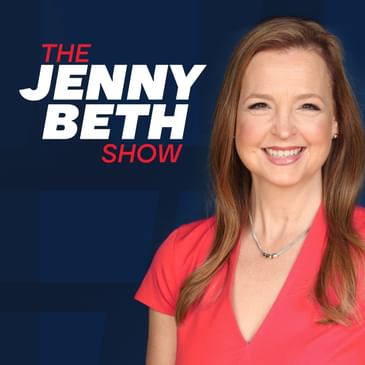
Phil Kerpen is president of American Commitment, a free-market advocacy organization in Washington. He writes and testifies on federal spending, energy policy, health care prices, and taxes, and he was working alongside Jenny Beth Martin in the earliest days of the Tea Party movement.
Robert McNeily is Director of Broadcasting and Grassroots Engagement at Tea Party Patriots Action and co-host of The Jenny Beth Show. He anchors the back half of this episode while Jenny Beth joins a scheduled America First Policy Institute meeting.
Key topics:
- Declassified intelligence showing China obtained the voter files of 220 million Americans
- The FBI official who wrote that she was running a shadow government, and the analysts who deliberately massaged the President's Daily Brief
- More than 250,000 noncitizens found on American voter rolls by the Department of Homeland Security
- The SAVE America Act attached to Reconciliation 3.0, and the ten billion dollar grant fund meant to move the states
- How the SAVE America Act actually started, on a coalition call with Senator Mike Lee and Cleta Mitchell about Arizona's bifurcated ballot
- Iran, the Strait of Hormuz, and why gas is knocking on four dollars a gallon
- Ninety three billion dollars out the door at the Energy Department in the last administration's final seventy six days
- Maine Democrats coalescing around Troy Jackson against Senator Susan Collins
- The Democratic Socialists of America manifesto: abolish the Senate, abolish the Electoral College, put the Supreme Court under Congress
- Hospital price transparency, why fewer than half of hospitals comply, and why price caps backfire
- Food stamp fraud, work requirements, and the HHS finding on poverty
Timestamps:
00:00 — Cold open: someone inside our own government ran a shadow government
00:36 — China obtained the voter files of 220 million American voters
05:22 — Rogue bureaucrats buried the intelligence
06:34 — This makes me so angry: unelected officials do not outrank the elected President
09:46 — Homeland Security finds more than 250,000 noncitizens on the voter rolls
12:54 — What I am asking you to do: call 202-224-3121
13:47 — Panel: Phil Kerpen of American Commitment
14:11 — Robert McNeily, and the service members lost in Jordan
16:14 — Gas near four dollars: Phil Kerpen on Hormuz and the pump
19:59 — Honoring the fallen
21:57 — Ninety three billion dollars out the door at the Energy Department
26:51 — Maine Democrats coalesce around Troy Jackson
28:28 — The Democratic Socialists want to abolish the Senate
30:17 — Phil Kerpen: restoring the system versus destroying it
33:52 — The SAVE America Act rides Reconciliation 3.0
34:28 — The ten billion dollar offer to the states
36:56 — How the SAVE America Act actually started
42:54 — What happens if the Senate goes home in August
44:32 — Health care price transparency and who is not complying
47:15 — Why price caps hurt the patients they claim to help
50:11 — Food stamp fraud, work requirements, and the HHS study
52:26 — Thank you, Phil Kerpen
53:29 — The World Cup came to America
56:05 — Apollo 11 at fifty seven years
59:57 — Closing: keep the pressure on
Links: teapartypatriots.org | jennybethshow.com | Senate switchboard 202-224-3121
[00:00:00] President Trump revealed someone inside our own government wrote in her own words she was running a shadow government. She and her colleagues deliberately kept the President of the United States, the man you and I elected, in the dark. Welcome to The Jenny Beth Show. I'm Jenny Beth Martin.
[00:00:31] Welcome to The Jenny Beth Show. Thursday night, President Trump went on national TV and told the American people something that should frighten anyone who is committed to American sovereignty and our way of life as a free people committed to self-governance. President Trump declassified intelligence, revealing that China got its hands on personal files of 220 million American voters. Your name, your address, your phone number, the party you belong to.
[00:00:59] And two of the biggest networks in this country, NBC and ABC, would not even carry the primetime address last week. I haven't had a chance to talk about this with you on the show yet, so let me walk through three things that I saw that I think matter the most and why we must get the SAVE America Act passed. First, let's watch a few clips from President Trump's speech. Here's the first one.
[00:01:23] The People's Republic of China carried out what is believed to be the largest compromise of election data in history, resulting in China's illicit acquisition of 220 million U.S. voter files.
[00:01:39] That information includes names, addresses, phone numbers, political party preferences and other sensitive data that would be needed to register to vote and engage in other nefarious activities, which is exactly what was happening. This data loss presents an unprecedented election security nightmare. The intelligence even shows that China has signed a data exploitation unit specifically to this new project.
[00:02:09] Compounding the travesty, the second set of documents we are releasing reveals that members of the deep state, very, very famous group of people, many cases in our intelligence agency work to actively suppress. And downplay information about the extent of China's sinister election meddling, covering it up from both the president and the American people like nobody thought was possible.
[00:02:38] First, the intelligence says that a foreign government reached into systems that hold our voter information. It matters even if they changed a single vote. And even if they did not change a vote, it still matters because that means they've got the information and they still could do something nefarious with it in the future.
[00:02:58] What also matters is that China and other adversaries could hack into our systems in the first place because when the voter and here's the important thing he was talking about when it comes to hacking, both the voter rolls and also the machines that deal with where you cash your ballots and count ballots. They're usually two different computer systems.
[00:03:22] So we have to make sure we understand that we're dealing with two different kind of computer systems. And also very recently, I think yesterday or over the weekend, Elon Musk said that with the changes that are coming with AI and the ability for AI to hack into computer systems, it makes sense to look at moving our balloting system back to paper ballots.
[00:03:47] So I'm highlighting this because we're dealing with problems from an adversary and we're also dealing with problems from vulnerabilities with the system. So we've got to make sure that our state and our local officials understand what has happened and that they are able to correct these problems. So that is something that I think is really, really important for us to pay attention to and to understand.
[00:04:18] And hold on just a minute because I'm glancing down at my notes. It's only common sense that we make sure that we are we're taking care of this because it strikes the very heart of American sovereignty and the defense of our constitutional republic. And the good news is there's a lot of frustrating things about what he said. But this is part of the good news with what he said.
[00:04:39] The material is finally declassified, which means that your state and county election officials can actually see what has happened. Republican and Democratic secretaries of state and county clerks need to go back and direct their respective offices to make sure the safeguards are in place to block out the bad actors. So that it's very alarming that China is able to do this.
[00:05:04] But it's good news that our state and local offices, election offices, know what happened now, have access to declassified information so they can work to shore up and make sure that their computer systems are more secure. OK, now, this is the one that got me the most angry. So let's watch this one.
[00:05:26] But it gets even worse. Raw intelligence obtained by the FBI in 2020, yet buried by rogue bureaucrats, stated that China's activities even included an attempt to manufacture illegal ballots for Joe Biden. Documents show that during this period, dozens of significant CIA and NSA reports about China's election targeting were kept out of the presidential briefing.
[00:05:54] These were briefings I would get almost every day. Everything was kept out that was of importance. One email among intelligence analysts admitted that they had, quote, deliberately massaged the presidential daily briefing to withhold information regarding Chinese activities related to the election.
[00:06:15] Another official inside the FBI wrote that she was running, quote, a shadow government, unquote, to keep intelligence about China's election meddling from becoming known and to keep it away from the honorable press.
[00:06:59] This makes me so angry. The reporting says, as President Trump just mentioned, that one analyst deliberately massaged the briefing to keep any link to the election out of it. And another described running a shadow government. Let me be clear. The president is elected by the American people. The president is commander in chief. The president makes the decisions and the people who work for him carry out his decisions.
[00:07:25] And we, the American people, hold the president in check with our votes. Not the other way around. Too many bureaucrats in Washington, D.C. have attempted to usurp the article to constitutional authorities of the executive office of the president of the United States. The principle applies whether the president is a Republican or a Democrat.
[00:07:48] That unelected bureaucrats do not have the privilege of withholding crucial intelligence, nor matters of national security from the duly elected president of the United States. And this pattern of behavior, it has to stop. So we have to make sure that it stops. And I urge you to make sure you're paying attention to this and sharing this information with people on both sides of the aisle.
[00:08:13] It doesn't matter whether the president is President Trump or President Obama or President Biden or President Bush or whoever the next president is going to be. The intelligence community has absolutely no right to do what it did to President Trump back in 2020. Now, let's watch what President Trump said about non-citizen voting, non-citizens being on our voter rolls.
[00:08:37] Tonight, I'm asking the FBI director to ensure that the matter is fully investigated and to work with the Department of Justice to prosecute those responsible for any crimes. Finally, to reveal just how vulnerable our elections continue to be, we are releasing the results of a stunning investigation by the Department of Homeland Security.
[00:09:01] According to the DHS review, state voter rolls and public records, they identified approximately 278,000 non-citizens who are registered to vote in federal elections. Since Democrat states refuse to share their voter files, the real number is actually much higher than that.
[00:09:23] Yet, even this limited analysis found more than a quarter of a million foreigners illegally registered to vote. Put together, these disclosures reveal an election system so broken and so vulnerable that no one can possibly defend it. It is not defensible. Now we know there are more than 250,000 non-citizens sitting on our voter rolls.
[00:09:51] The Department of Homeland Security has found them. They did a follow-up press conference on Friday. They highlighted that these numbers are—the biggest bulk of the people who are non-citizens on the voting rolls are actually coming from the states who are not complying with the SAVE database. And the states who are complying, they still are finding non-citizens, but it's nowhere like the number coming from California. So put that next to a foreign government treating our voter files like a shopping list.
[00:10:20] And you tell me that we don't need a law on the books that simply says you have to prove you are a citizen to register to vote, and you need to show an ID before you cash your ballot. It's common sense, and it's essential for national security. The SAVE America Act will do just that—proof of citizenship to vote, voter ID to cast a ballot. And it is stuck in Washington in the Senate. It has to pass, and we have to help get it done.
[00:10:46] President Trump had solutions, and one is calling for Congress to pass the SAVE America Act. And he concluded Thursday's primetime address, stressing how urgent and important it is for you to peacefully and patriotically join the cause by reaching out to your representatives and senators. Listen here to what he said about the solutions.
[00:11:07] I've also ordered DHS to notify every state about non-citizens on their voter rolls and direct them to remove all ineligible voters from the lists immediately. But most importantly, addressing this crisis of election security demands that Congress must pass the SAVE America Act. How easy is that to do unless you want to cheat?
[00:11:34] The only reason you wouldn't do it is you want to cheat because your policies are so bad and your candidates are so pathetic that you can't get away or can't get elected any other way. This landmark bill requires that all voters must show photo voter ID. How simple is that? Could I have your photo, please? Photo voter ID. All voters must provide proof of citizenship.
[00:12:04] Are you a citizen of our country, please? Thank you. Hopefully, there will be no corrupt mail-in ballots, which if you watched California and so many other places, mail-in ballots are inherently corrupt. So you would have no mail-in ballots except for illness, disability, military deployment or travel.
[00:12:27] If you're going away on business or vacation, these reforms are urgently needed to stop the vulnerabilities that I've mentioned. To all Americans, I ask you to pick up your phone tomorrow, call your representatives in the House and Senate, and demand that they pass the SAVE America Act without delay. Okay, so before we continue, here's what I'm asking you to do.
[00:12:56] Pick up your phone and call your senators. You know the number by now, probably by heart, just like I do. It's 202-224-3121. Again, it's 202-224-3121. You can pause right now and make the phone call and then come back to the show. Tell them to pass the SAVE America Act, and really, they should get it done this week. But we need to just keep the pressure on. No more excuses.
[00:13:22] Again, that number is 202-224-3121. We have two terrific people here with us for the full hour today, and there's a lot of breaking news we still have to get to, including two American service members who were killed overseas this weekend and a $93 billion rush of taxpayer money going out the door at the Energy Department during the Biden administration
[00:13:46] and a socialist manifesto that comes right out and says it wants to abolish the United States Senate. So let's get to it. Let me bring in our panel. Phil Kirpin is the president of American Commitment. He watches the economy and spending fights in Washington as close as anyone in this country that I know. Phil, welcome back to the show. My pleasure, Jenny Beth. And you all know Robert McNeely.
[00:14:12] He's our director of broadcasting and grassroots engagement here at Tea Party Patriots Action, and he's also my co-host. Robert, so glad you're on today. Oh, thank you, Jenny Beth. So I want to start with the hardest news of the weekend. Two of our service members were killed in Jordan. A third is still missing, at least as of last night. I don't know what kind of breaking news may be happening since we're preparing for the show. And their families are living every parent's worst nightmare this morning.
[00:14:40] Iran tore up the ceasefire sign just a few weeks ago, and our military has struck for the past nine nights running. So let's take a look at this video from CENTCOM, and then, Phil, I want to talk to you about this. Tonight, the destruction of a surveillance tower said to be used by Iran to track targets in the Strait of Hormuz. The new video from U.S. Central Command, hours after releasing dramatic footage of U.S. Marines rappelling onto a tanker.
[00:15:09] As gas prices in the U.S. rise, and traffic through the Strait of Hormuz fell to a three-week low, the U.S. again attempting to force Iran to back down. President Trump promising results. You will see the fruits of that labor very, very shortly. But Iranian state media releasing video of its own, saying this footage shows a drone attack on a Thailand flag tanker in the Strait, and Iran accusing the U.S. of killing civilians in the bombing of this bridge near the Strait.
[00:15:39] Tonight, Iran releasing this poster of seven people it says were killed in strikes on bridges, including three women and a child, their funerals announced for tomorrow. And Iran said these drones were launched at U.S. targets in Kuwait. A desalination and energy plant were hit. In 24 hours, Iran targeting seven U.S. partners and allies in the region. Here, an ammunition depot in Iraq hit.
[00:16:05] While here in Doha, we heard loud explosions which shook the windows. Qatar says falling debris injured a child. Bill, gas is knocking at $4 a gallon again. Walk people through what this means from an economic standpoint. How does a war on the other side of the world affect the gas pump here at home? And why is what President Trump is doing worth this short-term economic hit?
[00:16:33] Well, a substantial portion of global crude oil supplies normally travels through the Straits of Hormuz. With the disruptions we've seen in recent months, we have found some ways to route around that. And there are some new ways that oil is getting to market through pipelines and other means. So it's not like it's all been cut off even when the Straits were effectively closed. But it has a huge disruptive effect nonetheless. And global stockpile inventories have been drawn down significantly.
[00:16:59] Strategic reserves in almost all the Western countries and private re-inventories have been drawn down. And so we haven't seen the total massive price shock type impact that we would have otherwise seen. But still, remember, the economy was on a really good trajectory before this war. And oil prices, including gasoline prices at the pump, were down a lot from the highs that we saw under Biden. We had a two-handle pretty much everywhere. Some places even had a one-handle. And, of course, we've seen a pretty significant spike with this war.
[00:17:27] But I think it's important to keep in perspective that prices were higher under the Biden spike than they are right now, even though it was peacetime because of the anti-energy policies that we had in effect at that time. And also, there's a big inflation component built into the prices as well. To really compare, you have to do an inflation adjustment because, of course, the dollar was devalued substantially by all the money printing that we had in the last administration.
[00:17:51] And so in inflation-adjusted terms, gas prices are probably about 30 or 40 cents lower than they were under Biden. Obviously, it depends on where you are in the country. Now, that's not to say that people aren't feeling economic pain. They are. And, of course, we'd like to see the prices come back down as soon as possible. Well, it's not just what you pay at the pump. The price of gasoline and diesel, the price of oil is felt in everything in the economy. Everything grown, shipped, or manufactured has oil as an input, which is everything.
[00:18:20] And so the prices do tend to ripple throughout the economy. Now, we did see a big pullback in price increases in the June data. And part of that was because of the ceasefire that was in effect during that period. But still, overall, we saw not just a deceleration, but actually a decline in prices. We actually had negative inflation. Prices actually came down in that month. So that was really positive. Now, whether it's worth it, that's tough.
[00:18:48] I'm not a foreign policy or a national security guy. I'm more of an economics guy. But I will say that if you give up, if you just say, hey, we're going to let them abuse the terms of the ceasefire so we can get through an election, then everything we've done has been for nothing. So I think this is a president who's going to see through to his strategic objectives and try to mitigate the economic impact in the near term. But when and if the conflict is over, preferably with all of our objectives obtained,
[00:19:16] I do think the economy is poised to really take off because this has been the one huge negative. But otherwise, the economic outlook is really good. And so I am hoping we can get to the all clear at some point and things that will really take off from there. I hope we can get the all clear as well. And you're right. If we allow them to just violate the terms of the ceasefire with no consequence and everything that they've done up until this point is is in vain.
[00:19:43] I think that we've got the photos of the two names of the people who were killed in action over the weekend. We may not have their photos that we can show, but then the names I do have the names. I jotted them down right as the show is beginning. It's private Isabel Gonzalez. She's 19 years was 19 years old and from Carrollton, Texas. And then Lieutenant Tyler James Feehan. I think it's Feehan. He was 25.
[00:20:13] He's from Iwa Beach, Hawaii. We have to make sure that what they have sacrificed and what their families are now sacrificing is is worth is worth it. And what President Trump has said that we have to ensure that Iran never gets a nuclear weapon. I think he's absolutely right. We must ensure they never get a nuclear weapon.
[00:20:37] We cannot allow them to continue continue to terrorize Americans or or other people around the world through their terror proxies. And we can't let them think that they can make a ceasefire agreement with us, completely rip it to shreds and there won't be consequences. Or in the future, when other military engagements happen, other foreign countries will think they can get away with the same thing. So we're in a tough situation right now.
[00:21:05] And I appreciate the president's willingness to to risk political capital, to do what he thinks was to do what he thought was the right thing to do for the United States, making sure Iran never has a nuclear weapon. And now we've got to make sure we can can finish the job and and get out. And as we're as we're doing that, I am. I looked at the photo of Isabella Gonzalez and I just I ache for their their moms.
[00:21:35] I ache for their family today. And I'm praying for them and lifting them up in my prayers and praying that they feel the presence of God and that God's presence can give them peace as they go go through the valley of the shadow of death. Let's let's let's switch gears slightly and go to a slightly to a different topic.
[00:21:57] Phil, Energy Secretary Chris Wright testified that the last administration shoved ninety three billion with a B dollars out the door in its final 76 days. More than that, the department loaned in the previous. It's more than what the department loaned in the previous 15 years combined. Some of those recipients had no business plan in no financials.
[00:22:21] What's going on here and how does that kind of money outflow relate to the inflation you just were talking about in the printing of money that you just were mentioning? Well, Jenny Beth, the Democrats passed a bill called the Inflation Reduction Act, which I think is one of the most comically misnamed bills. It's almost up there with Affordable Care Act. And because they do a bill that does the exact opposite of what they name the thing or what they put their headline on it.
[00:22:47] And so the so-called Inflation Reduction Act was an inflation acceleration act. It shoveled a massive amount of money out the door, taxpayer money, borrowed money. Much of it was financed not even by real borrowing, but by Federal Reserve money printing. And that was one of the big impulses behind everything getting 30 percent more expensive or more in the Biden era. And a lot of the spending in this bill was under the guise of loans.
[00:23:16] And so they created this massive loan program at the Department of Energy. It was about $400 billion of loan lending authority. And the way they do the scorekeeping, they claim this would cost taxpayers nothing because their assumption is that all of the loans would be repaid. Now, of course, we know there are going to be tons of Solyndras and Fiskars and companies that are financed because they're doing trendy green stuff. But the business doesn't work and they're never going to pay it back and we're going to take huge losses on it.
[00:23:45] By the way, under Obama, the only loan that they made that actually would have made money was the Tesla one. But Musk being smarter than the Obama guys paid that back before it paid money. So we didn't even the taxpayer didn't even make money on the one investment that actually worked. And we lost huge amounts of money on all the companies that went belly up. And so, you know, I think what the Trump administration has been doing under Secretary Wright and a guy named Greg Beard, who's now taken over the loan office,
[00:24:12] is they've gone back through as many of these loans as possible and they've either pulled the money back or they've totally rewritten the loans. Because a lot of these were loans to utilities where they said, here, we'll give you this big loan, but you have to invest in some crazy renewable project that doesn't actually make economic sense. What they've done on a lot of these is they've reworked them, say, OK, you can keep the loan, but you have to actually invest in something that works, a natural gas plant, building out capacity, doing things that actually will work economically. Now, I'm a free market guy. I would rather cancel it all and just say, hey, market, figure it out.
[00:24:42] But, you know, if the program is there and the money's there and you can't do that, it's much better to do things that actually work economically. And that will protect the taxpayer interest much more because those loans actually will be paid back. And, you know, one of the things that they could do that I think we're going to see more of as this money moves forward with the pledge that the president got all of the big tech companies to sign is they can also use these loans as a way to make sure that where data centers go in,
[00:25:08] they are pushing buying down the residential electric rates rather than drawing from that base and not necessarily covering all the costs. And, you know, of course, all those tech companies say, hey, we cover all our costs. We would never push anyone's prices up. But what I've been calling for is to say, you know, that's not quite good enough. What you should do is when you announce it, do a deal with the utility where you pay extra and you actually buy down the rates for everyone else.
[00:25:32] And I think putting that in some of these loan programs would be a way to, you know, calm a lot of the fears of what's happening with the data center piece. But to me, the big win here, if we can if they can accomplish it, it looks like they've made a lot of progress in this direction. It's just saving us from massive losses, because even though the CBO claimed all those loans would have been paid back, I think we know otherwise. And the loss rate on them would have been enormous if they just went to trendy green energy projects.
[00:26:01] OK, so a couple of thoughts about what you just said. One, when it comes to the data centers, I'm pretty sure that I've got another question for you about that a little bit later in the show. So I'm going to kind of set that on the table for a few minutes and we'll come back to that. And then the other thing, I agree with you. I'm a free market person, and I also think the government spends way too much money all the time.
[00:26:21] If, however, the money is out the door and they can't get it back, then rearranging the terms of the loan and making sure it's being spent on energy programs at work is much better than making it be spent on things that won't work and that actually harm the grid. So I agree with you on that. All right, Robert, I want to we're going to change gears and talk about what's happening in Maine and then also talk about the Democrat socialists.
[00:26:49] So in Maine, it appears the Democrats have pretty much coalesced around Troy Jackson ahead of the convention this Friday where they'll formally nominate him. He is all but certain going to be the nominee against Susan Collins at this point. So, Robert, what do you think just happened? How do you think it affects the race in Maine going forward? Well, let's have a rerun of 2024 Democrats.
[00:27:13] Why not just pick the candidate after 12 million Democrat voters selected Joe Biden for his reelection? Well, the same thing happening in Maine now. But we know this pattern has gone on from 2016 into 2020 when crazy Bernie Sanders really not allowed to take on that nomination, regardless of how popular he was with the base. We now know that two thirds of Democrats based on some really reliable polling are now considering themselves not even progressive.
[00:27:42] But with that far left DSA movement, these people have 270 seats throughout the country. But Troy Jackson, someone who should not be underestimated, he spent two decades in the Maine state legislature. So definitely has that experience. Someone who could perhaps work with Angus King, that independent liberal leaning senator up there in Maine.
[00:28:06] We'll see if he can really come across to be competitive against the ever popular Susan Collins in this run up. But it's very interesting because we saw that Democrat primary voters very much in support at 72 percent of that primary vote for Graham Plattner, who ended up being an absolute nightmare for the Democrat bosses. OK, and then I want to get both of you to give me your quick take on the Democrat Socialists of America putting out a manifesto saying they want to,
[00:28:35] among many other things, abolish the United States Senate, abolish the Electoral College and put the Supreme Court under the thumb of Congress. Robert, do you think this is a fringe talking or is this where the energy of the Democrat Party is? And after you finish, we're going to to fill with the same questions. Well, I want to say it's right online with what they have to say when you look at their website. Democrat Socialists of America are pushing this. They want to get rid of the Senate because they find it more democratic to have direct democracy.
[00:29:05] Of course, it undercuts the very foundation of our nation and the federalism built into our constitutional republics. We're watching that very closely and they want to get rid of the presidency as well. So it seems as if with Article One, they want to enhance it in this superpower of a unicameral branch of government and then, of course, stack the court. And many elements have wanted to do this in the Democrat Party, dating back to FDR when he was president, at least with stacking the court.
[00:29:35] So this is something that's very consistent and I'll take them at their word. And Phil, what do you think about what we're seeing from the Democrat Socialists? And also, let me ask you one more question. I want to know what you think about their manifesto and their thoughts about abolishing the Senate and the Electoral College. A lot of people in the press are trying to compare them to the Tea Party movement in the beginning. And I think there's a huge difference between what they are standing for versus what the Tea Party movement stands and stood for.
[00:30:02] We want a constitutionally limited government. We want more of the constitution, not less of it. And you were there with me day in and day out at the very beginning of the movement. So that's why I'm asking you this question.
[00:30:16] Yeah, I mean, to me, it's the difference between, you know, wanting to restore the American system of government and economic as we understand it and wanting to destroy it, trash it, eliminate it, go with something completely different, which is what I believe they're for. And, you know, it's not just that they want to destroy the basic features of our constitutional system, which is bad enough.
[00:30:41] And by the way, I'm not clear on how they think that we would survive as a single country if they basically steamrolled the protections that smaller states have and kind of the constitutional arrangements that made the country possible. Other than some really disturbing authoritarian vision in which everyone would be forced to comply. It's hard to see how that would work. But, you know, it's not just the political arrangements and the constitutional structures they want to abolish.
[00:31:10] They also want to abolish the economic system. And you look at all of the policies that they've put forward, and there's such a big difference between their economic agenda and the traditional democratic economic agenda. Now, I disagree with both. But with the traditional democratic economic agenda, what did they do? They piled on regulations and they piled on taxes. And when we said, hey, you're going to put people out of business or you're going to destroy this business model or you're going to make it, you know, they said, no, no, no, this is great. Businesses will be able to live with it. It's no problem.
[00:31:39] This is now we've got with the DSA agenda, people who give a very different answer. We say, oh, this will put people out of business. They say, great. We want them out of business. Government should take it over. You look at the rent control agenda in New York City under Mamdani, and they've basically said, we're going to put these rent controls in. If that means we get rid of all the private landlords, great, because we'd love to have the city running all of the housing. Now, ignore the fact that the city-owned housing is a total disaster.
[00:32:02] You know, it's a very different and much more disturbing vision, I think, when you're dealing with people who are fine with their regulations and their taxes destroying private industries completely because they view everything as better run by the government. And I think a lot of the traditional democratic policies might have had that effect, but at least they denied it. At least they tried to claim that they weren't in favor of that and that they believed in a market system.
[00:32:26] Now we're dealing with an element of the Democratic Party that's gaining massive momentum that is openly hostile to our basic political system, our constitutional arrangement of institutions, but also to our basic economic system. And I think that's what makes it so dangerous. Yeah, I think that they are extremely dangerous. We have to take their capability of organizing within the Democrat Party right now very seriously.
[00:32:53] And we've got to make sure that we're paying attention to what they're saying and educating our fellow Americans on it, because the polling does show that most Americans don't agree with them. But we've got to we're going to have to make sure they understand that some of these nominees are not traditional Democrats at all. They truly are socialist and and separate and separate the two. We definitely have our work cut out for us between now and November and I think over the next several years. All right.
[00:33:22] We're going to take a very quick break and we'll be right back.
[00:33:52] All right. Welcome. Welcome back to the show. This is what we're going to talk about right now is a fight that I care care about the most. It is about the Save America Act. Right now, the House is working to attach the Save America Act to Reconciliation 3.0. And the House Rules Committee is meeting on Reconciliation 3.0 today. So, Phil, I wanted to hear what you I want you to talk about what you're hearing from the Hill.
[00:34:19] Where does Reconciliation 3.0 actually stand? How are things looking and what are you hearing from your your contacts? Well, they've written a budget resolution. The budget resolution is the first part of the process. It sort of defines which committees are involved and what the dollar amounts are so that they can write the reconciliation bill to it. And the way that they wrote this budget resolution is much narrower than some of us wanted. So there will not be any tax provisions. There will not be any health care provisions.
[00:34:47] They've limited it just to increasing defense spending to backfill some of the resources that were spent in the Iran War. They've got some farm relief in there. And then they've got this provision that is supposed to allow the House Administration Committee to write something relative to the Save Act. And that's it. Those are just three pieces. And that's it. There are no other committees that are written in there.
[00:35:14] And what Speaker Johnson has said they're going to they think can pass, you know, under the reconciliation rules and not get knocked out of the Senate relative to the Save Act is essentially a bribe, an inducement. A $10 billion spending fund that will be made available to pay states that adopt voter ID and citizenship verification measures voluntarily. Now, I don't $10 billion is a lot of money.
[00:35:41] But whether it's enough to actually convince any of the problem states to do this, I'm somewhat skeptical. So I do not have great hopes that this will actually accomplish its objective. But my understanding is that's what they're looking at. I know others are trying to get stronger language and trying to figure out ways around the Senate rules. So I think Senate parliamentarian has let us down repeatedly in terms of, you know, allowing more aggressive measures. So I'm not greatly optimistic.
[00:36:06] But my understanding is that this is basically the spending based approach that they're looking at. OK, so I have a couple of things about that. Let me let me just explain a few things from what I understand. First, it definitely won't do everything in the Save America Act. They'll do as much as they can, but there won't, as you're just pointing out, there's not going to be able, there will not be the ability to put the policy riders in place that we want to see.
[00:36:32] And the Save America Act is basically a policy bill. What they are trying to do, as you said, is put in the $10 billion that would be incentivized grants for states to adopt provisions of the Save America Act. Now, here's one thing that I do think is important to understand about what they're saying with those grants.
[00:36:53] The whole reason the Save, the original Save Act began, I just want to give people a little bit of history if they are not familiar. And if they are, bear with me as I repeat myself. Cleta Mitchell and I were on a phone call, a coalition call with Senator Mike Lee. On that call, she was talking about the problems in the state of Arizona when it comes to their bifurcated ballot because of a Supreme Court ruling about proof of citizenship.
[00:37:22] So very, very quickly, let me explain what that means in plain English. What it means is that the state, after the National Voter Registration Act, which we call the Motor Voter Law, went into effect. That has a voter registration form, and it has a simple checkbox to affirm you are a citizen. After that went into effect, the state of Arizona had a proposition on their ballot, a statewide proposition requiring proof of citizenship to register to vote.
[00:37:51] The proposition passed. The state got sued. It went all the way to the Supreme Court. And the Supreme Court ruled that they had to accept the National Voter Registration Act form because it's stemming from a law passed by Congress signed into effect or a bill passed by Congress signed into law by a president of the United States. It was Bill Clinton who was the president at the time. And that law is supreme law of the land. So they have to accept that.
[00:38:21] So what they've done in order to accommodate these two competing ideas, a checkbox versus proof of citizenship, is that if you show proof of citizenship to register to vote and you live in Arizona, then you get to vote for president, Senate, Congress, governor, lieutenant governor, all the way down to the lowest level office. And in Arizona, that is a precinct committee man.
[00:38:46] If, however, you did not show proof of citizenship, then you are able to vote for president, Senate and Congress. And that's what Cleetha Mitchell was explaining to Senator Mike Lee. And I got unmuted. I texted him beforehand. I got unmuted. And I said, hey, can we get this added? Can you make a law about this so we can clean it up? The Supreme Court rightly did not make law out of whole cloth from the bench. And instead, they basically were saying Congress could fix it if you want it done differently.
[00:39:16] Well, we want it done differently. Can you get Congress to fix it? And he said, yeah, let me look into it. I had no idea. Let's work on this. So that's how the Save America Act began and why we are working to get proof of citizenship to register to vote. It's not some grand conspiracy theory that some people on the left would would paint it as. It truly is trying to fix a problem because the federal law is out of place with the state law in Arizona.
[00:39:44] Now, Speaker Johnson got involved in February. And then President Trump, who was a candidate at the time, got involved. This is in 2024. Chip Roy got involved in January of 2024. It passed the House. It went nowhere in the Senate, nowhere with President Biden. Then we moved to 2025. They passed it again. We did our bus tour last year about this time. Then they passed it again in early this year. And they added on voter ID.
[00:40:12] And now we are where they're adding this to reconciliation. What I do think that reconciliation would change is that if Congress is incentivizing people to adopt these provisions through the incentive program, then that would actually free up Arizona and allow states like Arizona to require proof of citizenship, not violating the National Voter Registration Act.
[00:40:39] And that would make it where they don't have to have the bifurcated ballot in states like Alabama and Wyoming and other states that have passed proof of citizenship requirements. They're not going to get hit the same way that Arizona was from lawsuits. So I think that the incentive program would help with that, where we would run into problems right now without adjusting it. So I do think that is a good thing about reconciliation.
[00:41:09] Does it fix California if they don't adopt it? No. And that means we'd have to keep on fighting. But at least it would help in some places that are running into problems and conflicts with the federal law right now. That's my understanding. If I learn after saying all this aloud on a live podcast or later in the next week or so that I'm wrong, I'll come on and correct it and make sure you have the correct information.
[00:41:35] OK, very, very quickly, make sure that you call 202-224-3121 and ask your senators to pass the Save America Act. And we are going to a quick break. When we come back, Robert is going to finish out the show with Phil, and he's going to talk about some of the things that Phil has been working on. So we'll be right back. You are the grassroots of America. You love this country. When you love something, really love it. The news doesn't just inform you.
[00:42:05] It fires you up. And you find yourself asking, how can I make a difference? That is exactly what this show is built to answer. Never, ever, ever, ever give up. We owe it to every American who has ever voted to make America great again. We owe it to our future selves. We owe it to this republic to stand tall, to stay active, and to be smart about how we spend our energy so that we can win. Here on The Jenny Beth Show, we're going to help you do exactly that.
[00:42:34] Every show, we will break down the news, connect it to first principles, and give you specific, effective ways to take action. Not just outrage, action. And I am so glad you're here on this journey with us to do it. So let's get to it. Welcome to The Jenny Best Show. Bill, thanks for sticking with us today as we dive into so many different topics across the country and right in Washington, D.C. Quickly, the Senate goes home in August.
[00:43:03] Of course, they have a nice break without moving this Save America Act. What happens in between now and the midterms if it's not successful? Well, I don't think Congress is going to accomplish much the rest of the year, unfortunately. They are going to leave for that August recess. They probably will not get a government funding bill done before that, which means they're going to come back in September, and it's going to be, oh, my God, we're looking at a shutdown at the end of the month. And they will or will not pass something by the end of the month.
[00:43:31] Most likely, we will get some kind of a brief shutdown, although maybe they'll avoid it with some kind of continuing resolution. But the prospects for doing actual legislation, they get very dim because people want to go home to campaign. And so they'll somehow or another resolve the government funding debate, and then they'll leave. They'll come back after the election and maybe do a few clean-up things. But they're not going to accomplish much unless they legislate, unless they actually pass something in the very near term.
[00:43:59] I don't think there's going to be much more accomplished the rest of this year. You're already seeing the campaign messaging be more about everything we did in the one big beautiful bill as if that was, you know, they've completed their work for the whole two-year Congress. And this reconciliation bill they're working on right now is, as I said, extremely narrow. And so it looks like no tax provisions, no health care provisions. Maybe I'll be surprised and we'll actually accomplish something on SAVE Act or on health care or on tax.
[00:44:26] But as of right now, I don't expect them to accomplish much, unfortunately. Well, we'll see how this all goes down. You've been writing, Phil, on these big issues, pushing on a set of things that hit families right in the wallet. And they do not get nearly enough airtime. Now, let's start with health care. You and Steve Moore just made the case that the fix for high health care prices is transparency, not government price cap.
[00:44:53] So as we see there from the Daily Signal, here is the number that jumped out to me. As of 2024, fewer than half of the hospitals were actually complying with the price transparency rules that are already on the books. So the tools exist and nobody is enforcing them. What would real enforcement look like? Well, I like Ted Cruz's idea that if there's no price posted, you don't have to pay. I mean, if we could ever pass that, I guarantee the compliance would go to 100 percent very quickly.
[00:45:22] Right now, the fines that can be issued are relatively small. And you can give, you know, you give one of these giant hospital systems a million dollar fine. It's just it doesn't really incentivize them to change their behavior necessarily. And so the compliance with Trump's price transparency executive order has been quite poor. Now, there is a prospect that we do get transparency legislation this year. The House passed a very good bill out of committee last week. We're expecting Senate committee action this week. But whether there can be floor time, whether the Democrats decide to go along with it or not,
[00:45:52] I will say the one reason why I have a little more optimism right now on getting a transparency bill done than I would have a couple of months ago is Chuck Schumer got caught. He got caught. Politico reported that he told the New York Hospital Association they had a veto on everything on health care and he would never do anything without their agreement. And I think he actually is a little bit capable of shame. And I think that that being reported caused him to say, well, wait a second, I can't let the giant hospitals veto anything related to health care.
[00:46:20] And so maybe the possibility for something bipartisan opened up just a little bit with him feeling a little bit of shame and they can do something on transparency. That would be great. More likely is that they don't do something legislatively and we have to rely on the administration stepping up enforcement to try to get some progress. And it has been something that Dr. Oz has been focused on and he and Secretary Kennedy did send out a video.
[00:46:44] And I assume there were some letters as well saying basically, you know, we're going to increase the fines pretty significantly if you don't start complying. So I'm hoping we'll see a lot more posted prices and we'll get a lot more real competition going on because hospital services. If you've seen that famous chart that Mark Perry does every few months on what's gotten more expensive in the economy hospitals right at the top and it's almost vertical. So we've got to get a handle on that.
[00:47:08] And something that every American is talking about now, Phil, some states are going the other direction and just capping the prices altogether. So in plain English, why do you say a price cap ends up hurting the very patients that it intends to help? Well, I just don't think government price controls are a good solution. You know, if you can get a functional market where you can get real price transparency and you can solve some of the supply side barriers.
[00:47:32] And the other piece of this is the government has made it so hard for doctors and clinics and imaging centers to stay independent. So everything's getting gobbled up by these giant hospital systems, which is why there's so little competition and choice. That federal payment policies need to be fixed. Federal tax policies need to be fixed. And there are a lot of state policies that create regulatory barriers also that could be fixed. But, you know, politicians like easy answers to hard problems.
[00:47:57] And if the hospitals keep stonewalling on transparency, keep blocking the reforms that would bring in more competition and choice, a lot of legislators are just going to say, great, we're going to set the price now. We're going to say you can't charge more than, you know, 200 percent of Medicare or whatever it is in the commercial market. And a couple of states have already started to do this. And, you know, the problem with price controls is they cause shortages and they cause reductions in quality. And you don't want to have government setting prices because that can actually reduce competition, reduce choice, reduce supply.
[00:48:26] It can mean that that quality goes down. It can mean you have long waiting lists and things like that. But what we should want is a well-functioning market where supply is allowed to increase and then meet demand. And you can get price competition to push down costs. But, you know, I've been trying to warn these hospitals, look, you know, it's hard to blame some of these states that are just imposing price controls if you won't even allow people to know what the prices are because you stonewall on transparency. So I don't like these price caps. I think they're the very, very bad answer.
[00:48:55] But I think that hospitals need to need to stop blocking all the market based reforms if they don't want to get something worse, which is just outright price controls. And as we discussed earlier, the DSA platform gives them a leg to stand on with these price control arguments because they want to implement this socialism. And it sounds all cheery and wonderful until you run out of someone else's money. But to your point, I think we really – So if we get a Republican somewhere, let's say, you know, they say, oh, well, we're going to set price caps,
[00:49:24] but they're only going to be, you know, 200 or 300 percent of Medicare. And we know the business works at that level. We have a DSA guy who comes in next and he's going to say, well, I want to set the price cap at 90 percent of Medicare. And I don't care if it puts you all out of business because the government should be running your hospital. And, you know, now you've built the structure for them to do that because they don't care. They, you know, because they're happy to destroy private businesses. And so I think it's very dangerous to try to go down this path as Republicans. No, there's no question about that, Phil.
[00:49:52] Let me connect this story that has been hammered for a while now. You have been sharing the argument that food stamps, the reforms found fraud rather than taking the food for families who qualify. So lay this out. And the left wants to tell the exact opposite story, as we've seen from places like Minnesota. Well, we've got massive fraud in the food stamp program. And it really went crazy during the Biden years because they got rid of all of the eligibility checks and the fraud rates went crazy.
[00:50:19] And, you know, one of the things the big, beautiful bill did is it said, look, this is still going to be 100 percent federal funded, which I think is a big problem, by the way, because you can't have a program that's 100 percent federal funded, but 100 percent state implemented. Because what the states start to do is they say, hey, it's free money. So, you know, lie, cheat and steal as much as you want. It's free money into our state. But what they did in big, beautiful bills, they said, if you have a fraud rate that's above 6 percent, then you're going to have to put some state funds in. It's not going to be 100 percent federal funded anymore.
[00:50:48] I think it's 5 to 15 percent is the maximum. So it's not a huge amount. It's still a pretty small amount of state funding, but at least it's some state funding. Now, to me, this is not really a perfect solution because they can cook the numbers. They can try to play with it, but at least it's moving in the direction of reducing fraud. And I think there's a lot more that can be done. You know, the most important thing is the work requirements, which were finally put in for a lot of these programs, including SNAP and Medicaid in the big, beautiful bill.
[00:51:17] And, you know, we always get accused of being cold hearted. Say, oh, my God, you're using these work requirements to kick people off benefits and they're going to starve or they won't be able to get health care. And the right way to think about it is actually the opposite. We want work requirements because we want people to have to get up every day and go somewhere, even if it's just a job training site or, you know, whatever, volunteer work, whatever it is that's qualifying.
[00:51:40] But you want people to know you're going to have to get up and go to work somewhere every day, no matter what, because if they have to do that, most of them are going to find a job that's going to pay them enough to get on the ladder of economic opportunity and over time get off these programs. They end up much better off as well as saving the taxpayer money. And so that's why the work requirements are so important.
[00:52:00] And there was recently a study from HHS that looked at the work requirements as applied to Medicaid, and they found that the work requirements in the big, beautiful bill will reduce the number of people living in poverty by 1.5 to 2.9 million people because of this incentive to get people off of these programs and into the workforce. So the work requirements are really an anti-poverty program as well as being a way to save taxpayers money. Well, and President Clinton and his administration argued this back in the 90s, welfare reform. It makes sense.
[00:52:30] Phil Kirpin, president of American Spectre. Thank you so much. You actually cover more real ground that touches people's lives than anyone I personally know. So I'm grateful that you spent your part of the day with us this Monday. Thank you, everybody. Please follow Phil at Kirpin. Thank you again, Phil Kirpin, for joining us here on the Jenny Beth Show. Now, we also would like to go to a quick promo before we close. We'll be right back here.
[00:52:57] And we'll continue now with the Jenny Beth Show because this week really matters with the Save America Act. Go to a photo ID to vote. We need this to happen here in Congress. We've been talking about it all the time here on the show. Call your senators today, 202-224-3121. Tell them to pass it before they go home for August. And go to TeaPartyPatriots.org and join the Only Citizens Vote Coalition.
[00:53:26] Only citizens get to decide elections. Now, let me leave you with something good because there was a lot of good that happened this weekend, too, right here in America. The World Cup came to the United States and the whole world came to see it. Millions of people from every corner of the earth spent their summer in our great country. And they got to see the real America, our hospitality, our energy, the greatness of this country up close.
[00:53:52] And last night, Spain beat Argentina in extra time. And President Trump handed the trophy himself to the champions. One final act on this incredible summer of soccer for Rodri to lift the trophy and for the celebrations to begin both here and overseas.
[00:54:20] And when Rodri's ready, here we go. Spain have won.
[00:54:25] And what a time it was here in Atlanta, Georgia, as one of the host cities there in New York and New Jersey for the celebrations.
[00:55:06] But here's a little bit later on the tarmac talking about all of it as the president headed home to Washington, D.C. I thought FIFA was incredible. There has never been anything like it, probably in terms of an event, let alone soccer or football, whatever you want to call it. But I thought it was incredible. It was four times greater than any FIFA ever held. And it's probably about five times, actually, they're telling me today. So we're very proud of our country.
[00:55:34] We're very proud of the job that was done by everybody. We congratulate Johnny Infantino and all of his staff and the incredible job they did. But this was one of the greatest events of any kind ever held. So we're really happy that it did so well. And all over the world, people have come and they've loved our country. You know, it's shown off our country in a different light. And it's a great thing. It was a great event.
[00:56:02] And I'm glad you all enjoyed it. Now, as we continue celebrating America 250, it is worth noting that today is the 57th anniversary of the Apollo 11 mission, first bringing human beings to the moon. Neil Armstrong, Michael Collins and Edwin Buzz Aldrin set in motion the dreams and goals of President Kennedy's call to go to the moon.
[00:56:25] It was a privilege being our nation's capital for the 50th anniversary back in 2019, where NASA, in conjunction with the federal government, actually featured the footage from the landing brightly displayed on the Washington Monument. Really a first, which helped lead to celebrations like we saw over this past 4th of July. So let's take a look at the past and where it's leading Artemis and the 21st century explorers today. Okay, let's go there. Capcom on the hot fire.
[00:56:53] Okay, all flight controllers going around the horn. Go for undocking. Okay, retro. Go. Fido. Go. Guide. Go. Control. Go. Telcom. Go. Gensy. Go. Ecom. Go. Surgeon. Go. Capcom. We're at go for undocking. Armstrong, Aldrin, and Collins arrived at the moon on Saturday, July 19th. When we did get close and we rolled out and saw it for the first time, it was a revelation. It was gigantic. It filled our entire window.
[00:57:25] The next day, Sunday, July 20th, was landing day. In a lot of anticipation, we finally come to the day, the moment that this is about to commence. Landing on the moon was absolutely the most difficult piece of any Apollo mission. Okay? Think about it as a controlled fall out of lunar orbit. The problem is, in this controlled fall out of orbit, you only have enough fuel for one try.
[00:57:54] Capcom, we're go for landing. Altitude 4200. Houston, you're go for landing. Over. The trajectory had been wrong. They were targeted into this inhospitable place. Then they had to fly over this area at a high forward velocity, then pitch up to slow down so they'd kill that forward velocity, and then start down like a helicopter. So now we're critical fuel state.
[00:58:20] And that's why the 60-second call was given, and then the 30-second call. Then I really got nervous and was calling out 25 seconds of fuel after it, and then 20 seconds of fuel. Oh, jeez. Okay, engine stop. ACA at a descent. Oak control both. Auto-descent engine command override off. Engine arm off. 413 is in. We copy you down, Eagle. Houston.
[00:58:52] Tranquility. Tranquility, we copy you on the ground. You got a bunch of guys about to turn blue. We're breathing again. Thanks a lot. The landing, to me, was a great celebration. The nation was almost euphoric. Well, it proved that the United States could accomplish tremendous goals if they worked together as a team.
[00:59:28] Amazing footage. A great reflection as people fell in love with this country while they were here for FIFA. That's worth holding on to, even in a week that is heavy with many concerns, not only here at home, but abroad. We honor the service members who gave up their lives this weekend to make our world safer and a better place. We keep that pressure on the Senate for the Save America Act, and we remember that this is still the country the whole world wants to come see.
[00:59:56] Two things before we close. Congratulations to Vice President and Mrs. Vance on the birth of their fourth child. J.D. and Usha are blessed with a big family, as it is the first time in 150 years where a sitting Vice President has had the birth of a child while in office. Congratulations once again on a healthy baby boy. And thank you for joining us here on the Jenny Beth Show today. Heed the call of President Trump, Jenny Beth Martin, and the countless patriots by making that call this afternoon.
[01:00:26] 202-224-3121. And I'll see you next time on the Jenny Beth Show. For Jenny Beth Martin and the entire team at Tea Party Patriots Action, I'm Robert McNeely. May God bless you, and God bless the United States of America. If you enjoyed today's conversation, go ahead and hit like and subscribe. It really helps us reach more people who care about liberty and the Constitution.
[01:00:49] You can find this and other episodes at JennyBethShow.com, as well as Facebook, YouTube, Rumble, Instagram, X, and your favorite podcast platform. The Jenny Beth Show is hosted by Jenny Beth Martin. The Jenny Beth Show is a production of Tea Party Patriots Action. For more information, visit teapartypatriots.org.