
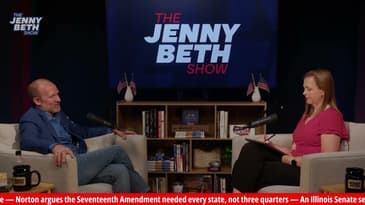
Before 1913, United States senators were appointed by their state legislatures. Constitutional scholar Bill Norton makes a point that gets lost in the standard telling: the great compromise fight at the Constitutional Convention was about proportional representation, not about how senators would be chosen. When the delegates voted on the method, it was a single vote, and it was unanimous.
Then came the progressive movement, which pushed for popular election for decades without gaining much traction — until an Illinois senator was found to have purchased his seat by paying each state legislator $2,500. The outrage over that scandal supplied the momentum that finally carried the Seventeenth Amendment.
Norton's argument is that the outrage got the diagnosis backward. The founders never assumed men were angels; James Madison said so directly. Checks and balances exist precisely because corruption was expected. And in that specific case, paying for the seat actually deepened the senator's obligation to his state legislature, which is exactly where the founders wanted a senator's allegiance to sit.
What replaced it was a chamber built as an oligarchy and asked to run as a democracy.
This is the bonus conversation following Lesson 3 of the founding-principles training with Jenny Beth Martin. Get the free training at teapartypatriots.org/1776. Full episodes at jennybethshow.com. More from Tea Party Patriots Action at teapartypatriots.org, and the Capitol switchboard is 202-224-3121.
00:00 — Unintended Consequences: Enter the Seventeenth Amendment
00:16 — 1913, and the Unanimous Vote Nobody Talks About
01:22 — The Progressive Push to Change the Method
02:36 — The Illinois Senate Seat That Was Bought
03:55 — If Men Were Angels: Why the Founders Expected Corruption
05:28 — Turning the Senate Into a Second Democracy
#JennyBethShow #SeventeenthAmendment #Constitution #Federalism #FoundingPrinciples #BillNorton #Senate #LimitedGovernment #TeaPartyPatriots