
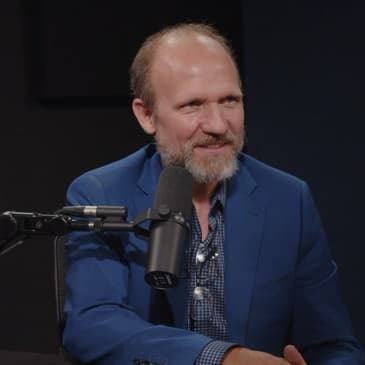
Join Bill Norton of Bellevue University as he shares how innovative classroom simulations are revolutionizing civics education. Discover how students engage with historical documents, experience the evolution of self-government, and learn the principles of civic responsibility. From the Magna Carta to the U.S. Constitution, these hands-on lessons empower young minds to understand and value America's founding principles. Learn how this program is shaping informed, active citizens and inspiring the next generation to embrace self-governance. A must-listen for educators, parents, and patriots.
Website: https://selfgovernmentworks.com/
[00:00:00] Chaos has often been a tactic of tyrants in history. They will purposely stir things up and get things chaotic so that they can ride in and become the hero and institute all these laws to prevent the chaos. So that's why, again, it's important to teach the students that chaos is not a good thing, but too much government's also not a good thing. So you've got to find the balance.
[00:00:25] Keeping our republic is on the line, and it requires patriots with great passion, dedication, and eternal vigilance to preserve our freedoms. Jenny Beth Martin is the co-founder of Tea Party Patriots. She is an author, a filmmaker, and one of Time Magazine's most influential people in the world.
[00:00:43] But the title she is most proud of is mom to her boy-girl twins. She has been at the forefront, fighting to protect America's core principles for more than a decade. Welcome to The Jenny Beth Show.
[00:00:56] In today's episode, I'm joined by Bill Norton, a passionate educator on civic engagement and self-governance. We discuss his work with simulations that bring history to life for students, helping them understand the importance of self-governing principles.
[00:01:11] From learning about foundational documents to acting out different forms of government, Bill shares how these simulations are empowering young people to become informed, engaged citizens.
[00:01:23] Bill Norton, thank you so much for joining me today.
[00:01:26] You're welcome. Thanks for having me.
[00:01:27] We go back such a long way, and you were doing something very exciting. What we always have worked on together is that you're educating people about the Constitution, and you continue to do that.
[00:01:38] Yeah, when I was with Tea Party Patriots, I was the education coordinator, and so I've continued to do that, and that's really been my passion all along is to figure out how to teach these important principles of liberty to just the general public,
[00:01:52] so that your average school teacher, your fireman, your clerk at the store, all these people at least understand basic concepts of self-governance.
[00:02:01] So what are you doing now? You've got a whole new curriculum, don't you?
[00:02:04] Yeah. So I work with a university out of Bellevue, Nebraska called Bellevue University, and it's a private university, and they're similar to Hillsdale in the sense that they don't take any –
[00:02:19] in fact, it's right in their charter that they can't take any government funds, and so they have to operate totally free market in order to be successful,
[00:02:28] which is always exciting when you see free market work.
[00:02:31] And so they are very civically minded.
[00:02:35] When they were created shortly after World War II, the Chamber of Commerce there in Bellevue noticed that a lot of soldiers coming back from the war didn't understand free market principles
[00:02:46] and didn't really understand self-governance, and so they wanted to create a university that helped them understand some of these principles.
[00:02:55] So Bellevue, for example, they – no matter what degree that you are seeking, you have to take nine credit hours, three credit – or three classes that are civics classes
[00:03:07] that are specifically designed to give them kind of an overview of the importance of civic engagement in our country.
[00:03:15] And so some students get a little annoyed with that because they're like, this has nothing to do with my degree.
[00:03:22] But it's important to Bellevue.
[00:03:24] And so a few years ago, about six years ago, they were seeking for some kind of an outreach program for junior highs and high schools.
[00:03:33] And I had this cool idea on how we could put together a really fun program.
[00:03:38] And so in doing that, we created a program called Self-Government Works.
[00:03:41] Well, what do – so Self-Government Works is for junior high and high schoolers?
[00:03:46] Mm-hmm.
[00:03:46] And what all is in it?
[00:03:48] So basically, it's a classroom simulation.
[00:03:51] Now, simulations, people don't always know exactly what they are.
[00:03:55] A lot of people think that they're just some computer models or something like that.
[00:03:58] But in social studies, a simulation is where you basically put the students through some type of a real-world activity
[00:04:06] that maybe parallels or mirrors an event in history.
[00:04:11] But you want it to be real world.
[00:04:13] So the students, their decisions still have consequences.
[00:04:16] So their outcome might be different than what the historical outcome was.
[00:04:20] But that's fine.
[00:04:22] In fact, you can do a compare and contrast and say this is – why did it end up different?
[00:04:26] And so that's what this is.
[00:04:28] This is a simulation that basically what it does is it walks them through the evolution of self-government.
[00:04:34] So most simulations that you'll see in social studies simulate like an existing – something existing in our system,
[00:04:41] like an election or a legislative body or something like that, like Model UN.
[00:04:48] Model UN, yeah.
[00:04:48] That's a good example.
[00:04:50] And so this one knows different.
[00:04:53] What we want to do is we want to teach them about how self-government evolved.
[00:04:57] And we use historic documents as historical benchmarks.
[00:05:02] So basically like while they're learning about the Magna Carta, for example,
[00:05:06] we put them through what we call the oppression phase.
[00:05:10] It's the first phase and we have this director that comes on this video
[00:05:13] and the director says, I've been given control over your classroom
[00:05:16] and we've got all these rules and we're going to make sure that you are the perfect classroom
[00:05:21] learning all the perfect things.
[00:05:22] And so all those rules become very oppressive.
[00:05:25] And so the students start feeling oppressed.
[00:05:27] And so we have this student hacker that comes on the video and she says,
[00:05:32] hey, you know, the Magna Carta was basically rules for the king.
[00:05:36] Maybe you should consider writing rules for the teacher and the director.
[00:05:40] And so the students behind the teacher's back, they write these rules
[00:05:45] and then they present them to her and they end up being adopted.
[00:05:49] The teacher and the director accept them.
[00:05:51] And then the day after they say, eh, never mind.
[00:05:54] Exactly like the Magna Carta.
[00:05:56] Right.
[00:05:57] So it's giving them this real world experience in the classroom
[00:06:01] and then showing them how this relates or parallels history.
[00:06:05] And what has been the experience as students have done this?
[00:06:10] So what's really fun about it is that as the students are doing this,
[00:06:14] they are creating different forms of government for their classroom.
[00:06:18] And they start very simple like the Mayflower Compact and something similar to that,
[00:06:22] colony charters, Articles of Confederation and things.
[00:06:26] And so they evolve with the classroom just like history evolved.
[00:06:31] And one of the cool things that happens that I love to see,
[00:06:34] I think a republic is a brilliant form of government, right?
[00:06:39] A republic that's grounded in the principles of democracy.
[00:06:42] And I think it's awesome.
[00:06:46] But students, like you tell them, hey, republic is cool.
[00:06:49] And they're like, okay, what does it have anything to do with me?
[00:06:54] Well, when they go through this process, they try different forms of government.
[00:06:58] And they always try democracy because they're like, that's what they say we are.
[00:07:02] So they try it and they learn democracies fail because their mob rule.
[00:07:07] They're very chaotic.
[00:07:09] And so the most exciting thing that I love to see is as they try these different forms of government,
[00:07:14] from democracies to tyrannies to oligarchies,
[00:07:18] they always settle in on some form of a republic.
[00:07:22] It may not look exactly like ours,
[00:07:24] but they realize that a republic is a brilliant system and the founders were brilliant
[00:07:30] and some of their solutions were just amazing.
[00:07:33] So how many schools have the curriculum right now?
[00:07:38] So we went and did kind of a beta version for five years or so.
[00:07:44] And then COVID hit.
[00:07:47] COVID changed everything, right?
[00:07:49] And so we're kind of revamping it back up again.
[00:07:52] And so there's, I mean, there's about 50 to 75 teachers that are using it in the classroom today.
[00:08:01] And that is in states like Nebraska, of course.
[00:08:05] And we've got Michigan, Arizona.
[00:08:08] There's actually a charter school that uses it.
[00:08:12] And they've got five charter schools.
[00:08:14] And they actually have implemented it to where it's not only just their social studies classes that use it,
[00:08:20] but every single one of their teachers use at least a small version of it.
[00:08:25] Because what they do is they use it to create a governing system for their classrooms.
[00:08:31] So then the students manage the classroom with their system of government that they created.
[00:08:37] And is that working well for that charter school?
[00:08:40] It does.
[00:08:40] That's interesting.
[00:08:41] Now, it's not always roses.
[00:08:44] I'm sure.
[00:08:44] Just like freedom and self-governance isn't.
[00:08:47] In human nature.
[00:08:48] Exactly.
[00:08:49] You go through some rough spots.
[00:08:51] We had one teacher.
[00:08:52] We have what we call teacher's rules.
[00:08:55] And these are the oppressive rules of the kids' experience.
[00:08:57] And we had one teacher who was having a problem with the – well, the students had a problem with it.
[00:09:03] They're like, this is ridiculous.
[00:09:04] We're not going to follow these.
[00:09:05] And he's like, well, if you don't like it, then just leave.
[00:09:07] And so they did.
[00:09:08] They all got up and they walked out of class and he had to go chase them down the hallway and say, well, we still have school rules that we need to follow.
[00:09:15] And it means you can't just walk out of class.
[00:09:18] So sometimes things go a little haywire.
[00:09:20] But on the other hand, we had another interesting thing happen with a private religious school.
[00:09:25] It was a Lutheran school.
[00:09:27] And no matter how tyrannical that teacher was, no matter how harsh the rules were, no matter how unfairly he implemented those rules, they wouldn't rebel.
[00:09:37] They just – they wouldn't say we want our own independence.
[00:09:40] Wow.
[00:09:41] So finally he's like, what's going on?
[00:09:43] Why won't you rebel?
[00:09:46] Well, and they're like, well, I mean, the Bible tells us that we should listen to our leaders and that we should – so they were willing to put up with a lot because of their internal beliefs.
[00:09:57] And so he asked me, he said, what can I do?
[00:09:59] And I said, you need to make it personal.
[00:10:02] Inform your parents so your parents don't get freaked out.
[00:10:04] But make it personal.
[00:10:06] If religion is that important to them, then make it so that you take away their ability to pray in the classroom like they do every day before they start class and take away their ability to even bring their scriptures to class and things.
[00:10:19] And when he did that, they rebelled.
[00:10:22] Oh, that's good.
[00:10:22] I'm glad that he finally did.
[00:10:24] Exactly.
[00:10:25] That's good.
[00:10:25] And it's kind of interesting because sometimes throughout history, people don't rebel until it becomes personal.
[00:10:32] That's right.
[00:10:33] I think we saw that during COVID, right?
[00:10:35] Yep.
[00:10:35] Like we've been calling for people to embrace liberty and to love and respect the Constitution for years and years.
[00:10:43] And then when COVID happened, all these new people started paying attention to it who hadn't before because they hadn't really experienced oppression before.
[00:10:52] Exactly.
[00:10:53] And people were able to experience it for the first time.
[00:10:56] And they were able to understand.
[00:10:56] In fact, I mean, a lot of the great philosophers from William Blackstone to John Locke, I mean, both of them said that really government oppression, they can get away with a lot.
[00:11:10] And even you can oppress a minority of people and they won't rise up.
[00:11:14] It's when the majority start feeling the pressure that you finally get people to stand up and say, hey, enough's enough.
[00:11:22] And I want to be clear that when we're talking about rebellion and the students rebelling and all that, this doesn't mean that they're grabbing pitchforks and they're destroying things or anything like that.
[00:11:31] We actually teach them that the best way to fix the system is to work within the system and to look at the system as if it's a thing.
[00:11:42] In fact, one of the lessons we teach them, there's a letter that we discovered.
[00:11:46] And this is some of the material that comes from the Center for Self-Governance.
[00:11:50] But there's a letter from Abigail Adams that we discovered that she wrote to John Adams on June 7, 1776.
[00:11:57] So this is before the Declaration debate is really happening.
[00:12:01] And this is when Abigail is overlooking Boston, seeing the embargo, seeing the cannon fire, hearing the guns, all that.
[00:12:10] And she writes a letter to her husband, John, saying, hurry and do what you're doing there.
[00:12:15] Get a government put together because this colony is ready to receive them.
[00:12:20] Speaking of the government, she scratches out the word them and puts it ready to receive it.
[00:12:27] So Abigail and others, including Thomas Jefferson, who used the word it multiple times in the Declaration of Independence when he's referring to government,
[00:12:36] they were having a paradigm shift that government isn't a them.
[00:12:40] It's an it.
[00:12:41] It's a machine.
[00:12:42] It's a mechanism.
[00:12:43] We can oil it.
[00:12:44] We can alter it.
[00:12:45] We can change it.
[00:12:46] We can keep it.
[00:12:46] We can get rid of it.
[00:12:49] And often when we look at government, we think of it as it's a them.
[00:12:54] So we need to destroy them.
[00:12:57] We need to overcome them, beat them.
[00:13:00] And so we teach the students that, that don't look at government like it's a them, like you have to go in and fight them.
[00:13:08] It's a machine.
[00:13:09] So learn it, figure it out, and then go in and maintain it and tweak it.
[00:13:14] And in the phases of government that you're teaching the kids, you're teaching about oppression, chaos, stabilization and maintenance, right?
[00:13:24] Yeah.
[00:13:25] So the rebellion period that you're referencing is what is necessary so that they can create a form of government that will be more sustainable.
[00:13:35] That's right.
[00:13:35] So they need to realize, so they go through the oppression phase and they want to break out of that.
[00:13:40] And then they go through the chaos phase.
[00:13:41] And when they're in the chaos phase, they realize that chaos can be just as oppressive as tyranny.
[00:13:48] Chaos of the majority, chaos of mob rule, right?
[00:13:52] And so, and often teenagers think that they want to live under fewer rules.
[00:13:57] And when they go through the chaos phase, they realize rules are pretty important.
[00:14:02] So the goal is to help them to see that we need to find a balance between too much government and too little government.
[00:14:08] And that's when they get into the stabilization phase.
[00:14:11] And really, and that's where they really write their, their more permanent class government.
[00:14:16] And they, they try to stabilize their, their classroom in doing so.
[00:14:20] Now, one thing that we have seen from Antifa and Occupy Wall Street and Black Lives Matter is that, and socialism, I think, and societies that wind up becoming communist.
[00:14:35] They really gen up chaos right, right now in the here and now to try to overthrow government.
[00:14:43] So how do you teach the students about what rebellion is like without making them want to overthrow our current government?
[00:14:52] Although there are pieces of our current government, maybe we should, but we want to keep the constitution, you and I do.
[00:14:58] Yes, absolutely.
[00:14:59] And that's a really good point because, because chaos is, has often been a tactic of tyrants in history.
[00:15:07] Um, they will purposely stir things up and get things chaotic so that they can write in and become the hero and, and institute all these laws to prevent the chaos.
[00:15:17] Um, and often that's how we get a lot of dictators in history is, is to try to, um, get rid of the chaos.
[00:15:24] I mean, Napoleon came about because of the chaos of the French Revolution.
[00:15:28] Um, Cromwell came about because after they beheaded King Charles, there was chaos.
[00:15:33] And so Cromwell was put in charge and both Napoleon and Cromwell, um, ended up being just as tyrannical as, as the governments that they overthrew.
[00:15:41] Um, by design.
[00:15:43] I mean, that's, that's, that's how, how that happens in history.
[00:15:46] Um, and so that's why, again, it's important to teach the students that chaos is not a good thing, but too much government's also not a good thing.
[00:15:55] So you've, you've got to find the balance and they end up learning that for themselves.
[00:15:59] So for example, we had one student that, um, that came to class one day because the class was fairly chaotic over the course of a few days prior to that.
[00:16:09] And he had been elected the president and he came to class one day with a prepared speech and asked if he could give that speech at the beginning of class.
[00:16:17] And in that speech, we have it recorded.
[00:16:18] It's so awesome.
[00:16:19] It's hilarious.
[00:16:20] In that speech, he says, basically he says, you know, you guys have proven to not be able to self-govern.
[00:16:26] Um, you're too chaotic.
[00:16:27] And so I am taking complete control of the classroom.
[00:16:31] And once you are able to govern yourselves better than I will return the authority or power back over to you.
[00:16:38] Uh, and it was just so classic of, of a tyrant in history in this.
[00:16:42] And the funny thing is this kid was when he's given the speech, he's like this really calm, soft-spoken, mild mannered kid.
[00:16:49] It's not like he was this, this big, boisterous.
[00:16:52] Exactly.
[00:16:53] Exactly.
[00:16:53] And, um, and so, uh, so we, we see this example where we're, and those kids are like, whoa, no way.
[00:17:00] We're, we're not going back to teacher's rules essentially because that's what this kid was saying.
[00:17:05] Um, so we are going to get rid of the chaos and become more responsible.
[00:17:11] And they ended up stabilizing themselves as a result of it.
[00:17:14] So they saw how bad it is when you have something like Antifa or Black Lives Matter, that, that those, those actions are not good actions.
[00:17:25] So, um, when my kids were in public school, they're, they're college age.
[00:17:33] And, uh, my son has graduated now from college, but they learned, well, they learned things that you and I would not be teaching our children about America and American government, or even about the Tea Party movement.
[00:17:46] Like my children came home and said, well, my book says, so the Tea Party movement is racist.
[00:17:51] I'm like, well, you know, that's not true.
[00:17:53] How do you feel about, first of all, if I, if you don't mind me asking the question, how do you feel about, uh, having your kids have in history books, something that you've been directly involved?
[00:18:01] Does it, does it make you feel like we're getting older?
[00:18:05] It does make me feel like we're getting older.
[00:18:07] When we're in the history books.
[00:18:08] But I, I, even when I, I saw that, I, you know, I don't, I don't even think I paused to think about the fact that what we're doing is making history.
[00:18:18] I just was like, here we go again.
[00:18:19] I gotta fight, I gotta fight more people who are attacking us because the attacks just are unrelenting.
[00:18:27] Um, but they're, they're taught things about, about the government that are not right.
[00:18:34] They're taught, like, they're taught things about the Pledge of Allegiance that are not right.
[00:18:38] They're taught that capitalism is not good.
[00:18:41] They're taught that socialism is, is good or a government with a little bit of capitalism or a little bit of socialism is a good thing.
[00:18:47] Uh, that our, our country is oppressive and was founded on, you know, all sorts of things.
[00:18:53] Look, our country, we've had bad times in our country's history.
[00:18:59] And we even had a civil war trying to, um, restabilize and, and correct some of the wrongs.
[00:19:07] And, and it did that.
[00:19:08] And then we had the civil rights movement that also was doing the same thing.
[00:19:12] So I understand that.
[00:19:14] Um, but I, but what is in the constitution has made it possible for us to correct the problems rather than, than, than just having a tyrannical system that never would have corrected the problems.
[00:19:29] Um, what is it that these schools where you're able to, to teach this?
[00:19:34] How is it mostly charter schools and private schools or have you been in public schools?
[00:19:38] Well, actually this product is in, in more public schools than it is in private and charter schools.
[00:19:44] That's pretty remarkable.
[00:19:45] It is.
[00:19:46] Remarkable.
[00:19:46] And how can parents and people who are listening and maybe they can let their school board members hear this episode.
[00:19:53] How, how is it getting into public schools?
[00:19:55] So when we were, um, actually talking to our own school district in Arizona, um, and I was meeting with the superintendent there about the product.
[00:20:03] Um, and after he had had it for a few weeks and we were having our second meeting, um, he said, you know, Bill, my favorite thing that I like about this.
[00:20:12] He said, I love this, this program.
[00:20:14] It's great.
[00:20:15] He said, and the thing I liked the most about it is when I go through all the material, it doesn't feel agenda driven.
[00:20:21] Oh.
[00:20:22] Which is fantastic.
[00:20:24] Um, that was the best thing I could, I could, uh, want to hear.
[00:20:27] And so that's the number one, one of the main reasons why you can get it into public schools is because it's not pushing any agenda because it doesn't have to.
[00:20:37] Um, so that's one thing.
[00:20:39] The other thing is social studies teachers are always looking for good quality simulations.
[00:20:45] So math, English, science, all these other subjects have built in mechanisms for hands-on engagement.
[00:20:52] Um, you know, math, you don't just sit and give a lecture and then expect them to pass a test.
[00:20:57] They have to practice.
[00:20:58] Science, of course, is all about discovery and experimentation.
[00:21:00] English, your writing or your role playing, you know, plays from, from history, whatever.
[00:21:07] Um, so social studies, we, we haven't traditionally felt like there's like hands-on.
[00:21:13] So we, we've always taught it just in lectures, which is just silly because social studies can be really exciting and engaging.
[00:21:19] Um, and it's, talk about discovery.
[00:21:23] I mean, that's one of the cool things about the simulation is that students love it because they discover.
[00:21:29] Like my, my daughter, when she was going through the simulation, um, she came running down the hallway one evening with her student workbook, um, which is primary source documents.
[00:21:40] And there's a letter or a document in here from John Locke.
[00:21:43] And she comes running down, daddy, daddy, John Locke is awesome.
[00:21:47] Um, and the reason why she thought he was awesome was because they were having some self-governing struggles in their classroom and John Locke had the answers.
[00:21:57] And so she was excited about that.
[00:21:59] And so there was this discovery.
[00:22:01] Um, so what happens to get to your, your, uh, answer your question is, um, it, because it's not a gender driven, because it is this hands-on thing that really gets students engaged.
[00:22:14] Social studies teachers are always looking for something hands-on.
[00:22:17] So they grab onto it.
[00:22:19] Um, then that's how, how it's able to get into any school, whether it leans conservative, whether it leans liberal.
[00:22:25] It just, it just doesn't matter.
[00:22:27] Now, the way that the students end up learning the, the true history of, of America and the evolution of self-governance is the fact, again, they discover it for themselves.
[00:22:38] They realize that again, democracy doesn't work.
[00:22:42] And so what are all these people telling us about how great democracy is when it doesn't work and historically it doesn't work?
[00:22:50] And so they start learning for themselves that the founders were brilliant, that there were amazing things that they just like my daughter was excited about John Locke.
[00:22:58] They get excited about, uh, James Madison and they get excited about the electoral college and they get excited about these things, which is just funny, right?
[00:23:06] Right.
[00:23:07] That we can get them excited about that, but they do because we're making it relevant to them.
[00:23:11] We're making them understand why it's important.
[00:23:14] And so as they're going through that, um, we're not hiding the fact that there, there were slave owners among the founders.
[00:23:21] We're not hiding the fact that they even made some, I mean, my opinion is the compromise where they held off the importation, regulating importation of slaves, um, until the early 1800s, um, was a terrible compromise.
[00:23:35] Because when that time happened, they stopped importation and, and the value of slaves skyrocketed because they cut off the supply and it made the problem worse.
[00:23:45] Um, and so they made mistakes.
[00:23:48] We don't hide from any of those with this.
[00:23:50] Um, but we also don't throw them out completely.
[00:23:54] Um, so they, they don't have to, uh, accept the fact that James Madison was a slave owner in order to realize that he was brilliant.
[00:24:05] When he put together the 15 resolves that created the constitution.
[00:24:09] And so that's, what's cool about it.
[00:24:11] We don't have to sit there and tell them all these things are wrong and bad and horrible and terrible.
[00:24:15] They're teaching you wrong or they're teaching you right.
[00:24:17] Or none of that.
[00:24:17] We just don't have to worry about that.
[00:24:19] Just, we let them go learn for themselves.
[00:24:21] Wow.
[00:24:22] That's really interesting, Bill.
[00:24:23] Now, a minute ago, you mentioned the center for self-governance.
[00:24:27] Elaborate on what that is for people who haven't heard of that in the audience.
[00:24:30] So the center for self-governance is a great organization that focuses, uh, primarily on how to teach citizens, um, how to exercise their civic authority and their civic responsibility.
[00:24:42] And what that means is, is, uh, how to actually live in a self-governing society, how to learn about your system and how to make a difference in changing and altering, tweaking, keeping your system, whatever we want to do.
[00:24:56] Um, and they tried to teach you how to avoid, um, getting too heavily into partisan politics and how oftentimes partisan politics worried about the, you know, who's wearing the red and blue Jersey can often be a distraction.
[00:25:11] And so here's some techniques that you can use to actually be very effective behind the scenes.
[00:25:17] Um, and, and, and it takes a certain type of, of person to kind of go that direction.
[00:25:22] Most people actually, well, most people like to not engage because they don't want the fight of the partisan politics and they don't want the technical detail of being the technician behind the scenes.
[00:25:33] They just want to live their lives.
[00:25:35] They want to live their lives, watch football, watch baseball and, and enjoy their family.
[00:25:39] Exactly.
[00:25:40] They want to go to church or whatever it might be, but they don't want, they don't want, it's hard work trying to maintain liberty.
[00:25:47] It's a lot of hard work.
[00:25:48] It's exhausting.
[00:25:50] Yes.
[00:25:50] And sometimes there are very few rewards.
[00:25:52] Yeah.
[00:25:53] Most, most definitely.
[00:25:54] So what they do is instead of teaching you how to do the partisan politics stuff, they teach you how to be the technician, how to be the mechanic, um, and how to be effective behind the scenes.
[00:26:04] So there's a lot of people who want to make a difference in their country, but they don't want to, to do the partisan fight.
[00:26:10] And so Center for Self-Governance is great for them.
[00:26:13] Um, but what, what they've also discovered is as people go through their classes, they also become better self-governing just in their everyday life.
[00:26:22] They become better husbands and wives and mothers and fathers and, and, and, and, you know, daughters and sons, and they become better, um, you know, police officers and better.
[00:26:34] In fact, the number one people that we see that it's really helped improve their life in general are entrepreneurs.
[00:26:41] It really helps them in their, in their business and being self-employed.
[00:26:45] Why?
[00:26:45] Um, because they're learning how to, how to take matters into their own hands.
[00:26:50] First of all, how to truly be self-governing and not rely on others.
[00:26:54] Um, and then, uh, when there is an obstacle that stands in their way, um, instead of looking at it as a big beast that they need to try to destroy, they figure out what, what mechanism is, is creating that obstacle.
[00:27:10] And what can I do to change that mechanism?
[00:27:11] So again, it's that kind of technical mechanic kind of mindset.
[00:27:16] It's, it's exactly what, uh, happened to my daughter when she was in school shortly after she did a simulation similar to this.
[00:27:24] Um, her school decided to let go of a very popular teacher.
[00:27:30] And so the kids were just an up in arms.
[00:27:32] They were rebelling.
[00:27:33] They were, uh, you know, they're basically mob rule.
[00:27:37] They were, they had gone in and occupied the office and walking out of class and everything.
[00:27:45] So my daughter and two, uh, young students, uh, they were in a, in a meeting with the principal to kind of express their views.
[00:27:54] And a few days later, I learned that the two gentlemen that was in the meeting with my daughter and the principal, that they were suspended for a few days.
[00:28:01] And so I get on the phone with the principal and I'm like, um, do I need to be aware of any kind of disciplinary action coming with, for my daughter?
[00:28:09] And he said, no.
[00:28:10] He said, your daughter, not only will she not be disciplined in any way, but she should be commended for the way that she handled herself.
[00:28:17] And so I asked her, I said, I said, well, first I asked him, what did she do?
[00:28:22] And he's like, instead of, you know, walking out of class and all that, she went and met with the PTA and president and met with the teachers involved with PTA and figured out how that, how you could turn it into a student parent teacher organization.
[00:28:35] Um, and, and basically what she did was she tried to figure out how can students engage more in the system?
[00:28:43] And so when she got home, I asked her, I said, asked her a little bit about it.
[00:28:47] I said, what made the difference?
[00:28:49] You and these other two students went to the same, had the same simulation, but why was it different for you?
[00:28:56] And so she thought about it for a minute and she realized CSG, the Center for Self-Governance.
[00:29:01] She happened to be taking the Center for Self-Governance classes while she was doing the simulation.
[00:29:07] And she learned about how you should look at your system and study it and understand it and then engage that way.
[00:29:14] And so that's exactly how she engaged.
[00:29:16] And she was much more effective, um, even in her own school, uh, than, than these other students who ended up being.
[00:29:23] Because this is teaching about, because what you're, you're talking about right here, self-government works is teaching about history.
[00:29:30] And making sure they understand and appreciate how America and the, the foundation of America came to be.
[00:29:40] That's right.
[00:29:40] And, um, in, in letting them live through a simulation of what it took to get America to, to where we are today.
[00:29:49] But what she was learning about from Center for Self-Governance is how to take action right now today.
[00:29:56] That's right.
[00:29:57] Not, not just what, what led us to where we are, but how to maintain and solve problems today.
[00:30:02] Exactly.
[00:30:02] And how to apply the principles that she's learning from the history along the way.
[00:30:07] And so when Bellevue came to me and said, hey, we want to create a, an outreach product that we can use for junior highs and high school.
[00:30:14] Um, and because it's an outreach project, by the way, this is all free.
[00:30:18] Okay.
[00:30:18] Bellevue pays for all of it.
[00:30:20] Even, even the, um, reusable or the products that you have to get new ones every year, like for the student workbook, um, teachers just get online and they order them and we send them to them for free.
[00:30:31] Oh, that is amazing, Belle.
[00:30:32] And so it's awesome.
[00:30:34] So when Bellevue said they wanted to create a product like this, I'm like, I've got an idea.
[00:30:38] Let's take this simulation that my daughter experienced.
[00:30:41] And so I got with that teacher and brought her as part of this team.
[00:30:45] Um, and then I said, let's take the principles that we've been teaching with the Center for Self-Governance and let's marry the two.
[00:30:53] Okay.
[00:30:54] And so that's the product that we have today.
[00:30:56] Okay.
[00:30:56] Is not only are they learning about the evolution of self-government, but along the way they have these lessons that we call the science of self-government, um, where they learn these little principles.
[00:31:07] Like we have a lesson about, um, about the letter, um, from Abigail Adams about them versus it.
[00:31:16] And we help them understand how important it is to recognize government as an it and not just to them.
[00:31:22] That's really good.
[00:31:24] Yeah.
[00:31:24] It's very good.
[00:31:25] Um, and what do parents think when they learn what their kids are, are learning when they learn about what's being taught?
[00:31:31] So the feedback that we get from parents is they're, they're floored that the kitchen table discussions are, are as in depth as, as the, and, and not only as in depth.
[00:31:42] In fact, um, if you go to our website, self-governmentworks.com, um, you can see some testimonials from students and, and, and, and from some teachers.
[00:31:52] And then you can also see samples of the lessons and things like that.
[00:31:54] But on there, on the testimonial from the teachers, you'll actually see one teacher, um, where he says, he says, you know, by the time this thing was over, my students knew more than I did about some of these historic documents and about, and about some of these historic philosophers and things.
[00:32:12] And I realized I needed to up my game and I needed to learn more.
[00:32:16] And so as he continued to do the simulation, he had, he went and learned more about some of these things himself.
[00:32:22] And so parents have experienced the same thing.
[00:32:24] It's like their students are coming home and they're like, uh, what have you done with my child?
[00:32:29] Because, because they're having conversations that are, that are, uh, meaningful and in depth.
[00:32:35] Um, and not just, again, not, they're not just getting angry about some political issue.
[00:32:41] They, they're engaged in how can we actually make a difference with an issue.
[00:32:45] That's, that is really good.
[00:32:47] Um, the, I, I think that, that it's refreshing.
[00:32:54] I think that, uh, you know, that there are school systems that want to teach more about history and want to engage students in learning this.
[00:33:00] Have you, maybe, maybe you have, maybe you haven't.
[00:33:04] How would this work into like, um, AP American history or AP world history?
[00:33:11] Have you thought about how this might help when they're going into those advanced placement exams being, uh, stronger on the foundational principles?
[00:33:20] Yeah.
[00:33:20] Because I, I, I think those exams are a problem.
[00:33:24] They are.
[00:33:25] And whenever you, so, so here's what's interesting about simulations.
[00:33:28] So as I've developed this, I've, um, done a lot of studying on simulations in general.
[00:33:33] And by the way, there's very little, um, education or, or, or training on simulations.
[00:33:40] There's no higher education institution that's teaching how to do simulations.
[00:33:45] Wow.
[00:33:45] Um, and so Bellevue, actually, I'm working with them now, uh, and, and we, we hope to, uh, over the course of the next couple of years, develop some courses that we can start teaching that.
[00:33:55] And I've actually recently even just put this book together called igniting student engagement, which is all about simulations.
[00:34:02] Okay.
[00:34:02] It's not about soft government works.
[00:34:04] It's just about how to do a simulation, what works, what doesn't work, all that.
[00:34:09] Um, and so, uh, when it comes to these, like the AP classes and things like that and, uh, standardized testing.
[00:34:17] So when simulations were first, uh, really got popular back in the 1950s, uh, that's about the same time that standardized testing started.
[00:34:25] Mm-hmm.
[00:34:26] Becoming the, the Vogue thing.
[00:34:27] And so what happened was when they were doing some studies on the effectiveness of simulations, they noticed that test scores either stayed the same or sometimes actually slightly went down.
[00:34:37] Because simulations aren't always ideal for teaching to the test.
[00:34:41] Right.
[00:34:42] Because it's, it's, it's, uh, hands-on experiential learning.
[00:34:46] Um, it's not, you're not giving them a specific name and a date, right?
[00:34:50] Um, they're experiencing things for themselves.
[00:34:52] Um, and so simulations kind of got unpopular and then they started getting more popular again in the seventies and eighties.
[00:34:59] Um, and now more studies have been done, but using different ways of assessing instead of just standardized testing.
[00:35:05] And what they've discovered about simulations is student engagement for sure, just through the roof on how much more students are engaged.
[00:35:14] Um, retention.
[00:35:17] Um, and the greatest one, which is my favorite is application of knowledge.
[00:35:23] So applying it to real world.
[00:35:26] Because as a teacher, that's what I really want.
[00:35:28] I don't, I don't care if they remember a name or a date, but if they can remember how to apply a principle that they learned from history or from the constitution, whatever, that's, that's what I really want.
[00:35:38] Um, and it also improves critical thinking and problem solving skills a lot.
[00:35:43] Um, so these really important, uh, things, uh, and, but the problem is the standardized testing still exists, right?
[00:35:50] So the way I teach teachers when I'm teaching them about simulations is when you're designing the simulation, you have to design, uh, some of those key points or those key metrics that are going to be in that standardized test.
[00:36:04] Build it into the simulation.
[00:36:07] Um, and sometimes you might need to have them memorize a name or a date.
[00:36:11] Um, but if you build it into the simulation, they'll actually retain it better.
[00:36:15] And the reason why is because when you engage the student's mind and their heart through their emotion, um, and this definitely brings up a lot of emotions, sometimes more than teachers are bargaining for.
[00:36:26] Um, and you engage their body, um, with, with hands-on activities, then the retention, uh, is it's again, it just skyrockets.
[00:36:37] In fact, there's been some recent studies done, uh, for PTSD where, um, the participants are shown like pictures that are, that are very traumatic, like a house burning down or a plane crash or something like that.
[00:36:51] And then half the participants, their hand is put in ice cold water for a time, enough time to make it, make the cortisol, the, uh, uh, the, uh, you know, the emotional hormone starts stirring in the body.
[00:37:06] And then the other participants, their hand is just put in lukewarm water, which doesn't create that kind of reaction.
[00:37:12] Well, the retention, um, of what they saw in those images, uh, is far greater with those that put their hand in the ice water because you're connecting it to an emotional stimulus.
[00:37:24] And so the same thing.
[00:37:25] So if you can take these standardized tests and you put in some of those things and you do the simulation at the same time, then you're going to get a higher retention.
[00:37:34] That is great.
[00:37:35] Right. And I'm, I'm glad to know that and that they're learning the actual history of our country, but they're learning how it all ties together.
[00:37:45] Now, if people want more information, where can they go to get more information?
[00:37:48] So they can just go to self government works.com.
[00:37:51] Um, they're going to see, uh, some videos and things there that way they can see some sample lessons, testimonials and all that.
[00:37:57] Um, and also all the contact information and stuff is, is on there as well.
[00:38:01] And right now what we do is, is we'll do teachers, uh, workshops.
[00:38:06] It's a two day workshop where we train the teachers how to do the simulation and that's free as well.
[00:38:11] And we do them in various states that we've already have some teachers in place, um, like Arizona and Nebraska and some others.
[00:38:18] Um, but if you in your area, if you have as few as even like six to eight teachers and or administrators, um, we'll come to you.
[00:38:28] And so, um, if there's a school district that wants to consider doing this and they don't even need to know for sure if they want to do it to have the teacher's workshop, the teacher's workshop can be part of their decision making.
[00:38:39] Um, but if they just have a handful of teachers and administrators, then we'll come do the workshop, um, locally for them.
[00:38:45] That is great.
[00:38:46] Well, thank you so much, Bill.
[00:38:47] And everyone listening needs to go get, let their school boards know about this program and encourage your, your school board to check it out and to consider implementing it.
[00:38:59] And it is self-governmentworks.com?
[00:39:02] Correct.
[00:39:02] So go check out self-governmentworks.com.
[00:39:05] Thank you so much, Bill Norton.
[00:39:06] Thank you.
[00:39:06] The Jenny Beth Show is hosted by Jenny Beth Martin, produced by Kevin Mooneyhan and directed by Luke Livingston.
[00:39:15] The Jenny Beth Show is a production of Tea Party Patriots Action.
[00:39:20] For more information, visit teapartypatriots.org.
[00:39:26] If you liked this episode, let me know by hitting the like button or leaving a comment or a five-star review.
[00:39:32] And if you want to be the first to know every time we drop a new episode, be sure to subscribe and turn on notifications for whichever platform you're listening on.
[00:39:42] If you do these simple things, it will help the podcast grow and I'd really appreciate it.
[00:39:47] Thank you so much.