
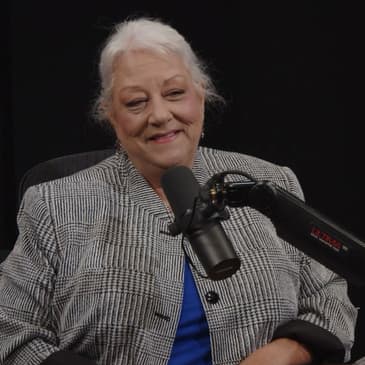
In this episode, Jenny Beth Martin sits down with Salleigh Grubbs, Chairman of the Cobb County GOP, to discuss recent election rule changes in Georgia aimed at ensuring election integrity. They dive into the new voter ID requirements for absentee ballot drop-offs, updated canvassing procedures, and how these measures enhance transparency and accountability in the voting process. Grubbs shares her firsthand experience with Georgia’s election board, offering insights into why these reforms are necessary and how they address concerns from both sides of the political spectrum. This episode highlights the importance of safeguarding every legal vote and restoring public trust in elections.
Twitter/X: @cobbgop @jennybethm
[00:00:00] [SPEAKER_01]: For as much as the left talks about voter suppression, they don't care.
[00:00:06] [SPEAKER_01]: I hate to tell America but they really don't care because if they cared they would want
[00:00:11] [SPEAKER_01]: to know that every vote counted, every legal vote counted and that's what we want.
[00:00:16] [SPEAKER_01]: We want only citizens voting and we want every vote to count.
[00:00:20] [SPEAKER_00]: Keeping our republic is on the line and it requires patriots with great passion, dedication
[00:00:25] [SPEAKER_00]: and eternal vigilance to preserve our freedoms.
[00:00:28] [SPEAKER_00]: Jenny Beth Martin is the co-founder of Tea Party Patriots.
[00:00:33] [SPEAKER_00]: She's an author, a filmmaker and one of time magazines most influential people in the world.
[00:00:38] [SPEAKER_00]: But the title she is most proud of is Ma, to her boy girl twins.
[00:00:43] [SPEAKER_00]: She has been at the forefront fighting to protect America's core principles for more than a decade.
[00:00:50] [SPEAKER_00]: Welcome to the Jenny Beth Show!
[00:00:52] [SPEAKER_02]: On this episode of The Jenny Beth Show, we're joined once again by Salleigh Grubbs.
[00:00:56] [SPEAKER_02]: The Tea Party Patriots action support team.
[00:01:00] [SPEAKER_02]: In addition to that hat she wears several other hats, including being the chairman of the
[00:01:05] [SPEAKER_02]: Cobb County Republican Party in the state of Georgia.
[00:01:09] [SPEAKER_02]: And recently she has in her own individual capacity as a citizen of Georgia,
[00:01:14] [SPEAKER_02]: gone before the state election board to offer rule changes which have actually been adopted
[00:01:19] [SPEAKER_02]: by the state election board in Georgia.
[00:01:21] [SPEAKER_02]: We're going to talk about some of those rules, rule changes, and how the left and
[00:01:26] [SPEAKER_02]: Democrats seem to be reacting to them.
[00:01:29] [SPEAKER_02]: And before we get into the details of that part of the conversation,
[00:01:33] [SPEAKER_02]: we're just going to go through as we begin this conversation with a few
[00:01:37] [SPEAKER_02]: explanations of some of the terms we'll be talking about.
[00:01:41] [SPEAKER_02]: And that's how we'll start off today.
[00:01:42] [SPEAKER_02]: Salleigh thanks for joining me.
[00:01:44] [SPEAKER_02]: Thanks for having me.
[00:01:45] [SPEAKER_02]: So let's start with a few very basic things.
[00:01:48] [SPEAKER_02]: In Georgia, there is the law and the way that the law is referred to often times
[00:01:56] [SPEAKER_02]: as OCDA in a series of numbers.
[00:02:00] [SPEAKER_02]: Correct. That's the official code of Georgia annotated.
[00:02:03] [SPEAKER_02]: And then what are the numbers that go with the election portion of it?
[00:02:08] [SPEAKER_02]: Do you know those?
[00:02:08] [SPEAKER_01]: So it's title 21.
[00:02:10] [SPEAKER_01]: So it's 21-2-4 for example, 493 or 522.
[00:02:16] [SPEAKER_02]: That allows for challenges to the law.
[00:02:18] [SPEAKER_01]: Yeah, 239 and 229 and 230.
[00:02:22] [SPEAKER_01]: So it's 21-229 and 21-230 for voter challenges to challenge an
[00:02:29] [SPEAKER_01]: electors' right to vote.
[00:02:33] [SPEAKER_02]: So that is the highest level.
[00:02:36] [SPEAKER_02]: And then we have a governor and a lieutenant governor and a attorney general.
[00:02:41] [SPEAKER_02]: Secretary of State, all of those are elected.
[00:02:45] [SPEAKER_02]: And then we have the state legislature, of course,
[00:02:48] [SPEAKER_02]: with a house in a Senate.
[00:02:49] [SPEAKER_02]: And we also have some boards in Georgia that take the law and then they
[00:02:54] [SPEAKER_02]: create rules so that you take what's written down and you figure out how
[00:02:58] [SPEAKER_02]: you're actually practically going to make that work.
[00:03:01] [SPEAKER_01]: Exactly. There's lots of boards in Georgia.
[00:03:03] [SPEAKER_01]: I mean, you have, for example, the labor board or behavioral health,
[00:03:08] [SPEAKER_01]: or all these administrative agencies that help effectuate the laws and make
[00:03:14] [SPEAKER_01]: policies, promulgate policies, and procedures on how those particular
[00:03:19] [SPEAKER_01]: boards should operate.
[00:03:22] [SPEAKER_01]: So there's something called the Administrative Procedures Act that's part of
[00:03:25] [SPEAKER_01]: our laws that outlines how these boards behave and how they adopt rules and
[00:03:32] [SPEAKER_01]: how they interact with the public.
[00:03:34] [SPEAKER_02]: And when it comes to elections, we have the Secretary of State,
[00:03:37] [SPEAKER_02]: but in we have local election boards at each county, and then we also
[00:03:41] [SPEAKER_02]: have a seat election board.
[00:03:44] [SPEAKER_01]: That's correct, Jenny Beth.
[00:03:45] [SPEAKER_01]: Each county has an election board that, and it depends on the
[00:03:51] [SPEAKER_01]: different makeup.
[00:03:53] [SPEAKER_01]: It's not absolutely uniform or there may be a probate judge.
[00:03:57] [SPEAKER_01]: Now that law has changed just recently.
[00:04:01] [SPEAKER_01]: So it will, you know, some of the more rural counties, they don't really have
[00:04:04] [SPEAKER_01]: enough voters to justify full board, but they've traditionally operated, for
[00:04:10] [SPEAKER_01]: example, with a probate judge.
[00:04:12] [SPEAKER_01]: But each county traditionally has made up its own mind, so to speak, through
[00:04:17] [SPEAKER_01]: legislation on how they would handle that.
[00:04:20] [SPEAKER_01]: And then there's the seat election board, correct?
[00:04:22] [SPEAKER_02]: And how is the seat election board comprised the members of it?
[00:04:26] [SPEAKER_02]: How many are there and how do they get on it?
[00:04:28] [SPEAKER_01]: So there's five members.
[00:04:30] [SPEAKER_01]: There's a chairman and the chairman.
[00:04:34] [SPEAKER_01]: It's that changed in SB 202 when that came into play a few years ago about how
[00:04:43] [SPEAKER_01]: that chairman is selected, and that person is to be nonpartisan.
[00:04:48] [SPEAKER_01]: And then each political party in Georgia, the Democrats, and the Republicans, each
[00:04:52] [SPEAKER_01]: have an appointee.
[00:04:53] [SPEAKER_01]: And then there's an appointee from the Senate or the lieutenant governor as they had
[00:04:58] [SPEAKER_01]: the Senate, and the Speaker of the House is head of the House of Representatives in Georgia.
[00:05:04] [SPEAKER_01]: So that makes up the five member board.
[00:05:06] [SPEAKER_02]: And the chairman, House of Chairman, selected, is that the governor or the governor's
[00:05:11] [SPEAKER_02]: appointment?
[00:05:15] [SPEAKER_02]: So, in for a while in Georgia there was no chairman.
[00:05:18] [SPEAKER_02]: There was a vacancy.
[00:05:20] [SPEAKER_02]: And then one member left recently resigned from the board, and that was the one that was
[00:05:26] [SPEAKER_02]: the president, and by the Speaker of the House or the lieutenant governor.
[00:05:30] [SPEAKER_01]: Well, the most recent one that left was the Speaker's appointment.
[00:05:33] [SPEAKER_01]: Okay.
[00:05:34] [SPEAKER_01]: Prior to that, the one that left who was the chairman was the governor's appointment.
[00:05:38] [SPEAKER_02]: And both of those have been refilled now.
[00:05:43] [SPEAKER_02]: So the makeup of the board because there was a missing position, and then someone
[00:05:47] [SPEAKER_02]: who resigned, it changed a little bit.
[00:05:50] [SPEAKER_02]: So the voting winds up being a little bit different now because there are new people voting.
[00:05:55] [SPEAKER_02]: So that just sort of outlines what the board does and how the members are appointed.
[00:06:01] [SPEAKER_02]: Then when it comes to the election process in Georgia, let's go from quickly through
[00:06:10] [SPEAKER_02]: it kind of from top to bottom.
[00:06:12] [SPEAKER_02]: You've got voter registration, and that's how people get on the voter roles.
[00:06:17] [SPEAKER_02]: And then when you go to vote, you show your voter ID and being a voter candidate.
[00:06:23] [SPEAKER_02]: You show where you live, and they'll look at and confirm that you are who you see.
[00:06:28] [SPEAKER_02]: You are and that you live, or you see you live, and then they give you a ballot.
[00:06:33] [SPEAKER_02]: And then if you request a ballot by mail or absentee ballot, you have to have a voter.
[00:06:39] [SPEAKER_02]: You have to tell the last four digits of your voter ID number or your Georgia driver's license number now.
[00:06:47] [SPEAKER_02]: Then if you're doing the voting in person, you get a card sort of like a credit card or a card
[00:06:53] [SPEAKER_02]: that you would get at a hotel. You put that card into a machine, that machine is called a ballot marking device.
[00:07:00] [SPEAKER_02]: You touch on there how you want to vote who you're voting for, then you print your ballot and you get a paper ballot.
[00:07:06] [SPEAKER_02]: Then you walk the ballot into be scanned in a scanner.
[00:07:10] [SPEAKER_02]: That's right.
[00:07:11] [SPEAKER_02]: And then the scanner counts the ballots, then all the ballots.
[00:07:15] [SPEAKER_02]: And then if you're voting by mail, the ballots go back to the county level.
[00:07:19] [SPEAKER_02]: And the county opens on the lips and on or around election day, they can start removed.
[00:07:27] [SPEAKER_02]: There's a privacy envelope so they take the private, they take the the the inner envelope that is a secretive one with a ballot out from who it says it is.
[00:07:38] [SPEAKER_02]: Then on or about election day, they can start separating those ballots from the secrecy envelope.
[00:07:43] [SPEAKER_02]: And then the count all those to they all get counted. And then from the precinct level, they take the paper ballots and the scan card and they take that back to the county.
[00:07:56] [SPEAKER_01]: And before before which they print the tabulator tape from the scanner.
[00:08:00] [SPEAKER_01]: Okay, so that there is a copy of the tabulator tabulator tape that is posted on the door. There's several copies that are made.
[00:08:07] [SPEAKER_01]: So that at the end of voting for that night when the poll closes, there is a recap of all the ballots cast in who they were cast for on the doors of the precinct.
[00:08:16] [SPEAKER_01]: And I can be a really long piece of paper.
[00:08:18] [SPEAKER_01]: That's why I don't like those those amendment questions on the ballot because it makes the tape so long.
[00:08:25] [SPEAKER_02]: So we have that in they've had to post those on the door for years and years in Georgia.
[00:08:31] [SPEAKER_02]: And then they take it to the county and the county does what with the ballots at that point.
[00:08:35] [SPEAKER_01]: So they take them to the tabulating center and they take the memory cards and the memory cards are uploaded into the EMS system.
[00:08:45] [SPEAKER_01]: And then the ballots by precinct should be accounted for.
[00:08:50] [SPEAKER_01]: And there should be a reconciliation process to say, you know, they said they sent this total number of ballots.
[00:08:57] [SPEAKER_01]: This is how many receive, you know, someone and so forth. So that goes into the reconciliation process.
[00:09:02] [SPEAKER_02]: And they make sure that what the precinct says that the county is getting is what the county actually got.
[00:09:08] [SPEAKER_02]: Correct. And then from there does it go to the state again, or is it transmitted electronically?
[00:09:14] [SPEAKER_01]: Transmit it electronically to the state's main server. Okay.
[00:09:18] [SPEAKER_02]: And in Georgia by law, any processing of ballots is open to the public. You don't have to be a poll watcher or anything.
[00:09:27] [SPEAKER_02]: You can watch and observe the processing of ballots. It does not mean casting your vote and voting that that is reserved to poll watchers or poll workers.
[00:09:38] [SPEAKER_02]: But the processing of ballots at the county level, or opening the precinct before voting begins or closing the precinct after voting ends is open to the public.
[00:09:48] [SPEAKER_01]: You can have public observers and most all the processes. There is one period of time where you have to be sequestered, where you can't have a phone. You can't talk to other people.
[00:09:59] [SPEAKER_01]: That's those absentee ballots when they're counting the absentee ballot processing.
[00:10:03] [SPEAKER_02]: Because you begin scanning those before the polls close.
[00:10:07] [SPEAKER_02]: Right. Okay. So that kind of gives you an overview of how the elections happen in Georgia. Now let's talk about a couple of specific terms on what?
[00:10:19] [SPEAKER_02]: Certification is a process that is required and it's kind of a buzz word these days that the left and the right are talking about in their lawsuits about it and all sorts of things. What is certification exactly?
[00:10:30] [SPEAKER_01]: So certification is when your local board of election actually reviews or does a canvas to say this is, because remember that one of the important points is that and people tend to forget this is that your board of election members
[00:10:48] [SPEAKER_01]: have to raise their right hand and swear to uphold the Constitution of the United States and the Constitution of Georgia.
[00:10:55] [SPEAKER_01]: And there is an oath that they take when it comes to certification of an election that says that they agree to provide a true and accurate accounting of the votes.
[00:11:07] [SPEAKER_01]: So they are swearing now this is where you get into other terms that we probably weren't going to get into, but whether that's just a ministerial act
[00:11:16] [SPEAKER_01]: or if it actually means something. So on the left they say it's just a ministerial duty, they're just there to basically sign off on it doesn't matter whether it's correct or not.
[00:11:27] [SPEAKER_01]: But just matter what, rubber stamp it no matter what the issue is.
[00:11:31] [SPEAKER_01]: If I was on a board of elections and my book because I get an appointee to our local board of elections as the Republican Party chairwoman, I've appointed someone who is the loan member of the Cobc County Board of Elections.
[00:11:46] [SPEAKER_01]: But I know that oath means something to her. So when she raises her right hand and she signs an oath to that effect and she is also said that she will uphold the Constitution,
[00:11:58] [SPEAKER_01]: she wants to be sure that if she certifying an election that she's doing that with full knowledge that yes the votes or what are what they are.
[00:12:07] [SPEAKER_02]: Right, okay. So certification and if it were just ministerial with all the computer systems involved the computer could just print out a report and that would be it.
[00:12:19] [SPEAKER_02]: Why would we need a person at all? And why do they need to swear on oath?
[00:12:22] [SPEAKER_02]: It doesn't that I think that when you just think of that I'm not sure why the reason they're there is to be a check in balance.
[00:12:31] [SPEAKER_02]: That's right. There are check in balance just like we have throughout the entire Constitution among the three branches of government between the states and the federal,
[00:12:40] [SPEAKER_02]: there are checks and balances along the way. And it's accountability and accountability, you're right.
[00:12:45] [SPEAKER_02]: And this is just another place to make sure that you've got another set of eyes and that you're checking that everything really is what the report says it is.
[00:12:55] [SPEAKER_01]: That's right. Okay. What is can this thing of votes?
[00:13:01] [SPEAKER_01]: So a canvas is basically what we're talking about with reconciliation.
[00:13:07] [SPEAKER_01]: Doing a canvas is to say, you know, this many people checked in at the poll pad or the poll book and also a distinction of difference is a voter registration list is not the same thing as a certified voters list or a certified electors list.
[00:13:25] [SPEAKER_01]: They are two different things. So for anyone who's watching that's involved in elections, just prior to the election in Georgia, they have if you're a political party, you have the right to request a certified list of electors prior to the election because you want to be sure that on that list of electors,
[00:13:46] [SPEAKER_01]: those are people who are duly qualified to vote in the election. Now, the reason that there's a difference is that you have the voter registration list,
[00:13:56] [SPEAKER_01]: people like if you're 17 and a half before an election, but you'll be 18 by the time of the election, then you can go ahead and register to vote.
[00:14:04] [SPEAKER_01]: But that has to have happened to, you have to have turned 18 to be a certified elector. So you want to have that certified list of electors so that you can see that the people who actually cast a ballot,
[00:14:15] [SPEAKER_01]: now we're not looking to see, you know, how people voted or anything like that because the bet we have to have absolute ballot secrecy.
[00:14:24] [SPEAKER_01]: But you want to have that certified list to know that the people who actually show up with their ID who actually get a ballot marking device card to vote that those people are qualified electors.
[00:14:39] [SPEAKER_01]: So that's kind of the initial process of being sure that you have that information, so you can then take that information and reconcile it against the total number of cards cast.
[00:14:52] [SPEAKER_01]: It's called a cast vote record and that that reconcils against the number of ballots printed and then because there's counters on the printers and then reconcile that to the number of ballots that are put into a scanner and scanned.
[00:15:05] [SPEAKER_02]: And it's just an accounting process. How many are scanned and how many are actually there in the end as well, like the paper versus the skin, the number of the scanner says.
[00:15:17] [SPEAKER_02]: So they're about four or five steps along the way and a precinct where you just want to make sure the numbers match and they should match. They should match. There should be no reason now.
[00:15:26] [SPEAKER_01]: And it helps find errors. Let's say for example, we went through logic and accuracy testing. That's where they test all the equipment, how all of the data is loaded for an election.
[00:15:40] [SPEAKER_01]: And you have to account for every little thing in election.
[00:15:43] [SPEAKER_01]: And in this particular situation, the ballots were a little bit longer than the trays underneath the scanners when you when you scan the ballot and it was captured.
[00:15:56] [SPEAKER_01]: There were scanned ballots that were getting trapped because the, you know, just like with any printer, the tray was set a little bit too short and it started causing a log jam in there.
[00:16:05] [SPEAKER_01]: And somewhere stuck under the tray, it was kind of a mess. Well, you know, opening that that machine and there's a whole process to that and having those, you know, the doors tagged and keeping an accounting of the numbers on the tag securing the security tags.
[00:16:22] [SPEAKER_01]: So you just want to be sure, okay, if there's a jam and somebody's cleaning out the ballots to be sure when didn't fall under the scanner or when didn't, you know, slide away.
[00:16:33] [SPEAKER_01]: So that's why because human error happens and just things happen.
[00:16:39] [SPEAKER_01]: Mechanical error exactly, you just want to be sure that you have a proper accounting.
[00:16:43] [SPEAKER_02]: So the canvassing is the accounting or it's just looking at all of the votes or a cast and right, the accounting process to be sure that you have everything you think you have.
[00:16:55] [SPEAKER_02]: And it is not door to door canvassing where you're going out to get, it's a completely different kind of canvassing and it's not a oil painting canvassing there. So we're not painting pictures of ballots either.
[00:17:07] [SPEAKER_02]: Okay, so those are the basic, the basic things in the background definitions and the way things work in Georgia.
[00:17:14] [SPEAKER_02]: Now, recently the state election board passed some new rule changes, including one that you were very involved in and I think another one that you helped out a little bit on.
[00:17:25] [SPEAKER_02]: Let's talk about what were those rule, rule changes.
[00:17:28] [SPEAKER_01]: So the first one that kind of we say broke the log jam that was passed was actually providing ID for someone who goes to like if you're my friend and you're second in the hospital.
[00:17:41] [SPEAKER_01]: And I take your absentee ballot and I go turn it in.
[00:17:45] [SPEAKER_01]: I now have to show my identification and my relationship to you and why I'm dropping off your ballot so that we hopefully avoid the historic, you know, ballot stuffing and drop box stuffing that that happened so much in Georgia.
[00:18:00] [SPEAKER_01]: Also that there's surveillance on drop boxes drop boxes have been limited now, which is good.
[00:18:07] [SPEAKER_01]: But where there's a will there's a way and in Cobb County in 2022 they decided to start opening libraries and government offices to deputize people to accept absentee ballots.
[00:18:23] [SPEAKER_01]: And so well there's got to be an accounting for that. You can't just you know have someone on a street corner collecting ballots.
[00:18:31] [SPEAKER_01]: There has to be a process for that. So this helps in that process to show identification that people and I saw this in play.
[00:18:40] [SPEAKER_01]: In 22 I did stop by an area of the library and they were accepting absentee ballots and a lady came in and she had a handful of ballots in her hand.
[00:18:52] [SPEAKER_01]: And I was just sitting there watching and the woman looked around and when she you know, the worker had her hand out to accept them.
[00:19:01] [SPEAKER_01]: And she said are these, you know, it was this ballot yours and she I couldn't believe I saw this. She actually looked around and put them back in her purse and left.
[00:19:12] [SPEAKER_01]: So I have no doubt that those were not legal ballots and she realized she was about to be caught and so she left.
[00:19:19] [SPEAKER_01]: So that's why this rule that the first rule that that I did was passed is when you have accountability, you have way more transparency.
[00:19:29] [SPEAKER_01]: So that was the first one. The second one I did not write but I did present it before the state election board.
[00:19:35] [SPEAKER_01]: It was a collaborative effort.
[00:19:37] [SPEAKER_01]: Bridget Thorne was the one who put that together and that provides for proper canvassing procedures to go along with what is already provided in the official case.
[00:19:49] [SPEAKER_01]: And I think that's a great idea of Georgia annotated. It's already in state law.
[00:19:52] [SPEAKER_01]: It's just one of those administrative things that needed to be done to give a policy and procedure for the counties to do.
[00:20:01] [SPEAKER_02]: And that's the one that requires a poll workers to reconcile the the poll book with the number of votes cast and then with the number of ballots.
[00:20:11] [SPEAKER_02]: Okay, and it seems like that's something that would have been happening anyway.
[00:20:16] [SPEAKER_02]: But this is just to ensure that it actually is happening.
[00:20:20] [SPEAKER_01]: And it also the last paragraph for people who might not read to the end of the story.
[00:20:26] [SPEAKER_01]: It does provide that certification must still happen by 5 p.m. on the Monday following the election.
[00:20:34] [SPEAKER_01]: There's a lot of disinformation that's been put out there as we were talking about earlier with Rachel Madal who seemed almost completely epic like the other day about the roles that
[00:20:47] [SPEAKER_01]: somehow and I don't know how they make this jump that this is all too delay and avoid certification.
[00:20:54] [SPEAKER_01]: Nothing could be further from the truth. We're still operating within the law.
[00:20:58] [SPEAKER_01]: We want certification to happen as well because to be quite honest, I hope we win the election.
[00:21:04] [SPEAKER_01]: In a sentence we do, I want to certify the election as soon as possible.
[00:21:08] [SPEAKER_01]: But I want to know that everything is properly accounted for.
[00:21:12] [SPEAKER_02]: Okay, that seems like a simple common sense rule. It makes sense and then there's another rule that I believe someone else presented that allows the board of elections to review information before the certification deadline.
[00:21:29] [SPEAKER_02]: Is that a different rule?
[00:21:31] [SPEAKER_01]: Well, so where is it part of the same rule?
[00:21:33] [SPEAKER_01]: Okay, so that's why you were mentioning the deadline. Correct.
[00:21:38] [SPEAKER_01]: Okay, and also one of the things is that there's another type of ballot that we haven't talked about and that's called the Yucapa ballots.
[00:21:47] [SPEAKER_01]: And those are our overseas ballots for military and for people living abroad.
[00:21:52] [SPEAKER_01]: And so in the rule, it talks about meeting at three o'clock on the Friday before the Monday when you have to certify.
[00:22:03] [SPEAKER_01]: And that's just to kind of give an overview of the certification and canvas process, really the canvas process.
[00:22:12] [SPEAKER_01]: So that if there are any issues that come up, the person with the board of elections can look at that ahead of time and get that cleared up over the weekend before certification on Monday.
[00:22:22] [SPEAKER_01]: So to give a window into, okay, are the numbers adding up if there's something wrong? Is there something missing?
[00:22:29] [SPEAKER_01]: And being able to rectify that ahead of time.
[00:22:33] [SPEAKER_02]: Okay, I mean it seems pretty simple and if it doesn't get rectified then do they not certify or what happens still?
[00:22:39] [SPEAKER_01]: And they just they report the numbers and they certify.
[00:22:43] [SPEAKER_01]: Again, going to the ministerial act.
[00:22:47] [SPEAKER_01]: It is giving that board of election member the opportunity to say, you know what we looked high and low there's four ballots missing.
[00:22:57] [SPEAKER_01]: So here's the numbers.
[00:23:00] [SPEAKER_01]: They and would they tell that there were four ballots missing?
[00:23:03] [SPEAKER_01]: Correct.
[00:23:04] [SPEAKER_01]: It's just saying where, you know, what happened? What's the accounting?
[00:23:09] [SPEAKER_02]: And it's not saying they can't, you're not saying don't certify. They still have to certify.
[00:23:14] [SPEAKER_01]: Right. They still have to certify in accordance with the law.
[00:23:18] [SPEAKER_01]: Everything is in accordance with the law and it's just they would they would be able to know with reasonable certainty that the numbers they're reporting are a true and accurate reporting.
[00:23:29] [SPEAKER_02]: And and the state law says to the state law Trump's whatever the allegations are that are floating around about these rules.
[00:23:37] [SPEAKER_02]: Okay. Now, the left is going crazy. You just mentioned Rachel Madhouse. She wrote an op-ed about it.
[00:23:43] [SPEAKER_02]: She had a show about it. She said on her show she doesn't normally write op-eds but Georgia is such a problem. She's got an intervene.
[00:23:50] [SPEAKER_02]: When the left had in 22 and they said that there was going to be a problem.
[00:23:57] [SPEAKER_02]: And voters would be suppressed. We had even more voters vote than before. So it the their accusations oftentimes just don't add up.
[00:24:09] [SPEAKER_02]: But there's a lawsuit going on now as well against the state election board over these rules. What's going on with all of this?
[00:24:18] [SPEAKER_01]: You know, for as much as the left talks about voter suppression they don't care.
[00:24:24] [SPEAKER_01]: I hate to tell a, hate to tell America but they really don't care because if they cared they would want to know that every vote counted, every legal vote counted.
[00:24:34] [SPEAKER_01]: And that's what we want. We want only citizens voting and we want every vote to count.
[00:24:38] [SPEAKER_01]: We're the one saying, hey, we need to put these safeguards in place to be sure that these votes are properly accounted for.
[00:24:46] [SPEAKER_01]: They're coming at it from the the other side of the fence and you know you have to really wonder when people are like, no, you don't need more information.
[00:24:53] [SPEAKER_01]: Don't look here. No, you don't need to reconcile these no chance currency.
[00:24:57] [SPEAKER_01]: No chance currency. That's right. Very, very opaque. No transparency whatsoever. So when you see someone doing that, you have to go, hey, wait a minute. Why don't they want that?
[00:25:06] [SPEAKER_01]: They don't want us looking. They don't want us to peek behind the veil and see what's really going on.
[00:25:13] [SPEAKER_01]: And it was, you know, Rachel Madel did a very big disservice to the people who follow her because what she's saying is absolutely untrue.
[00:25:25] [SPEAKER_01]: It has nothing to do with delaying certification. It's saying give us the tools that we need to be able to raise our right hand,
[00:25:33] [SPEAKER_01]: swear in a, in accordance with the Constitution and say, here's the numbers. You know what they are what they are.
[00:25:40] [SPEAKER_01]: But one of the problems that gave rise to this is we had board of election members who requested certain information.
[00:25:47] [SPEAKER_01]: For example, please let me have a list of the certified electors.
[00:25:53] [SPEAKER_01]: And when they were denied, it's like, well, why wouldn't you want to provide that? I mean, you have to have that to conduct the election.
[00:26:00] [SPEAKER_01]: And another thing is, and this was very key in the election board meeting, the one democratic member of the election board wanted to do a list and limit like the
[00:26:12] [SPEAKER_01]: Lannie ate what we would be entitled to see as an election board member.
[00:26:16] [SPEAKER_01]: And come up with a list of acceptable documents for election board members to see.
[00:26:22] [SPEAKER_02]: But Georgia has an open records rule. So pretty much all of it is public, public record and anyone can look at it through the open records.
[00:26:31] [SPEAKER_01]: Jane, Jane, Joe, can go down. And that's how we knew.
[00:26:35] [SPEAKER_01]: And this is not about the 2020 election, but I'm just going to give you an example.
[00:26:40] [SPEAKER_01]: But way of example in the 2020 election, besides missing ballots in Fulton County, there were missing tabulator types all over the state.
[00:26:49] [SPEAKER_01]: And particularly bad in Cobb County. So for people that wanted to go back and see for themselves, you know, well,
[00:26:56] [SPEAKER_01]: where the ballots there was the count really there when they did open records request.
[00:27:02] [SPEAKER_01]: I don't know, there was 20 or 30 tabulator types that were just completely missing.
[00:27:06] [SPEAKER_01]: And those are the chips of the end of the night that they have to post should have been posted for years.
[00:27:10] [SPEAKER_01]: That's correct.
[00:27:12] [SPEAKER_01]: And so when this particular, it was Sarah Gazal, the board member who wanted to limit what could be discovered,
[00:27:21] [SPEAKER_01]: it's like when you have things that are a public record and now a public official who serves on the state election board,
[00:27:27] [SPEAKER_01]: doesn't want you to have access to that.
[00:27:31] [SPEAKER_01]: That's who Rachel Madel should be worried about. She shouldn't be worried about us, right?
[00:27:36] [SPEAKER_02]: And it doesn't even make sense. Like limiting that in light of the open records rules in Georgia, pretty much if,
[00:27:45] [SPEAKER_02]: if an employee sends an email that email is public record.
[00:27:48] [SPEAKER_02]: That's right. It might be difficult to get it and they may try to charge you or try to do all sorts of other things,
[00:27:54] [SPEAKER_02]: but it's public record. It is. And there's some good board of election or board election supervisors who will just,
[00:28:03] [SPEAKER_02]: oh, I sent this here. Let me just print it out for you. So you don't even have to OR at let me just give it to you.
[00:28:08] [SPEAKER_02]: And then others who, whether they are in a state election board or a school board or whatever,
[00:28:13] [SPEAKER_02]: they just throw up roadblock after roadblock, but it's still. It's just there.
[00:28:19] [SPEAKER_02]: And the state Supreme Court even said that it sends to contractors now. That's right.
[00:28:24] [SPEAKER_02]: Recently in Georgia. So that's just a crazy obstacle that she tried to put in there.
[00:28:31] [SPEAKER_01]: It is a crazy obstacle and thankful that we have the members of the board that we do because they caught onto that right away.
[00:28:38] [SPEAKER_01]: And you know, the sunshine walls are very important.
[00:28:44] [SPEAKER_01]: And the Democrats say that that's very, very important to have transparency and all that kind of stuff.
[00:28:50] [SPEAKER_01]: So when you see them flip the script now and they're saying what they're saying it's kind of like,
[00:28:55] [SPEAKER_01]: okay we're saying let's be transparent. Let's show the, show your work.
[00:29:00] [SPEAKER_01]: It's like in school, you know, you have an algebra problem and you come up with an answer.
[00:29:04] [SPEAKER_01]: Well, show me how you got there. Do the accounting. Let's just prove your work and they don't want to prove their work.
[00:29:15] [SPEAKER_02]: And in Georgia, you should both sides of the aisle really should want this.
[00:29:20] [SPEAKER_02]: We saw in 2022 in a primary election with a Democrat running for office into Cap County,
[00:29:27] [SPEAKER_02]: Georgia, which is a very Democrat county that this lady went to vote and she saw that in the
[00:29:34] [SPEAKER_02]: results, she got no votes and she voted for herself. And she saw no votes for her, her, in her own precinct.
[00:29:42] [SPEAKER_02]: And it raised concerns and they wound up doing a hand count with it. This is a Democrat primary.
[00:29:48] [SPEAKER_02]: Our organization helped with that hand count.
[00:29:51] [SPEAKER_02]: And in the end, she was a top vote getter went to a runoff and is now the county commissioner in the cab county Georgia.
[00:29:58] [SPEAKER_02]: It affects both parties like making sure that these things match up.
[00:30:02] [SPEAKER_02]: And it may not, you may not like it as much for the general election, but you better believe you're going to have to care about it if it is a contentious primary and you're in the primary
[00:30:11] [SPEAKER_01]: Determin's who runs your government. That's exactly right.
[00:30:14] [SPEAKER_01]: And it is a nonpartisan issue.
[00:30:17] [SPEAKER_01]: And I encourage people to read the rules for themselves. They're posted on the Secretary of State's website.
[00:30:22] [SPEAKER_01]: And they'll see it does provide for the FAVC on the Monday following certification.
[00:30:28] [SPEAKER_01]: Everything that I'm conveying and everything you're saying is quite verifiable on the Secretary of State's website.
[00:30:35] [SPEAKER_01]: And people should remember that the State election board is its own entity, but it's having to operate under the Secretary of State's information, but it's all right there.
[00:30:47] [SPEAKER_01]: And another exciting bit of news which we haven't even discussed today is that the a couple of members of the State election board have now taken the steps to get a Twitter account.
[00:30:56] [SPEAKER_01]: And an Instagram account. Oh, very good. And a Facebook account so that they can be putting this information out to the public.
[00:31:04] [SPEAKER_01]: Previously there was kind of a cloud of secrecy because the Secretary of State was the chairman before SB 202.
[00:31:13] [SPEAKER_01]: That all has now changed and so more open government, more transparency, shining more sunlight on the process is what's good for Georgians.
[00:31:24] [SPEAKER_02]: And Sally, in 2022, wasn't there in your own county a Democrat who went up not being on the ballot?
[00:31:31] [SPEAKER_01]: And it was a similar situation of what you're describing into cab.
[00:31:35] [SPEAKER_01]: And that's why I say it's not partisan, Jennifer.
[00:31:37] [SPEAKER_01]: Is that I made phone calls concerning the fact that this guy in his own house district, he was running for legislative seat and his own house district.
[00:31:47] [SPEAKER_01]: And he was left off the ballot. He went to vote for himself and his name was not on the ballot.
[00:31:52] [SPEAKER_01]: I would have been really upset if I'd been hit.
[00:31:54] [SPEAKER_01]: You spent a lot of money to rent for office and then your name's not even on the ballot when you go to vote.
[00:31:59] [SPEAKER_01]: So I got the phone call about it. And someone said, well that's a Democrat that you don't need to worry about that.
[00:32:06] [SPEAKER_01]: But if it can happen to a Democrat, it can happen to a Republican.
[00:32:10] [SPEAKER_01]: And I'm all about the transparency and making sure elections are correct.
[00:32:14] [SPEAKER_02]: I don't care which side it's on. And that's just being intellectually honest.
[00:32:19] [SPEAKER_02]: And we have to be, especially when it comes to this because I want people no matter who wins,
[00:32:25] [SPEAKER_02]: to have faith in the outcome of our elections.
[00:32:27] [SPEAKER_02]: I care about who wins very much.
[00:32:30] [SPEAKER_02]: But even before I care about who wins, if we don't have faith in the outcome,
[00:32:35] [SPEAKER_02]: I don't know what that means for American the long term.
[00:32:38] [SPEAKER_02]: I know that it is very, very bad.
[00:32:40] [SPEAKER_02]: And we have to get back to a point where we cannot faith in the outcome.
[00:32:45] [SPEAKER_01]: Well, and the trust is a big deal. If we don't, if we don't do this now,
[00:32:51] [SPEAKER_01]: and if we don't work together in a bipartisan way across the aisle,
[00:32:55] [SPEAKER_01]: we become Cuba. We become what's happened in Venezuela and other countries
[00:33:00] [SPEAKER_01]: where the citizens have no trust in government.
[00:33:05] [SPEAKER_01]: And it was very interesting. The other day I was listening to a podcast.
[00:33:11] [SPEAKER_01]: And one of the Democrats was making fun of someone because they were like,
[00:33:16] [SPEAKER_01]: They think their rights come from God.
[00:33:17] [SPEAKER_01]: Can you believe that? I mean, their rights come from Congress.
[00:33:21] [SPEAKER_01]: And I was like, we need to return to civics because these are the things that matter
[00:33:28] [SPEAKER_01]: in America. Having an accurate election, regardless how it shakes out,
[00:33:33] [SPEAKER_01]: is what we have to have. Like you said, we might not like how it turns out,
[00:33:37] [SPEAKER_01]: but we have to have the faith in the elections and it's going to take American citizens
[00:33:41] [SPEAKER_01]: getting involved to do that.
[00:33:44] [SPEAKER_02]: And you've done that. So thank you very much for being involved.
[00:33:48] [SPEAKER_02]: And if people want more information, they can find the rules of the Secretary of State's website.
[00:33:53] [SPEAKER_02]: We'll do our best to link those in the description of this podcast.
[00:33:57] [SPEAKER_02]: And then are you on social media for people to follow you?
[00:34:02] [SPEAKER_01]: I am on Twitter at Georgia over 80K chairwoman.
[00:34:08] [SPEAKER_01]: Our county website is cobjo.org.
[00:34:12] [SPEAKER_02]: Okay, well thank you very much.
[00:34:14] [SPEAKER_02]: And we may be back if there are any more rules changes talking to you again.
[00:34:18] [SPEAKER_02]: Thanks so much, Sally. Thank you.
[00:34:20] [SPEAKER_00]: The Jenny Beth Show is hosted by Jenny Beth Burton,
[00:34:24] [SPEAKER_00]: produced by Kevin Munihang, and directed by Luke Livingston.
[00:34:29] [SPEAKER_00]: The Jenny Beth Show is a production of Tea Party Patriots Action.
[00:34:34] [SPEAKER_00]: For more information visit TeaPartyPatriots.org.
[00:34:40] [SPEAKER_02]: If you liked this episode, let me know by hitting the like button or leaving a comment
[00:34:44] [SPEAKER_02]: or a five star review. And if you want to be the first to know every time we drop a new episode,
[00:34:50] [SPEAKER_02]: be sure to subscribe and turn on notifications for whichever platform you're listening on.
[00:34:55] [SPEAKER_02]: If you do these simple things, it will help the podcast grow and I'd really appreciate it.
[00:35:00] [SPEAKER_02]: Thank you so much.