
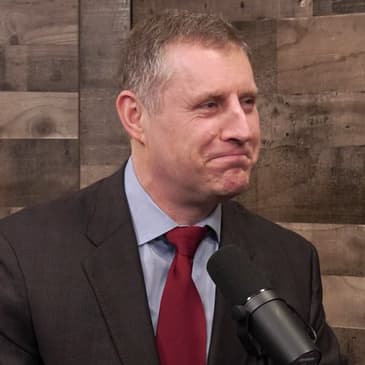
Jenny Beth sits down with former White House and Department of Justice Attorney Ken Klukowski to discuss some of the bogus lawsuits that have been brought against former President Donald Trump.
[00:00:00] You got a bunch of creative lawyers and activists on the left who says, Hey, you know what?
[00:00:06] I don't care how popular Donald Trump is.
[00:00:08] I think people shouldn't even be able to vote for him.
[00:00:11] I bet there's something we can find in the constitutional where we can get judges
[00:00:16] to say no, you know, average Joe or average Jane American.
[00:00:22] You don't even get to vote for this guy.
[00:00:25] Keeping our Republic is on the line and it requires patriots with great passion
[00:00:30] dedication and eternal vigilance to preserve our freedoms.
[00:00:34] Jenny Beth Martin is the co-founder of Tea Party Patriots.
[00:00:37] She is an author, a filmmaker and one of Time magazine's most influential people in the world.
[00:00:43] But the title she is most proud of is mom to her boy girl twins.
[00:00:48] She has been at the forefront fighting to protect America's core principles for more than a decade.
[00:00:54] Welcome to the Jenny Beth Show.
[00:00:56] Ken Kukowski is an attorney who served in the Trump White House and a senior counsel
[00:01:01] in the Civil Division of the Department of Justice.
[00:01:04] Prior to his service in government, he served as a senior fellow at the American Constitutional
[00:01:09] Rights Union and a senior counsel at First Liberty Institute.
[00:01:14] Ken is an expert in constitutional law, election law and federal courts.
[00:01:18] In this episode, Ken joins me to talk about some of the lawfare we are seeing play out against President Trump.
[00:01:26] Ken Kukowski, thank you so much for being with me today.
[00:01:29] You are an attorney.
[00:01:31] You work for the Department of Justice. Is that correct?
[00:01:33] That's right. I was in the White House in OMB and then at the Department of Justice.
[00:01:39] Recently, you helped defend President Trump's ability to be on the ballot in Colorado, correct?
[00:01:47] Absolutely.
[00:01:48] How did you do that and tell me a little bit about that case?
[00:01:51] Sure, absolutely.
[00:01:52] Well, it's for lawyers, everyone takes 14th Amendment in law school.
[00:01:57] No one ever gets anything on section three of the 14th Amendment.
[00:02:02] It's kind of way off the beaten path.
[00:02:05] It's an esoteric provision in the Constitution.
[00:02:08] And all of a sudden, we use a phrase made famous by Justice, the late Justice Antony and Scalia
[00:02:14] and others that now shows up in Supreme Court decisions, that Congress does not hide elephants in mouse holes.
[00:02:22] And usually you do that when you're talking about the scope of federal power.
[00:02:27] But that principle holds true here.
[00:02:29] We are a constitutional democratic republic.
[00:02:32] And what that means is that in our form of government, the default is that ordinary
[00:02:38] citizens get to decide what goes on in this country through their vote.
[00:02:43] Now it's a republic. It's not a democracy.
[00:02:46] They don't vote on every bill and issue directly, but they do vote for who are
[00:02:50] the decision makers going to be.
[00:02:52] And we're giving them certain powers for a certain length of time.
[00:02:56] And then we get to judge whether they're doing a good job and then we can reelect them
[00:03:01] or whether they've fallen short, in which case we can replace them.
[00:03:04] Now, so in that at the federal level, you have three branches of government.
[00:03:08] You have Congress, you have the presidency.
[00:03:10] Those are democratically elected.
[00:03:12] Then you have this third branch, the judiciary.
[00:03:15] They're unelected. They're life tenured.
[00:03:18] They're politically unaccountable.
[00:03:19] And that's the way the Constitution sets it up.
[00:03:22] But because of that, in our democratic, republican form of government under our
[00:03:28] Constitution, the Constitution assigns a narrow role to these unelected,
[00:03:34] unaccountable people.
[00:03:35] And so you got a bunch of creative lawyers and activists on the left who
[00:03:40] says, hey, you know what?
[00:03:42] I don't care how popular Donald Trump is.
[00:03:45] I think people shouldn't even be able to vote for him.
[00:03:48] I bet there's something we can find in the Constitutional where we can get judges to say,
[00:03:54] no, you know, average Joe or average Jane American, you don't even get to vote for this guy.
[00:04:00] As opposed to facing off on the playing field in a campaign to say,
[00:04:06] okay, you have two candidates or more.
[00:04:08] You know, if you don't like someone, vote for the other guy.
[00:04:11] Instead of giving the ordinary American citizen that choice, they're saying,
[00:04:16] we don't care if you want to vote for him.
[00:04:18] You're not allowed to.
[00:04:19] And so they came up with this big, elaborate, you know, idea.
[00:04:24] They found a sympathetic county judge in Colorado who says, hey, I think that sounds great.
[00:04:29] Then they go to the Colorado Supreme Court, seven justices, all of them Democrats,
[00:04:33] all of them appointed by a Democrat governor, four to three, even three
[00:04:38] Democrat-appointed justices on the Colorado court.
[00:04:42] We're like, oh my goodness, what have you done?
[00:04:44] You know?
[00:04:45] So it goes up to the US Supreme Court.
[00:04:48] Depending on how thin you slice the baloney, there's about eight issues in the case.
[00:04:53] President Trump only needs to win on one to get it reversed, you know?
[00:04:58] Even so, the left, they're like, oh, this is going to be unanimous, you know,
[00:05:02] kicking Trump off the ballot kind of a thing.
[00:05:04] And I'm like, I agree it's going to be unanimous, but not the way you think
[00:05:07] it's going to be unanimous.
[00:05:09] And sure enough, all nine justices found one or more flaws,
[00:05:15] constitutional flaws with what the lower court did in terms of in this case,
[00:05:20] latching on to a point that we had mentioned that we had explored in our brief.
[00:05:25] I was honored to represent former US Attorneys General Ed Meese,
[00:05:31] Michael Mukasey, even Bill Barr with a couple of constitutional scholars.
[00:05:36] And then also our friends at Citizens United, Dave Bossie, you know,
[00:05:39] great organization, great patriots.
[00:05:42] And so we represent them.
[00:05:43] And one of the points that we expand upon that were also brought up by
[00:05:47] President Trump's lawyers is that section three of the 14th Amendment
[00:05:51] is not what's called self-executing, meaning it doesn't do anything directly.
[00:05:56] It rather empowers Congress to set up a whole system by law, you know?
[00:06:02] What kind of allegation do you need to make?
[00:06:04] What kind of rules of evidence would you have?
[00:06:07] Who's the decision maker to decide if someone is engaged in insurrection or
[00:06:11] rebellion, you know?
[00:06:13] Are they presumed innocent?
[00:06:14] Do they get to confront witnesses against them?
[00:06:17] Do they get to introduce evidence on their own?
[00:06:19] So all of these due process issues, none of which Congress did
[00:06:25] in terms of a statute that's currently on the books except for one thing.
[00:06:28] And the left never wants to talk about this.
[00:06:30] First, Congress did make a broad statute right after the states
[00:06:36] ratified the 14th Amendment.
[00:06:37] It's called the Enforcement Act of 1870.
[00:06:40] It set up a system of writs of quo warranto that could be used to
[00:06:43] disqualify people from public office.
[00:06:46] They did that because the Chief Justice of the United States,
[00:06:49] Sammon Chase, said in an 1869 case called Griffin's case,
[00:06:53] right after the 14th Amendment was ratified, he said, look,
[00:06:56] this isn't self-executing.
[00:06:58] Congress would have to pass a law on this.
[00:07:00] So the next year, 1870, Congress did pass a law.
[00:07:04] And that law was used a number of times.
[00:07:06] Now parts of that law were later repealed.
[00:07:09] Then it was repealed in 1894.
[00:07:12] Then another part repealed in 1909.
[00:07:14] Then the remainder was repealed in 1948 except for
[00:07:18] one provision that was re-codified in what is currently 18 USC section 2383,
[00:07:24] which is the federal crime of guess what, insurrection.
[00:07:29] And if you are convicted under that,
[00:07:31] the statute flat out says you're disqualified from public office.
[00:07:35] So there was a law on the books.
[00:07:38] President Trump has never been convicted under that law.
[00:07:41] He's never even been charged under that law.
[00:07:44] He's never been indicted under that law.
[00:07:48] And so instead, just because talking heads on camera
[00:07:53] choose to use a particular politically charged word,
[00:07:56] that's not a substitute for a criminal conviction or
[00:08:00] especially even being charged with something.
[00:08:03] So with all of that we were just unpacking all of that for
[00:08:06] the Supreme Court and again nine to zero.
[00:08:09] So for anyone on the left who wants to scream bloody murder, yeah,
[00:08:12] those left wing activists like Sonia Sotomayor or
[00:08:15] Justice Jackson appointed by President Biden.
[00:08:18] It's like when you lose nine to zero at the Supreme Court,
[00:08:22] it means you're wrong.
[00:08:23] That's correct.
[00:08:24] You're really wrong.
[00:08:25] There's no debate.
[00:08:26] So dead wrong, right?
[00:08:28] Exactly.
[00:08:28] And that's what was going on in the case Trump v Anderson
[00:08:32] where the Supreme Court got us back on a constitutional footing.
[00:08:36] And thankfully they did.
[00:08:39] Trump's involved in quite a few other cases unfortunately.
[00:08:43] Well, the fraud case in New York,
[00:08:46] the amount of money that they said he had to pay was unreal.
[00:08:51] And in claiming he committed fraud, I personally don't think he did commit fraud.
[00:08:59] So what's going on with that case?
[00:09:02] Great question.
[00:09:03] First of all, that fraud statute has never been applied in this context
[00:09:08] whatsoever.
[00:09:09] It's like if it comes to going after Donald Trump,
[00:09:14] it doesn't matter what's ever been passed, what's on the books,
[00:09:18] how it's ever been applied before.
[00:09:19] It's like you get the picture of some lawyers and political activists
[00:09:24] just sitting there flipping through pages of a law book,
[00:09:27] just saying is there anything here I can try?
[00:09:30] Throw it at the wall and see if it sticks.
[00:09:32] Absolutely.
[00:09:33] If you find a judge who's willing to say,
[00:09:35] oh, that's a clever idea.
[00:09:38] And that's exactly what they found with Judge Angaron in New York State
[00:09:46] is they go after him with this statute by this far left,
[00:09:50] radical left attorney general, Letitia James,
[00:09:53] the hardcore political hack.
[00:09:56] Who campaigned on getting Trump.
[00:09:58] Absolutely.
[00:09:59] And I have to tell you, I think there could even be separately
[00:10:02] a whole separate due process issue now
[00:10:06] to say if someone wielding the power of prosecution
[00:10:10] in the name of the government, whether federal or state,
[00:10:12] in this case, elected AGs or state,
[00:10:15] if they run for office promising to use the punishing power of the courts
[00:10:22] to go after someone.
[00:10:23] An individual.
[00:10:24] Absolutely.
[00:10:26] I think that raises troubling questions of due process
[00:10:30] right out of the gate as to whether that could even disqualify
[00:10:36] that person from being re-incharges right from the get-go.
[00:10:40] She had also said that she was going to go after
[00:10:42] the National Rifle Association.
[00:10:44] And now we have a case at the Supreme Court, NRA versus Vulo,
[00:10:48] where even though the case there,
[00:10:51] even though the government action,
[00:10:54] which the Supreme Court is reviewing right now,
[00:10:56] came from the finance department director,
[00:10:59] so that's under the governor, not the attorney general,
[00:11:02] they were still all in cahoots together.
[00:11:04] So I think all of your viewers should be watching
[00:11:08] that Vulo case at the Supreme Court, NRA versus Vulo,
[00:11:11] because there could be some things in the offing there
[00:11:14] that can have direct application to what we're talking about
[00:11:17] with regards to President Trump.
[00:11:19] But in terms of this New York County judge,
[00:11:21] okay, overturned several times by the appellate court.
[00:11:25] Now this gets confusing because in New York,
[00:11:27] the lowest court is called the Supreme Court.
[00:11:30] Then above that, you have the Supreme Court Appellate Division,
[00:11:33] that's the middle level court.
[00:11:35] And then the top court in that case, in that state,
[00:11:38] is called the New York Court of Appeals.
[00:11:40] So you already had this county judge,
[00:11:43] I'll just call him to keep it straight for everyone.
[00:11:47] He's already been reversed several times
[00:11:49] by the appellate division.
[00:11:51] You have here, again, this law, this fraud statute,
[00:11:54] it's never been used this way before.
[00:11:55] It is used for people who get scammed,
[00:11:57] people who get ripped off and they're financially injured.
[00:12:00] And so they are seeking to get made whole in a court.
[00:12:04] In this case, all of the financial institutions
[00:12:07] that President Trump's companies did business with,
[00:12:10] they're like, we love doing business
[00:12:12] with President Trump.
[00:12:13] It's never missed a payment, we made plenty of money,
[00:12:17] we made our profit, there's no victim here.
[00:12:20] And so she brought, so she was the one,
[00:12:25] the AG is the one who's bringing the suit
[00:12:27] because none of these private companies are,
[00:12:28] they're happy with how business went.
[00:12:31] You get this shocking, a phrase from law
[00:12:35] that I think should apply here
[00:12:36] that it shocks the conscience
[00:12:38] to have $464 million in a judgment.
[00:12:42] And then it's like, okay, well, I think this is wrong
[00:12:45] so I want to appeal it.
[00:12:46] Okay, you just have to post a bond to appeal it.
[00:12:50] Okay, sounds good.
[00:12:51] How much is that bond?
[00:12:52] Over a half billion dollars.
[00:12:54] Something like $557 million.
[00:12:58] It reminds me if your listeners have ever seen
[00:13:00] the Harrison Ford movie, Clear and Present Danger,
[00:13:04] where they're down there in Columbia
[00:13:07] and he's trying to get the American troops out
[00:13:09] and find them and needs a helicopter
[00:13:11] and you have this Huey helicopter that's there.
[00:13:14] He says, hey, how much to buy your Huey?
[00:13:19] Well, he says, well, it's not available for rent.
[00:13:22] We'll sell it to you.
[00:13:23] And it's like, okay, how much does it cost?
[00:13:26] And he says something like, it's either one or two,
[00:13:28] I think it's $1 million.
[00:13:30] And he's like, oh, he said,
[00:13:31] well, I need to take it for a test drive first.
[00:13:33] And he said, sure, you can do that.
[00:13:35] You just have to leave a deposit.
[00:13:36] Okay, great.
[00:13:37] He's like reaching for his wallet, Harrison Ford.
[00:13:39] He's like, how much is the deposit?
[00:13:40] Guy's like, $1 million.
[00:13:43] That's kind of what was going on here
[00:13:44] where it's like, wait a second,
[00:13:45] you're finding me a half billion dollars?
[00:13:47] That's gotta be wrong.
[00:13:48] I'm going to appeal it.
[00:13:50] Okay, you can appeal.
[00:13:51] You just have to post a bond.
[00:13:52] How much is the bond?
[00:13:53] A half billion dollars.
[00:13:54] So they tried to box him in to this Catch-22.
[00:13:59] Now mercifully, the appellate division,
[00:14:02] is like, you're just so far beyond the pale here.
[00:14:07] So they reduced it to $175 million.
[00:14:08] It seems like it is an incredibly dangerous precedent
[00:14:12] to set because if it can happen to Trump,
[00:14:15] I understand there are a lot of people
[00:14:16] who just want to get Trump for whatever reason
[00:14:18] because they're deranged.
[00:14:20] But those kind of actions have consequences.
[00:14:25] If it can happen to Trump, it can happen to anyone.
[00:14:27] Absolutely.
[00:14:28] And it really goes back to what the president says
[00:14:30] over and over where he says,
[00:14:33] this isn't about me.
[00:14:34] This is about you.
[00:14:35] I'm just the guy standing in their way.
[00:14:38] They're trying to come through me to get you.
[00:14:41] And that's why, that's certainly why I support him
[00:14:44] and I say we need him back in the White House
[00:14:45] as soon as possible. Absolutely.
[00:14:50] The level of that fine is so high
[00:14:52] that I think we actually have a U.S. Supreme Court
[00:14:55] decision in the offing here
[00:14:57] unless the appeals courts in New York actually fix this,
[00:15:00] then maybe SCOTUS doesn't feel the need
[00:15:03] that they have to take it.
[00:15:05] I do hope it goes all the way.
[00:15:07] I hope President Trump wins on appeal in the lower courts
[00:15:10] but I hope Letitia James keeps appealing
[00:15:12] and that it does get all the way
[00:15:13] to the U.S. Supreme Court
[00:15:15] because only a U.S. Supreme Court decision
[00:15:17] on what I'm about to say would settle this for all time
[00:15:21] which is what I want to see happen here.
[00:15:22] So many of the things going on with lawfare
[00:15:25] against the president.
[00:15:26] I hope that we can settle as many of these matters
[00:15:29] at the U.S. Supreme Court as possible
[00:15:31] so that no future president or presidential candidate
[00:15:34] ever has to go through this again.
[00:15:36] Because again, if they can do it to them,
[00:15:38] wow, they can sure do it to you or me
[00:15:40] or to any of your viewers.
[00:15:42] Right.
[00:15:43] And in that is the Eighth Amendment
[00:15:46] prohibits excessive fines
[00:15:49] and also cruel and unusual punishment, excessive bail.
[00:15:53] Now, the Eighth Amendment is what we call
[00:15:55] a criminal procedural amendment in the Constitution.
[00:15:59] So these are rights for criminal defendants.
[00:16:01] So normally it's like, well wait a second,
[00:16:03] this is civil fraud, this is civil not criminal.
[00:16:06] So at first blush someone could say,
[00:16:08] well maybe the Eighth Amendment doesn't apply.
[00:16:11] Even though it's always been used only for crimes,
[00:16:13] the word crime doesn't appear in the Eighth Amendment.
[00:16:17] And you have a related doctrine
[00:16:20] called younger abstention in the federal courts.
[00:16:24] And that is that part of sovereignty
[00:16:26] is being able to pass criminal laws
[00:16:28] and enforce them in your own court system.
[00:16:31] Our Constitution sets up a system of dual sovereignties,
[00:16:34] the federal government and state governments.
[00:16:37] Each one is supreme in whatever area
[00:16:39] the Constitution says belongs to them.
[00:16:41] And so state criminal laws as an aspect of that,
[00:16:45] if you are charged with a state crime
[00:16:48] by a county prosecutor,
[00:16:50] then it goes to state county court.
[00:16:53] Even if there's a federal issue involved,
[00:16:55] so a federal court would have jurisdiction,
[00:16:57] they will under younger, they will abstain.
[00:17:01] They will say, now that the state has started
[00:17:04] its sovereign process, we will out of respect
[00:17:07] for their sovereignty under the Tenth Amendment,
[00:17:09] allow them to go to county court,
[00:17:11] then the state appeals courts,
[00:17:12] then the state supreme court.
[00:17:14] Because at the end of the day,
[00:17:15] if you never get justice even from
[00:17:17] the state supreme court,
[00:17:18] the US Supreme Court's always there
[00:17:20] to review whatever federal issue
[00:17:22] you say has been violated, okay?
[00:17:25] Now that's, as I said, that's for criminal violations.
[00:17:29] But part of younger abstention is
[00:17:31] that if you have a civil proceeding
[00:17:34] brought by the state,
[00:17:36] if it is sufficiently resembles a criminal matter,
[00:17:40] then younger abstention will apply
[00:17:42] even though it's a civil matter, not a criminal matter.
[00:17:45] I think that same reasoning should apply here.
[00:17:48] In this case, there was no victim.
[00:17:51] No one was cheated out of any money.
[00:17:53] It is the law enforcement officer
[00:17:56] of the state bringing charges, the attorney general.
[00:17:58] She is doing so seeking to impose these huge numbers
[00:18:03] to punish President Trump
[00:18:05] and to deter what she calls future wrongdoing.
[00:18:09] Those are all hallmarks of a criminal prosecution.
[00:18:13] And so I think the Eighth Amendment should apply here
[00:18:16] and that this half billion dollars fine
[00:18:20] should be struck down as unconstitutional
[00:18:22] under the Eighth Amendment.
[00:18:24] Okay, and based on what you're saying with that,
[00:18:26] it's not a civil case
[00:18:27] where you and I are suing one another civilly.
[00:18:31] And it's the government intervening
[00:18:34] and the government always,
[00:18:36] even if you're a billionaire,
[00:18:38] the government always has more money than-
[00:18:41] Unlimited resources.
[00:18:42] They have unlimited resources.
[00:18:44] So there has to be some way to limit their power
[00:18:47] to go after an individual unfairly and unjustly.
[00:18:52] Chief Justice John Marshall once said,
[00:18:54] the power to tax is the power to destroy.
[00:18:57] And certainly in conservative circles,
[00:18:58] we say stuff like that all the time
[00:19:00] because yes, excessive taxation, that can destroy you.
[00:19:04] But I'll tell you,
[00:19:05] you know what the real power to destroy is?
[00:19:07] It's the power to incarcerate.
[00:19:08] Right.
[00:19:09] You know, it's, you give people a choice
[00:19:11] of paying higher taxes or being locked up for 20 years
[00:19:15] and ask them which one is more resembles destruction.
[00:19:18] They're gonna say it's being locked up.
[00:19:20] And that is the power that prosecutors have.
[00:19:23] It's not just the power to take your stuff,
[00:19:25] it's the power to take your liberty.
[00:19:27] And so I mean, so the constitution
[00:19:29] has to jealously protect the rights
[00:19:33] of individual citizens by ensuring
[00:19:38] the strict application of all of these procedural protections
[00:19:44] that every citizen has against the government
[00:19:49] taking action against you.
[00:19:50] You know, no president is above the law
[00:19:53] but no president is below the law either.
[00:19:55] That's right.
[00:19:56] We're all entitled to equal justice under the law
[00:19:59] and especially so when we're talking about Donald Trump.
[00:20:03] Okay, I know that your time,
[00:20:06] I'm trying to be very respectful
[00:20:07] because you're on a limited time today
[00:20:09] but I do wanna hit on Fulton County in Georgia.
[00:20:13] I'm from Georgia originally, so I care.
[00:20:17] We're counting on you to keep them all honest
[00:20:19] and down there in Georgia.
[00:20:21] My friends are involved in these indictments
[00:20:24] and I know that there is one who's lost his house
[00:20:28] and he's one of, I think maybe both cars
[00:20:31] or one of their cars.
[00:20:32] It's just, it's wrong.
[00:20:34] What's happening there is completely wrong
[00:20:35] and every single day that they have to pay a penny more
[00:20:38] to defend themselves against an unjust,
[00:20:41] tyrannical district attorney is one penny too many
[00:20:45] and it drives me, it just makes me angry
[00:20:48] and then watching that hearing,
[00:20:50] learning about how,
[00:20:53] watching the hearing and listening to all the evidence,
[00:20:55] it is clear that the district attorney
[00:20:57] and her boyfriend were not being completely honest
[00:21:01] and she's going after people for not being.
[00:21:03] Part of it is, at least one of them is a perjury charge.
[00:21:07] It just, it's so wrong.
[00:21:09] When even a left-wing judge in the,
[00:21:12] you know, presiding over the case
[00:21:14] says that an odor of mendacity,
[00:21:17] you know, is hanging over all this,
[00:21:19] she was so brazen and shameless
[00:21:25] and even saying then on the camera,
[00:21:26] you know, well I'm not apologizing
[00:21:29] for having a relationship with the man.
[00:21:31] It's like, wow, you're not even apologizing
[00:21:33] for having an adulterous affair.
[00:21:35] I mean, he's not just a man, you know, by all accounts,
[00:21:38] he was a married man and you're controlling
[00:21:41] like the money here of the taxpayers
[00:21:44] and you're giving it, you know,
[00:21:46] to this boyfriend of yours,
[00:21:48] this boyfriend on the side
[00:21:49] and then we're having this whole hearing
[00:21:51] where even the judge is now saying,
[00:21:53] you know, I don't think, you know,
[00:21:55] I don't think all of this is truthful
[00:21:57] and that being very mild in terms of,
[00:21:59] but where he's essentially saying,
[00:22:01] I think someone's lying to me here.
[00:22:04] All of that together, I mean, so bottom line is
[00:22:07] that's a total train wreck, total mess.
[00:22:09] So what do we do about that?
[00:22:10] And by we, I mean society, not you and me.
[00:22:13] Well, the people, you know,
[00:22:17] in the president's orbits,
[00:22:19] one of the co-defendants,
[00:22:20] they've already taken the matter up on appeal now.
[00:22:23] So this judge said, okay, yeah,
[00:22:26] I think there is a conflict of interest.
[00:22:27] We've got the prosecutor.
[00:22:29] We've got, you know, we've got the boyfriend here.
[00:22:34] And then oddly he says, so one of them has to go.
[00:22:36] Evidently one lying sheet is okay on the case,
[00:22:40] but two is one too many.
[00:22:42] I tend to think that two is too many.
[00:22:45] If we're looking at due process
[00:22:47] as we were just talking about
[00:22:48] having equal protection under the law.
[00:22:51] So I want to say that the judge did one thing well
[00:22:55] and that was that he did certify that ruling
[00:23:00] as being, you know, on the table for immediate appeal.
[00:23:03] And now it is being appealed.
[00:23:05] And I would very much hope that in the Georgia system,
[00:23:09] whether it's the intermediate level
[00:23:11] or the Georgia Supreme Court,
[00:23:13] that they hold that this really is a due process
[00:23:16] violation to have people engaged in this kind of,
[00:23:20] you know, financial conflict of interests
[00:23:22] and self-dealing, you know, all that talk about how,
[00:23:26] oh, I was paying them back in cash.
[00:23:28] No, I don't have any receipts for that.
[00:23:30] And paying them out of your campaign funds,
[00:23:32] which also she's not allowed to do.
[00:23:35] So all of these, because that's like,
[00:23:36] all right, where'd that money come from?
[00:23:38] You know, where's your withdrawal slip?
[00:23:40] If you're paying it in cash, you know,
[00:23:42] well then you had to withdraw it from,
[00:23:44] cause it's like, does the county pay you in cash
[00:23:46] or do they like, do they give you a check
[00:23:48] or is it direct deposit?
[00:23:49] If so, for you to have cash,
[00:23:51] that means you had to withdraw it from your account.
[00:23:54] Can we see the receipt of that?
[00:23:55] I mean, all of these things just don't add up
[00:23:59] and they don't pass the smell test
[00:24:00] for a lot of people who say, you know what?
[00:24:02] I gotta tell you,
[00:24:03] that sounds like a very creative story.
[00:24:05] I just don't believe you.
[00:24:06] And there was a witness who said
[00:24:07] that they were involved in the relationship prior.
[00:24:10] So you have all of this, you know,
[00:24:14] you have all of this evidence
[00:24:15] of these people who are close,
[00:24:18] who are saying all of these things.
[00:24:21] And so I think the judge was totally off base on appeal
[00:24:27] and maybe this too needs to go all the way
[00:24:29] to the US Supreme Court.
[00:24:30] Now I would love for the courts in Georgia
[00:24:33] to come out on this the right way,
[00:24:35] but for it to then still go to the Supreme Court.
[00:24:38] I hope she is show that she continues her shamelessness
[00:24:44] just long enough to have the gumption
[00:24:49] to ask the US Supreme Court
[00:24:51] to review a lower court ruling that's already kicked her off
[00:24:55] because I would like this to be a controlling principle
[00:24:59] in precedent of constitutional law in all 50 states
[00:25:02] for all presidential candidates going forward.
[00:25:06] And in the aftermath
[00:25:07] of every presidential election contest going forward,
[00:25:10] I want it to be totally off the table
[00:25:12] in terms of things like this just violate the law.
[00:25:16] You can't violate the law in order to uphold the law.
[00:25:19] The ends don't justify the means.
[00:25:22] And it's like, even if there was a legal violation
[00:25:27] going on, part of what it means
[00:25:30] to be entrusted with the powers of government
[00:25:32] like with a prosecutor is that you have
[00:25:35] to follow the law too.
[00:25:36] And you have to follow the law as you are pursuing
[00:25:40] those you accuse of breaking the law.
[00:25:43] And that is what the rule of law means in this country
[00:25:46] is that it's not about the ends,
[00:25:48] it's also the process that we use to get there.
[00:25:51] And when you're required to follow the law
[00:25:53] as a prosecutor with all of that power
[00:25:56] that we talked about before that the government has,
[00:25:59] it doesn't mean you follow the big laws
[00:26:02] but not the little laws or it's a lot of money,
[00:26:05] not a little money.
[00:26:06] It means the law period.
[00:26:09] And it-
[00:26:10] A law is a rule that everyone needs to follow.
[00:26:14] That's a nice simple child's definition.
[00:26:17] I even adapted that from a cartoon
[00:26:19] that I saw some years ago.
[00:26:20] When someone asked, what is a law?
[00:26:22] And the other cartoon character says,
[00:26:24] a law is a rule that everyone has to follow.
[00:26:27] And I think if that's good enough
[00:26:28] to teach five and six year olds,
[00:26:30] it should be good enough for adults as well.
[00:26:32] Right.
[00:26:34] I think in the Georgia case,
[00:26:35] beyond whether she should be involved in prosecuting it,
[00:26:41] I don't think that the charges are right.
[00:26:44] In Georgia, there is very clearly law
[00:26:47] that allows for an election contest.
[00:26:49] And the fact of the matter is there's that kind of law
[00:26:51] in every state across the country.
[00:26:52] And what President Trump did
[00:26:55] was file an election contest under Georgia law.
[00:26:59] And he was allowed to do that.
[00:27:00] He had a legal right to do that.
[00:27:03] And to talk about it, that's a First Amendment right.
[00:27:07] And we're all allowed, the president as well,
[00:27:10] where we have a free speech right.
[00:27:12] So I think that there are real problems with it
[00:27:14] simply because they are not,
[00:27:19] they're ignoring the Constitution,
[00:27:21] they're ignoring the law that exists
[00:27:22] and they're creating these,
[00:27:24] they're fabricating a RICO case out of nothing.
[00:27:28] And RICO-
[00:27:29] I'm not an attorney,
[00:27:30] but this is just me looking at it.
[00:27:32] Well, and I'll tell you, I'm not licensed in Georgia
[00:27:35] and criminal laws are different in every state.
[00:27:37] From the understanding that I do have,
[00:27:40] I mean, Georgia's RICO statute has never been used
[00:27:43] in any fashion similar to this.
[00:27:45] Also, if there is a process on the books
[00:27:50] in terms of challenging an election,
[00:27:52] and Georgia has since really beefed that up
[00:27:55] with SB 202, a new statute on the books,
[00:28:00] that I think, because I think so much was highlighted
[00:28:03] about areas for serious improvement in every state.
[00:28:06] Every state has areas on which they can improve
[00:28:09] on this election integrity.
[00:28:11] I had a friend who won her primary runoff by four votes.
[00:28:17] Her opponent challenged it within an election contest,
[00:28:23] no fraud, just irregularities and misconduct.
[00:28:27] That was overturned and we had to redo the election.
[00:28:30] So when I say, I know this law exists,
[00:28:33] I know because I sat in the courtroom
[00:28:34] when my friend's election got overturned
[00:28:36] and then had to help her get reelected.
[00:28:38] Sure, absolutely.
[00:28:39] And when laws like that are on the books,
[00:28:44] there has to be a way
[00:28:46] to pursue your remedies under that law
[00:28:49] without it being a game of gotcha
[00:28:51] where you just say that it's just strewn with landmines,
[00:28:55] that if you go here or if you go there
[00:28:57] or if you go there,
[00:28:59] if you turn to the right, if you turn to the left,
[00:29:02] that there's a criminal violation.
[00:29:04] Now I'm sure it's possible for people to commit crimes
[00:29:10] in the course of doing what they claim to be
[00:29:12] is contesting an election,
[00:29:15] but it cannot be this razor thin, this tightrope,
[00:29:19] you need to walk in that
[00:29:21] with the slightest leaning one way or the other.
[00:29:26] All of a sudden you're committing a crime
[00:29:27] because who's going to ever try and assert their rights
[00:29:30] to contest an election if it's like,
[00:29:34] you can't do this without running a serious risk
[00:29:39] of criminal prosecution for goodness.
[00:29:41] And if you can't contest an election,
[00:29:43] then you have a banana republic
[00:29:44] because you can't trust the outcome of the election.
[00:29:47] The contest itself winds up being a check
[00:29:49] and balance for the loser.
[00:29:51] And there are federal and state laws
[00:29:55] to say exactly that in a close election,
[00:29:59] and there's no question that in several states,
[00:30:01] 2020 was a close election,
[00:30:05] that both sides have the right to say,
[00:30:07] I wanna look at this, I wanna check out that.
[00:30:12] And yes, that election integrity laws like that
[00:30:16] and their faithful application is essential
[00:30:20] for voter confidence in the outcome of an election,
[00:30:23] which is a paramount importance
[00:30:26] in any democratic Republican form of government.
[00:30:29] The voters must have a sense of confidence
[00:30:32] at the end of it that the process,
[00:30:35] even though no election is perfect
[00:30:37] and real close elections,
[00:30:39] the slightest thing can tilt them one way or the other.
[00:30:42] So I mean, the way everyone's mantra,
[00:30:46] like I hear Ambassador Ken Blackwell,
[00:30:50] he says that the way to win an election
[00:30:53] is your victory has to be too big to rig.
[00:30:56] That's right.
[00:30:56] And just to have it by a big decisive margin
[00:31:00] so that people just say, okay, it's over.
[00:31:02] Right.
[00:31:03] But that when you do have those close elections,
[00:31:07] the process needs to play out
[00:31:09] in a way where at the end of it,
[00:31:10] everyone can say, okay, I left it all on the field,
[00:31:13] and now we can all have confidence in the result.
[00:31:17] And that's what we need to be working towards.
[00:31:19] Absolutely.
[00:31:20] Well, thank you so much for your time today.
[00:31:21] Thank you, Jenny Beth.
[00:31:22] God bless.
[00:31:24] The Jenny Beth Show is hosted by Jenny Beth Martin,
[00:31:28] produced by Kevin Mooneyhan
[00:31:30] and directed by Luke Livingston.
[00:31:33] The Jenny Beth Show is a production
[00:31:35] of Tea Party Patriots Action.
[00:31:37] For more information, visit teapartypatriots.org.
[00:31:43] If you liked this episode,
[00:31:45] let me know by hitting the light button
[00:31:46] or leaving a comment or a five-star review.
[00:31:49] And if you wanna be the first to know
[00:31:51] every time we drop a new episode,
[00:31:53] be sure to subscribe and turn on notifications
[00:31:56] for whichever platform you're listening on.
[00:31:59] If you do these simple things,
[00:32:00] it will help the podcast grow
[00:32:02] and I'd really appreciate it.
[00:32:04] Thank you so much.