
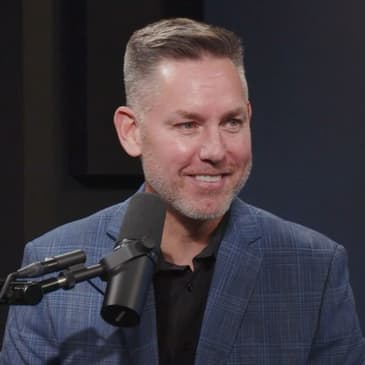
Join Jenny Beth as she sits down with Sheriff Frank Reynolds of Cherokee County, GA, for an insightful conversation about the critical role of a constitutional sheriff, public safety, and local law enforcement. Sheriff Reynolds shares his perspective on border security, fighting human trafficking, and the importance of accountability in leadership. Discover how he works to protect Cherokee County while emphasizing community vigilance, faith, and proactive safety measures. Tune in for a powerful discussion on leadership, service, and safeguarding local communities.
Twitter/X: @CherokeeSO | @jennybethm
[00:00:00] You have to be careful when you talk about federal dollars, strings attached. I like local control. I don't want the federal government in my business. We all say, less federal government, more local control. So sometimes you have to balance that. Yes, we want to participate with our federal partners when it comes to illegal immigration, but we also want to be mindful that we don't want them telling us how to do our job.
[00:00:26] Keeping our Republic is on the line, and it requires patriots with great passion, dedication, and eternal vigilance to preserve our freedoms. Jenny Beth Martin is the co-founder of Tea Party Patriots. She is an author, a filmmaker, and one of Time Magazine's most influential people in the world.
[00:00:45] But the title she is most proud of is mom to her boy-girl twins. She has been at the forefront, fighting to protect America's core principles for more than a decade. Welcome to The Jenny Beth Show. In today's episode, I'm joined by Georgia's Cherokee County Sheriff Frank Reynolds. We cover the role of a sheriff in keeping the community safe, the need for local control and law enforcement, and the challenges of border security and human trafficking.
[00:01:13] He talks about leadership, public safety, and his duty as an elected official. Frank Reynolds, thanks so much for being with me today. So you are the sheriff of Cherokee County. What is a sheriff anyway? Well, thank you, Jenny Beth. Thank you for what you do. Thank you for your friendship. And to answer your question, the sheriff is here in Georgia. There's 159 counties, and the sheriff is elected by the people.
[00:01:39] The sheriff is on a four-year term. We're on a presidential cycle, so I am starting my third term as the sheriff here in Cherokee County. And the law, the Georgia Constitution says all 159 counties will have a sheriff and some other elected officials. And the duties and responsibilities are outlined in Georgia, official code of Georgia annotated.
[00:02:04] And those include a few things, actually many things, but I'll simplify it for you. Security at the courthouse, issuance of warrants and civil process, the jail, and for us, general patrol. So we don't have a county police force here in Cherokee County. We have about 300,000 people in our community, and we have about 500 team members at our sheriff's office. And you might notice in some other communities that they have a county police force.
[00:02:33] We don't. So we do everything with the exception of our municipal areas, our cities. They have city police departments, and we are a force multiplier for them, and they are a force multiplier for us. So that's it in a nutshell. So what was your background before you became sheriff, before you ran for office? Well, I started here in 1994, and I started in jail, worked in jail for two years.
[00:02:59] Went out on patrol and was on our SWAT team in our traffic unit and did that for a number of years. And then I went overseas, worked with the State Department's High Threat Protection Program, providing security for high-risk individuals in Iraq, VIPs, dignitaries, and so forth. And then I came back and worked for a neighboring sheriff's office as a field operations commander,
[00:03:22] which oversaw a few different things, patrol, criminal investigations, school police, and those type things. And I got elected in 2016 and took office January 1st of 2017. And I want to come back, but we can do this maybe near the end of the discussion and talk just a little bit about campaigning. Because when I get elected officials on, I like to get tips about what they've learned from campaigning. But we'll do that in a few minutes.
[00:03:51] When we're talking about sheriffs, a lot of people talk about a constitutional sheriff or it's a constitutional officer. Could you elaborate on that? Sure. So sheriffs are elected by the people. And we swear or no, just like any police officer or sheriff's deputy does, that we'll uphold the Constitution of the United States and of this state. To my knowledge, there is no mention of the word sheriff in the U.S. Constitution, only in the state constitution. I can't speak for other states.
[00:04:20] When I speak further, it's about the Georgia Constitution. And the Georgia Constitution says that all 159 counties will have a sheriff. And the duties and responsibilities are outlined in the official code of Georgia annotated. So if you hear me say OCGA, it's the official code of Georgia annotated. And that is codified in law of what those things. So when people talk about the constitutional officer, we're talking about state constitution, not U.S. Constitution.
[00:04:50] Does that make sense? Yes. Yes. And does every state have sheriffs? No. To my recollection, I believe that Alaska does not have sheriffs. Hawaii may have a sheriff, but I think it's kind of universal, an appointed position. And it's a state position. I'm not 100 percent on that. And I think Connecticut may not have sheriffs.
[00:05:17] I think they have a state marshal or something of that nature. But don't don't quote me on that. But I think those are the three that don't have sheriffs like they do in the state of Georgia. OK. And then one more thing about sheriffs, just broadly speaking, and then we'll get into some other items. In Georgia, are sheriffs the same thing as police? No. So a sheriff, again, is an elected official.
[00:05:40] And police chiefs and police officers are appointed by their respective jurisdiction, whether that be a small city or a large county. And that chief works for a governing body. For instance, I don't work for, respectively, I don't work for the commissioners. I don't work for a county manager. I don't work for a public safety director. I work for you.
[00:06:08] Whereas and respectfully speaking, a chief typically works for, say, a city manager or a county manager. And then their governing body, whether it be a city council or a county commission, sometimes they have a public safety director in the middle of that. And then our job, again, is outlined in the Constitution of what we do.
[00:06:30] The city police, they may have a jail, but we are constitutionally and statutorily required to fulfill those responsibilities. And typically we have statewide powers where we can go, say, to North Georgia or South Georgia to execute those warrants or bring back a prisoner. And so that's kind of a fundamental difference. Okay. That makes sense.
[00:06:52] And then you're responsible as the sheriff to the people who elected you because you're an elected official, just like a county commissioner or governor or anyone else. That's right. I've got a job interview every four years to say whether I'm doing what our community asks us to do. Okay. Let's shift gears just a little bit.
[00:07:15] And as we're filming this, we are about to come up on what would be the 23rd birthday of Lake and Riley, which would be tomorrow because we're filming this the day before. Lake and Riley was a member of this community and her family was a member of this community. How do you think that her murder has affected this community and the state? I think it's had a profound impact, unfortunately.
[00:07:47] I've met with the family. I've met with the mom and the sister and the dad. And I tell you, as a parent myself, it's gut-wrenching. Sorry, I get a little choked up. No parent should have to go through that. I couldn't imagine what that would be like.
[00:08:18] They're strong. They're a strong family. They're a Christian family. And I have to say, personally, it impacts me because I want to make sure that our community is safe. Anything can happen at any time, anywhere.
[00:08:41] But we can take proactive steps as a community, as a state, as a nation to ensure that doesn't happen on our watch. Now, granted, anything can happen. But what are we doing to minimize that threat? What are we doing as a community so that we bring awareness to that?
[00:09:07] So if there's a takeaway from me personally, and I take this personal, what can we do in our legislative acts, in our border protection, in our prosecution? What message are we sending to say, it's not going to happen here?
[00:09:32] So that tragedy, as unfortunate as it is, reminds us how vulnerable we are, especially today. And what can we do? What can I do as a sheriff to minimize that ever happening? That should not happen. No, it shouldn't. And when you were just saying, let me just take a step back so the audience is aware. We're in Cherokee County recording this.
[00:10:02] And she went to high school and elementary school, middle school, and her family lives in Cherokee County. The crime itself happened in Athens-Clark. That is correct. So it did not happen here, but it's still, we drove around and looked at red and black ribbons on mailboxes for months because everyone had that to memorialize her. Right. Thank you for that point of clarification. But her family's here.
[00:10:32] We as a community surround that family and everybody else impacted by that. And that's why I take it so personal, you know, to look in the eyes of a parent that's lost a child under these tragic circumstances. Something that we could have done better as a nation. Yeah.
[00:10:55] And when you were just saying that these things happen, that bad things happen, absolutely bad things happen. You're a sheriff. You understand crime happens. And you as a sheriff can't single-handedly prevent somebody who is bent on committing a crime from committing a crime if you're not right there holding them back. You can't be everywhere.
[00:11:20] But the thing that is so maddening about what happened to Lake and Riley and to the other people who have lost a family member or been injured because of an illegal immigrant. It's a little bit different because you can protect the community here, but you are relying on the government, the federal government, to protect the border before people ever get here.
[00:11:49] And when we fail to do that, they shouldn't be in the country in the first place. So her death never should have happened because that person never should have been in the country according to our federal law to begin with. And the Biden administration abused the asylum system and allowed people to violate the immigration law and created the opportunity for her death and other people's, not just death, but murder to occur.
[00:12:20] I agree with you 100%. And, you know, my job is to provide a quality of life through an enforcement level here in Cherokee County. I have a saying, don't let somebody else's problem become our problems. But that's what's happened with this border crisis. That problem has become a problem here and everywhere else. Now, we may not have the same issues that you're going to see on in Texas, for instance. You know, we have secondary and tertiary effects that are here.
[00:12:49] Georgia is an international community with Atlanta and the busiest airport in the world. We've got human trafficking. We've got, you know, a lot of crime that is, again, coming here from that. I've been fortunate to work with our attorney general and the governor on some initiatives to eradicate as best we can human trafficking and the other criminal elements that are occurring because of this crisis.
[00:13:20] It may not just be sexual abuse. It could be, you know, an indentured servitude, you know, of that human trafficking, working for an industry that is profiting from this person being here. And they will never work off, you know, that return from getting here in the United States. And in some cases, they're worse off here than they were where they came from in our host country.
[00:13:46] We don't see that at this level or that level here in our community. You know, we are a metro county, but we're a north metro area or Atlanta metro. And but we do see it. It does impact us. And we've had instances where that have occurred. You know, we see that in our the drug trafficking here in our community. And we're constantly trying to push that back.
[00:14:12] We've got a great relationship with our federal partners to help identify situations and people that are moving in our county. We use a lot of technology, a lot of intelligence to fight this. Let's face it. I should be dealing with a burglar here and there, you know, you know, some fraud and some traditional crimes that would occur in any community. But now we're having to deal with some stuff that we've never dealt with before.
[00:14:42] And and why should why should we have to deal with that unnecessarily? And, you know, that that that erodes our quality of life, you know, for our community. And so we're doing things traditionally that we shouldn't be dealing with because of the secondary and tertiary and direct influences from the border.
[00:15:05] Have you seen a difference in the number of non U.S. citizens who have been arrested and who you've had to arrest in Cherokee County over the last four or five years? So we have kept stats for a long time. And and so I pulled some stats for you from 2019, December 31st of 2019.
[00:15:32] And according to our statistical information, we had 611 non U.S. citizens enter into our jail. They're arrested for a wide variety of things. It could have been a traffic stop. It could have been something more serious. December 31st, 2024, just a few days ago, 1505 non U.S. citizens brought into our jail.
[00:15:56] That's 146 percent increase of people brought into our jail that are non U.S. citizens. Now, granted, some of them may be here legally. Some may not be legally. Governor Kemp instituted something in law that we would all agencies would comply with sharing information. That would be fingerprints and name, date of birth and that kind of stuff to see if this person's wanted. We've been in compliance. That law was to bring some of these other agencies.
[00:16:26] We're not sharing that information and not say non compliance. But this law required that. It was voluntary before? For us, absolutely. And we've always been cooperative with our federal partners to address those illegal immigration issues. But 150 percent increase.
[00:16:49] And with that is in 2019, we had 113 ICE holds, 83 released to ICE and 88 released to the state and county. So if we brought somebody in our jail and they had a hold from ICE, ICE is not going to come get them until we are finished with them. They've been adjudicated. You know, their sentence has been completed. They have bonded, posted a bond, but we won't release them because of the ICE hold.
[00:17:19] And then ICE has 48 hours to come get that individual or we're obligated by law to release that person. And those stats as of January or excuse me, December 31st, this past year was 90 release holds, ICE holds, 32 released to ICE versus the 83 years ago.
[00:17:45] Eight released to state custody, 20 released to self and three released to other agencies, state prison system, so forth. So you can see that there was, there wasn't the attention that there was four years ago. Right. And that has directly impacted our numbers. The numbers speak for themselves. So let me see if I'm, I was listening to the numbers as you were doing it. So the number of non-citizen arrests went up.
[00:18:13] The number of releases to ICE went down. Is that correct? In fact, even though you're, you had more non-citizens in custody, ICE was taking fewer people. And what happens when they go to ICE? I don't know. Okay. I have no idea. Do they come and get them and what they do with them after that? But if they're not really, if they're not taking them, then you release them. They're going to be released back into the country. Kind of like what happened with Laken Riley's murderer.
[00:18:42] And that happens here in Cherokee County. I know of some cases where some people have crossed back over. We've rearrested them. And, you know, they were arrested or deported a year ago or two years ago. Why are they back? Yeah. So it is problematic. I am hopeful that, you know, this will be addressed. I'm confident that it will be.
[00:19:07] We are going to do what we can to participate, as we have been, to ensure that those people that are here lawfully have gone through a process, are here because they want to be productive members of our community. And I think there's a pathway for that. I encourage that. You know, I'll say this.
[00:19:33] Our jail, we have the capacity of holding about 1,200 inmates. We're below that. We have less than 600 in our current facility. The vast majority of people in a county jail, I won't say are, I say they're good people. We got bad people. But I have a saying. We get rid of the ones we're scared of. We keep the, or excuse me, we get rid of the ones we're mad at. We keep the ones we're scared of. The same thing with immigration issue.
[00:20:02] We want to bring in the folks that we like and are compatible and want to do well, want to be productive members of our community and our society, want to assimilate. We want to get rid of the bad actors. And unfortunately, with the amount of people that have crossed over, if you just study the numbers, look at the numbers, anybody will tell you, even a small percentage of that. If you had, how many people have crossed into the United States, do you think? It's in the millions.
[00:20:28] If you take 100,000 that have come to Georgia, and if there's millions and 100,000 is not that big of a number. No, it's not. You know, comparatively to the millions. And you take a percentage of that just in our community and people that want to do ill will to our community. That doesn't take a lot of people. No.
[00:20:58] And we've got to do what we can to get rid of these bad actors because they're here. They are. And I am very hopeful that the next administration is going to be able to do that. What other things would you like to see the Trump administration do in the next four years from a law enforcement perspective? You know, there are training opportunities for law enforcement to get funding for training opportunities.
[00:21:27] You know, you've seen that in years past where training was made available to local law enforcement that didn't have that funding that they could, you know, go to, you know, federal law enforcement training center or other various places or funding to train people to do certain things and have that ability to do it. I'd like to see that. I'd like to see more funding. You have to be careful when you talk about federal dollars, strings attached.
[00:21:56] You know, I like local control. I don't want the federal government in my business. You know, we all say, you know, less federal government, more local control. You know, so sometimes you have to balance that. Yes, we want to participate with our federal partners when it comes to illegal immigration. But, you know, we also want to be mindful that we don't want them telling us how to do our job. And so that's the balance that we have to make. But there are, you know, there are funding sources without strings attached.
[00:22:26] And if we can accomplish that, I think that'll be beneficial. Have you had those kind of grants in the past? Uh, they've been made available that a participating agency could pick and choose. You know, here's what's available. What works best for your community and go do that training. Or how does that help you for, let's say, bulletproof vests?
[00:22:48] You know, can we have, can we apply for a federal grant that allows us funding to have bullet resistant vests or similar type of equipment? Uh, you always got to be careful of, of what that looks like. And that's where you may have a, uh, a person writing grants to look at all those things, see what the fine print is and, uh, and choose what's best for you.
[00:23:11] I think that, um, grants, the way that you're talking about, of course, I, I want less government, federal government spending at all the time always. But setting aside what I want, the way that you're describing it, grants for a specific project with a specific timeline that end are, are different.
[00:23:32] And what happens, I think, all too often at a local level, at a school board level, certainly at school board levels around the country, um, at the, the state. And, and then even within the federal government is that the, the agency or the recipient becomes addicted to that money. And I don't know how else to call it, but they just become completely dependent on that money and they can't imagine functioning without it.
[00:24:00] And so they'll do whatever they can to ensure that that flow keeps going to them. The way you're describing it is much more specific about training or about equipment and, and it's a very narrow scope. It is. And we live in a community that, you know, we have a great economic development. We have great board of commissioners. Um, there is no defunding the police, uh, so to speak in our community because we have such good community support.
[00:24:29] There's not a day that goes by that somebody doesn't pat me on the back and say, thank you for your service. Thank you for what you do. And quite frankly, it's not the work that I do. It's the deputies that are out on the street doing that and representing their community. Um, so there are obviously a lot of law enforcement agencies that don't have that funding. They don't have either the support of the community or they don't have the funding source or both.
[00:24:54] And so they become reliant on, you know, grants, whether that be state, local, federal. And you're right. It's kind of like paying your bills. If you're relying on overtime, which is not guaranteed to pay your bills, then you may be leaving, uh, living outside of your means. So you either need to get another job, uh, or finding different funding source, uh, than just to rely on overtime.
[00:25:19] And I think similarly, there, there are agencies that, you know, whether that be, uh, enforcement for profit, uh, which I'm totally against. Uh, I, I think if, if you're out there profiteering from enforcement, then your, your priorities are wrong. Um, and the same thing with grants, you gotta be careful that you, as you said, don't become addicted to getting money to provide that service.
[00:25:49] You know, those things have to be addressed. Fortunately in our community, we are very well taken care of. That's good. Um, the, I, I'm, I'm trying to think of the next question. I think that with the way that you were just describing how to handle the, the grants that, that, that makes sense.
[00:26:13] Can we go back just one moment back to what was happening with illegal immigration here in Cherokee County? Have Lake and Riley is an, an extreme example, and we don't want that to happen to other families, but you were mentioning human trafficking and, and other issues related to the increase
[00:26:38] in, in, in illegal immigration that's happening because of the lack of border enforcement. What are the kind of things that you're seeing here locally that are the more routine kind of, if you will, problems, not the extreme, like what happened with Lake and Riley's murder? So, you know, there are, um, industries that utilize labor.
[00:27:03] Uh, that's what we probably see more here than anything else, um, is labor intensive. Uh, somebody that's crossed over illegally and it doesn't, you know, when we think of that, sometimes we might think, uh, from our Hispanic community and, uh, and not necessarily, you know, other countries, I'll just leave it at that. Other countries that are involved in some sort of, and I go back to human trafficking.
[00:27:29] Human trafficking is, is a broad umbrella and that could be somebody that cuts grass to, you know, sexual in nature to, you know, construction, um, our hospitality industry. And I, I think that's, that's the broader sense. I think those are the secondary and tertiary effects that, uh, that we see.
[00:27:53] Um, you know, we've had some instances where we've worked with, uh, our, um, our state's attorney general on, uh, massage parlors and, uh, some issues, uh, obviously associated with that. And, uh, and we've been able to shut those down and, um, I don't want to say displace because sometimes those folks will move somewhere else and, and those, uh, businesses will appear somewhere outside of our community.
[00:28:23] Uh, that's what we see here. It's, um, it's very troubling. What I I've learned from my studies, what happens as people are coming into the country is the kind of thing that you're saying, but oftentimes if they've paid a cartel to get them across the border, which almost always is what is happening.
[00:28:46] If they're entering by land on the Southern border, then, um, they wind up being indebted to that cartel. And then the cartel is sometimes mandating where they go work or telling them where to go live. And they're, the cartel just keeps getting money. And it's hard to believe that a cartel can be that powerful, but they truly are multi-billion
[00:29:12] dollar businesses that are running completely illegal businesses, but it, and they have no regard for, um, humanity and human rights the way that we do in America and the way that we respect people. And when I hear about human trafficking, we're in 2025 now. And it bothers me so much to think that there are human beings in our country who are being
[00:29:37] treated in a way that we would, if we look back, if we look back on this time, we would be ashamed of the way they're being treated. And I think it's so important that we solve the problem at the border, that the people who are here are here legally. And that because they're here legally, they wind up having a bit more freedom to, they have the freedom to do what, what citizens can do and what, what legal people who are here
[00:30:07] legally are able to do. Uh, I think, you know, the criminal enterprise is very compartmentalized. And once a product or a person, whatever it is, is delivered to the next phase that in that handoff, the left hand doesn't know what the right hand's doing.
[00:30:33] And, and, and I think that's, you know, by design so that it doesn't trace back, but we know where the, the root cause is the proximate cause. And, uh, and so trying to make those links from this situation to this one, this one, that's the real hard part. Uh, so that's where we have to tackle those. It's like whack-a-mole. I mean, we have to deal with this problem right here and then see if there's a, some
[00:31:01] connectivity to, you know, the, the other area and, and try to find some, some commonality there where we could prove either a RICO case or, you know, some, some connection between those two enterprises, but they're so compartmentalized. That's the difficult problem to, to handle. Um, Frank, what is it that citizens can do to help you as a sheriff and to help other sheriffs
[00:31:28] and, and law enforcement, uh, locally around the country? I love nosy neighbors. Uh-oh. That, that's a good thing. That's a bad thing. Nosy neighbors, uh, you know what goes on in your community. Um, you know, there, there is, uh, sometimes a difficulty, you know, with once we get into the situation and we try to, you know, investigate it, that there are individual events that appear as one.
[00:31:56] Um, you know, this happened recently, you know, somebody sees an airplane go over a low, lower altitude. Dude, they see fire, they hear a boom and they see fire. And it turns out those are three different events that went on. Airplane's fine. He just happened to be, you know, student pilot cutting the engine because he's doing stalls or whatever, you know, they do. Uh, somebody burning trash and then, you know, a, uh, a dumpster, you know, being dropped by, you know, it's machinery.
[00:32:23] Uh, so you got three different events occurring and, you know, somebody combined those into one. And that's going to happen. But more often than not, uh, when we have somebody says, you know, Hey, my neighbor, uh, I know they're out of town because they've asked me to watch your house, but there's a car in the driveway and there's people around it. My shift when I was back in the day, when I was patrolling, we caught 11 burglars on my shift that year.
[00:32:51] And they were all because nosy neighbors saying somebody, uh, doesn't, you know, look right at my neighbor's house. Uh, so we know what goes on our community and the old saying, say something, see something, say something. And that's a perfect example of we're going to come out. We're going to do what we can. We're going to investigate. You know, we have limited authority to, to go ask questions. We do have the ability to have a tier one encounter, which is simply me coming up to you and say, hi, my name's a deputy so-and-so.
[00:33:20] And, you know, uh, can I ask you a few questions at that point? You're free to leave. You don't have to ask any questions, but to start a conversation. And that's what we do. We get paid to be, um, inquisitive. We get paid to be brilliant before a bad thing occurs because we're looking at all those and those beat officers know also what's in their community. So I think that's the best thing that we can do right now is one, uh, get engaged. If, if you're not engaged in your local government and what's going on.
[00:33:48] And if we look at what the forefathers, the founders of this country wanted local control. Right. And, you know, here in our community, you can see that, you know, uh, and, and I encourage local control, your local businesses, uh, your local government, your local enforcement, uh, but get involved what's happening in your community. And that has a greater impact. If we all do that, if we're all involved somehow in our community, uh, we're going to make a
[00:34:17] profound impact on the future, you know, the future for my kids, your kids. Uh, and I, I'm hopeful that's what we're going to see in the next few years is, uh, is getting back to, uh, what my former chief deputy uses call. Uh, he said, when I grew up and he's older than I am, uh, he has since retired. He was a cop for almost 50 years.
[00:34:39] And he said, when I grew up, we had front porch communities, which means they would sit on a front porch, snap peas, you know, talk that, you know, streetlights would, would come on. They'd do it. Kids be out there playing, uh, interacting. Now we're a back porch community. You know, we don't know the person that lives to the left or right or across the street. We sit on our back porch.
[00:35:05] We've got a fence up and we're, we're zoned in to just us. We're not engaged. I encourage people to get engaged in their community and be a productive member and not just be a shooting star. I see this all the time. Somebody gets really energized and then they, with a lot of vigor and a lot of good intent, they, they start off and then they fizzle out real quick because it is difficult. It is.
[00:35:31] It, it takes, um, so much time to be involved locally and to stay involved. You have to learn the process. You have to learn how, if you're trying to, um, whether you're trying to be a watchdog for a local government, like the, the, um, like watching your school board or watching your county commissioner, your city council, you have to learn how those meetings work. You have to learn what they've done in the past.
[00:35:57] You have to learn when, when their budget will happen, what they're paying for and, and then stay on top of it constantly. If you're, if you're being involved in your neighborhood, you, you have to be involved in, continue to be a good neighbor. You can't just be, I mean, I guess you can be a good neighbor for a little bit, but, but it, it just takes a lot of steady energy and time over and over and over. And sometimes it takes rolling up your sleeves and learning the process.
[00:36:25] So you can, can even watch what's going on. But spending that time is very important. What you mentioned about local control and our founding fathers, we, we often talk about we, the people want this, or we, the people want that. Well, we, the people also means, yes, we can exercise our authority, but with the authority as an individual citizen in this country come comes responsibility.
[00:36:52] And you have to, you have to pick up the responsibility in order to, to really have the ability to keep exercising that authority. That's right. You know, get involved, find your passion and do those things. Um, but let me, can I go back a little bit, you know, about, uh, some issues. So, you know, we, we've talked about, uh, the issue on the border and with a new president coming in with president Trump coming in and wanting to address these things.
[00:37:22] That's, it's not going to happen overnight. No. And, you know, I've, I've been around the world. I've, um, I've experienced a lot of different things. Uh, uh, and what I, I don't want to be an alarmist. You know, my job is to stay up at night thinking of all the things that could happen. And, and so we go back to see something, say something, but also want our, your listeners
[00:37:49] and our community is don't let your guard down, you know, be vigilant. Uh, don't be paranoid, but be vigilant. You know, I, I, my daughter is starting to drive now and, uh, and I have to, you know, constantly show her things that I see as a driver, you know, uh, such as, you know, if, if you're in an area where if you've got pedestrians crossing the street, they're looking at their cell phone. They won't even look to their left or right. And step into the road.
[00:38:20] They walk across the road and still looking at their phone. I'll say, see that person. See, they, they didn't even know we were there. And so what I encourage people to do is to continue to be vigilant and know your surroundings. Watch people. I'm a people watcher. That's what I get paid to do. That's what I've built my life around. Um, watch people at the grocery store. They have no situational awareness for their safety or the safety of others or, or they're, they're caught up in their little world.
[00:38:50] And, you know, I just have to believe that, you know, something's going to happen. I don't know when I don't have any information, but my gut tells me, and I think there's a common sense that something's not right with all the things that have occurred in the past couple of years. So I encourage people to remain vigilant, to know their surroundings, to know what's in their community. Um, and, and, and, you know, that's, uh, that's troubling.
[00:39:19] We don't want to admit that, but you know, it's, it's, it's there. And I think, uh, if we're going to protect, uh, if I'm here to help you, you got to help yourself. Right. You know, if you're waiting on me to come rescue you, you're already at a disadvantage. Right. You need to take proactive steps to know how to defend yourself, defend your family, defend your home. Um, and, uh, and, and be, you know, a, uh, uh, an asset instead of a liability.
[00:39:48] I, um, we always hear about being prepared and it's just a step of being prepared, being able to, to, to defend yourself. Defend yourself, whether it be a violent encounter, but it also may be, you know, that, uh, you know, we're about to have some, some severe weather rolling in. Right. You know, are you taking proactive measures to ensure that you have food, water, those type things? Well, what if we had, you know, some other situations where, you know, that could be problematic
[00:40:17] for a few days. Have you taken the necessary steps to ensure that your family has those supplies? Uh, so I'm not saying that there's something on the horizon. Uh, my gut tells me maybe there, there might be, I don't know with that many people coming in and we don't know who they are and they're unvetted. Yeah. There's still, on January 20th at 1201, they're still going to be here. They're not, they're not just magically automatically going to be deported.
[00:40:45] And even if Trump signs an executive order sometime around 1201, um, it still takes time to, to get the entire apparatus of the federal government or an agency within the federal government to, to, to deport, to deport the most, the, the most violent. And then to look at deporting the rest of the people is what Trump and, and Holman have said.
[00:41:11] But, um, we also are not going to have, you said that the change isn't going to happen immediately. And you mentioned how you watch the, you've been around the world. Well, I've been to Washington DC more times than I ever want. I, I, I have to go again soon and I, I don't even look forward to that. Um, but I, I've learned how Washington DC works and I learned how the, how Congress works.
[00:41:40] And there's all this debate right now about whether it's going to be one big, beautiful reconciliation bill, or it's going to be, uh, two bills. And there are members of Congress going, if we want something to happen with the border before the fall, we need two bills because they know how Washington works. Washington will drag its feet and the Capitol will drag its feet. And everyone will want to go get a piece of the pie and stick their finger in it to, to create the bill before it's finally done.
[00:42:08] And that takes not just days and weeks, but months. And so, um, whether it's one bill or two bills, um, the, the issue with inflation, the issue with growing the economy again, with securing the border, it's all going to take more time than any of us want because we want rapid change. Mm-hmm. So, you know, when we talk about executive orders, you know, we've talked about, you know,
[00:42:32] whether it's this party, you know, implementing, uh, unconstitutional executive orders, which, you know, if they're unconstitutional, then I'm not going to enforce them. If they're, you know, constitutionally, uh, recognized in a border crisis, we have a duty and responsibility to protect our borders as a nation. And that's what the federal government is there to do. Um, and I have another sheriff, uh, a great, great sheriff.
[00:42:59] Uh, but, you know, he says something that, uh, you know, is maybe applicable to this is that the sheriff is the arm and the sword of the judicial and the legislative branch. So, you know, so long as those orders, which I'm confident they are, uh, and I'll be looking at those, you know, that's my job is to do my due diligence.
[00:43:22] Um, then, you know, we need to partner with our, our federal agencies to ensure that we're upholding the constitution as well. So I just want to make that point of clarification that any enforcement level locally by our jurisdiction is going to be based on the U S constitution. And has been for the last four years. That's right. And so, um, you know, that I just hope that our legislators and our judicial and legislative
[00:43:52] branch are doing what they do collectively as, as a unified body to ensure that the safety and protection of the U S citizens, our community is, is paramount. I, I do too. And I know that there are members of Congress and I know that, um, I, I don't know exactly when we're airing this, maybe next week, but it may be another week or two.
[00:44:17] Um, the Lake and Riley bill just passed a house the other day and 48 Democrats voted for it and it's going to the Senate and Fetterman has said, well, he's a co-sponsor, he's a Democrat and he's a co-sponsor. And I believe that even John Ossoff has said that he's, um, in favor of the bill or going to vote for the bill or at least spoken somewhat favorably of it. And I'm hopeful he'll vote for it. Um, and Warnock should too.
[00:44:45] But my, my point is it isn't just the house freedom caucus. It isn't just Republican hardcore conservatives who want the border secure. It isn't just Trump at this point. It's, I, I think that it is bipartisan. It is certainly bipartisan in the American spirit because we can look at polling around the country, but I think even legislative bodies are realizing we've got to do what's right for our citizens. That's exactly right.
[00:45:11] And, uh, you know, when we get a 911 call, you know, as a sheriff, I'm a Republican, I'm a conservative, uh, but I don't wear that on my sleeve when I'm the sheriff. When I put my sheriff hat on, you know, when we go to a call, it's, you know, we're here to provide a service. It doesn't matter if you're a Republican, Democrat, uh, uh, you know, independent, white, black, this religion or that.
[00:45:33] We're here to help you because you're a human being and we want to do what we can to, uh, keep you safe, you know, uh, you know, protect you and your property and your life and your family. That's paramount. And I think this, you know, I believe the same thing is occurring here that people recognize what's right is right. And, uh, and we have to be a united front to say, we're going to do everything we can to protect our community.
[00:45:57] And I think, you know, with the election and the outcome that it was a mandate to say, these things are, uh, across the board, important to our nation, to our community. We may not always agree. We may agree to disagree. We may even, you know, fuss and fight, but I believe the outcome was based on what all people, the majority of the people in the United States want. And that's a safe and secure border. That's right. That's absolutely right. Okay.
[00:46:27] Okay. Let's shift gears completely and talk about campaigning. Oh my goodness. My favorite topic. You've campaigned now three different times. You've run for office. Um, you've run for office the same three years that Trump has run for office. Haven't you? I have been on the, uh, the ballot with him three times. That's pretty amazing. It is amazing. And in fact, I had, uh, our elections office print out a, uh, a sample copy because I can't get a real copy. Um, but a sample copy of that just so I could put it in my, my book. That's good.
[00:46:56] Now, um, you had to raise money. You've gone door to door. What, what are the things you've learned about campaigning that you would tell people you're thinking about running for office? So this is, uh, I, I enjoy this because, you know, I applaud anybody that's going to want to put themselves out there in a public light because it's not about just you. It's your family. It's, I had a, a state representative sit down with me. I called him and said, Hey, I think I'm gonna run for sheriff.
[00:47:24] Um, we met and he gave me a little nugget and I'm going to give you some little nuggets that I got. He said, if you can't stand the side of your own blood, don't run. And that has been proven to be true because it doesn't have to be true. They're going to, they're going to say things about you. They're going to say things about your family, your spouse, your children. All those things happen to me. And you have to be thick skin and, uh, and you have to be, uh, you know, answerable to some things, but it doesn't have to be true.
[00:47:53] And I have found that both as a candidate and while I'm sheriff, that it doesn't matter what the truth is. It's what the narrative is going to be painted. So you as a candidate, and it may not be your opponent. It may be somebody that just doesn't like you. They don't like the way you comb your hair or your face or whatever. They just don't like you. The other bit of advice is goes with that is the only person you can trust is the person that says to you, I'm not going to vote for you. Because a lot of people will say, look, that's true.
[00:48:22] An old sheriff used to tell me, everybody will eat your barbecue. You know, they're going to, they're going to come to your fundraiser. They're going to hang out. They're going to see if they're going to eat your barbecue. Doesn't mean they're going to vote for you. In fact, I know people that said, oh, we voted for you. Well, they weren't even registered voters. So, you know, people are going to tell you what you want to hear. And you have to be, you have to be ready for that. The other part is you have to prepare your family for it because they didn't sign up for this.
[00:48:48] They're supporting you as the candidate, but they have to endure the time that you spend away, the dedication you have to put into your campaign. And there are some people that believe that they're going to win. They wouldn't run otherwise. But you have to be in it to win it. And that family member has to be prepared for that because they're, you know, out in the community. People are going to judge them.
[00:49:17] You know, people are going to come up to that spouse and say something. People are going to come up to the kids. And I could tell you stories about mine, but it was pretty ugly and I don't want to get into it. But, you know, when they go after your children. Yeah, it's tough. The gloves come off. Yeah. So just be prepared. Money is unfortunately a key factor in running an election. You have to get your messaging out. You have to get your branding out.
[00:49:45] You have to invest in the things that are going to get your information out there. That's, you know, your website, your PR team, whatever that is. You know, your data collection. You know, I was the manager of my campaign. But I went to people who are really good at creating a website. I said, hey, would you come aboard?
[00:50:10] I want a person that collected data about information pertinent to our campaign. Hired that person. Fundraising. So we had a team and, you know, one of the things that said, do no harm to your own campaign. You know, so you've got to listen to those candidates who do that. Yes. You know, you have to listen to those folks. But at the same time, at the end of the day, you have to make the judgment call. Is this what you want?
[00:50:40] You have. But you have to get out of your your own ego. You have to get away from your own ego and and listen to those people. Well, chew on it. Pray about it. Think, you know, what is the long term strategy and how does that fit into your campaign? That's a difficult part. And it's not doing harm to your own campaign is letting yourself get either influenced by the wrong person or your ego get in the way.
[00:51:04] But if I had a person working on my campaign, she said, and this was just a cold hard truth. She was in it to win it. But she said, I'm not going to work for you anymore because I told you to do these things and you haven't done these things. And if you're not going to work as hard as I am, then I'm off your campaign. And that was a gut check. And she was right. Yeah. I had not done the things that and she was experienced. She told me to do these things.
[00:51:30] I procrastinated, you know, I'll get around to it or whatever. And that was a gut check. Yeah. And so you have to really listen to those folks. And I said, I'm so sorry. You're absolutely correct. I will handle that right now. Got off the phone, did the things that she had suggested and it paid off. She was right. But I didn't listen to her. And some other things like that. Have fun. It is.
[00:51:58] And most people that have run for office, either successfully or not, have had fun because they get to go out and meet the people in their community. And, you know, listen to them. They may be misinformed. And again, you're not going to win over everybody. But getting out there and listening to them. I know I'm talking a lot. If you're going to go out there and run and you're going to knock on doors, if you're talking more than 30 seconds, you need to shut up.
[00:52:28] Because that person wants to talk. That person wants to know that their opinion is important. And you may have all the accolades. You know, I had a master's degree. I'd gone through the FBI National Academy. I'd, you know, done a lot of different things in my career. That got me a seat at the table.
[00:52:48] But when that person realized this person's willing to sit down, drink my sweet tea and listen about my grandkids and what's important to me, that made all the difference. Because people, you know, will invest in you if they believe in you and what that messaging is. And I go back to money. You know, you have to get that out.
[00:53:08] You have to get out what it is that you plan on doing, what you stand for, your ethics, and why you're the best choice. And that's difficult. Do you encourage people to step up and run for office? I encourage people to get involved. And I can only speak for myself in this regard. When I ran for sheriff, I studied it.
[00:53:37] And this is some people get, you know, involved a little bit too late. And they think, you know, there's an upcoming election in six months. I'm going to run for that. I spent eight years studying this county, in particular, what it was to run for sheriff. What's going to get me a seat at the table? So you may have all the accolades.
[00:54:00] You may have the education, the experience, and this and that on a professional level, but you have no connectivity to your community. You're not relatable. And then you may be, I'll just say, maybe a good old boy, very relatable, but you don't have the credentials or the pedigree or whatever it is for this. You need a blend of the two. And so somebody that's really serious about it needs to be involved. You know, getting involved six months before an election is not going to get you there.
[00:54:29] It may, and some by default because there's nobody running for that position. But if you're going to take it serious, then you need to be involved well in advance and be engaged in your community so that people have faith and trust in you. And they do that through relatability. All the professional accolades, that's wonderful. Again, that gets you a seat at the table, but does not get you elected. It's a blend of the two. Yeah, I think that's very important. It's a blend of those two, and it's the ability to raise money.
[00:54:58] And people don't like to hear that it costs money. And I don't like to say it, but it does. I mean, you have to be able to get your message out. Well, when people give you money, they're investing in you. You know, whether it be $500 or $5 or $500, they're investing in you. And the person that gives you $5 is just as important as the person that gives you, you know, the max donation. Because, you know, that may be all that they have.
[00:55:26] And by them giving you that financial donation is important to them. And they're saying... It can be sacrificial giving even at $5. Yes, and it's here. I trust you enough that I'm willing to give you my hard-earned money to go out and be our, in this case, sheriff. And raising money is very difficult. You've got to get used to asking for money. You know, somebody will ask, well, what can I do for you?
[00:55:54] Well, I could use your financial assistance. And you have to be comfortable. How much? I'm going to leave that up to you. But I'll tell you that in Georgia, the max contribution for this race is $3,300. Whatever you give, I'll be most appreciative. And I'll leave it with them. And then if they give me $5, I'm very happy. If they give me, you know, the $3,300, I'm even more happy. Or maybe not more happy. But, you know, that's a plus.
[00:56:21] But you've got to have those resources to buy your signs, your billboards, your advertising, your mailers, all that stuff. Our community, again, is 300,000. So if you're going to run a countywide race, it's very important. And when I started in this job, I think our community was probably 115, 120,000 people. Now it's 300,000. And so which means we've got a lot of people that moved in our community.
[00:56:48] So even though I was unopposed this time, I had to do a reopening or not necessarily a rebranding. But I had to get out there and do advertising this time because we've got, you know, 80,000 new people in the community from when I first ran. I've got to reintroduce myself to those folks so that they know who I am and what my messaging is and that I work for them. So that's very good. Very good. So do we cover everything that you would want to cover today?
[00:57:17] I think so. You know, and so let me just recap on anything I've said. You know, my goal as the sheriff, and I think, you know, I can say this for a lot of sheriffs in Georgia and across the nation. We are committed to our communities.
[00:57:32] You know, the sheriff that has six deputies and an administrative assistant, his community is just as engaged and as, you know, they may have 13,000 people in our community. We've got 500 deputies and civilians and, you know, 300,000 people in the community.
[00:57:58] Their issues are just as important to them as we are. And so I know that sheriffs across the United States are so instrumental in their community. You know, the sheriff has an extremely important role in communities. And quite frankly, in most cases, they're probably the most well-known politician, if you will, in their community.
[00:58:26] And that's a tremendous responsibility. And so when I wake up every day, you know, I tell the Lord, I say, please give me the strength and the knowledge, the wisdom to do what's right for our community, regardless of, you know, the circumstances. Going back to politics, if you do the right thing, the politics will take care of themselves. And, you know, being the sheriff is a blessing.
[00:58:51] You know, I thought being the sheriff, you know, is all about enforcement and stuff. And it's not. No, it's not at all. No. And so I just want to say to our community in particular, thank you for entrusting in me because I get to do so much good in our community. We've got two foundations. We've got one for our deputies and one for the community. And that is a mechanism where we get to give back financially. But, you know, to be invested in our community. So if somebody calls me and says, hey, I've got an issue.
[00:59:21] Can you help me? The great thing is I may not be able to help them because it's outside of my wheelhouse. But I know somebody that can help them. And all I got to do is pick up the phone and say, I've got somebody in need. Can you help them? Can you point them in the right direction? Can you what can we do to help this person regardless of who they are, you know, where they grew up, you know, whatever their circumstances, our goal is to help that person.
[00:59:47] And I, quite frankly, and I'm embarrassed to say, I didn't I didn't see that before I became a sheriff. But now in this role, I get to do I feel so much more good for our community. And it's not about just enforcement. It's just being engaged and hearing the needs of the people in our community. Well, that's very good. And I know from people who I talk to in the community here that they know you and they talk talk about you and they refer to you on a first name basis.
[01:00:17] And so you definitely are getting out there and people know who you are and you're making a difference. Thank you, Jane and Beth. The Jenny Beth Show is hosted by Jenny Beth Martin, produced by Kevin Mooneyham and directed by Luke Livingston. The Jenny Beth Show is a production of Tea Party Patriots Action. For more information, visit TeaPartyPatriots.org.
[01:00:43] If you like this episode, let me know by hitting the like button or leaving a comment or a five star review. And if you want to be the first to know every time we drop a new episode, be sure to subscribe and turn on notifications for whichever platform you're listening on. If you do these simple things, it will help the podcast grow and I'd really appreciate it. Thank you so much.