
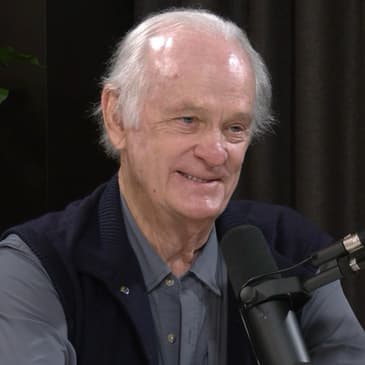
In this episode of The Jenny Beth Show, Jenny Beth sits down with Kit Goldsbury, a remarkable entrepreneur and philanthropist. Kit shares his incredible journey from enjoying free beer at the historic Pearl Brewery in San Antonio to transforming it into the iconic Pearl District, which incudes his stunning Hotel Emma. He discusses his passion for revitalizing historic properties, his success with iconic brands like Pace Picante Sauce and NatureSweet Tomatoes, and his unwavering commitment to taking care of his employees. Tune in to hear Kit's fascinating stories and gain valuable insights on entrepreneurship, perseverance, and the power of giving back.
The Hotel Emma: https://thehotelemma.com/
Pearl District: https://atpearl.com/
[00:00:00] is a boarder's been in the news a lot and the policies that Biden has enacted have seen changes from that that have affected San Antonio. I know people that come across legally and they sometimes have to wait all day long
[00:00:15] to get across that bridge where they're looking down there and they're watching people swim across. Keeping our republic is online and it requires patriots with great passion, dedication, and the eternal vigilance to preserve our freedoms. Jenny Beth Martin is the co-founder of Tea Party Patriots.
[00:00:34] She's an author, a filmmaker and one of time magazines most influential people in the world. But the title she is most proud of is Mark to her boy girl twins. She has been at the forefront fighting to protect America's core principles for more than a decade.
[00:00:51] Welcome to the Jenny Beth Show. Today, I'm joined by a truly inspiring guest. Kit Goldsbury is a remarkable entrepreneur who has built some incredible businesses from transforming San Antonio's historic Pearl Brewery into the stunning hotel Emma. Kit's journey is nothing short of its extraordinary.
[00:01:10] In this episode, Kit shares his passion for revitalizing historic properties. His experiences in building successful brands like Peace Pekonti Soss in Nature Suite to Manos and his commitment for taking care of his employees. Join us as we dive into kits, fascinating stories, and learn valuable lessons on entrepreneurship,
[00:01:30] perseverance, and the power of giving back. Kit, thank you so much for joining me today. I really appreciate it. We're in your hotel, the hotel Emma right now, recording this. How did you wind up building this hotel? Well, I used to come here and drink free beer.
[00:01:50] I really... That's really what it's normal. I don't know. I started when it was an operating beer brewery, because I went to school not far from here. But I love the old buildings that's really the truth.
[00:02:03] And when it came up for sale in O2, I think it was, it was a pretty worn-out piece of property over here. So we got it at a pretty decent price. We waited a long time before we had research.
[00:02:21] We got people to come in like research, the hotel, and they said, don't put a hotel there until everything else is built around it. We started with a couple of restaurants. We had some really good advisors who had retired from their businesses, and very, very
[00:02:41] good at what they did. So one of them was real estate. And so let's test... Let's test if anybody wants to live here. We had some of these little apartments that you see around.
[00:02:53] And so we opened those up for tests and young people went crazy, and they all moved in. A lot of them haven't left. And so that proves that people want to live here. Now there was a young age that people wanted to live here.
[00:03:09] And that led to the apartments you see around here. Then we had a couple of restaurants in here by a really well-known chef from the Insan Antonio. And he was a pioneer. He put two restaurants here that were gave us credibility.
[00:03:28] And then after that, I had gone to the CIA, which is the color of the Institute of America. The first thing that said, and I've the president we've been in front of the president's desk. The president's desk is a friend now.
[00:03:39] But at that point they said, no, we just had our plan for the next five or six years and we're not going to have any more campuses. So one of us was a smart lawyer and he sits down and he said, why don't we just dream
[00:03:54] a little bit? Smart! True, true. And so we wanted it, we said let's do a test. You guys come down, we'll pay you like to hear that non-profits. And so we came down and did a test in one of the little buildings on the grounds.
[00:04:12] And they did well, they'd really well. One of the things we were standing there is that we want to test who's in your kitchens? Do you know? And they said what do you mean? Do you know? We teach him. We certainly know who's in our kitchens.
[00:04:26] So let us test it and we'll pay for it. So we test it and find out that 30% of the students in kitchens are Hispanic, which is the target we were looking for. And so probably 150% down here. But anyway, we put this to San Antonio.
[00:04:49] Near the closure you get the Mexico. Yeah. And so we had the school for two years and it showed up that 40% to 50% of the students and that's still the number years later, 10-12 years later, or Hispanic kids who didn't
[00:05:07] have a chance to break through that glass ceiling as they call it. They're always in the kitchen but not necessarily the chef. And so that was kind of the beginning of the whole thing. Wow. This area that we're in in San Antonio, it's called Pearl.
[00:05:26] How did it get it same? From the Pearl Brewery. OK. Yeah, because it employed. It was at one time I believe employed like 20% of the city. So lots, lots of people.
[00:05:39] And then the hotel is built on, is a whole area on the Pearl property or is it mostly the hotel that was, no, no. It was a whole area because they had warehouses and so forth. Yeah.
[00:05:52] And then the hotel is only eight years old now and we've been here almost 20 years. And so the guy that did, there was another person we got and that was a company that studied public places. And they looked around and decided how to put where on the property.
[00:06:15] And one was a Plaza, which is the one where we have the market. And we'll get three or four thousand people to it on the Saturday. But he said the secret to that, they said the secret to that is you have to have 10 things around it.
[00:06:29] You got to have a church, you got to have maybe a public building and you got to have bars, retail and things that bring people to that grassy space that you have. And I worked and it worked really well.
[00:06:42] So then we decided to open the hotel and it's done very well. We just got awarded the number one in Texas. Well, I think you should be number one in the whole country.
[00:06:53] I travel so much and I'm usually a chain hotels and I have a good experience and you know I just need a place to stay and need to know what's clean and safe and so that works. I've been in this hotel and it is everything about the hotel.
[00:07:11] Every detail is just it's thoughtful. The staff are amazing. They love their job, they love being here and it's just it's my favorite hotel and the whole world. So always the people you know there, tell me if you check this out, that's safe at works.
[00:07:29] But they were told with your 10 feet from a guess, you say hello. And so I hope that's working. Yes, they say hello. One time during COVID or after I think it was in 2021 so after Biden was in office,
[00:07:49] I was in the area and I checked in and I stayed here and I was so tired and so hungry. It was like 11 30 Eastern time or something. And most hotels quit serving food. So you couldn't get food. You couldn't get bottles of water.
[00:08:04] I mean, everything was broken in hotels. So that's the only way I noted to describe it and I said, do you, is there any food I can get? And they said, oh yes, we have room service and I said, well, it's 10 30 because it was 11.
[00:08:18] It was like Eastern time. So it's a 10 30 here. I said, it's awfully late. They said, oh no, we have a full service menu and I'm checking in at the front desk and the lady said, what would you like to eat?
[00:08:30] And I said, I just want some grilled chicken in a salad and she said, I'll take care of that for you. You go ahead and get in your room and it will be up in 20 minutes. And sure enough, it was.
[00:08:37] And it just, it was so, it was such a breath of fresh air considering how many broken hotels there were after COVID. Was that that was after COVID? Yeah. Because sometimes on during COVID we'd have one guest.
[00:08:49] That's what the lady said she said, we stayed employed the entire time. We didn't shut down and sometimes there'd be one guest but we also had our jobs and they appreciated that so much. There's dignity in working. Yeah.
[00:09:02] I paid off because I mean, when we opened, after all that COVID stuff, we opened up and we had a full staff where the hotels had to go and you know, hire more people and find people and stuff. Staff knew what to do.
[00:09:14] A lot of the hotels that I've been in, they had to go back and rehire people or hire new people and they sometimes I've checked into some hotels and I'm telling the person at the front desk that what I'm asking for is possible.
[00:09:27] I'm like, I know it is. I just did it last night in another city. It works. You just need to fight, you know, yeah. And I don't get upset with it. I might try to be very patient.
[00:09:36] Well, I think in some of those hotels that let them all go or fire them or whatever you want to call it, maybe they didn't get the best back. No, well, and why would, why would they?
[00:09:48] Because the employees are always going to wonder if something happens, they're going to let us go on a dime. Yes. So we can come and work but there's no sense of loyal. Well, it's as the trust. Right. Yeah, that's right. Now, this is not your first business venture.
[00:10:04] You also started or not started but built a family business and it's really a household name. At least for people who grew up in the south, peace pecante sauce. Yeah, New York City, we were talking about it just a little while ago.
[00:10:20] Yes, this stuff's made a New York City. My family when I was a kid, we would laugh at that advertisement. My dad thought it was a funnyist thing. But you took this condiment and turned it into something that houses across the entire
[00:10:40] country know about it and it sold everywhere. Yeah, there's a lot of fun. I'll tell you, but they're again, it started from almost nothing. And my background though, it was in Mexico. So I was brought up on hot sauce and all kinds of chilies and whatever.
[00:10:56] And so I had a real taste for it. So I loved my products, so we know we'd love your product. You sell it better. That's true. And what are the lessons that you learned as you built that company?
[00:11:11] I think it's still about how you take care of people. That's the number one thing. We tried to do as much as we could for everybody. Yeah. And then you sold the company and you sold it for a very, you got a very generous
[00:11:32] amount when you sold the company. But you didn't stop. You just kept building companies and you didn't go off into the sunset. No. We mean active. No, we found a little tomato company which we turned into a pretty big tomato company, which we have just sold as well.
[00:11:48] But we did the same thing with them as the people. And they were all in Mexico, but for the most part. And that we did a lot of things that weren't being done by the produce business in Mexico. We had a lot of loyalty there for that reason.
[00:12:01] And what kind of things were you doing? Well, like I remember in one case there was a storm that tore it out. Tore a lot of their houses up and we went and replaced them or put roofs on them or whatever had to be done.
[00:12:14] There's another town that didn't have water wells. And so we went and drilled a bunch of water wells for this town so they'd have water. Things like that. Pretty basic, but compassionate things. Before you head and water. Right. Not God. Right. Sheldon water. Wow.
[00:12:33] And that tomato company took something that really is just rather a generic item, turned it into a name brand. Didn't you? Right. To talk about that a little bit. And it's your sweet.
[00:12:46] It started as a tiny company again and we worked at, we kept working on the quality of it. It was a pretty good quality of start but we kept working on that until we got a product that's about two to three times.
[00:13:03] We do the nanny tomato you get in a grocery store of the largest variety. And so we kept working on that and I'll play it off. I mean, kids reading them like candy and we were promoting them as a snack. Right.
[00:13:15] And so it's a lot more than just putting them on the sandwich and stuff like that. So yeah. And it's true. It's better than just, it's better than candy. It's really a lot better for you. It's better for you. It's better for you. Yeah.
[00:13:29] And then you have a son who is in college and you've been apparent what kind of advice would you give to parents? I think that I think you really have to watch when they're growing stages and to watch
[00:13:51] who their friends are because I had some problems in my past where we didn't do a good job of that. I think the child really turns out the best when two people are managing him, him or her.
[00:14:07] And it really takes work on both sides of the parents to bring them along. But watching their friends because that can be something that can be drawn one side of the other by my bad friends.
[00:14:24] So I think that's really important today when so many kids are going online and they're like I always tell parents make sure that if your kids are in social media, that you have the log into their social media.
[00:14:40] And it isn't that I'm not in any way suggesting you don't trust your kids. What I'm suggesting though is that the algorithm from the social media shows them things and you won't see the same thing you're following them.
[00:14:57] So you can see everything they post just by watching them from your account. But what you don't see is all the stuff they're seeing. And sometimes that can influence in the same way that friends can and you have to be very cognizant and careful about that.
[00:15:16] Well, there's a lot of things that they won't even know they'll take a lot of these drugs that are coming across the border now or getting into things that they wouldn't suspect it would hurt them.
[00:15:29] And so there's a lot of that and a lot of that stuff you touch it and it'll kill you. Yeah, it's really the fentanyl. Right, it's just horrible. Horrible. Now, you said that you grew up in Mexico? A lot. Yeah, a lot.
[00:15:48] I'm from San Antonio but we've been ranching in Mexico for about 100 years. And so the brand we still have it and of course you tend to grow up in the saddle when you're on a ranch. So I did.
[00:16:01] And the people in this part of the borders and the news a lot right now because so many awful things are happening with the way that the border is being handled right now.
[00:16:14] I bet that you could talk a lot about the changes that you've seen over the years and what's happening on the border. But also, the people who live in this part of Texas and in New Mexico and Arizona,
[00:16:31] they have such an interesting relationship with the border that people who've lived here and this is their home because they have friends, sometimes the friends live on the other side of the border and they come to America or you were ranching on the other side of the border.
[00:16:46] And it is traditionally in our country's history, it's been a good relationship. It has and there's a book written called River Never Divided This and exactly what you're saying. I mean, there's still go back and forth.
[00:17:04] It's not just hard now apparently to go back and forth but that's the way it was. The families divided, you know, but not really. You know, not the did physically but not really keeping the families apart. So have you seen any changes?
[00:17:24] Is the border's been in the news a lot and the policies that Biden has enacted? Have you seen changes from that that have affected San Antonio? Oh yeah, was there a lot more homeless here? There's a lot more crime, car thefts, like 30 to 40 percent something like that.
[00:17:46] And but you see a lot of people on the street now that you never saw before and it's a shame. Yeah. Yeah. And people have trouble. I know people that come across legally and they sometimes have to wait all day long
[00:18:01] to get across that bridge where they're looking down there and they're watching people swim across. Yeah. That's just they're breaking in line. Yeah. You know, like if I'm standing in line at six flags or something, I'm not okay if somebody breaks in line. It's not right.
[00:18:19] It's not right for that to be happening for the people coming into the country. Not to mention thousands. Right. Exactly. We'd be really upset if I were in line. And thousands came in front of me and that is unfortunately happening right now. That's too bad.
[00:18:34] You have been a supporter of Tea Party, Petrients Action and you care about this country. What motivates you to care so much about the country? Your business man, you could just go on and focus on your business and ignore politics. Yeah.
[00:18:56] But I mean, it's you think about what these young kids are growing up in and what they're getting indoctrinated in the schools. And it's it's wrong. Yeah, we were talking earlier about you know what's happening to some of them and you
[00:19:10] know a lot of times the belief in some of these things socialism, cognitiveness and doesn't matter if it's the truth and not as long as you make them believe it. And these big crowds that are rioting and so forth like that, I bet you have the people
[00:19:25] in them that go on. Don't know the real reason that that what happened. I'm thinking that Israel Palestine, Canada. Right. Yeah. I think that that is correct. They just kind of get swept up in it or they I thought this as the black, the black
[00:19:46] lives matter movement became such a big deal in June and July of 2020. I know that there were people who are going to those events in the daytime and they were doing so for for very good reasons.
[00:20:00] They don't want to see discrimination, they don't want to see racism and their motives were very pure. And then as it would get darker like the sunlight as the sunlight went down, there was this other element that was coming out and became very, very destructive and a well
[00:20:17] that being tied with that movement and I'm sure a lot of it was with that movement. But it don't think that that's why most of the people when they first came out were
[00:20:27] there and I think some of the the same thing when you're talking about Israel and what's happening in Gaza right now, there are people who think that they're standing up for something that is right and then they're chanting things that essentially are calling for
[00:20:44] the destruction of Israel and I don't know. Somebody's got to be planning all that amongst the groups that we're talking about who it is I don't know but yeah, I think there's a lot of you know we're all blongers and
[00:20:58] when you belong into a big movement maybe that's what they think this is cool. But the history behind it is not getting out and you know in the black life matter that's a great thing but you know it ought to it's dividing us all up into colors and
[00:21:14] all that stuff is not good. No. I watch out here, Santon is a different pretty different because I watch out here last Saturday and I bet we had 3000 people up there and it looked like a cross section of the
[00:21:27] world everybody getting along everybody standing in line everybody eating everybody just having a good time. I thought wow this is really cool but when we start pitting one against the other it's harmful to the communities where that happens and it's harmful to the whole country. Yeah. Yeah.
[00:21:47] If somebody were starting a business today what are the kind of advice would you give them if they're an entrepreneur starting a business? Well if you have something you really like or can do well keep at it and surround yourself with smart people. That'd be my biggest advice.
[00:22:09] And that's what you've done. Yes. Yep. Absolutely. And when you are looking at hiring people who are smart people what are the kind how can you tell that you're hiring the light people? It's hard sometimes. It is.
[00:22:28] We watch people run parts of companies for 10 to 12 years before we decided to make them the head of something and it worked out but we were able to watch them for a long time which was great. Otherwise you're taking a little bit of a gamble.
[00:22:44] You need to gather all the information you can on somebody if you're going to hire them. And I remember a friend of mine passed away recently who was at he had an hour together for 25 years at pace and I had a hundred of found him hired him.
[00:23:02] It's a marketing guy. And marketing guys were given about three years before they moved on to some other job. Anyway, we were together for 25 years. Wow. So it's just a slucky, a lot of luck plays in. So you have a gut feel but still a lot of luck.
[00:23:20] And then treating them the right way makes him want to stay. Right? I mean, they normally leave him marketing after three years staying for him. So onto something else, they're like the product too. Right. I think so.
[00:23:34] In staying for 25 years, that's a, it's a testament to wait the whole entire business way. And it's not just when we have a friend who's now runs a business but when he came
[00:23:49] on, he came from a serial company and then we sold pace and he was kind of without a job. So he floated around for a while. And then we went and talked to him and he said, how would you like to be in the produce business?
[00:24:05] And by the way, it's in Mexico. So you need to learn the produce business. You learn, you need to learn Spanish. He did it for 10 or 15 years. He did it and built it into a great company. Wow. Yeah. That's pretty interesting. So it doesn't necessarily the product.
[00:24:21] You know, he liked the people. Right. Yeah. Yeah. And working for you, the kind of company, it's going to be. I guess so. Well, and I would imagine he knew what he was going to be like any help make it into a kind of company.
[00:24:33] Well, and he had, you know, we had 15 years before we moved to even further up. So that's good to watch him. Yeah. That's very good. And then loving the product would, it is interesting. It's it's peace for country sauce. It's tomatoes. It's hotels and and real estate.
[00:24:58] It's sometimes not the flashy things. It's just the things that you have a passion for. Yeah. And it doesn't necessarily have to be that it can be people. And I went to a company yesterday. This man is from South Africa and young guy.
[00:25:15] And he started a lumber yard here. And so I went out to his company. And he's unbelievable stuff. He takes giant trees and saws them into things, makes tables and all kinds of different stuff out of it. But South Africa, the Texas, you know, that was pretty amazing.
[00:25:35] Right. But he does beautiful things. But he's young guy and to watch that him build a business like that is exciting to me. That's very exciting. And it's great that our country provides that kind of opportunity. Yeah. Yeah. Yeah. That's amazing.
[00:25:54] What are some of the struggles that you've had as you've grown businesses? What are challenges and hurdles you've had to overcome? Sometimes in the early years, we ran into some people that took our formula and tried to start another business. This was in the sauce of this.
[00:26:10] And we had to go to court and that was a long horrible experience. But we prevailed eventually. We didn't win the case, which was strange. But anyway. The court system is often strange. Yeah. We had to peel it and get out of town, basically because anyway.
[00:26:30] You know, sometimes we can't. We can't trust people. So you want to prevailing with marketing. With marketing. The matter fact, the attorneys that were on the losing side, which was us said, you're going to be a good person. Yeah. That's how you're going to be.
[00:26:47] And that's how we did that. Yeah. That's good. Yeah. It's good. You're able to do that. Yeah. Who's it takes perseverance? And even when you look at something and it seems like you've got a loss in a defeat, finding a way to work around that and just keep.
[00:27:03] Yeah. Sometimes it drives you more. Make you want to win. Yeah. Yeah. And then here in this area, you built. Built this up and the river is right right by here. I just think this area is a beautiful area.
[00:27:25] It's taken an old part of San Antonio and honored the history and built this amazing community. Yeah. It's been it's been fun to watch. It's been amazing. It took a few years for it to catch on.
[00:27:38] But now it's really popular in the people who've caught on to make you wonder which you'd bought a hundred more acres. But it was too pretty risky at the time. And so there's been a lot of things built around here.
[00:27:50] So we welcome them because we got 25 restaurants and we'll feed them all. That's good. That's really good. Yeah. And in a, um, allowed other people to be entrepreneurs as well. Right. Right. Well, we had to pull that river up here.
[00:28:06] It was here, but it was a creek and it was every people living down, you know, camped out all along. It was a mess. And there was a great mayor that helped us. And we pulled it all the way up to this property and cleaned it all up.
[00:28:20] And that's, that's what you see now. How do you pull a river up? Well, number only cleaned it out because it was full of weeds and, I mean, you had water. But it, it, this, head waters of the springs are very close to here.
[00:28:35] And so we knew it had a good flow all the time. And we'd dammed up parts of it and stuff like that. And so the river is, it looks, what it looks like today now. But in that help, that helped people,
[00:28:49] make up their minds to come and build all up and down river too. So there's a lot of, if you drive around the, the area, there's a lot of new buildings that have been built probably because of that river being pulled up. That's pretty amazing. Yeah, it's cool.
[00:29:05] And then when you, when you pulled the river up, did you envision? When, you know, when you were talking, when you and your attorney, we're talking to the culinary Institute of American, you were saying, let's drink for a little bit.
[00:29:22] Did you dream it was going to be like it is today? Then have a, yeah. Then have a, especially across the river because it was pretty rough over there too. And we finally ended up getting some adding parts of the other side of the river
[00:29:37] because we wanted to kind of control our piece of the river, which we have, we do pretty much control now as far as what's gets built back for it. Yeah. And recently you were named to the Texas Business Hall of Fame. Yeah.
[00:29:54] I would tell it, talk about that a little bit. Well, I don't know how to get up and make a speech with I hate doing, but anyway. Haha. Somehow passed past, but it's a vote of a lot of people.
[00:30:07] And they have one a year and put up several people. And I was lucky enough to get elected, to get voted on. That's how it happened. Well, it just didn't surprise me at all. You're a good businessman. And people just, they love working for you. Yeah. Thanks.
[00:30:26] And you're, you're just, I think that it's just amazing to see what you've built here, the community and the fact that you're creating, because you invested and took the risk and created opportunities for yourself. It also created opportunities for so many other. And it's true. That's true. Yeah.
[00:30:52] And that's what capitalism does. Yeah. And it, somebody's got to like the WIC and that's what happened. I mean, people started seeing what was happening here and invested all on the river all the way to downtown. So in which it wasn't much before that.
[00:31:10] And no matter how good a government is and how much a government exists in an area, a government can't do the same kind of thing that businesses are able to do. No, not at all. Or they would have done it. Right.
[00:31:27] I mean, when this place closed, you would think, but the government benefits, they're getting a huge lot of revenue from the taxes coming out here. So that's a real plus for government. Right. And then that can go to schools and public works and other things that the government
[00:31:47] does and traditionally has done well, maybe not so great with schools at the moment around the entire country by picking on San Antonio specifically. But those are the kind of things that the government traditionally has done well with. Yeah. Yeah. So.
[00:32:07] Well, I appreciate you being here and it's talking a little bit and sharing some of your story and your experiences and the lessons that you've learned in your life. Well, thank you very much. I'm glad to be here. Good to see you.
[00:32:21] It's so good to be with you. Thank you. Thanks. The Jenny Beth Show is hosted by Jenny Beth Burton, produced by Kevin Mooney Ham, and directed by Luke Livingston. The Jenny Beth Show is a production of Tea Party Patriots Action. For more information visit teapartypatriots.org.
[00:32:42] If you like this episode, let me know by hitting the like button or leaving a comment or a five star review. And if you want to be the first to know every time we drop a new episode,
[00:32:52] be sure to subscribe and turn on notifications for whichever platform you're listening on. If you do these simple things, it will help the podcast grow and I'd really appreciate it. Thank you so much.