
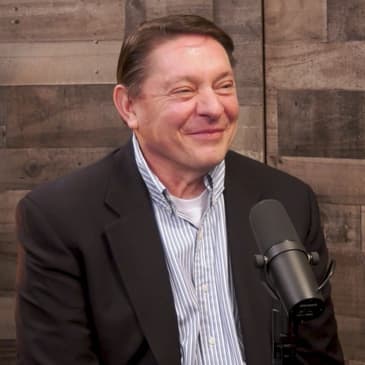
The Truth About the Climate Hoax & Junk Science | Steven Milloy, junkscience.com
Is climate change really a crisis, or is it a manufactured hoax? In this explosive episode, Steven Milloy, founder of JunkScience.com, exposes how the EPA, the UN, and radical environmentalists manipulate science to push a political agenda. From the war on fossil fuels to the mandated EV push, Milloy reveals the devastating impact of green policies on America's economy, energy independence, and everyday freedoms. He also discusses Trump’s plan to dismantle the climate scam and restore common sense to environmental policy.
Don't miss this deep dive into climate alarmism, junk science, and the future of energy policy!
Twitter/X.com: @JunkScience | @jennybethm
Website: https://junkscience.com/
[00:00:00] EPA plus the UN, they have weaponized carbon dioxide, which is a benefit to, is a necessity for humanity. They've weaponized it into something that is going to destroy the planet. It's bad science used to advance an ulterior motive. Keeping our Republic is on the line, and it requires patriots with great passion, dedication, and eternal vigilance to preserve our freedoms.
[00:00:28] Jenny Beth Martin is the co-founder of Tea Party Patriots. She is an author, a filmmaker, and one of Time Magazine's most influential people in the world. But the title she is most proud of is mom to her boy-girl twins. She has been at the forefront, fighting to protect America's core principles for more than a decade. Welcome to The Jenny Beth Show.
[00:00:52] Today, I'm joined by Steve Malloy, who you may know on X as Junk Science. Steve, what do you do? And how do you have this title called Junk Science? Well, Jenny Beth, thanks for having me. Well, for the last 34 years, I've been working in this peculiar area where science has been abused by the federal government an awful lot.
[00:01:13] And in 1995, when the internet started catching on, I started a website called Junkscience.com, and this is going to be its 30th year. It's really hard to believe. Wow, that's great.
[00:01:54] That's what I wound up doing, and I guess I've been fascinated by the lying so much that I just can't stop. You know, it's happening today. It'll happen tomorrow. It'll happen forever because it's just the nature of people. So what kind of lying have you seen? Oh, my God. This could take a whole time, right? Well, so, you know, the biggest con going on right now is the climate hoax. And of course, this is a big focus of President Trump, who also thinks the climate alarm is a hoax.
[00:02:22] And so the challenge, you know, we want to implement what the president wants, and he's got all these great executive orders on ending what he calls the Green News scam, and that's all the money being spent through the Inflation Reductionary Act. He wants to roll back the climate hoax itself, which is – there's an EPA rule called the endangerment finding that, you know, has got to happen. And there's – you know, he wants to end offshore windmills and really onshore windmills.
[00:02:47] So he's got a lot of things in his agenda, and so I'm going to help him roll it back. So what about it is the most egregious lie, and what about it is wrong? I mean, I can imagine a lot of things, but what do you think are the worst things that they are saying that alarm people and cause – wind up manipulating the public?
[00:03:11] Well, I guess, you know, the fundamental flaw in the federal system is this EPA rule called the endangerment finding. The Obama EPA concluded in 2009 that carbon dioxide, which is a greenhouse gas, we exhale it. Plants need it as food. It's colorless, odorless. You know, pollution used to be something you could see. Now it's invisible. And not only is it invisible, it's plant food.
[00:03:34] So the Obama EPA decided in 2009 that carbon dioxide and other greenhouse gases were a threat to public health and a threat to public welfare. And because of that, they could regulate it under the Clean Air Act, and they have done so. I worked in the coal industry for a number of years. During the Obama years, EPA killed 50,000 high-paying coal jobs based on this endangerment finding. These were high-paying jobs.
[00:04:04] Each job was supported by 4 to 10 other high-paying jobs in local communities and related industries. So EPA wiped out, you know, hundreds of thousands of jobs for no reason, no scientific basis at all. And, of course, everyone knows about the climate hoax because we are constantly bombarded with it. Your children get it in schools. We – you know, everyone has to buy, you know, Biden-mandated EVs for everybody because of it. And I wrote a book in 2009 called Green Hell, How Environmentalists Plan to Control Your Life.
[00:04:33] And it's through climate that they want to tell you, you know, where to work, where to live, how much energy you can use, what kind of energy you can use, what kind of food you can eat, what kind of car you can drive, just every aspect of your life, what kind of light bulbs you can have, what kind of dishwashers you – I mean, it's just endless, right? Everything in our lives that use energy is subject to – they want to regulate. So it's plant food.
[00:04:57] Explain to people who maybe don't remember science or didn't get the right kind of science because if they went through school recently, they may not have even had the right science. How is it plant food? I love that phrase. Right. So carbon dioxide is naturally occurring in the atmosphere with sunlight. It's how plants make food for themselves so that they can grow. It's called – the process is called photosynthesis. We learned about this usually in seventh grade or so. Right.
[00:05:26] And if there's not enough carbon dioxide in the atmosphere, all plant life will die. Humans will die. We don't know that there's too much plant food in the atmosphere because we just can't get – I mean, there's no process by which we can get there. But generally speaking, the more CO2 there is in the atmosphere, the better it is for plants.
[00:05:48] I mean, you can see this in scientific studies where plants grow under different – you know, same temperature but different levels of carbon dioxide do better because – And so we have – you know, thanks to the slight warming that has occurred plus carbon dioxide, we can feed the 8 billion people that are on the planet. You know, before the internal combustion engine, before emissions, there were only about a billion people on the planet.
[00:06:11] And so modern technology, including the internal combustion engine and emissions, have taken us to over 8 billion people living healthier, wealthier, and freer lives than ever before. And the Greens want to end that. It's just crazy. And the plants turn carbon dioxide into oxygen. Oh, I'm sorry. Right? Which is why if we don't – if you don't have carbon dioxide, you don't have plants using it, then we don't have oxygen and that's how people die. That is part of the process. In the evening, they will respire oxygen.
[00:06:41] But, I mean, they first use carbon dioxide to make energy for themselves. For themselves. And then oxygen is a byproduct of that. And it's amazing how there are all these cycles built into the Earth to help the Earth sustain itself. It's incredible. And yet the people, they twist this. Yeah. They twist the science. So, yeah.
[00:07:04] So, I mean, people – this started out as global warming because the idea is that carbon dioxide is a greenhouse gas and greenhouse gases help trap the heat. And if you remember Al Gore's Inconvenient Truth, he's got this little cartoon of a frog in a pot. And his idea was that carbon dioxide is kind of like turning up the heat on that pot and we're slowly boiling ourselves.
[00:07:27] So, of course, unfortunately for Al Gore and this whole hoax, there's actually no direct scientific evidence that emissions have affected anything. Over the last 40 years, there's probably been some warming. But it's probably caused by the naturally occurring El Ninos. We've had a series of El Ninos. These are the – warming comes out of the Pacific and causes warming and other weather disruptions all over the planet. So, that is what's been warming the planet. You can see every time there's a spike.
[00:07:56] There was a big spike in 1998. There was a big El Nino spike in 2015. There was a big El Nino spike last year, 23-24. And that's where the warming is coming from. The warming is not coming from CO2. You can't show that. And, you know, if you were in D.C. recently for the inaugural, you would not have felt any warming at all. It was actually really cold. Maybe not the record coldest it's ever been in D.C., but it was really cold.
[00:08:24] So, January in the United States as a whole was the fifth coldest January since 1981. And January in particular was about 8 degrees colder than January 1990 despite 1.4 trillion tons of emissions. January was about 8 degrees cooler than January 2006 despite 800 billion tons of emissions.
[00:08:52] It means there's just no evidence that emissions have anything to do with anything. Yet, you know, EPA plus the UN and what could go wrong there with those two. Nightmare scenarios. Right. Right. They have weaponized carbon dioxide, which is a benefit to – it's a necessity for humanity. They've weaponized it into something that is going to destroy the planet. Okay.
[00:09:21] So, how are they doing that? And what do you think can happen to change it with Trump as president? Okay. Well, so, EPA issued this basic finding that CO2 is a danger. And so, you know, using that finding, Obama, for example, was able to destroy half the coal industry. They are shutting down our coal plants. They would shut down gas plants. They want to destroy our electrical grid.
[00:09:49] They want the electrical grid itself to run on wind, solar, and batteries, all of which are unreliable and really expensive. And so, you know, our electricity grid is one of those things that has gotten us, you know, out of the dark ages, right? But they want to destroy it. You know, now whenever we have extreme weather, everyone has to worry about whether the grid is going to hold up. You know, because there's more demand when it's really cold. People turn on their heaters more.
[00:10:18] When it's really hot, use your air conditioning. And now we even have data centers coming online, which are drawing even more power. And our grid is just not equipped to do that. And the greens on top of that would make us all drive EVs. And our grid just could not survive that at all. You know, we really do need, you know, my MAGA energy plan is to burn coal for electricity, to take all that wonderful natural gas we have, export it to Europe and Asia, where they'll pay six times more for it, and then count the money.
[00:10:49] That works. No, I mean, coal is the cheapest form of electricity there is when it's reasonably regulated. And coal plants are clean. People don't know that. I worked in the coal industry. Even the coal industry didn't really understand how clean these modern plants are. But they're very clean. You know, in China, we often see, you know, China is very heavily coal. When you see the polluted air in China, that's not their coal plants. That's because a lot of Chinese still use coal to cook at homes, in their homes.
[00:11:16] And so, you know, when that soot goes into the air, it's not scrubbed. There's no air pollution control in that. But in a modern coal plant, there are controls. So that's the difference. And what is Trump doing to help pull these things back? And he's only been in office for two weeks as we're recording this. So there's still a lot of time for him to do more.
[00:11:43] So to have your coal only and export the natural gas, that's your plan. But what is his plan? Well, so President Trump is really great on all these issues. And he and I are really at the same mind. And it's just a question of getting everybody in between us to do what they're supposed to do. President Trump is for burning coal. He's for exporting natural gas. You know, he has reversed Joe Biden's ban on or moratorium on export terminals for liquefied natural gas.
[00:12:13] President Trump wants to burn more coal. You know, he wants to change EPA regulations to make that possible. He wants to start with this thing called the endangerment finding we talked about earlier, where the EPA decides CO2 is bad. So we want the EPA to roll that back. President Trump is also going after, you know, during the Biden administration, they passed this awful bill called the Inflation Reduction Act, which requires about $1.2 trillion worth of spending subsidies, I should say, for green technology.
[00:12:42] I hate to use the word. For wind turbines and solar panels and EVs and batteries. And he wants to roll all that back. And, of course, the Biden administration was shoveling as much of that money out the door at the end as possible. I hope Elon Musk gets around to looking into that fraud because I'm sure there's a lot of it there. So President Trump, I mean, you know, I love the guy. I mean, look. Yeah. I mean, I'm so excited about him being president because he gets all of this. He campaigned on this. Right. And he often said climate was a hoax.
[00:13:11] He would describe why it was the Green News scam. He talked about that all the time. He would make fun of wind turbines, EVs. You know, there's nothing wrong with having EVs, but they should not be mandated by the government, nor should they be subsidized. And, you know, even Elon Musk is on board with that. Right. So. He is. And the Biden administration said we couldn't have gas stoves. We couldn't have.
[00:13:43] Cause people to have to reconfigure the electricity in their house to be able to. It's just mind blowing how, how much they take all these scientific. And I say that in quotes. Studies and then use it to twist things around so they can manipulate how people act instead of letting us make our own decisions. And it's not like, you know, these scientific studies are coming from good people intending good things. Okay.
[00:14:11] The, you know, we, the environmentalists, I mean, this is just a left-wing political agenda. They're all just political actors. Communist China is behind a lot of this. You mentioned the gas stoves. That was, you know, that, that research and that institute that did that is funded by the communist Chinese. Their fingerprints are all over all this stuff. You know, we, as more, every EV, every wind turbine, every solar panel, every battery we buy just makes us that much more dependent on communist China.
[00:14:39] Cause that's where all the raw materials for these things come from. And we're, we're just making ourselves more dependent. So, you know, not only is the science, see what makes junk science, just to bring this back to where we started, it's bad science used to advance an ulterior motive or agenda. And that's exactly what climate is. Climate is not about the environment. It's not about the climate. It's about advancing the left-wing political agenda.
[00:15:05] And, you know, it's, it's just, it's beyond me how successful they have been wildly successful. But President Trump, unique among all, virtually all Republicans, except for maybe like Jim Inhofe, late Jim Inhofe, President Trump has been outspoken about this. And he was outspoken about it during the campaign. It was awesome. Yeah, it was. And he's, he's shining light on it.
[00:15:30] And he, he understands you have to have energy in order to, to flourish, but you have to have energy just to, to survive. Yeah. And, and it's naive to think that you don't need it and that we can live without it. See, it, you know, and, and that, you know, that is the ultimate position you want to be in. We need all this energy. But President Trump takes it a step further.
[00:15:53] You know, he's, that, that position, which you just articulated, your average Republican will say, we need energy, but climate is a problem. Yeah, it's not there. Just to be clear. Right. No, no, I know. But I just want to explain this to people. And in my business, we call that luke warmer. Yeah. Okay. The President Trump is not a, yeah, squish. President Trump is not a squish, not a luke warmer. He knows it's a hoax. He said that a million times. He said during the campaign, he can explain it anytime you want, which is fantastic to have in a president.
[00:16:21] And so, you know, I'm so excited about this moment. I'm only hope that in between, say, myself and President Trump, this idea doesn't get lost if we don't get these things done. Right. So when it comes to the EPA and what happened during the first administration, during the first Trump administration versus where we are today, and we're just getting started today. I understand that. Although, to just be getting started, Trump has done some amazing things in just 14 days.
[00:16:50] But what kind of maybe challenges did you see from the EPA and from the deep state that you would hope we can overcome in the next administration? Okay. So I come to this from the perspective that I was on the transition team in 2016, 2017 for Trump and EPA. And, you know, we started at the position, well, we're going to roll back all these bad EPA policies and bad EPA methodologies for doing things.
[00:17:17] And we had some success doing that, but it took a long time. And in the end, Biden just rolled it all back. This time, President Trump is taking a different, more aggressive tact. He's going directly, you know, giving specific instructions to, you know, his cabinet, including Lee Zeldin at EPA, what to roll back, what to do. And so I think we're going to see a lot. And, of course, now he has Elon Musk as kind of this enforcer. Yeah.
[00:17:46] This is really, it's really fantastic. And one of the most amazing things I think about what Elon is doing and the programmers working for him is that they're looking through all the data. They're looking through all the money. They're looking through where, where are things flowing? Where's the money flowing? What is happening? Because when you follow the money, you can figure out what went wrong. And we didn't have that before.
[00:18:11] And we certainly didn't have the ability to look at it all with artificial intelligence the way it's available today. Yeah. Yeah. And, I mean, what else is good is, you know, we are now, Elon and his team has been going into the agencies. And if they're not cooperating, they are gone. Yes. And they lose their access. And that's what should have happened the first time. But, of course, it's hard, you know, it's hard to know. So the whole idea of the resistance was new at the time. Right.
[00:18:38] And the resistance organized itself very well and was a very effective force. This time is going to be different. You know, I don't know what's going to happen in the future. Nobody does. It's so exciting. Yes, it is exciting. It's hard to know. But we'll see. So I hope that the same kind of thing happens in the EPA that we're seeing in other agencies right now.
[00:19:03] If they get in there, the new administration is in there and they are working and they're trying to change things or to get information to change them. If they're not getting it, get rid of the people. Get rid of the roadblocks. As Elon Musk would say, delete, delete, delete, delete, delete. And then get to a point where we can have real science. And go ahead. The phrase I heard yesterday was control, halt, delete. Okay. That would work. Yes. Control, halt, delete.
[00:19:33] But it's not just the EPA. It's also going to be Department of Energy where Chris Wright is now. You know, Chris Wright is the first energy secretary we've ever had to have any experience in the energy industry, which is hard to believe. I mean, the energy department was created in the Carter administration and it's just been filled with hack politicians. That's crazy. Isn't it? You know, Steve, this is something that I've, I'm just, I'm marveling about with President Trump right now.
[00:20:02] He understands how to build things out of nothing. Like to go and dig in the ground. Like to go and dig in the ground and move the earth around and build a huge, ginormous skyscraper building. Like massive building. And a huge building. And he understands how the supply chain works. He understands raw materials.
[00:20:26] He understands rent prices and mortgage prices and leasing and borrowing money and spending money and interest rates. How airplanes work because he owns an airplane. I mean, he may not know all the ins and outs, but he at least understands the basics of it. And it is so different than the normal people we have as presidents who come in and they come in from this whole political sphere where they've poll tested everything they're saying and thinking. And they've pushed a lot of papers.
[00:20:56] And they don't have the real world experience that he has. And Musk has real world experience. And as you're just talking about Chris Wright, he has real world experience. Well, I mean, President Trump is a gem in this way. He's the first president that I can think of in certainly in my lifetime and just almost anyone's lifetime where, you know, this building experience he has. He understands how things go together.
[00:21:24] What has to happen to bring a building to life, right? He knows about the financing and the foundation and just the whole building process. And so does Musk, right? Musk has that. Just think of that rocket being captured. I mean, Musk did that. Right. Right. Musk has a private space agency, essentially. I mean, it's really amazing. It said to have these two brains running these things.
[00:21:51] Yeah, I understand how a lot of people have difficulty with this, don't understand what they're doing because they don't understand how to build things. But President Trump does. Elon Musk does. And I think this is actually a great learning experience for J.D. Vance because he's going to, you know, this is different than working in finance or in venture capital or community organizing like Obama or in crooked Washington, D.C. politics like Joe Biden or, you know, whatever nonsense oil stuff George Bush was doing as the son of somebody else.
[00:22:20] You know, Trump can really build things. And so I think, you know, we ought to let that experience work for America. Well, and I think we're already seeing it work in what I mean we saw at work in his first administration. I'm not downplaying or dismissing that would to me right now crystallizes the difference between Trump and most other all other presidents in my lifetime is what just happened in Western North Carolina.
[00:22:49] They were hit by this once in a lifetime storm and completely devastated trees are down roads are washed away. There's just debris everywhere. And for months, paper pushers have been claiming to try to help. And FEMA has gone in there and who knows what set up a couple of tents or RVs and say, come over here and we'll let you fill out some paperwork and give you some assistance somewhere.
[00:23:14] Trump goes in, sees it and 24 hours later, earth movers are there moving the trees that have fallen down and getting the debris out of the way and bulldozers are there clearing the way because he understood what needed to be done. I mean, anyone who goes who has been to a construction site anytime in their life or watched a house being built would know, hey, you've got to clear that out so you can rebuild. But instead, we just sat there.
[00:23:42] They stagnated for months, the coldest month in years. In years. Yeah. Well, your average politician can't relate to any of this. I mean, they can. It's just, you know, going to those sites is just a photo op really to show that I care. But Trump wants to do something. Right. He likes the bulldozers. I mean, I'm sure he would be out. You saw him in the trash truck. Yes. He would. He would probably driven that trash truck. He knew. Yes. He'd be out there with the bulldozers if he could. But he's really a remarkable person.
[00:24:10] And, you know, yeah, he's breaking some China right now and people are upset. This is all new. I mean, who would who would have thought that a president would just come in with a wrecking ball and do this to the federal government? No one. But it's what has needed to be done, because to build something that works, you've got to tear down the garbage, you know, the monstrosity that's there. Right. You've got to get rid of the debris with some bulldozers. Yeah. Yeah.
[00:24:36] So there's just a wrecking ball that has to go into what we have because we're $36 trillion in debt and we are not headed in the right direction. And it's another trillion every like three months right now, I think. It's unsustainable. We can't continue on this path. But that brings us to what you are working on right now. You have to free up the energy so that that businesses can exist in America.
[00:25:01] And you can't let the bad science and the junk science be you can't let people manipulate science to implement their socialist agenda. So, you know, EPA has abused the science to help industry leave America. Yes. And so we are at a point now where we are entirely dependent on communist China. So President Trump has introduced some small tariffs on China.
[00:25:26] China responded by putting export controls on tungsten, tellurium, you know, a bunch of other minerals. I mean, this is what China is going to do. And, you know, China could really shut down our economy if they wanted to because we are so dependent. We don't make antibiotics here. We make them in China. Phones, chips, you know, you name it. Everything, chemicals, everything. Right. So we need to re-industrialize America. Something else President Trump wants to do. And to do that, we're going to have to have realistic science coming out of EPA.
[00:25:55] You know, of course, you know, like President Trump says, we want to have clean air, clean water. Of course, we've had that ever since I've been working on these issues starting in 1990. And we want to keep that. But we don't, you know, we don't need to abuse the science to just so it's impossible to have any industry at all. We need to have a coal industry. We have great natural resources. We've been blessed incredibly. We have plenty of coal, plenty of natural gas, plenty of oil. We have all these minerals. We don't need to mine them, you know, in the most disgusting way in China.
[00:26:24] We can mine them cleanly and safely here. And we should. So one of the things that I have thought, I used to work in a paper mill. And I have watched trees go in and paper come out. So I've seen that and I've seen the smells and I've worn the hard hat and the steel toad shoes, earplugs, eye protection. But so I've done I've done that.
[00:26:49] But these businesses as manufacturing has left America and gone to China. We hear people are saying, oh, no, he can't put tariffs on. It's going to cause prices to go up and it's not fair. And we need free free trade. And I want free trade. And I don't think that free trade is a bad thing. What I do think is a bad thing is when you say we're going to have free trade and air quotes.
[00:27:18] And what they really mean is China can do whatever it wants. It can have slave labor. It can have any kind of pollution that it wants. It can build as many coal plants as it wants every single week. If if they want to build one, they can. And here in America, we're saying you can't do this and you can't do that. And workers must do this and workers must comply with that.
[00:27:38] And you wind up with so many regulations on a manufacturing plant that there is no way they can comply financially with all those regulations and pay people a competitive wage so they can can live and survive in America and compete with slave labor and no regulations in other parts of the world. That's not free trade. No. So and I say this coming out of a libertarian background. When I first started in the 90s, I was with the Cato Institute and other groups.
[00:28:09] And, you know, they were they were wrong. They were naive. Free trade is great. It's a great ideal. But in the world we live in where we have this we have two nuclear powers who are geopolitical, especially China, geopolitical rival. Free trade doesn't work. China is using free trade to make our to make the U.S. dependent on China. It's free freight is a weapon. A weapon. It's a weapon.
[00:28:35] And so we need to reindustrialize America to where we make all our vital goods here. And, you know, if if President Trump is going to use tariffs to, you know, help us get back to a good place. Well, I think that's great. You know, as far as timber, for example, someone they were talking yesterday, I guess, or day before about. Well, Canada is going to put tariffs on us. And and President Trump says, so what? You know, we've got plenty of trees and we do. And you know what? We can cut them down.
[00:29:04] Trees grow back. As a matter of fact, we need to cut down trees just so that our forests don't burn down in Los Angeles. You know, right. Right. Right. There's we've got trees to spare. We have trees to spare and they grow back. That's right. We're a little resource. And they're good jobs. Yes. For people. And we need to have these, you know, not everyone wants to work at Starbucks or code, you know, ridiculous. Or drive an Uber around or whatever. Yeah. Which will be out of business with Elon Musk advances in technology in a few years. Yeah.
[00:29:34] There's so much we can do and we can really get back to what I always thought America was all about. You know, having great jobs where people could, you know, go to work, have a career, buy a house, you know, raise their kids, send their kids to college. And, you know, that should be a reasonable expectation. But now you have kids that are in their 30s. They can't even think about doing any of those things because they're not prepared. Right. They're not prepared.
[00:30:00] And the jobs don't do not that I don't want to be too paint too broad of a stroke because people find a way to to find a job and people are innovative and entrepreneurial. But if you think every single person must go to college in order to go program or do something like that so they have a job, you're not you don't have a diverse you don't have diverse opportunities for them. So you don't have to.
[00:30:28] We have a diverse population in our country as far as skill sets go. Well, I mean, look. Not everyone's going to be able to be Elon Musk. There's only one of him. Yeah. You know, colleges are very expensive. Yes. And for everyone, it's not clear what they get out of them. Some of them are just getting indoctrinated. Yeah. And some people need to go to school later or whatever. I mean, but there should be good, solid, high paying career paths out of high school.
[00:30:56] You should be able to learn a trade that's valuable and be a success. And you shouldn't have to have to go to college if you don't want to. A lot of people are autodidacts, can learn on their own, learn what they need. You can have a happy life not going to college without spending all that money and going into debt. There's just so many options. And, you know, right now I feel like there's really not much. These kids, they get into debt and when they graduate, there's really nothing to do except code, drive an Uber or work at Starbucks or something like that.
[00:31:26] And it's really unfortunate. Or work for the government. Or work for the government. Right. We need fewer people in the government. You know, it used to be that people would go to work for the government. They make less money and they might have a little bit more job security and maybe they'd have a guaranteed, you know, retirement plan, medical benefits. Now, the government jobs pay better than private jobs. It's crazy. And they have, you can't fire them. They have Cadillac health care. They have Cadillac retirement benefits.
[00:31:55] And at the same time, they're screwing America with their stupid regulations. It's just, it's crazy. So there's a lot of opportunity right now to change the regulations and adjust them or just get rid of them. Are there any that you can think of that you would want to rewrite? Or maybe you don't want to discuss that. I don't know. No. I bet you have a whole list in your head. Like the same way Elon Musk is going through USAID, I would go through EPA.
[00:32:25] I mean, I've been working on EPA issues. I know more about EPA than probably anybody alive. Why? What is your background? How did you? Well, I have a background in science from college. I have a graduate degree in public health, biostatistics, so statistics. And I'm a lawyer and I'm also a securities lawyer. Wow. You like school. Well, I was in school until I was about 30. You believe it with all those degrees. No, but I worked while I went to school. So I have lots of experiences. I worked on Wall Street. I've started businesses.
[00:32:54] I have all kinds of experience. I worked in the coal industry. So I've been blessed. I've had all these experiences. It's how I know anything. But I've always had my eye on EPA. I started out as a consultant for companies on EPA and even for the U.S. government. I was hired by the Bush administration to find out why EPA science is so bad. I produced my report.
[00:33:22] When it was finished, the government had changed. The Clinton administration tried to censor my report. I took it out anyway, published it. And the Wall Street Journal praised me for doing that, spotlighted it. And that was how I got started in this. And I've just been fascinated by the amount of lying going on when it comes to these regulations. What's called science is not science. It's junk science. It is junk science.
[00:33:50] I remember I was in college in the late 80s and early 90s. And we worried about, well, I didn't worry about it. But people worried about acid rain, you know, and that it was going to destroy the world. And here we are all these years later and acid rain has not destroyed the world. And there's always a new fad that they're worried is going to destroy the planet. And it scares people and gins them all up. And then they just comply with whatever they're told to do.
[00:34:18] So acid rain was one of those scares. Turned out to be a big nothing burger, the ozone hole. Yes. 50 years ago in the 70s, we were worried about a looming ice age that didn't pan out. So that became global warming. That didn't really pan out. That became climate change. And they can win no matter what. Well, then it just became bad weather. Right. Bad weather. So any weather event now is, oh, that's climate change. Right. Crazy. Yeah. OK. So if you were in the EPA, what would you want to change?
[00:34:45] Well, I would start with that endangerment finding, which we have talked about before. Right. Roll that back. So the EPA would not be involved in climate anymore. I think heads might explode if you do that. Heads will explode? Oh, around the world. Oh, yeah. No, no. OK. When that happens, you know, if that happens, when that happens, heads will explode. I would also get rid of many of EPA's air quality regulations. And that's not going to dirty the air because, as I said, in 1990 when I started, the air was air and water were clean and safe.
[00:35:14] It had remained clean and safe. But EPA has layered on all these really expensive regulations that destroyed all these coal mining jobs I talked about and other industrial jobs. You know, states and localities don't want to have industrial plants because it'll throw them out of compliance with EPA air quality rules. And EPA did that on purpose. And if you don't, if you're a state and you don't meet your EPA air quality compliance,
[00:35:42] you know, standard, EPA gets to withhold their highway money, your highway money. And of course, what governor is going to allow that to happen? And so they'd rather forego the industrial plants. And this is really part of, you know, when people think about regulations, they think about the compliance costs. You know, how much will it cost for me to comply with that regulation? But the really big cost is the opportunities that are lost. We can't have industrial plants. We can't have manufacturing.
[00:36:11] And we need both to have an economy. Well, and it's very important to do that. So I think that being able to make these changes are going to make, are going to make a huge difference and it will help us grow the economy in a way that we haven't seen in a while. And I would just like to bring, you know, this may be a wishful thing, but, you know, science, the EPA, I mean, it is possible. You know, we're constantly bombarded with these scares.
[00:36:40] Today, there was a story in the Washington Post about how there are microplastics in our brains. Oh yeah, that's a big thing now. Yeah, big eye roll. And also, you know, these things called forever chemicals, they're everywhere. So, you know, the thing with forever chemicals and microplastics is they're everywhere. There's no question about that. But the real issue is, are they causing any harm? And the answer is no. And why?
[00:37:06] Because they are both engineered to be inert in the environment and inert in your body. If you consume them, they just pass through. There's no, they don't, they don't store up in your body despite today's Washington Post article, which is the most ridiculous thing I've ever seen. But, you know, the left owns the media and scary stories sell. So this has really worked out for them. They have done really well with it. And it's really hard.
[00:37:33] You know, Republicans traditionally have avoided the environmental issue. You know, the old joke is you ask a Republican what they think about climate and it's not really a joke. You know, and they go, well, I'm not a climate scientist. You know, and of course they get beat up for that. Right. It was always a lame response. But President Trump doesn't care. You know, if a reporter goes up to President Trump and says, you really think climate is a hoax? I mean, he will give you chapter and verse on why it is. Right.
[00:38:02] Which is really, you got to love the guy. Yeah. Well, I do. Everybody. Everyone should. Yeah. Everybody else I'm kind of lukewarm about. But Trump, he's awesome. Yes. Going back to like the Washington Post and all of the things that they're trying to use the scary stories for. We saw all these scary stories during COVID and we saw how the science caused the whole world.
[00:38:30] It literally changed the entire world. It changed our entire path. And we diverged from where we were going and went on a completely different path because they closed down everything in a way we could never even imagine. So COVID is a great example. Now, I used to write a weekly column for foxnews.com. It was called Junk Science. It appeared every Friday. It's before they went to this blog format. So it was always, you know, it was there.
[00:38:56] And for all those years, those nine, ten years, whatever it was, I documented how corrupt the public health establishment was. So when COVID happened, of course it's corrupt. Of course they don't have any science. It's CDC, the whole public health establishment, corrupt, politicized. And if they're not, they're incompetent. Right. Okay. Because these are not the smartest people. I went to a school of public health. I know who's there. I know what these people are. I know what they know and what they don't know. Better than they do.
[00:39:26] And because I've been functioning sort of as a, you know, a Cisco and EBIT for science in a sense. Yeah. As a movie critic, I'm a science critic. Right. And so COVID was a no-brainer. Of course there was no science behind any of that. Right. You know, I'm glad that it opened people's eyes to what is going on in science. But, you know, they still have to make the leap between COVID and everything else. I mean, it is all, all of it is fraud.
[00:39:56] But there's, I mean, if you read about it in the newspaper, it's probably not a science. Yeah. It's probably an attempt to get attention. I think that's a good place to start. Like, if you just start with that when you're reading it in the newspaper, especially when it relates to science, but you probably could add just about every subject in there. But it's not, don't believe what you're reading. Like, you can't even research some of it because it's been censored so much. Right.
[00:40:22] And until recently, it's really been taboo to talk about these things and to question things, right? Because you'll get shut down in a modern university or in the government, state, federal government, or anywhere in society. You know, you'll get canceled. Of course, me and my fellow climate skeptics, we were the first ones to be canceled in the 1990s. Right. And I probably got canceled before any of them because when I did my report that we talked
[00:40:52] about earlier about the abuse of science at EPA, I got shut down right away because they, you know, it was like they knew I was, you know, coming right for their heart. Right. Coming right for them. And they shut me down right away. But I, you know, I was right and just persevered. Yeah. And so here we are, President Trump. That's right. Well, and you know what? I think there are a lot of us who got shut down or got attacked or the government was
[00:41:21] weaponized against us and we just kept going, you know, we knew, you know, that what you're doing is right and you just keep going and going and going. And now you've got President Trump and he's championing all of our causes. And in trying to fix it all. Yeah. COVID was kind of a miracle in that way. It just sort of woke everyone up in a way that people wouldn't have been woke if it hadn't happened. I mean, it's terrible that it happened, but I don't know. I mean, I just, people are now aware. Yeah.
[00:41:51] And, and that's really, you know, it's invaluable. Well, I think that that's right. And I worked with and still work with so many doctors who tried to get the country reopened and tried to deal with all of the, the bad science coming at them. Um, you, you, you were talking about the public health officials and they did, they weren't really smart and they don't really know anything. They really are a lot of paper pushers. And then you've got the doctors who are touching and feeling and looking in patients eyes and,
[00:42:21] and treating the symptoms and helping them live. Um, but even within that, you've got this group of doctors, um, and group in academia, in some of the IVs and IVs and some of the bigger, you know, the, the much more intellectual schools, the schools that you would want your doctor to go to, um, who have stepped, they stepped away and they said, wait, this isn't right.
[00:42:50] The, this isn't right. The science is bad. It's not how it's supposed to do to be, but they still, some of them haven't made that leap to say, and also the science over here related to the climate stuff is just as faulty as the science we're seeing around COVID. Many have, but some have not. Yeah. I mean, I will say I've been in some ways very fortunate. So I, I graduated from the Johns Hopkins school of public health, which was number one public
[00:43:19] health school in the country. And, um, I got out, I was in a PhD program. I got out early cause I was bored by it. It just seems so stupid that all public health problems have been handled and everything else was just being made up. And I forgot about it. I went into the securities business. And then several years when I, when I got washed out of the securities industry for like the third time cause the market crashed. Um, I started working for, uh, my, uh, lobbyist in Washington who focused on EPA.
[00:43:46] He used to be at OMB at OIRA was in charge of regulations. He liked me cause I had a background in science, statistics and law. And he goes, this is perfect for what I want to do. And, um, you know, from the first, very first project I started working on, I could see this is all crap. And, and so, no, but I, I've had this, you know, very fortunate career path for looking at this stuff and evaluating most people don't, but COVID really sort of brought people along.
[00:44:12] And if they could just project that into the rest of what the federal government does, you know, they, we, we'd all be so much better off. Yeah, it, we would be. And if they would project that into anything that's talking about like the scientific models and the model says that the world is going to end in a few, a few years or a few days or a few months, whatever it might be, if they would just take a step back and go, wait a minute. I, I, I, I can't, I don't know if they're right.
[00:44:41] Look, all the COVID models are wrong. Every one of them. All the climate models are wrong. They've never been right, but EPA still uses them. Right. And, and they do so unabashedly and that's just got to end. Yes. Well, and then they can't even predict the weather a day from now. And yet we're supposed to believe they know how to predict that the world's going to end
[00:45:07] and everything must be, be our whole entire lives must be upended for something that's going to happen 50 years from now. Yeah, no, absolutely. You know, the last two years there's been this warming spike and all this weird weather. You know, I, I've been told so many times, well, climate science is settled. We understand it. Well, no one predicted that, you know, with science, if you can't predict what's going to happen, you don't know anything. Right. That's what science is all about. Science is about predicting the future. And if you can't predict the future with the science, you know, then you don't know any science.
[00:45:37] And that's the, that's the bottom line. It doesn't matter what degree you have. If you can't predict the future, you are not a scientist. Yeah. Yeah. That seems pretty, pretty simple. And in my lifetime, I, I like to do this just when I'm picking on science. Um, and anytime my kids would come home and say, well, my kids were really good. I made sure they understood what was real before they went to school. One time you will be so proud of my children.
[00:46:04] They went to school and on earth day, they were told something about earth day and they needed to do something for earth day. And one of my twins, I won't say which one, I think it was first or second grade. They went up to the teacher and they said, we can't do this. We don't worship the earth. Yes. Children understand. That's very good.
[00:46:27] Um, but, um, in my, during my time, I was taught that Pluto was a planet and then I've been told Pluto is not a planet. And then I've been told Pluto is some sort of small planet. Like they can't even decide what's in our solar system. So I, I, yeah. So, I mean, that tells you right there, it's not really science. That's right. Because they don't know what it is and they keep changing their minds. And it's just, it's not science.
[00:46:55] Um, I go back to, if you cannot predict the future with what you know, then you are not a scientist or do not have scientific knowledge. No matter what your degree, you can have a PhD, you can have five PhDs in physics. If you can't predict what's going to happen, it doesn't matter. It doesn't matter how many degrees you have. You know, retrospective analysis is not science. It's just analysis. Okay. Right. You need to predict the future. Right.
[00:47:19] And when they say things like, well, the science is settled, um, then what are they afraid of if you're trying to poke at it and, and, and, and push at their theories to see if their theories hold up? Because a real scientist would say here, here's what I think was going to happen. I proved it was going to happen. You can have at it every which way. And my theory is going to hold up no matter what. No, look, I do this with my friends all the time. If I'm wrong, explain to me how, okay.
[00:47:47] I want to know, I don't want to go out and be wrong. If I'm wrong, I'm not going to insist on being wrong. I want to know how am I, how am I wrong? And that's how, that's how people should be. Right. You should want to, you know, improve your theory or cut your losses and get something, you know, get a new theory or something. Um, but unfortunately with, when government funding, you know, the government decides what the policy is and then the funding is just to prove whatever the government thinks the policy should be or what the science should be.
[00:48:17] That's how it's always worked. The policy comes first and then the science is built around to support it. And it's wrong. It is wrong. That's not actually science at all. No, it's not. It's just propaganda to support a government policy. Right. But because it's done by people with PhDs, people think it's science, even though it's never been right, can't be proven, has no basis in reality, doesn't matter, you know. It's absurd.
[00:48:46] Now, one, one other topic to cover. So, um, you have also been involved in the stock market and you understand the markets, you understand science. What do you think of all of the, the push for ESG, environmental, environmental, social governance? So ESG is really just politicized investing, right? Yeah. Um, well, so this is something the left has been working on for 40 years now and, uh,
[00:49:15] uh, it took them 20 years to get anywhere when they, when they started getting someplace 20 years ago, I started a publicly traded mutual fund to push back on them and we had some success. Uh, but then when the, when the stock market went to hell again in 2008, because of the housing bubble, you know, we couldn't afford to keep our mutual fund going. Uh, but of course the left is, has very deep pockets and they could. And so they brought it to this point where it's now ESG. It used to be corporate social responsibility. Now it's, uh, ESG investing.
[00:49:44] And, um, as it became ESG investing, they, the left had captured all the banks, all the big banks. And when you capture the financial system, that's very powerful weapon in society. And so they, through the banks, they were having the banks implement social policy that could not be enacted through the government, through Congress or through regulations. Uh, the banks were saying, look, if you want money, if you want us to finance what you're
[00:50:09] doing, company X, Y, Z, you need to, you know, uh, adopt a climate agenda, adopt DEI stuff, you know, whatever. Right. Um, and so, um, you know, a bunch of us started pushing back on this, uh, years ago, a couple years ago, uh, sort of a new round of this. You know, I started it 20 years ago, but a new round of it now, and we've had a lot of success, uh, working in red States.
[00:50:34] Um, we have been able to expose the illegal nature of ESG investing. I mean, and I mean illegal in terms of antitrust law, so actionable violations of the law. And so, so people are starting if, you know, if the banks, I think the banks are basically owned by leftists now. So if the banks are not, you know, all the way on our side or neutral, um, they're at least being forced back underground with their political activities.
[00:51:01] So, uh, it's, you know, if you've been debanking, you know, I saw President Trump was great at, at Davos. He, he, he, he, uh, beamed himself into Davos and he lectured the Bank of America CEO on debanking conservatives. Yeah. You gotta love that guy. What president of the United States would ever dare do that? I mean, usually president of the United States would try to suck up to CEOs. Not President Trump. He tells you what you think, what he thinks. Yeah.
[00:51:27] And he was right because Bank of America has been awful and they have debanked, uh, plenty of people. Um, so hopefully ESG is gonna, you know, we're going to continue to fight and push it back. Uh, that, that's another thing I've been working on. I'm sorry we didn't talk about that more. Um, but yeah, that's, that, that, that's another, you know, ESG is one of those things that relies on junk science. At least the, you know, the biggest part of the E is climate and climate is junk science. Right.
[00:51:55] Um, and when you started working on it 20 years ago and it was corporate social responsibility, what was the response when you were pushing back then versus, I mean, now you've got states that are paying attention to it. So it was interesting because it was a new idea for conservatives and libertarians. And so we would try to raise money for our mutual fund and we'd get people and, uh, you know, obviously people did, some people invested, uh, but a lot of people would say, well, you
[00:52:22] know, if I don't like what Bank of America is doing, I'll just start my own bank. That's which is kind of a, it's really hard to do and kind of crazy. And by the time you get around to starting it, uh, it's just, just, you know, and just to show you how, um, if you're familiar with Milton Friedman, most famous, you know, libertarian, uh, conservative economist of all, free market economist of all time. Uh, we went to Milton Friedman's apartment because we wanted him, we wanted his support. Yeah.
[00:52:49] We had gotten support of all of the libertarian think tanks and conservative think tanks. Um, and so we asked Milton Friedman and Milton Friedman was like, I don't want to get involved in this. And besides, don't you know that we have already won? The Berlin wall came down, meaning that, uh, free markets had already triumphed over communism. And of course, as, as we had just lived through, that is obviously not the case. The left is alive and well, and the Berlin wall, they don't care.
[00:53:20] Yeah. I mean, we won that, that round, but liberty requires eternal vigilance. There's always going to be another round coming to try to take liberty away. Leftist has been around. Leftism has been around for a very long time, predates the civil war. It's still here. If you ever watch MSNBC or CNN, you will see it in action. It is alive and kicking today. May not have as big an audience as it used to have, uh, but they are still around. And there's a lot of people that have, are heavily invested in it.
[00:53:50] And, um, it would be extremely foolish for conservatives to pretend that these people are not around anymore because they are. They've already, look, they own every institution in this country. Um, more than the federal government, they own many state governments. They own every university. They own the education establishment, right? Very important. Cause that's where, that's who educates our children. Uh, they own every institution. They own many corporations. It means they're a very powerful, um, political force. We have not vanquished them.
[00:54:20] No. And they're, and because they own the education system, they're thinking of their ideology because they are just indoctrinating. They're trying to indoctrinate as many people as they can right now, rather than educate that, that thinking and mentality is in the minds of so many young people across this country. And it's going to take Trump being successful and us being able, all of us who support Trump
[00:54:48] going back and pushing back and saying that stuff you were taught in school, it's wrong. It's a bunch of bunk and watching. You've seen how much your life has improved and the economy has improved and the world is improving when you allow capitalism to flourish and you aren't, you aren't trying to control every single aspect of, of a person's life, which is what the, the alternative really is. So the teachers unions have figured out this leftist catechism that kids memorize.
[00:55:18] They don't learn to think. And even when you get to university, you don't learn to think, you don't learn to question. And as, as Matt, you're discouraged from thinking and questioning. You have to do whatever your professor says. You have to think like he does, or, you know, he'll hold it against you, especially if you're a conservative and God, you know, God help you. If you speak your mind, right. You know? So that's got to change. We've got a lot of work to do, but we've got to start someplace. President Trump is the place to start. I'm only sorry that he's going to be there for four years.
[00:55:47] We're going to really need a good replacement. That's going to be. Right. But we've got a lot of opportunity right now. So I look forward to watching what you're able to do to help from the outside with the EPA and people who you're, you're working with. And I think we all have, have to make sure that we are doing everything we can to support President Trump as he's upending things and trying, he's not just trying to upend everything. He's trying to set it right again. Right. And he's trying to do it in, in two weeks. So.
[00:56:18] Yes. Yes. It'll take longer than that, you know, two months. But yeah, no, he's doing, he's doing quite a bit. It's really amazing. I encourage everyone. You know, the left is going to make it sound like the whole world is falling apart. It's not. It's being fixed. It is. It's being fixed. And it's being fixed by a guy who's a master builder. That's right. And, and a rocket scientist. And he actually is predicting, he can reproduce catching the rockets. So, you know, a rocket scientist, a real scientist is right next to him. Yeah. And both of them are for free speech. That's right.
[00:56:48] Very good. Well, thank you so much for joining me today, Steve. Thanks for having me. Great to have you. The Jenny Beth Show is hosted by Jenny Beth Martin, produced by Kevin Mooneyham, and directed by Luke Livingston. The Jenny Beth Show is a production of Tea Party Patriots Action. For more information, visit teapartypatriots.org. If you liked this episode, let me know by hitting the like button or leaving a comment or a five star review.
[00:57:17] And if you want to be the first to know every time we drop a new episode, be sure to subscribe and turn on notifications for whichever platform you're listening on. If you do these simple things, it will help the podcast grow. And I'd really appreciate it. Thank you so much. Thank you.