
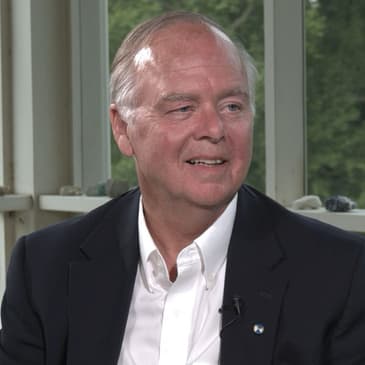
In this episode of The Jenny Beth Show, NY Times Best Selling author and historian Craig Shirley dives deep into the legacy of Ronald Reagan, offering listeners a rich perspective on the 1976 and 1980 campaigns that shaped Reagan's presidency. Shirley, a renowned Reagan scholar, shares personal anecdotes from his time working on Reagan's campaigns and discusses the pivotal moments that defined the conservative movement in America. He emphasizes how Reagan revitalized the American spirit, transforming the Republican Party into a forward-looking political force that embraced individual freedom and small government.
Shirley also explores Reagan's significant achievements, including his efforts to defeat the Soviet Union, restore American morale, and implement supply-side economics. He highlights Reagan’s belief in transferring power back to the individual, which played a key role in his economic policies that created millions of jobs and shrank the size of government. Through Shirley's expert analysis, this episode provides a detailed look at how Reagan's leadership reshaped not only the GOP but also America's global standing during a critical time in history.
Twitter/X: @CraigSmpa | @jennybethm
[00:00:00] [SPEAKER_01]: Government failed to secure inflation. Government failed to cure high taxes. Government failed
[00:00:07] [SPEAKER_01]: at many different levels through the 1960s and 70s, so there has to be an answer to that.
[00:00:13] [SPEAKER_01]: The answer is the individual, not government. That was, I mean, Reagan came along at the
[00:00:18] [SPEAKER_01]: right moment and the right time to convey his message.
[00:00:23] [SPEAKER_00]: Keeping our republic is on the line, and it requires patriots with great passion,
[00:00:28] [SPEAKER_00]: dedication and eternal vigilance to preserve our freedoms. Jenny Beth Martin is the co-founder
[00:00:34] [SPEAKER_00]: of Tea Party Patriots. She is an author, a filmmaker and one of Time magazine's most
[00:00:40] [SPEAKER_00]: influential people in the world. But the title she is most proud of is Mom to her Boy Girl Twins.
[00:00:47] [SPEAKER_00]: She has been at the forefront fighting to protect America's core principles for more than a decade.
[00:00:53] [SPEAKER_00]: Welcome to The Jenny Beth Show.
[00:00:55] [SPEAKER_02]: What is it take to become a leading authority on Ronald Reagan, one of America's most iconic
[00:01:00] [SPEAKER_02]: presidents? Today we dive into the life and insights of Craig Shirley, a New York Times bestselling
[00:01:06] [SPEAKER_02]: author who has not only written six books on Reagan but also served as the historical
[00:01:11] [SPEAKER_02]: advisor for the new Reagan movie. From his early days canvassing for Barry Goldwater
[00:01:17] [SPEAKER_02]: to becoming a best-selling author and a trusted Reagan scholar, Craig's story
[00:01:22] [SPEAKER_02]: is one of dedication and passion for American conservatism. In this first part of our two-part
[00:01:27] [SPEAKER_02]: series, Craig shares his unique perspective on Ronald Reagan's 1976 campaign, the pivotal moments that
[00:01:35] [SPEAKER_02]: defined Reagan's political career and the impact of his policies on America's future.
[00:01:41] [SPEAKER_02]: We'll uncover how Craig transitioned from a political operative to a revered author.
[00:01:46] [SPEAKER_02]: Stay tuned for an enlightening conversation with Craig Shirley that offers a blend
[00:01:50] [SPEAKER_02]: of historical insight and personal anecdotes providing a deeper understanding of the president
[00:01:56] [SPEAKER_02]: who revitalized the American spirit. Craig Shirley, thank you so much for doing our podcast and
[00:02:02] [SPEAKER_02]: for having me at your lovely beautiful home. Thank you, thank you very much, Jenny Beth.
[00:02:06] [SPEAKER_02]: You have written so many books. The stack if I hold it all up it would be like very tall,
[00:02:13] [SPEAKER_02]: feet tall. You've written six books on Ronald Reagan, right? Yes. And you were or are a historical
[00:02:20] [SPEAKER_02]: advisor to the new Reagan movie that's coming out. Yes, yes. Why did you decide to research
[00:02:26] [SPEAKER_02]: Reagan and become so well-versed in his history? My parents were charter members of the New
[00:02:33] [SPEAKER_01]: York State Conservative Party. They were delegates to the state convention every two years and they
[00:02:38] [SPEAKER_01]: were with the Buckleys and Mike Valerio, a lot of people like that. They're very active in the
[00:02:44] [SPEAKER_01]: early days of the conservative movement and they got my brother and me involved. And so we went,
[00:02:50] [SPEAKER_01]: we went door to door for very gold water and we went door to door for Richard Nixon,
[00:02:56] [SPEAKER_01]: brochures and got a lot of doors slammed in our face but conservatism has always been
[00:03:01] [SPEAKER_01]: in my blood. I worked on the 76th campaign. I worked on the 80 Reagan campaign where
[00:03:07] [SPEAKER_01]: I first met my wife, Zarene, 47 years ago. So I remember very distinctly after the 64 campaign
[00:03:15] [SPEAKER_01]: my father came home with a record album. The title of the record album was Ron DeGru with Destiny.
[00:03:21] [SPEAKER_01]: It was Reagan's speech for very gold water and he made my brother and me sit down and listen to
[00:03:26] [SPEAKER_01]: it. And after listening to, you know, it was long playing 33, you know, third, you know, long
[00:03:32] [SPEAKER_01]: playing record album. And afterwards I remember my father explaining this man Reagan himself should
[00:03:38] [SPEAKER_01]: be present. He was pretty prescient, you know, in 1964. So, you know, it just, I'd always been a
[00:03:45] [SPEAKER_01]: follower of Ronald Reagan, I always studied Ronald Reagan, I always read newspaper articles
[00:03:49] [SPEAKER_01]: about Ronald Reagan magazine articles. And so just one thing led to another. I worked on the
[00:03:55] [SPEAKER_01]: 80 campaign then I worked for the Republican National Committee which was the political arm
[00:04:01] [SPEAKER_01]: of the Reagan White House. I worked for the White House Conference on Small Business and I
[00:04:05] [SPEAKER_01]: worked on the 84 campaign. And then I started my own firm and a lot of my clients were clients
[00:04:11] [SPEAKER_01]: that I worked on in conjunction with the Reagan White House. Nick Rodney Contra's were a client,
[00:04:18] [SPEAKER_01]: the Afghan Moushad Deans, I worked on SDI, I worked on the 86 tax reform bill so I was
[00:04:23] [SPEAKER_01]: at the White House all the time, you know, working on strategy and all that. And
[00:04:29] [SPEAKER_01]: when I started my own company, one of my early clients was Thomas Nelson Publishing. They started
[00:04:36] [SPEAKER_01]: Thomas Nelson, you know, we remember the largest publisher of the Bible. Right. They started public
[00:04:41] [SPEAKER_01]: comparison division called Nelson Current and they hired my firm to do all the marketing for Nelson
[00:04:46] [SPEAKER_01]: Current. And the president of the company who is now passed away, unfortunately David Dunham
[00:04:51] [SPEAKER_01]: had a standing order and that was that we ever had a good idea for a book we're supposed
[00:04:55] [SPEAKER_01]: to call them and tell them. So I called him one day, I said, you know, I got a good idea for books
[00:05:01] [SPEAKER_01]: to tell me what's that? I said, nobody has ever written a book about the 1976 Reagan campaign.
[00:05:08] [SPEAKER_01]: Mrs. Reagan always said of Reagan's five national campaigns it was the most exciting.
[00:05:13] [SPEAKER_01]: And without 76 campaign, there is no 1980 campaign because it laid the foundation for
[00:05:18] [SPEAKER_01]: him to run in 1980, laid the ideological and personal foundation. He said, I love the idea,
[00:05:25] [SPEAKER_01]: go get me a writer. So I called all over Washington, I called George Will, I called Frank Donatelli,
[00:05:31] [SPEAKER_01]: I called lots of writers and lots of political activists and everybody had an excuse why they
[00:05:36] [SPEAKER_01]: couldn't write. They weren't interested in the subject. They were busy, yammy, yammy, yammy.
[00:05:41] [SPEAKER_01]: So after about three weeks, I report the sad news back to David. And I said, David,
[00:05:46] [SPEAKER_01]: I'm striking out on this idea for a writer for the 76 campaign book. And David said,
[00:05:54] [SPEAKER_01]: six little words that changed my life forever. He said, well, why don't you write it?
[00:05:59] [SPEAKER_01]: I said, okay, I'll write it. Sure. I thought I'd entertain leading notions about writing
[00:06:04] [SPEAKER_01]: steamy novels and stuff like that, but not nonfiction, not historical nonfiction. Although
[00:06:09] [SPEAKER_01]: I was history major in college, I studied history in my whole life and loved American history.
[00:06:16] [SPEAKER_01]: So I said, okay, what do I do? He said, well, first you got to write a treatment. I said,
[00:06:21] [SPEAKER_01]: what's the treatment? Yeah, you're not right. He laughed and he said,
[00:06:25] [SPEAKER_01]: I'll send you some samples. You can use templates. So I got the templates,
[00:06:30] [SPEAKER_01]: we got the samples, and I sent them back a template three weeks later, two weeks later.
[00:06:36] [SPEAKER_01]: And within a matter of days, I got a contract and a very large check and advance
[00:06:43] [SPEAKER_01]: with the good news is I got a contract and a very large advance. The bad news is I got a contract
[00:06:48] [SPEAKER_01]: and a very large advance. Now I got to write the darn right. So I signed the contract deposit
[00:06:54] [SPEAKER_01]: of the check and just set about gaining as much knowledge as I could about the 76 campaign. I
[00:07:00] [SPEAKER_01]: interviewed everybody who's still alive. I interviewed, you know, many of the Reagan
[00:07:04] [SPEAKER_01]: children I interviewed a lot of the Bush children I interviewed Howard Baker, I interviewed his
[00:07:10] [SPEAKER_01]: Sissy Baker, I interviewed so many people who are still alive. And when I started writing this
[00:07:16] [SPEAKER_01]: 20 years ago that I interviewed. And so after fashion, I came up with a book and it ended
[00:07:26] [SPEAKER_01]: up being on the Washington Post Best Seller's List. And they were very happy because it sold very
[00:07:31] [SPEAKER_01]: well. I was very happy because I had something in my hand show, you know, something for my
[00:07:37] [SPEAKER_01]: I mean, I had a lot of things might don't get me wrong. They're like coached and I built the
[00:07:41] [SPEAKER_01]: business and built a family. But writing a book is different is different. You're exactly right.
[00:07:46] [SPEAKER_01]: Exactly right. Something tangible to prove you have intellect, you know, not just a diploma
[00:07:53] [SPEAKER_01]: to hang on a wall, but actually something you can say, you know, I did this. I'm proud
[00:07:58] [SPEAKER_01]: of this accomplishment. Right. So I wrote the book it came out and met good reviews.
[00:08:04] [SPEAKER_01]: And a couple months later, I got a president from the public, a call from the president of ISI
[00:08:09] [SPEAKER_01]: publishers and says, I love Reagan's Revolution. But the story is incomplete. I said, yeah,
[00:08:16] [SPEAKER_01]: I know. He said, well, we want you to write the story, the book on the 1980 campaign.
[00:08:21] [SPEAKER_01]: So again, they sent me a contract and a very large check. And again, I set out gaining as
[00:08:26] [SPEAKER_01]: much knowledge as I could. I mean, I interviewed everybody and I dug into presidential libraries
[00:08:32] [SPEAKER_01]: the Reagan library and the Ford library and all these other locations, you know, national archives
[00:08:39] [SPEAKER_01]: and the Library of Congress. By the way, I have to say on my book on the 76th campaign,
[00:08:45] [SPEAKER_01]: I had a little trouble with the Reagan library. So I complained about one day to an old
[00:08:50] [SPEAKER_01]: Reagan speech writer, Peter Hanifor. And, lo and behold, Mrs. Reagan called
[00:08:58] [SPEAKER_01]: Reagan library and she says, you give Craig Shirley all the cooperation he wants, whatever
[00:09:03] [SPEAKER_01]: he wants you give it to him. Because I know he's going to write a good book for Ronnie.
[00:09:07] [SPEAKER_01]: So I did. And you know, she was my best friend after that. Right. Right.
[00:09:12] [SPEAKER_01]: So I wrote the book on the 80 campaign. And the nice thing was, was that really
[00:09:16] [SPEAKER_01]: it is the definitive story of the 1980 campaign. Nobody's ever, nobody's ever written
[00:09:21] [SPEAKER_01]: anything close to it. And I hope nobody ever will.
[00:09:25] [SPEAKER_02]: The Reagan, Reagan's revolution, the first one you were, you were seeing that this one was so
[00:09:30] [SPEAKER_02]: important, informative to how he became who he was. Yes.
[00:09:35] [SPEAKER_02]: Yeah. Mrs. Reagan thought it was such an important time. What elaborate on that?
[00:09:40] [SPEAKER_01]: Well, it's more about that period. Okay. It was a very dark period for the Republican
[00:09:44] [SPEAKER_01]: party in 1973 and 74. The country is in the depths of Watergate. Nixon is about to resign,
[00:09:50] [SPEAKER_01]: Spiro Agnew has already resigned. And by the way, Spiro Agnew was the front runner for 1976,
[00:09:56] [SPEAKER_01]: not Ronald Reagan. Spiro Agnew absent his corruption and pretty leading no low contender
[00:10:03] [SPEAKER_01]: in resigning the vice president. See would have been nominated by the Republican party in 76.
[00:10:09] [SPEAKER_01]: But that changes everything for Reagan. And then Nixon resignation also. The path is clear
[00:10:16] [SPEAKER_01]: through the wilderness for Ronald Reagan, who previously wasn't really thinking about running
[00:10:21] [SPEAKER_01]: for president until 74, 75 when it becomes clear that the nomination is now wide open because Gerald
[00:10:28] [SPEAKER_01]: Ford is challenged. Okay. He's a non incumbent appointed president. He's never asked anybody
[00:10:36] [SPEAKER_01]: in the country for his vote except outside of one congressional district in Michigan.
[00:10:41] [SPEAKER_01]: So nobody has anything invested in Gerald Ford. So now that it's open and Reagan comes
[00:10:48] [SPEAKER_01]: out of 2259 delegate votes cast in Kansas City in August 76, Reagan comes within 69
[00:10:56] [SPEAKER_01]: delegate votes of beating the incumbent. And only because of hijinks in the Ohio,
[00:11:04] [SPEAKER_01]: Mississippi and New Jersey delegations is Reagan denied winning the nomination 76.
[00:11:10] [SPEAKER_01]: Now, a lot of people say it was good because Reagan and 80 was a better, stronger, more prepared
[00:11:15] [SPEAKER_01]: candidate in 76. I'm not so sure I buy him by that because if you look at his him in 76,
[00:11:23] [SPEAKER_01]: I mean he was on fire, his speeches, he was at the top of his game. And who's to say that he
[00:11:29] [SPEAKER_01]: wouldn't become president and still been able to persuade a conservative Democratic Congress
[00:11:35] [SPEAKER_01]: to follow him a lot of legislation. Now on the other side of the equation, I will tell you is
[00:11:40] [SPEAKER_01]: Reagan 76 was not a fully formed conservative. He had the national defense. He had the family
[00:11:49] [SPEAKER_01]: arguments, pro-life arguments a little bit. He didn't have the tax cutting arguments at all.
[00:11:55] [SPEAKER_01]: He didn't have the anti he had some of the anti Soviet argument, but he was incomplete.
[00:11:59] [SPEAKER_01]: Issue cluster was incomplete. So the issue cluster was complete in 1980. The one that Donald Trump
[00:12:05] [SPEAKER_01]: runs on today is the one Ronald Reagan introduced to the party in 1980.
[00:12:11] [SPEAKER_02]: And when you say it wasn't complete, what is a complete picture of conservatism and a conservative?
[00:12:19] [SPEAKER_01]: Conservative, well, as Reagan said in 64, maximum freedom consistent with law and order.
[00:12:26] [SPEAKER_01]: I would say it's about a number of words, individuality, privacy, dignity,
[00:12:34] [SPEAKER_01]: life extending for all human beings. I believe in supply side happiness,
[00:12:41] [SPEAKER_01]: not just supply side economics, but supply, you know, is just to create a world where
[00:12:46] [SPEAKER_01]: everybody can reach the highest level of achievement without the heavy hand of
[00:12:51] [SPEAKER_01]: government or nobility interfering is leaving people alone. I know I'm not articulating this well,
[00:12:58] [SPEAKER_01]: but it is that basically it comes down to the individual, the privacy and the rights of the
[00:13:04] [SPEAKER_01]: individual, which is where American conservatism has been since the revolution. The revolution
[00:13:10] [SPEAKER_01]: was really about throwing off the shackles of the British empire, throwing off the
[00:13:15] [SPEAKER_01]: Church of England and allowing the individual to flourish. That's right.
[00:13:24] [SPEAKER_02]: It's hard to imagine what it was like before that because we've never experienced anything
[00:13:29] [SPEAKER_01]: like that. No, but a different sort of way, not like the British empire.
[00:13:35] [SPEAKER_02]: Although with COVID, we sure experienced a lot of heavy handed government.
[00:13:39] [SPEAKER_01]: Yes, absolutely. Starting with the New Deal and on forward. Absolutely. But you know,
[00:13:44] [SPEAKER_01]: under the British crown, the Church of England, which is overlooked completely by historians,
[00:13:52] [SPEAKER_01]: Revolutionary War was as much a religious war as it was a war for personal freedom
[00:13:56] [SPEAKER_01]: and independence for the American county. The Church of England was the political arm
[00:14:04] [SPEAKER_01]: of the King of England. The Church of England wasn't dominant in Massachusetts because
[00:14:11] [SPEAKER_01]: those pilgrims and those religious sects had already gotten there first. It wasn't because
[00:14:18] [SPEAKER_01]: William Penn had settled in Pennsylvania, but it was very prominent in the South.
[00:14:23] [SPEAKER_01]: They collected taxes. They meted out punishment. Some clergymen who preached
[00:14:29] [SPEAKER_01]: other faiths other than the Church of England were actually hung by the Church of England.
[00:14:34] [SPEAKER_01]: They would physically punish people. It was a very, very suppressive political arm of
[00:14:41] [SPEAKER_01]: the British crown. So as much as the American Revolution was about all those other things,
[00:14:49] [SPEAKER_01]: it was also a war for American religious, which is why it's in the First Amendment, right?
[00:14:55] [SPEAKER_01]: Is that you will have no state religion because they had a state religion and it was awful.
[00:15:00] [SPEAKER_02]: Right. That's exactly right. Okay, so he doesn't win. There are shenanigans.
[00:15:08] [SPEAKER_02]: He learned a lot and then he became a full-fledged conservative.
[00:15:13] [SPEAKER_02]: And what happened during the campaign season in 1979 and 1980?
[00:15:21] [SPEAKER_01]: There were a lot of ups and downs. He almost lost a nomination because of his
[00:15:27] [SPEAKER_01]: inter-tenant list to his own campaign. Reagan, when he had a tendency to coast,
[00:15:33] [SPEAKER_01]: it was only when he had to fight did he become, his eyes would brighten up, his resolve would
[00:15:42] [SPEAKER_01]: sharpen, his message would sharpen, and then he became really focused. And then after he lost
[00:15:49] [SPEAKER_01]: the Iowa caucuses to George Bush in 1980, everybody was saying it's over for Reagan.
[00:15:55] [SPEAKER_01]: You know, we were just what Tom Petter of NBC said the night of the hour caucuses, right? It's
[00:16:00] [SPEAKER_01]: huge upset. I mean, George Bush beats Ronald Reagan, who was a local hero in Iowa. He broadcasts
[00:16:08] [SPEAKER_01]: two different radio stations there and he went to college just over the river in Illinois.
[00:16:15] [SPEAKER_01]: And Tom Petter that night said, we have just witnessed the political funeral of
[00:16:19] [SPEAKER_01]: Ronald Reagan. He said that now today there's only one week between the Iowa caucuses and
[00:16:26] [SPEAKER_01]: New Hampshire primary. Not enough time to recover, but in 1980 there were five weeks in between the
[00:16:32] [SPEAKER_01]: Iowa caucuses and New Hampshire primary. So it gave Reagan time because he wasn't campaigning in
[00:16:37] [SPEAKER_01]: Iowa the way he should have been. He was inattentive and he lost. And the people of Iowa
[00:16:42] [SPEAKER_01]: really resented it. They said we're going to, this is a vote. This is a strategic vote.
[00:16:48] [SPEAKER_01]: We're voting against Reagan for ignoring us. So he went to New Hampshire and just,
[00:16:53] [SPEAKER_01]: he just stayed there and just campaigned there every day. He campaigned there, you know, one day
[00:16:59] [SPEAKER_01]: he was campaigning for morning delight overnight in the campaign bus, the press bus. One night
[00:17:06] [SPEAKER_01]: they hung a sign in the buses, it says, bring the Reagan 44 because they were covering him
[00:17:12] [SPEAKER_01]: and they were exhausted from covering a man who was twice their age driving them, you know,
[00:17:18] [SPEAKER_01]: into the grass because he was so aggressive. So, and of course that was the side of the famous
[00:17:24] [SPEAKER_01]: debate. Now a lot of people think, you know, I'm paying for this microphone. Mr. Brain won
[00:17:30] [SPEAKER_01]: the campaign for Reagan. He would have won anyway, but it did increase his margin. He won
[00:17:35] [SPEAKER_01]: 53-21 over George Bush. Crushed him, he reinstalled himself as the front runner for the 1988 nomination.
[00:17:44] [SPEAKER_01]: But absent that, that scene of him yelling at the National Telegraph editor, right, Mr. Brain,
[00:17:54] [SPEAKER_02]: absent that. Elaborate on that a little in case people like my daughter or son don't know.
[00:18:00] [SPEAKER_01]: Is that George Ronald Reagan had avoided all presidential debates before that,
[00:18:06] [SPEAKER_01]: right? Because he had a campaign manager said, no, we don't need to. We're the front runner.
[00:18:12] [SPEAKER_01]: We don't need to talk to these people, blah, blah, blah. And people resented it. The Reagan was
[00:18:15] [SPEAKER_01]: absent here at all these debates and it fed the rumors too that he was at home because
[00:18:21] [SPEAKER_01]: he was too old to run against the president. Now this was, you know, 40 years ago. So
[00:18:25] [SPEAKER_01]: he was 69 at the time. And, you know, today that's not 69, oh, yawn, you know? But 40 years ago it was
[00:18:34] [SPEAKER_01]: considered to be an elderly man. Was he up to being president? And there were a lot of columns,
[00:18:41] [SPEAKER_01]: a lot of newspaper reports, a lot of TV reports saying he was too old. Is he dottering? This
[00:18:47] [SPEAKER_01]: is not the other thing. I mean, Reagan's age and all the polling came up as number one.
[00:18:51] [SPEAKER_01]: What is your chief concern about Ronald Reagan? His age, his age, his age. People turn out when he
[00:18:56] [SPEAKER_01]: did speak, they turn out just to see him, just to see how old he looked, right? I mean, they told
[00:19:00] [SPEAKER_01]: newspaper reports, I only came to see how old he was. You know, I didn't come to shear him or
[00:19:04] [SPEAKER_01]: support him. So now it's time for the national debate and Reagan accepts this because he's
[00:19:13] [SPEAKER_01]: now running behind George Bush. Pauling in New Hampshire still had him behind George Bush
[00:19:19] [SPEAKER_01]: so he accepts it. And Bush, you know, accepts it too, obviously. And there was a minor
[00:19:27] [SPEAKER_01]: side drama over the fact that according to the FEC at the time, they couldn't sponsor
[00:19:37] [SPEAKER_01]: a debate with just two candidates. They had to invite everybody, unless it was paid for by
[00:19:42] [SPEAKER_01]: the campaigns themselves. So the national debate couldn't violate FEC rules by paying for the
[00:19:47] [SPEAKER_01]: debate. So the Reagan campaign says, okay, we'll pay for it. Reagan said I'll pay for it. So Reagan
[00:19:53] [SPEAKER_01]: voted the bill for the debate himself. So that way he could just make an debate for himself
[00:19:59] [SPEAKER_01]: and George Bush and exclude all the other candidates. And so that became a minor dust-up
[00:20:04] [SPEAKER_01]: because the other four candidates who were called the national four, you know, showed up and made
[00:20:08] [SPEAKER_01]: a scene and that became a side story. Anyway, they have the debate now Reagan is on fire.
[00:20:15] [SPEAKER_01]: I mean, he is just clicking on issue after issue about national defense and George Bush's failure
[00:20:22] [SPEAKER_01]: as CIA chairman to anticipate Soviet intentions and all these other things. There comes an explosive
[00:20:29] [SPEAKER_01]: moment in the debate where Reagan tries to make a point. Mr. Green, the editor, is saying
[00:20:38] [SPEAKER_01]: Governor, you sit down, you can't talk because now you're turned, dah-dah-dah-dah.
[00:20:42] [SPEAKER_01]: And Reagan finally stands up and explodes. He says, Mr. Green, I am paying for this microphone.
[00:20:48] [SPEAKER_01]: And National High School explodes. 3,000 people there and just goes crazy. Now, and of course,
[00:20:57] [SPEAKER_01]: George Bush is sitting there, goody-tousos like this, you know, looking like the schoolboy who
[00:21:03] [SPEAKER_01]: you know stole the apple pie or something. So now this is shown on television over and over
[00:21:09] [SPEAKER_01]: of Reagan just exploding and for the, for this is happening on a Friday night. And so it's for
[00:21:16] [SPEAKER_01]: Saturday, Sunday, Saturday, Sunday, Monday and Tuesday for the next four days. And of course,
[00:21:21] [SPEAKER_01]: Reagan wins the debate big. His boy is installed as front runner and then just really just
[00:21:29] [SPEAKER_01]: doesn't walk to the nomination. He's still got a fight for it. But he gets obviously
[00:21:33] [SPEAKER_01]: first ballot nomination in 1980 and takes George Bush to produce a unified convention,
[00:21:44] [SPEAKER_01]: which is interesting. I'll tell you as a sidebar, I hear these people on cable television talking
[00:21:49] [SPEAKER_01]: about VP and their neighbor Trump and they talked about, well, I saw a girl the other night,
[00:21:55] [SPEAKER_01]: obviously she has no campaign to go to her own name or name. But she said, well,
[00:22:00] [SPEAKER_01]: you know, he's a, he used to pick Rubio because Rubio has really good executive experience.
[00:22:07] [SPEAKER_01]: And I'm yelling at the TV, I said to Zarina says nobody votes for vice president. Nobody picks
[00:22:12] [SPEAKER_01]: a vice president because he can sign a piece of paper, right? There's one reason to pick a VP
[00:22:19] [SPEAKER_01]: candidate to produce a unified convention, unified conventions, win in the fall,
[00:22:24] [SPEAKER_01]: divided conventions, losing the fall. And you think about over the years,
[00:22:27] [SPEAKER_01]: 64 Republicans divided. They lose Democrats United, they win 68. The Democrats united
[00:22:33] [SPEAKER_01]: or divided Republicans are united. Republicans win 72. The Democrats are divided Republicans
[00:22:40] [SPEAKER_01]: United Republicans win 76. The Democrats are united Republicans are divided. They win 80.
[00:22:46] [SPEAKER_01]: The Democrats are divided the Republicans United. They win down through history. I can point to
[00:22:50] [SPEAKER_01]: example after example, after example, unified convention. So that's why you gotta pull the
[00:22:56] [SPEAKER_01]: party together. So that's why you pick a vice president, why you pick a qualified vice president.
[00:23:01] [SPEAKER_01]: That doesn't mean arguing for picking, you know, some silly candidate or something and
[00:23:05] [SPEAKER_01]: a George Clooney or something like this. You can tell me he's qualified, but somebody who
[00:23:09] [SPEAKER_01]: was ideologically sympathetic over the delegates to produce a unified convention.
[00:23:15] [SPEAKER_01]: Like, I'll tell you, like, you know, like, like Tim Scott. Tim Scott is
[00:23:18] [SPEAKER_01]: the perfect choice for Donald Trump. Absolutely. And why do you say that?
[00:23:24] [SPEAKER_01]: Because he and Rand Paul are the two smartest men in the United States Senate
[00:23:28] [SPEAKER_01]: because he's conservative, because he's articulate as hell. Because if I had to debate Tim Scott,
[00:23:34] [SPEAKER_01]: I'd be scared to death that, you know, facing him in a debate. I think he would definitely
[00:23:39] [SPEAKER_01]: produce a unified convention. He touches all the right, forget the racial buttons.
[00:23:44] [SPEAKER_01]: The man is great depth and great intellect. He would be an excellent choice for Trump.
[00:23:48] [SPEAKER_02]: I thought that his campaign video, when he launched his campaign for this, for running for
[00:23:56] [SPEAKER_02]: president right now, even though he's out, I thought that it was a great video. I thought that
[00:24:01] [SPEAKER_02]: his speech was good. I heard some people say, oh, well, it's kind of way too scripted or
[00:24:06] [SPEAKER_02]: pollsters put it together or whatever. It's like, yeah, but this is a good message.
[00:24:10] [SPEAKER_02]: You've got to push aside some of that and just, this is a good message for America.
[00:24:15] [SPEAKER_01]: Focus on the message. You're absolutely right. You're absolutely right. I mean, look, he ran,
[00:24:20] [SPEAKER_01]: but a lot of people, you know, DeSantis ran. Nobody, this is Donald Trump's year.
[00:24:25] [SPEAKER_01]: This is Donald Trump's year. There's nobody else going to get the Republican nomination
[00:24:29] [SPEAKER_02]: other than Donald Trump. That's right. That's right. And I, that's what I thought the whole
[00:24:34] [SPEAKER_02]: entire time. I just was like, if they supported Trump, not even they, we supported Trump through
[00:24:40] [SPEAKER_02]: everything from 2016 all the way on. Do you think all of a sudden we're going to be like, oh,
[00:24:45] [SPEAKER_01]: gee, someone else is running? We'll support you? It's such an important point. We all made a psychic
[00:24:51] [SPEAKER_01]: investment in Donald Trump. It's like Richard Nixon is that when even when he resigned in August
[00:24:57] [SPEAKER_01]: 74, right, is he still had a base in support because voters had voted for him in 52, 56,
[00:25:06] [SPEAKER_01]: 60, 68, 72. So they had voted for him five times. They were not just going to walk away from this man
[00:25:13] [SPEAKER_01]: because they made a psychic investment in him. Right. Just as voters have made a psychic
[00:25:18] [SPEAKER_01]: investment in Donald Trump, just as voters made a psychic investment in Ronald Reagan.
[00:25:23] [SPEAKER_02]: Right. That's right. And when we're talking about a vice presidential candidate, what you just
[00:25:32] [SPEAKER_02]: were saying about a unified ticket is really interesting. And I've listened to debates online
[00:25:37] [SPEAKER_02]: and among activists when well, I want this person or I want that person. And I've always just been
[00:25:41] [SPEAKER_02]: like, it doesn't matter what we want. It's what the nominee wants. Right. Right. And I kind of
[00:25:48] [SPEAKER_02]: have just said, you know, and also what do vice presidents do? Presidents of the Senate. Yeah.
[00:25:54] [SPEAKER_02]: I mean, and if it's not, if they don't have to deal, they don't have to go out and vote for
[00:25:59] [SPEAKER_02]: tie breakers in the Senate. Right. Right. Once a millennium, they voted for a tie breaker.
[00:26:03] [SPEAKER_02]: Then there's not a lot that we're seeing from the vice presidents.
[00:26:08] [SPEAKER_01]: You know, when I was working for a brief time, I worked for George Bush when he was vice president.
[00:26:13] [SPEAKER_01]: And that was office. I worked for his political, his pack that was getting ready to run him for
[00:26:18] [SPEAKER_01]: president in 1998. And he would talk about being vice president. He said he had a motto. He said,
[00:26:27] [SPEAKER_01]: you die, fly. You know, his job was to go to funerals. Right. Yeah. And I think that I heard many
[00:26:35] [SPEAKER_02]: speeches or several speeches that the vice president of Pence gave while he was, was vice
[00:26:41] [SPEAKER_02]: president and he did a great job of explaining what Trump was doing and what the Trump presidency
[00:26:47] [SPEAKER_02]: and administration was doing. And I think that's an important role for vice president.
[00:26:50] [SPEAKER_01]: That's the job of the vice president is to support the president. Right. I mean, you got to think
[00:26:54] [SPEAKER_01]: long and hard about a time when even, even Gerald Ford, when he was vice president under Nixon,
[00:27:02] [SPEAKER_01]: really never broke with Nixon until after Nixon resigned when he said our long national nightmare
[00:27:07] [SPEAKER_01]: is over. But he stood pretty loyally by Nixon. I mean, he would let little things leak out
[00:27:13] [SPEAKER_01]: at the very in the last couple of months when it was obvious to everybody that Nixon was going
[00:27:18] [SPEAKER_01]: to have to resign because he'd lost the, he'd lost the ability to go. He'd lost his basic support.
[00:27:23] [SPEAKER_01]: You don't have the support of the American people. You don't have any.
[00:27:26] [SPEAKER_01]: And but he knew to his credit, he was loyal to Nixon and even then was very,
[00:27:33] [SPEAKER_01]: very circumspect after Nixon's resignation. But he never really criticized him publicly
[00:27:39] [SPEAKER_02]: other than say it's over with. Okay. So as we move forward, Reagan becomes president.
[00:27:47] [SPEAKER_02]: Right. And you mentioned that between 76 and 80, he became much better, much better
[00:27:54] [SPEAKER_02]: versed in the Soviet more complete, including in the so regarding the Soviets. Yes.
[00:28:00] [SPEAKER_01]: And that that's really 76. He was already a hawk. He was already a hawk, but he didn't
[00:28:05] [SPEAKER_01]: really until until 1980, he really achieved the message. I remember one time during the 80 campaign
[00:28:13] [SPEAKER_01]: where he said, we don't need nuclear parity with the Soviets. We need nuclear superiority.
[00:28:20] [SPEAKER_01]: And a lot of people condemned him for it. But I knew exactly what he meant is that we need to
[00:28:26] [SPEAKER_01]: spend the Soviets in the ground so we can defeat them. We need to use every means at our
[00:28:31] [SPEAKER_01]: disposal. Radio for Europe, radio Vatican is working with indigenous third party forces like
[00:28:39] [SPEAKER_01]: the Musha and the Belva revolution and the Nicaraguan Contras is to knock the Soviets back on
[00:28:46] [SPEAKER_01]: defense. That's what we need to do. And so I understood it took me a while for it to sink
[00:28:51] [SPEAKER_01]: in. But then I realized what Reagan meant about winning having our we need an arms race is
[00:28:56] [SPEAKER_01]: what he said. And because everybody's to grow, we're getting arms race, we're getting arms
[00:29:00] [SPEAKER_01]: race, we need another salt free to the Soviets can violate. And that became really one of his
[00:29:07] [SPEAKER_02]: legacy is that he defeated the Soviets. So talk about his presidency. Well, that was that was
[00:29:14] [SPEAKER_01]: he had three great goals he wanted to achieve because a leader, Jimmy Carter, there was a saying
[00:29:21] [SPEAKER_01]: in 1980 going around the country that if you ask Jimmy Carter what time it was, he'd tell you
[00:29:27] [SPEAKER_01]: how to build a watch. And if you ask Ronald Reagan what time it was, he say it's time to get this
[00:29:32] [SPEAKER_01]: country moving again. Once once a tactician, one as a leader, Reagan didn't sit around
[00:29:38] [SPEAKER_01]: scheduling the tennis courts at the White House like Jimmy Carter used to Jimmy Carter used to
[00:29:44] [SPEAKER_01]: schedule the president of skates used to decide who could play who couldn't play on the tennis
[00:29:49] [SPEAKER_01]: on the White House tennis court. That's insane. He's the president of the United States.
[00:29:54] [SPEAKER_01]: tennis courts was by the way, there were two sports. He loves sports, he loves sports,
[00:29:59] [SPEAKER_01]: he loved football, he loved baseball, he loved the two sports he despised. One was jogging,
[00:30:03] [SPEAKER_01]: Neil was tennis, but he probably didn't even know that there were tennis courts at the White
[00:30:07] [SPEAKER_01]: House. And you know what, president's not supposed to care about that stuff, right? Right.
[00:30:11] [SPEAKER_01]: President's supposed to think up, think about big ideas. And so he thought about big ideas.
[00:30:16] [SPEAKER_01]: He thought about the restoration of the American morale was most important.
[00:30:21] [SPEAKER_01]: He knew, he knew instinctively that that a happy people are productive people.
[00:30:27] [SPEAKER_01]: And after 17 years, we had gone through, America had gone through 17 years of real torture from the
[00:30:34] [SPEAKER_01]: time of John Kennedy's assassination through the failure of the Johnson administration,
[00:30:40] [SPEAKER_01]: through the failure of Vietnam, through the failure of Nixon's administration,
[00:30:45] [SPEAKER_01]: through high inflation, high interest rates through the 70s with Pet Rocks and John Travolta
[00:30:51] [SPEAKER_01]: and losing the Soviets. And the failure of Jimmy Carter presidency from 1963 to 19,
[00:30:58] [SPEAKER_01]: we're used to being winners, right? Americans were winners. We could beat the Nazis. We could beat
[00:31:05] [SPEAKER_01]: the Japanese. We could win the Industrial Revolution. We could win the Civil War. I mean,
[00:31:11] [SPEAKER_01]: the country could win the Civil War because it really is that we believe in freedom for all, right?
[00:31:17] [SPEAKER_01]: Right. Is that from the time of the American Revolution, we pretty much won everything.
[00:31:23] [SPEAKER_01]: That's part of the American creed, right? It's part of the American exceptionalism. I mean,
[00:31:27] [SPEAKER_01]: that is American exceptionalism. I mean, who would think the two little bicycle repair men
[00:31:32] [SPEAKER_01]: from Dayton, Ohio would invent an airplane that fly? They were scientists.
[00:31:38] [SPEAKER_01]: Yes, change the world. They weren't scientists. They didn't have a high school diploma. And yet
[00:31:44] [SPEAKER_01]: they changed the world by inventing a heavier than aircraft, right? The atom, the space race,
[00:31:53] [SPEAKER_01]: the moon, all these things we win at. So we're not used to losing, but then starting in 1963
[00:31:59] [SPEAKER_01]: through 80, we're losing all the time. We're losing Eastern Europe. We're losing the Soviets.
[00:32:04] [SPEAKER_01]: We're losing the Warsaw Pact. We're losing the war of inflation. We're losing presidents.
[00:32:11] [SPEAKER_01]: We're losing everything. And Reagan changes all that. Reagan changes all that because he talks
[00:32:18] [SPEAKER_01]: about, you know, the Democratic Party had been the party of the future from the time of,
[00:32:25] [SPEAKER_01]: excuse me, from the time of the New Deal up until the time of Kennedy administration, right?
[00:32:30] [SPEAKER_01]: Happy Days Are Here Again was FDR's theme song. John Kennedy ran for the new frontier,
[00:32:39] [SPEAKER_01]: it was the new frontier. And he said, we need to get this country moving again, right? It was
[00:32:43] [SPEAKER_01]: always about the future. The Republican Party was the green eye shade, spinach eating bookkeepers.
[00:32:50] [SPEAKER_01]: We're the nasty old balanced budget guys, right? Only until 1980, Reagan acquired
[00:32:56] [SPEAKER_01]: supply side economics and a message for the future, right? No 18 year old wants to hear about how
[00:33:03] [SPEAKER_01]: lousy the future is going to be. The way Carter was talking about a future of scarcity,
[00:33:08] [SPEAKER_01]: a future of shrinking ties, a future of, you know, he gave a commencement speech at Harvard
[00:33:15] [SPEAKER_01]: in 1979. He says, we need to get over in order to fear of communism. You know,
[00:33:20] [SPEAKER_01]: that's just the words of second place. And in fact, Henry Kissinger, when he was Secretary of
[00:33:27] [SPEAKER_01]: State, his, he said his job was to guide the United States and do an acceptable second place,
[00:33:33] [SPEAKER_01]: right? He compared us to Athens and the Soviets to Sparta. And of course, his history was kind
[00:33:40] [SPEAKER_01]: of missed, not correct because even though Sparta is reputation as being militant and Athens
[00:33:46] [SPEAKER_01]: has the reputation of being the intellect, the Peloponnesian war lost lasted 300 years
[00:33:52] [SPEAKER_01]: with Athens actually winning. So he got his history wrong, but everybody knew what he meant.
[00:33:57] [SPEAKER_01]: So I hope all the elites, Henry Kissinger, Jimmy Carter, all the elites have this loser's
[00:34:03] [SPEAKER_01]: attitude. Reagan comes out of the West as populist, it's anti-elitist, it's
[00:34:07] [SPEAKER_01]: anti-intellectual conservative and projects an entirely different message,
[00:34:12] [SPEAKER_01]: entirely different message. And Americans, people like what they hear because, you know,
[00:34:17] [SPEAKER_01]: I remember the debate 1980 when he's debating Carter and his, you know, Carter was chatting him on
[00:34:23] [SPEAKER_01]: how his tax cuts would be inflationary. And Carter says, how is it inflationary for the
[00:34:28] [SPEAKER_01]: government to take your money and spend it the way that you want? But it, but it is inflationary
[00:34:33] [SPEAKER_01]: for an American individual to keep their money and spend it the way they want, right? Carter
[00:34:38] [SPEAKER_01]: was blah, blah, blah, he had no response to that. Right. Because there isn't a good response to that.
[00:34:45] [SPEAKER_01]: Yeah. But I mean, again, it all goes back to individuality, right? Right. Personal freedom,
[00:34:51] [SPEAKER_02]: personal dignity, personal privacy. Right. And also being willing to do tax cuts,
[00:34:58] [SPEAKER_02]: right? Because I helped grow the economy and you said between 76 and 80.
[00:35:03] [SPEAKER_01]: That's what he acquired. That's when he started acquiring the supply side economic message.
[00:35:08] [SPEAKER_01]: I remember I was with Reagan, there was a me, I think it was a CPAC in the early 80s.
[00:35:14] [SPEAKER_01]: And there was a private reception before the dinner and the group of conservatives we were
[00:35:18] [SPEAKER_01]: standing around Reagan, he was talking about because his tax cuts were on the
[00:35:23] [SPEAKER_01]: in the proposal stage of Congress, they hadn't been passed yet. He said, look,
[00:35:27] [SPEAKER_01]: I know a lot of people are saying about the tax cuts, but it's not just about economic
[00:35:32] [SPEAKER_01]: growth and stimulating the economy. It's also about sending sending power away from
[00:35:40] [SPEAKER_01]: the government back to the individual. Reagan knew power cannot be destroyed nor created.
[00:35:49] [SPEAKER_01]: Power can only been moved around and power in the form of the regulation of speech in the form
[00:35:55] [SPEAKER_01]: of taxes had been moving steadily from the time of the New Deal up until the Carter's presidency,
[00:36:01] [SPEAKER_01]: power had been moving away from the individual in the states and localities to the national government.
[00:36:08] [SPEAKER_01]: Reagan wanted to reverse that as a true federalist, right? He wanted power for the individual,
[00:36:13] [SPEAKER_01]: not for the state. So that was the framework for a new federalism theme of his
[00:36:19] [SPEAKER_01]: administration was to send power back to the individual. And it worked well, right?
[00:36:24] [SPEAKER_01]: It worked very well. Yeah. And then created 18 million new jobs, right? He created when he became
[00:36:33] [SPEAKER_01]: president there were 4,000 millionaires. When he left as president there were 34,000 millionaires
[00:36:39] [SPEAKER_01]: is that he eradicated high interest rates, he eradicated high inflation. He shrunk the size
[00:36:45] [SPEAKER_01]: of, as he promised, he shrunk the size of Washington because he grew the size of the
[00:36:54] [SPEAKER_01]: so I mean in the best of Jefferson, you know people used to say well Louisiana Purchase
[00:37:00] [SPEAKER_01]: proved that Jefferson wasn't much of a constitutionalist or a federalist. No,
[00:37:05] [SPEAKER_01]: it doesn't. It proves just the opposite. He was because what the Louisiana Purchase was six times
[00:37:11] [SPEAKER_01]: the size in land mass of the existing country but he doesn't grow the size of the government,
[00:37:17] [SPEAKER_01]: he only grows the size of the country. So that by definition takes power away from Washington
[00:37:21] [SPEAKER_01]: and sends it back. It diffuses. It's bigger, yeah it's a bigger space. And that's what Reagan was
[00:37:26] [SPEAKER_01]: doing with his anti- speech regulation you know don't forget he signed the fairness,
[00:37:32] [SPEAKER_01]: he refused to sign the fairness document. And why is that important? Because it gave people
[00:37:37] [SPEAKER_01]: the right to speak the way they wanted. The fairness document had been on the books for
[00:37:41] [SPEAKER_01]: many years, right? And for years they had it if Jenny Beth Martin goes on W ABC in New York
[00:37:48] [SPEAKER_01]: City and talks for half an hour by American conservatism, they got to pick Ralph Nader to come
[00:37:54] [SPEAKER_01]: on for a half an hour to talk about American liberalism. And it was just a bureaucratic nightmare.
[00:37:59] [SPEAKER_01]: And so often times radio shows wouldn't have on Jenny Beth Martin because then they got to go
[00:38:05] [SPEAKER_01]: through the whole rigmarole of getting a liberal and giving him equal time. Reagan said this
[00:38:11] [SPEAKER_01]: is nonsense. He violates the First Amendment, violates free speech. So he refused to renew
[00:38:16] [SPEAKER_01]: the fairness document. There were a lot of conservatives like Phyllis Schlafly who were
[00:38:20] [SPEAKER_01]: actually upset with him for not renewing it. But it spawned the growth of hundreds of conservative
[00:38:25] [SPEAKER_01]: talk radio stations around the country which is for us is an important part of communication
[00:38:30] [SPEAKER_01]: because we know what the networks are like, we know what the big city newspapers are like,
[00:38:35] [SPEAKER_01]: but now we have your podcast and we have thousands of other podcasts and we have
[00:38:41] [SPEAKER_01]: talk radio, we have Newsmax and Fox and other cable systems and our own newspapers, Washington
[00:38:47] [SPEAKER_01]: Times and Washington, so we have our own communications infrastructure that we didn't have 40 years ago.
[00:38:57] [SPEAKER_02]: And today when people say, oh, we're up against the mainstream media and how tough it is,
[00:39:02] [SPEAKER_02]: and it's tough to be sure, but it is not nearly as tough as when you had none of the other
[00:39:08] [SPEAKER_02]: conservative networks to spread your voice. When I was coming up with this business,
[00:39:13] [SPEAKER_01]: what many years ago when I was young is we didn't have any of that. We didn't have any.
[00:39:19] [SPEAKER_01]: We had National View and the Human Events. Those were our publications and there were a
[00:39:24] [SPEAKER_01]: couple of newsletters like Pink Sheet on the lap, stuff like that. But that was our formal
[00:39:29] [SPEAKER_01]: communication. NBC, you're a conservative, hang up the phone. They wouldn't talk to us,
[00:39:36] [SPEAKER_01]: wouldn't give us the time of day, is that they carried all liberal message. And it's astonishing
[00:39:42] [SPEAKER_01]: that we're able to win given that communications blackout. It's astonishing that we were able to win
[00:39:50] [SPEAKER_01]: starting in, I mean, I wouldn't include Nixon because Nixon wasn't conservative, he was a Republican,
[00:39:57] [SPEAKER_01]: but starting in the 70s, we started pushing back and we started winning because we were
[00:40:01] [SPEAKER_01]: getting our message out. And a big portion of that really is direct mail. A big reason for that is
[00:40:07] [SPEAKER_01]: it was biggery and other direct mailers for allowing servers to use the post office to get
[00:40:12] [SPEAKER_01]: their message out because they couldn't get it out anyplace else. Direct, just direct to the
[00:40:16] [SPEAKER_02]: mailbox. Direct contact without. And I actually think in the 2024 campaign, that direct contact
[00:40:24] [SPEAKER_02]: is going to be very important yet again because you're getting so many messages on
[00:40:29] [SPEAKER_02]: social media and so many messages in your text and so many messages everywhere else.
[00:40:33] [SPEAKER_02]: So many bad messages. Yes, so many bad messages that direct contact is a little bit unexpected
[00:40:40] [SPEAKER_02]: to be sure. And the message was one that did resonate with where Americans were,
[00:40:48] [SPEAKER_02]: American exceptionalism, they were feeling down, they needed to restore that American morale.
[00:40:54] [SPEAKER_01]: Is that always showed, you know, American liberalism had dominated American politics from
[00:40:59] [SPEAKER_01]: the time of the New Deal up until the late 1970s. And Paulie started popping up saying,
[00:41:06] [SPEAKER_01]: the country is growing conservative, not liberal. It was a two to one. It was just not sure.
[00:41:11] [SPEAKER_02]: Despite all their efforts, it still was going conservative.
[00:41:13] [SPEAKER_01]: It was going two to one for two reasons. One, we were getting our message out,
[00:41:17] [SPEAKER_01]: not well, but we're going to get a message out. And the object values of liberalism.
[00:41:22] [SPEAKER_01]: You know, liberalism failed to or government was put it this way. Government failed to
[00:41:28] [SPEAKER_01]: check John Kennedy. Government failed to win the Vietnam War. Government failed to
[00:41:34] [SPEAKER_01]: secure inflation. Government failed to cure high taxes. Government failed at many different levels
[00:41:41] [SPEAKER_01]: for the 1960s and 70s. And so there has to be an answer to that. If government is failing them,
[00:41:47] [SPEAKER_01]: then what is the answer? The answer is the individual, not government. And Reagan came along
[00:41:53] [SPEAKER_01]: at the right moment and the right time to convey his message.
[00:41:59] [SPEAKER_02]: Do you see similarities between what Reagan feasts with Biden and what Trump feasts,
[00:42:06] [SPEAKER_02]: I'm sorry, with Reagan feasts, you can tell where I'm going. Do you see similarities between
[00:42:11] [SPEAKER_02]: what Reagan feasts with Carter and what Trump feasts right now with Biden? You see,
[00:42:16] [SPEAKER_01]: he played Biden in- I was laughing because I've read some of these nonsensical stories
[00:42:21] [SPEAKER_01]: comparing Reagan's normity speech with Biden's normity speech.
[00:42:25] [SPEAKER_01]: The only- I did a TV interview this morning and I said,
[00:42:28] [SPEAKER_01]: I said Reagan's speech was for the ages. Biden's speech was for the minutes.
[00:42:33] [SPEAKER_02]: Well, and Biden's speech was plagiarizing a knockoff.
[00:42:38] [SPEAKER_01]: He's going to plagiarize his whole life.
[00:42:40] [SPEAKER_01]: What else is new? He's a plagiarist, but he doesn't say it with conviction.
[00:42:44] [SPEAKER_01]: He doesn't say it with any intellect. He doesn't say it with any moral authority.
[00:42:48] [SPEAKER_02]: And I've listened to the comparisons of the two and I just think, wow,
[00:42:52] [SPEAKER_02]: Reagan just- he sounded like he believed what he was saying. It was coming from his heart.
[00:42:58] [SPEAKER_01]: He truly, truly, truly believed in the righteousness of his cause
[00:43:02] [SPEAKER_01]: and that what he was saying was right, was correct. And history proved him correct.
[00:43:07] [SPEAKER_02]: It absolutely did. It seems like as we look at it, and I think about where the country was
[00:43:18] [SPEAKER_02]: with Carter, there's so many similarities to Carter and Biden right now. The inflation,
[00:43:25] [SPEAKER_02]: hostages, the Afghanistan withdrawal.
[00:43:29] [SPEAKER_01]: I mean, think of the Afghanistan as the Soviets invade Afghanistan 79 and Carter
[00:43:36] [SPEAKER_01]: foolishly invites them, right? Carter does an interview on issues and answers on ABC.
[00:43:42] [SPEAKER_01]: It says no, Afghanistan is not in our defensive perimeter. Within weeks, the Soviet Union
[00:43:48] [SPEAKER_01]: invades Afghanistan. Biden says, 40 years later, it says no, Ukraine is not part of
[00:43:56] [SPEAKER_01]: our defensive perimeter. Within weeks, the Russian invades Ukraine, right?
[00:44:04] [SPEAKER_01]: But then also the comparison between Afghanistan because our weakness in the face of it
[00:44:11] [SPEAKER_01]: with Carter and then our weakness with withdrawal with Biden, which by the way,
[00:44:16] [SPEAKER_01]: he went against all his military advisors said no, Mr. President, this is not a good idea.
[00:44:21] [SPEAKER_01]: This is not a good idea to believe. A terrorist base open and available in Afghanistan. We have
[00:44:28] [SPEAKER_01]: to keep the presence there. And he says, no, I'm going to take him out. Consequences to be damned.
[00:44:33] [SPEAKER_01]: Of course, 13 US service people were killed because of Joe Biden.
[00:44:39] [SPEAKER_02]: And it just is a horrific image of the planes leaving and people hanging onto the planes.
[00:44:45] [SPEAKER_02]: Sure. And then when we watch how Biden is responding to Hamas and Israel, it's as if he wants
[00:44:54] [SPEAKER_02]: Israel to accept losing what you were saying about Carter wanting to just sort of accept
[00:45:01] [SPEAKER_02]: second place for America. I feel like Biden wants us to accept second place. We don't have
[00:45:06] [SPEAKER_01]: to be the winner. Well, Carter was an Arabist. Carter was anti-Israel. There's no doubt about
[00:45:10] [SPEAKER_01]: it is that he said it. He said it in so many ways, so many different times. He did. I was to Carter's
[00:45:16] [SPEAKER_01]: credit. He did negotiate the Camp David Accords between Israel and Egypt and produced a durable
[00:45:24] [SPEAKER_01]: peace. So still those two countries still pieces Joe, then Carter deserves to credit for it.
[00:45:29] [SPEAKER_01]: But he was not. He was no fan of Menachem Begin, who was then the Israeli president.
[00:45:35] [SPEAKER_01]: He was very tough on Israel. He was very, very open to the Arabs just as Joe Biden is. Joe Biden
[00:45:42] [SPEAKER_01]: has taken a step further. I mean, Joe Biden has a long history going back to his days in the
[00:45:46] [SPEAKER_01]: Senate of being anti-Israel and that he didn't in his speech. He talks about World War II and
[00:45:55] [SPEAKER_01]: he talks about the sacrifice of Normandy, but it does talk about the war come.
[00:46:00] [SPEAKER_01]: How can you not do that? How can you? Part of the, not the whole reason,
[00:46:04] [SPEAKER_01]: but a big part of the reason for World War II was the extermination of 10 or 11 million people,
[00:46:11] [SPEAKER_01]: not just 6 million Jews, but 4 million undesirables. Everything from homosexuals to
[00:46:17] [SPEAKER_01]: political opponents to Poles to Russians who were all went through many of the Nazi death camps.
[00:46:24] [SPEAKER_01]: And by the way, there were many Nazis. There wasn't just Auschwitz or Treblinka or Dachau.
[00:46:29] [SPEAKER_01]: I researched this one time. The Nazis had something like 45 different death camps spread out all
[00:46:38] [SPEAKER_01]: through Eastern Europe. But for him to not mention the Holocaust, not to mention the state of Israel,
[00:46:45] [SPEAKER_01]: which was created after World War II as a direct result of the Holocaust, not to mention
[00:46:50] [SPEAKER_01]: the anti-Semitism in this country going on right now that's brought about by the Democratic
[00:46:54] [SPEAKER_01]: left is shameful. It's absolutely shameful. It truly is. And in November, Americans will,
[00:47:04] [SPEAKER_02]: they have a, they're going to have a very distinct choice and they're going to have to decide are
[00:47:09] [SPEAKER_01]: they better off right now than they were four years ago? They're better off economically, but
[00:47:14] [SPEAKER_02]: also they're better off spiritually. And is our country better off? You feel safer right
[00:47:19] [SPEAKER_02]: now than you felt four years ago? Do you feel safe? Do you feel like the war, the world is at
[00:47:25] [SPEAKER_02]: a steady place or are we on the precipice of war? I think a lot of Americans feel that.
[00:47:31] [SPEAKER_02]: Well, absolutely. And you know a lot about Normandy and about World War II. I know this
[00:47:37] [SPEAKER_02]: book isn't about Normandy, but you have, we've talked about Reagan books. You know about...
[00:47:41] [SPEAKER_01]: The 1944. And I don't know if I have that one in here. Yeah, August 1944, which was the,
[00:47:48] [SPEAKER_01]: which was the sequel to December 1941. December 41 and then you also have August 1944.
[00:47:55] [SPEAKER_02]: Well, yes. Which you don't have out here. 1945. 1945, which you don't have out here.
[00:47:59] [SPEAKER_02]: But both of those are, you've researched World War II as well. So when we talk about
[00:48:06] [SPEAKER_01]: Normandy, it isn't just... That's just an echo of history. I've studied it. I've
[00:48:12] [SPEAKER_01]: studied it. I've read about it. I've interviewed people about it. I had a friend,
[00:48:16] [SPEAKER_01]: Lenapsinger, who's a very dear friend of mine, who was a Reagan aide. He was a young army ranger,
[00:48:22] [SPEAKER_01]: 19 year old army ranger on Omaha Beach on June 6, 1944. These two fingers on his right hand,
[00:48:32] [SPEAKER_01]: these were gone because when he was climbing the cliffs, his fingers got blown off by Nazi shrapnel.
[00:48:39] [SPEAKER_01]: So he had, he was missing these two fingers. Wow. Yeah. And he just had to keep going.
[00:48:44] [SPEAKER_01]: He kept going. Yeah, kept going. And he was so, you know, he was so matter of fact about it.
[00:48:50] [SPEAKER_01]: I remember talking to him many times. Len was a very good guy and a very good friend.
[00:48:54] [SPEAKER_01]: And he was just kind of, it was, America, it was the greatest generation. He was,
[00:48:58] [SPEAKER_01]: he was representative of the American generation, of the greatest generation because he was very,
[00:49:06] [SPEAKER_01]: sure I did it, but you know what? Anybody could have done. You know, is that type of
[00:49:10] [SPEAKER_01]: no, not anybody could have done. You did it. But he refused to accept, to, to decorate himself
[00:49:16] [SPEAKER_01]: in glory about it and braid around with the medals and things like that. It was just something
[00:49:21] [SPEAKER_01]: he had to do. Right. Like millions of other young Americans.
[00:49:24] [SPEAKER_02]: Right. And thank goodness they did.
[00:49:26] [SPEAKER_01]: Thank God they did.
[00:49:29] [SPEAKER_02]: I took both of my, each of my children on separate trips to Normandy and, and I'm so glad that
[00:49:36] [SPEAKER_02]: I did that. My daughter and I did it sort of a happenstance. The first time I ever went to Europe,
[00:49:42] [SPEAKER_02]: she and I, and her brother were there. And then the two of us stayed longer and he had to go back
[00:49:46] [SPEAKER_02]: for a Boy Scout camp, come back home to America. And we stayed longer and I was like,
[00:49:52] [SPEAKER_02]: okay, we'll stay longer, but we're going to Normandy. Right.
[00:49:54] [SPEAKER_02]: We're close. There's a tour. We're going. And then after I finished, she wound up becoming
[00:49:59] [SPEAKER_02]: an exchange student in Spain and her twin brother and I went and met her to bring her back. And I
[00:50:05] [SPEAKER_02]: wanted to meet the family that graciously hosted her. Wonderful. And so we're going to go pick
[00:50:10] [SPEAKER_02]: her up. But first you're going to Normandy. Right. And, and so this week is the 80th anniversary
[00:50:15] [SPEAKER_02]: was happening. And that's for last week. And that's when we're filming this, even
[00:50:19] [SPEAKER_02]: this episode of making it out a little bit later. Excellent. I was sending them photos and
[00:50:25] [SPEAKER_02]: going, remember we both went there. This is a big deal. Just pay attention to, right, to what an
[00:50:30] [SPEAKER_01]: enormous accomplishment. Yeah. It is the war for civilization. The Nazis were evil. You know,
[00:50:39] [SPEAKER_01]: Stutz Terkel was the famous novel, not novelist, he was the famous writer about many things
[00:50:44] [SPEAKER_01]: about American culture, but he wrote a book called The Good War. And it was the good war if
[00:50:49] [SPEAKER_01]: war has to be good because we're the good guys. There was no moral ambiguity between the two.
[00:50:55] [SPEAKER_01]: The Nazis were evil. We were good. And so I mean that's why that's part of the reason why
[00:51:02] [SPEAKER_01]: it's such an important war because it is to defeat evil and it is a battle for American
[00:51:07] [SPEAKER_01]: world civilization. Not just America. Not just American world civilization.
[00:51:11] [SPEAKER_02]: And survival of the Jewish people as well. Yes. Yeah. Who would have surely been exterminating
[00:51:18] [SPEAKER_02]: if Hitler had his way. Wiped off the face of the earth. Well, and everything that is old is new
[00:51:27] [SPEAKER_02]: again. So we have to fight these battles sadly over and over in our own time to remind.
[00:51:33] [SPEAKER_01]: Mark Twain once said history does not repeat itself but it does rhyme.
[00:51:38] [SPEAKER_02]: Craig, we're going to pause right here and in this first half, this first podcast episode,
[00:51:44] [SPEAKER_02]: and then we'll resume in the next episode. Okay. So we have been joined today by Craig Shirley,
[00:51:51] [SPEAKER_00]: who is historian and author. The Jenny Beth Show is hosted by Jenny Beth Martin, produced
[00:51:57] [SPEAKER_00]: by Kevin Mooneyham and directed by Luke Livingston. The Jenny Beth Show is a production
[00:52:04] [SPEAKER_00]: of Tea Party Patriots Action. For more information, visit teapartipatriots.org.
[00:52:12] [SPEAKER_02]: If you liked this episode, let me know by hitting the like button or leaving a comment
[00:52:16] [SPEAKER_02]: or a five star review. And if you want to be the first to know every time we drop a new episode,
[00:52:22] [SPEAKER_02]: be sure to subscribe and turn on notifications for whichever platform you're listening on.
[00:52:28] [SPEAKER_02]: If you do these simple things, it will help the podcast grow and I'd really appreciate it.
[00:52:33] [SPEAKER_02]: Thank you so much.