
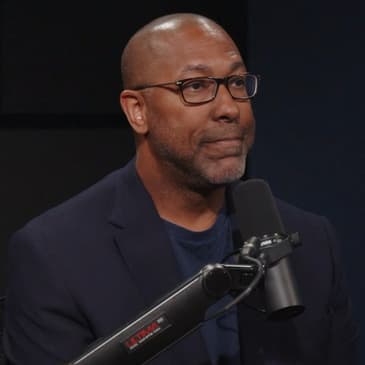
In this episode of The Jenny Beth Show, Dr. Robin Armstrong, Republican National Committeeman from Texas and Galveston County Commissioner, shares his insights on preserving conservative values and defending freedom in today’s political climate. Dr. Armstrong discusses Texas’s pivotal role in the national conservative movement, strategies to strengthen the GOP, and ways patriots can push back against radical agendas. Join us for an inspiring conversation on the future of conservatism, the power of grassroots activism, and why Texas remains at the heart of America’s fight for liberty. Listen now to hear Dr. Armstrong's vision for a stronger America.
[00:00:00] I think this is an exciting time to be alive, I really do, because I think that we're fighting an ideological battle that is now engaged by a lot of people, by a lot of conservatives, and by a lot of pastors, a lot of churches, and I think that's very exciting.
[00:00:16] Keeping our republic is on the line, and it requires patriots with great passion, dedication, and eternal vigilance to preserve our freedoms.
[00:00:25] Jenny Beth Martin is the co-founder of Tea Party Patriots.
[00:00:29] She is an author, a filmmaker, and one of Time Magazine's most influential people in the world.
[00:00:35] But the title she is most proud of is mom to her boy-girl twins.
[00:00:39] She has been at the forefront, fighting to protect America's core principles for more than a decade.
[00:00:46] Welcome to The Jenny Beth Show.
[00:00:48] In today's episode, I'm joined by Dr. Robin Armstrong, a leader in the Republican Party and a physician with first-hand experience treating COVID-19 patients at the beginning of the pandemic.
[00:01:00] Dr. Armstrong shares his thoughts on how government regulations impacted healthcare, his challenges in advocating for effective treatments, and his vision for restoring freedom in medicine.
[00:01:11] Get ready for an eye-opening discussion on the intersection of healthcare, liberty, and politics in America.
[00:01:19] Robin Armstrong, thank you so much for sitting down with me today.
[00:01:22] Well, thank you for having me.
[00:01:23] We got to know each other during COVID, and I read about what you were doing because you were using the drugs that shall not be mentioned, shall not be named, helping treat patients in Texas.
[00:01:39] And then I learned you were one of the national committeemen to the RNC.
[00:01:44] Yes, yes, absolutely.
[00:01:45] So, yeah, in 2020, in March of 2020, we were actually the first to use hydroxychloroquine, azithromycin, and zinc as a regimen to treat COVID in a nursing home.
[00:01:58] And so, remember, this is March of 2020, so this was the very beginning of the pandemic, certainly in Texas.
[00:02:03] It was in New York a little earlier, but we were the first to use that regimen on a large number of patients in a nursing home setting.
[00:02:10] And we were very successful.
[00:02:12] We lost one patient there.
[00:02:13] And so we were attacked for that, but certainly that's how we originally came into contact with one another and frontline doctors and Simone Gold and that whole group.
[00:02:24] And so, yes, we really kind of grew from there, but it was an interesting time, COVID was.
[00:02:29] It really was.
[00:02:30] And you treating those patients in the nursing home with only one losing their life was quite remarkable because there was a nursing home, I think, it went to New York.
[00:02:41] COVID was in New York.
[00:02:42] And then it was in Washington, maybe in Seattle, Washington.
[00:02:45] And the patients in a nursing home there did not do well at all.
[00:02:50] So this was a contrasting news story, but one of hope.
[00:02:54] Yours.
[00:02:55] Absolutely.
[00:02:55] Absolutely.
[00:02:56] The nursing home in Washington, they lost probably 25% of their patients in that nursing home.
[00:03:02] And in Tennessee around that same time, there was a nursing home where they just decided, you know, they panicked and they just called the ambulances and said, get everybody out of here.
[00:03:12] So they sent all their patients to the hospital, which is also bad for elderly patients as well.
[00:03:18] And so we decided rather than do either of those things, we would do, so we would just keep them in house and we would just treat it.
[00:03:24] We set up a mass unit there in the nursing home.
[00:03:28] We visited them every day.
[00:03:30] We were very, you know, very attentive to them because we didn't know what was going to happen.
[00:03:33] We knew they were going to be safe for the medicines because we knew the medications were safe.
[00:03:37] You know, I'd taken higher doses of hydroxychloroquine on a mission trip to Africa that I'd have gone on.
[00:03:43] So we knew the medications were safe, but we just didn't know how they were going to do as far as their COVID.
[00:03:49] And amazingly, they did very well.
[00:03:50] We treated them with the medications.
[00:03:52] They all survived.
[00:03:53] The families were happy.
[00:03:55] The patients were happy.
[00:03:56] You know, physicians in the community were happy.
[00:03:58] The nursing home was happy.
[00:04:00] But the national media was not happy about it.
[00:04:02] No, not at all.
[00:04:03] Because, well, they needed those numbers to tick up about COVID, not to do the things you were doing.
[00:04:10] Absolutely.
[00:04:11] For a long time, I asked myself as a physician, you know, I've been involved politically for a long time.
[00:04:15] But as a physician and just treating patients, I asked myself, you know, why would they attack our situation so aggressively?
[00:04:26] And I found out, I kind of thought about it a lot because I was confused.
[00:04:29] You know, Democrats have grandparents and loved ones who they want to live through COVID as well.
[00:04:34] So I would think everybody would be accepting of this information.
[00:04:37] But I thought about it.
[00:04:39] And I thought, you know, without, if there's any medications that are shown to be effective in treating COVID, then you cannot bring online the vaccinations, which had to be brought online through emergency use authorization.
[00:04:56] So by law, emergency use authorization cannot be used if you have medications that could potentially treat that illness.
[00:05:05] And so that was part of it.
[00:05:07] They wanted to bring the vaccines online.
[00:05:08] And also, I think they needed something to fear.
[00:05:11] They needed people to fear COVID.
[00:05:13] And my thought is if there's a national, a positive national story about COVID is out there, you know, the most elderly, the most sick, the most infirmed people that are bed bound, if they could survive it, then people would not fear it as much as they did.
[00:05:29] And when you offered the message of hope and I offered, I helped pull doctors together trying to offer a message of hope.
[00:05:37] And I just kept saying to my team, we have to reduce the fear.
[00:05:40] We have to do whatever we can to get the fear to come back down.
[00:05:44] Because until that fear comes back down, nothing is going to be normal.
[00:05:48] Nothing's going to be stabilized.
[00:05:51] And when you would put messages of fear, I mean, of hope out, we were censored.
[00:05:58] We were bashed.
[00:05:59] Absolutely.
[00:05:59] We were told we wanted to kill people.
[00:06:01] It was such a terrible time.
[00:06:04] It was a horrible time.
[00:06:06] It was a surreal time.
[00:06:07] It really was.
[00:06:08] I didn't, you know, I felt like I really didn't know what country I was in anymore.
[00:06:13] You know, it was really, it was the craziest thing.
[00:06:16] I just, you know, I felt, wow, this is the first time that I really felt, even though I've been involved politically, it's the first time that I felt like they really do not want the truth to come out.
[00:06:30] You know, they really are not interested in hearing the truth at all.
[00:06:34] And for a physician and a scientist, that was very, very alarming that, oh my gosh, you know, we were writing a paper.
[00:06:42] You know, I was in conversation with the governor of Texas during this time, who was Greg Abbott, and he said, man, you should write this up because this should be, it was very early in the pandemic, this should be the protocol that every nursing home in the United States is using if it's successful.
[00:07:00] And so we were preparing a paper, but we were not able to finish it.
[00:07:05] And we didn't finish it because I came to the conclusion that people really are not interested in the truth.
[00:07:11] It was an observation paper is all it was.
[00:07:13] It wasn't a double blind random study.
[00:07:15] You don't do that during pandemics.
[00:07:16] And so people really were not interested in hearing the truth.
[00:07:19] And so it would do no good to put this paper out.
[00:07:22] It would just be criticized, debunked and attacked.
[00:07:25] And so we didn't put it out for that reason.
[00:07:27] And it would have been.
[00:07:29] And the funny thing about that double blind study that you just referenced that became the standard during COVID, they made us wear masks.
[00:07:39] Well, thankfully in Georgia, there was never a statewide mask mandate.
[00:07:44] But if I was on a plane, I had to wear a mask.
[00:07:47] I would go into doctor's offices, a few, not many, and I'd have to wear a mask.
[00:07:51] And I mentioned to people in government and in doctor's offices where they had these stupid policies.
[00:08:00] I said, you know where there was not a double blind study?
[00:08:04] On masks.
[00:08:05] Right.
[00:08:05] Because how can you do that?
[00:08:06] You would see who's wearing one and who's not.
[00:08:09] There's no blind study with that.
[00:08:10] So your own standard doesn't work.
[00:08:14] Right.
[00:08:14] Absolutely.
[00:08:15] You know, the irony is that early on as a physician, you know, we were talking about masks.
[00:08:23] And we were very concerned about running out of PPE, personal protective equipment during that time.
[00:08:29] And so they were telling us very early on in the pandemic, you know, we got this from Fauci and from the CDC, that we should not be wearing masks.
[00:08:39] We were told that.
[00:08:40] Right.
[00:08:40] At the very beginning.
[00:08:41] Right.
[00:08:41] You should not wear masks because it's unnecessary.
[00:08:44] And so we were kind of, it was funny because we were sort of, we were told to strongly encourage our colleagues who were physicians to not wear masks because we were inciting fear.
[00:08:56] And we were going to cause the nurses to want to wear masks.
[00:08:59] You know, they're going to see the doctor wearing the mask.
[00:09:01] Why is he wearing a mask?
[00:09:02] I want to wear a mask too.
[00:09:03] And so they were telling us not to.
[00:09:05] And then literally weeks later, they were mandating that we wear masks.
[00:09:10] It made, it just, it was such a crazy time.
[00:09:14] It was.
[00:09:15] Okay.
[00:09:15] So stepping back from the crazy time, what are the kind of policies that you think the government should be considering when it comes to healthcare?
[00:09:23] Because I think we have way too much government in healthcare.
[00:09:27] But how do we fix some of the problems?
[00:09:30] You know, one thing that people don't consider, I think healthcare is one of the biggest issues going forward in this country.
[00:09:38] Healthcare in general.
[00:09:39] I think COVID really empowered the bureaucracy a lot more than it should be.
[00:09:45] But we've been doing this for the last 50 years.
[00:09:48] Government has, you know, when you think about healthcare, it's about 20%, almost 20% of the gross domestic product.
[00:09:54] We spend more on healthcare than we do on military defense.
[00:09:59] And so people don't realize that.
[00:10:00] And it's growing.
[00:10:01] It's growing.
[00:10:02] It's going to continue to grow.
[00:10:03] And so it's going to continue to consume more and more of our national dollars.
[00:10:08] And so we have to be.
[00:10:09] I think some of the policies, we have to try really hard, work really hard as a government to start focusing on chronic diseases like, you know, some of the folks RFK talks about, you know, chronic diseases.
[00:10:23] We have to start talking about introducing more free market principles into healthcare.
[00:10:30] You know, the healthcare system has not been a free market for the last 50 years.
[00:10:34] People don't realize that.
[00:10:35] You know, you talk about insurance involvement in it.
[00:10:38] It's all managed by Medicare and Medicaid services.
[00:10:42] And even the insurance companies, they make their prices based on those government entities.
[00:10:47] And so I think that we have to introduce more free market any way we can do that.
[00:10:51] And I have a, you know, as a politician, I've always thought in terms of how do we, what are the two things I would do in medicine?
[00:10:59] I say if it, if it benefits the patient and it, if it empowers patients and it empowers physicians, it empowers the person receiving the service and it empowers the person who is providing the service.
[00:11:12] That needs to be our motto in healthcare.
[00:11:16] Any legislation that does not do one of those two things should not be done.
[00:11:20] And, and, and if it, we shouldn't be empowers the insurance companies.
[00:11:24] We shouldn't be empowering hospitals.
[00:11:26] We shouldn't be empowering certainly lawyers in the legal profession.
[00:11:29] We should be empowering patients and we should be empowering physicians.
[00:11:33] And we need to introduce the free market because, you know, patients were better cared for and physicians did better financially when it was more of a free market.
[00:11:41] When, when, when the, when the patients had choices and they could barter with their physicians, you know, and they could choose physicians based on, you know, their performance, how they were doing, their bedside manner.
[00:11:52] And so I think that that was the better way to do healthcare.
[00:11:55] And we have to get back to that.
[00:11:57] We have to promote policies that will promote that.
[00:11:59] It, it's such a simple concept.
[00:12:02] Does it benefit the patient?
[00:12:04] Does it benefit the physician?
[00:12:05] And we, I think one of the things that we have advocated for since the passage and lack of repeal of Obamacare, and even during the Obamacare debates is protecting the doctor patient relationship.
[00:12:20] Because when you have so many different entities in that exam room, maybe not physically present, but they certainly, their presence is felt, whether it's the insurance companies or Obamacare or Medicare or Medicaid, your, your insurance company, the drug companies, all of that is in there, in the, the physician, in the exam with you.
[00:12:47] And it impacts the quality of care you get, the decisions that both sides of the equation are making.
[00:12:53] And I don't think that that's good for healthcare.
[00:12:56] It's not.
[00:12:57] And I'll tell you, it, you know, I'm an, I'm an older physician now.
[00:13:01] I've been practicing for about 25 years.
[00:13:02] And so it's easy for me to kind of put aside all of the background noise.
[00:13:08] And so I'll tell you, you say it, you can feel that those entities are present there.
[00:13:12] Well, it's in our mind as well.
[00:13:13] It's in the physician's mind also.
[00:13:15] So it's a very real thing.
[00:13:17] Certainly younger physicians, they're, they're concerned about, you know, you know, insurance, whether the patient should be an observation patient or an inpatient.
[00:13:25] You know, one will make the hospital a whole lot more money.
[00:13:28] You know, we're thinking about that.
[00:13:30] You know, we're concerned about insurance and whether they're going to pay.
[00:13:33] You know, we have peer-to-peers we have to do, you know, innumerable peer-to-peers because the insurance is refusing to pay the hospital.
[00:13:40] You know, which in turn they refuse to pay the physician.
[00:13:42] And so there are all these financial issues that are in the back of our head.
[00:13:46] You know, medical records is a big issue now as well.
[00:13:49] And I'll tell you, a lot of these, a lot of these other entities, hospitals, insurance companies, they will tell physicians that this is part of the care of the patient.
[00:13:59] And as an older physician, I have to tell them, no, it is not.
[00:14:02] No, it is not a part of the care of the patient in any way.
[00:14:05] But they tell us that and they convince us.
[00:14:08] They've convinced them of that.
[00:14:09] And so they think that what they're doing is part of the care of the patient, which it absolutely is not.
[00:14:14] If anything, it's detracting in many, many ways.
[00:14:17] And so younger physicians, I tell them all the time, I say, listen, you have to do what is best for your patient.
[00:14:25] Put all this other stuff out of your mind when you're making that decision.
[00:14:28] Now, you have to think about it because it's important for the entity to stay in business.
[00:14:33] But you need to really be focused on your patient.
[00:14:35] If you're doing what's best for the patient, you know, don't worry.
[00:14:38] I'm not going to fire you as my employee.
[00:14:41] You know, I'm going to support you in that.
[00:14:43] Well, and that is how it should be.
[00:14:46] It should be thinking about what is best for the patient.
[00:14:49] And that's one of the things that bothered me so much during COVID is that it was the government was trying to insist and the hospital and medical chains also joined in on this.
[00:15:06] There was one size fits all for COVID.
[00:15:09] And that doesn't make any sense.
[00:15:11] The elderly patients had worse outcomes than young patients when it came to COVID.
[00:15:16] The people with diabetes had worse outcomes than people who don't have diabetes.
[00:15:21] Apparently, COVID loves glucose or something.
[00:15:24] That's what doctors told me.
[00:15:26] I think a lot of things love glucose, actually.
[00:15:30] But there are all these different factors that need to be considered when you're treating an individual patient.
[00:15:38] And one size doesn't fit all.
[00:15:40] But what I think that we see from Obamacare and Medicaid and Medicare is that they try to just have one solution to work for all, all.
[00:15:53] Absolutely.
[00:15:54] I believe that the health care bureaucracy would love to institutionalize everything.
[00:16:02] They would love to have protocols for everything.
[00:16:06] So you'd have to follow the protocol and you would do this and this and this because in reality.
[00:16:13] So physicians, as a physician, I am a high cost to the Medicare bureaucracy.
[00:16:19] You know, I'm very well trained.
[00:16:21] I've gone to school for many, many, many years and residency and done all this training.
[00:16:25] But if they can institute protocols in how we treat people, then they really don't need a physician to do that.
[00:16:32] That's right.
[00:16:33] They could have anyone do that.
[00:16:34] They could have a nurse or they could have a robot do that.
[00:16:37] Right.
[00:16:37] And so I believe that it's a way to lessen the cost of care.
[00:16:42] And it's a way to get the outcomes that you want.
[00:16:46] And there's so many really evil entities, I think, that are a part of this that, you know, I think that one of the outcomes may be maybe people are living too long.
[00:16:57] You know, maybe the cost, you know, we do know that the cost of health care in the last five years of life is exponentially higher than the other, you know, sort of 80, 85 years that you've been alive.
[00:17:12] And so it's to the economic benefit of the government to maybe not have people live those last five years.
[00:17:21] And so that's, you know, and I think that there are people who agree with population control.
[00:17:28] There are people who agree with some of these things that are just antithetical to everything we're trying to do in the health care profession.
[00:17:34] You know, you think about euthanasia and it's gaining more momentum in some parts, in some states, in some parts of the country.
[00:17:41] And so I believe that we really have to, in the purest sense, there's so many health care positive things that we can do.
[00:17:48] But it has to be for the patient and it has to be to empower those two entities, the patients and the physicians, to provide better care.
[00:17:56] I think that makes a lot of sense.
[00:18:01] Since COVID happened, and I've been in touch with doctors throughout the entire Tea Party movement because when we started, one of the first, well, the first major piece of legislation that we opposed was Obamacare.
[00:18:16] And so it wasn't just being opposed to Obamacare, it was standing for health care freedom.
[00:18:22] And I learned a lot about it during that time.
[00:18:27] And then since COVID, I think that COVID just, for a very short period of time, brought all those things we were warning against together in reality.
[00:18:37] And people saw it play out very quickly right before their eyes.
[00:18:41] And I think people are, the more time that passes, the more they will forget that.
[00:18:48] But it seemed very much like when it came to COVID, we were dealing with socialized medicine, pure socialized medicine.
[00:18:57] The thing that you said about more free markets in medicine, I've seen doctors since COVID, some of them, not all, because so many are attached to some sort of corporate chain or corporate entity.
[00:19:10] But they're going out and saying, I want to practice again.
[00:19:14] I want to practice medicine, not do the protocols that you mentioned, and to treat patients.
[00:19:19] And they're trying to find ways to set up a doctor's office the way that they used to be set up so that they can treat patients.
[00:19:28] And some of them are offering subscription models so they've got money coming in as sustainable or predictable income coming in each month.
[00:19:36] I find that very interesting, and I'm hopeful that maybe we can invigorate and innovate some of what's happening in health care.
[00:19:45] Absolutely.
[00:19:45] I believe that that is certainly happening now.
[00:19:48] And I'll tell you, the only reason I had freedom to not get the vaccine and the only reason that I had freedom to practice medicine the way I thought was best for the patient, because I own my own company.
[00:20:00] And that is the only reason.
[00:20:02] And we're fairly large in the community where we're in.
[00:20:05] And so we took care of almost all the COVID patients that were in the hospitals as well.
[00:20:11] So they really couldn't get rid of us.
[00:20:14] Right.
[00:20:14] And they couldn't pressure us or bully us.
[00:20:16] And so you're absolutely right.
[00:20:18] The key is going to be physicians stepping outside of that institutionalization and starting to sort of do the concierge medicine theme.
[00:20:31] You know, what we're trying to do now is also outside of our hospitalist company.
[00:20:36] And we're trying to also – that's hospitalist.
[00:20:39] Some people think I say hospice when I say that.
[00:20:41] If it's hospitalist company, it's an inpatient company that takes care of people in the hospital.
[00:20:45] Outside of that, we're starting to set up practices where we can form clinics because we have a lot more capital to be able to do that now so that people can come and practice in a free setting to where they can do what they want for their patients.
[00:20:59] And not be controlled by a corporate entity or a government entity.
[00:21:04] So you're absolutely right.
[00:21:05] That is the key to bringing back more free market principles.
[00:21:08] And then also getting physicians involved.
[00:21:11] Physicians are very busy and not very involved politically at all.
[00:21:14] And so we've allowed other groups to control the industry of medicine.
[00:21:19] And so we have to get more involved and active as well.
[00:21:23] And so – and I want to thank you for, you know, championing a lot of these issues.
[00:21:27] I mean, people don't know this, but, you know, doctors aren't super organized.
[00:21:30] And so you kind of came in as a great organizer for us during COVID, helping us get that message out.
[00:21:40] And so we really need some people who are freedom-minded folks who come in and step in and kind of help organize us and gather us and get us together and sort of move us along in the right direction.
[00:21:52] And so we appreciate that help.
[00:21:53] It's been one of the pleasures that our entire organization has been able to do to help support these doctors around the entire country and around the world.
[00:22:03] And we've met some of the brightest minds in medicine from even Ivy League schools that were attacked because they were saying, wait, maybe hydroxychloroquine works or maybe ivermectin works where we should at least do a study and figure out if it does, not just automatically say it doesn't.
[00:22:23] Absolutely.
[00:22:25] And that's been, it's really been a good thing.
[00:22:29] And the doctors all still communicate, it seems, with one another and they're following politics.
[00:22:36] And I've built some, I have some amazing friendships that have been the bright light out of COVID.
[00:22:46] Right.
[00:22:47] And I think these folks have the potential to be great leaders.
[00:22:51] You know, it's not going to be the last, COVID will not be the last pandemic.
[00:22:54] No.
[00:22:54] It was extraordinarily effective for the left and for the Democrat Party.
[00:22:59] You know, I believe that it was changing election laws and changing them in a way that could give them the edge in 2020.
[00:23:06] And certainly I believe that it's going to be, you know, we have to, hopefully our groups can organize, our physicians can organize, and we can have another voice during the next pandemic.
[00:23:19] So we can be saying, no, maybe that's not the best way to go.
[00:23:21] So one thing people don't know about physicians is physicians are very hierarchical in our education.
[00:23:28] And so we have a medical student, then we have an intern, and then we have the resident, we have the attending, the faculty.
[00:23:35] And you talk to the person that's above you, like the medical student doesn't talk to the attending, the chief resident does.
[00:23:42] And so it's very hierarchical.
[00:23:43] So physicians tend to follow orders.
[00:23:46] And so during COVID, I saw that a lot.
[00:23:49] You know, some of the smartest people, you know, were wearing three masks.
[00:23:53] Yeah.
[00:23:53] Physicians, you know, and they were fearful.
[00:23:56] They had a lot of fear.
[00:23:57] And then also they just were not following their minds.
[00:24:01] You know, the smartest physicians were saying that hydroxychloroquine was not safe.
[00:24:05] You know, we all know that it's safe.
[00:24:08] It's over the counter in most of the countries in the world.
[00:24:10] And it's amazing.
[00:24:12] And I've taken it, you know, on missionary journeys.
[00:24:16] And higher doses than I prescribed it for COVID.
[00:24:19] And so it was absolutely amazing.
[00:24:21] But I did have a physician tell me this.
[00:24:24] They were also bullied as well.
[00:24:26] They were.
[00:24:27] Bullied into not giving.
[00:24:28] I had a physician tell me, infectious diseases doctor.
[00:24:31] He says, Robin, you know, I know you've been, you know, giving hydroxychloroquine to people.
[00:24:34] He says, Robin, I don't believe that it works.
[00:24:37] He says, but I've got a prescription in case me or my family get COVID.
[00:24:41] Yes, of course they did.
[00:24:43] That's what almost every physician had.
[00:24:45] Right.
[00:24:46] Yes.
[00:24:46] Because he knew it was safe.
[00:24:47] Right.
[00:24:48] He said, at the very worst, you know, I'm taking a sugar pill that's not doing anything.
[00:24:52] Right.
[00:24:53] But it's not going to hurt me.
[00:24:54] No, it's not going to do any harm.
[00:24:56] So why not go ahead and give it a try?
[00:24:57] Absolutely.
[00:24:58] So it's, yeah.
[00:25:01] And I encountered that with quite a few physicians.
[00:25:08] I think that they will continue to emerge as leaders.
[00:25:13] And you already were a leader, which is part of the reason why you were out there so early
[00:25:19] and doing news reports, because you understood politics and you understood that it isn't just
[00:25:24] medicine.
[00:25:25] There are other things at play.
[00:25:27] And I think a lot of them have learned now that there are other things at play and they're
[00:25:32] engaged in the political process.
[00:25:36] And they're also trying to improve the healthcare process altogether.
[00:25:42] And many of them have, it's interesting to watch because many of them have come back and said, if they were wrong about COVID, what else were they wrong about?
[00:25:50] And they're starting to go back and they're starting to go back and rethink and study other diseases.
[00:25:55] And I think that's part of why what Robert Kennedy Jr.
[00:25:59] Right now, he's talked about concerns with vaccines for years.
[00:26:05] And many of them are taking a step back and going, maybe we need to just make sure.
[00:26:10] Maybe they're safe.
[00:26:11] Maybe they're not.
[00:26:12] But we can't just blindly believe what we're told any longer.
[00:26:16] Absolutely.
[00:26:17] I think it's just, that's what science is.
[00:26:19] Yes.
[00:26:20] Just asking the question.
[00:26:21] And, you know, I love, you know, a lot of my doctor friends who were just, that's all they were saying.
[00:26:27] I mean, that's all, you know, Peter McCullough was saying.
[00:26:30] You know, look, I'm not saying it works.
[00:26:32] I never said it worked.
[00:26:34] You know, I just said, let's try it and let's see what happens because we know it's not going to harm our patients.
[00:26:40] We tried it and it seemed to be very effective and it seemed to work.
[00:26:44] And so, and I believe that if, had that been the protocol for other nursing homes around the country, then we would have saved, could have potentially saved a lot of lives.
[00:26:57] And I believe that, you know, as a medical profession, we really fail to serve, you know, our constituencies, our clients, you know, during COVID.
[00:27:08] And hopefully that'll give us a little more pause to be so quick to follow the CDC and the World Health Organization.
[00:27:20] And hopefully we can see some changes in those organizations going forward.
[00:27:25] I hope so as well.
[00:27:27] All right, let's shift gears a little bit.
[00:27:29] So we've talked about health care freedom, but you are not just a doctor.
[00:27:32] You're an entrepreneur and you are politically active.
[00:27:37] You're a member of the Republican National Committee and you have been for many years, right?
[00:27:42] Yes, yes.
[00:27:43] I've been on the Republican National Committee for 12 years.
[00:27:45] That's amazing.
[00:27:46] So I've been reelected in Texas.
[00:27:48] And so that's a, it's, I just got reelected again recently, which is great.
[00:27:52] And so I didn't have an opponent, which is rather unusual in the state of Texas because, because these positions are pretty highly sought after.
[00:27:57] And so, so I've been a strong conservative first and that's what motivates me to do politics.
[00:28:04] And then, and then also I've just been a, just want to be a servant leader.
[00:28:10] I believe that, that if Christians are not involved, if believers are not involved in the political process, then someone will fill that void.
[00:28:19] Someone will fill that vacuum.
[00:28:20] And, and so we have to be involved.
[00:28:22] It's, it's not something, interestingly enough, I mean, I'm, I'm also a county commissioner as well, but I don't think you knew that.
[00:28:28] But I, in my local area.
[00:28:30] And so I think that it's, I just, I think that we have to fill these positions and we have to do it as a service.
[00:28:38] You know, you don't have to like politics.
[00:28:40] You don't have to love politics.
[00:28:41] You don't have to be interested in politics.
[00:28:43] But I think it's a civic duty to be involved.
[00:28:46] And so, and I've been involved at the very local level as a precinct chair in, in Galveston County in Texas.
[00:28:54] So I served as a medical student.
[00:28:56] I was a precinct chair.
[00:28:57] Wow.
[00:28:57] You know, so, so when I, you know, didn't have time to be a precinct chair, but, but I, I still did it.
[00:29:03] And because I thought it was important to do.
[00:29:06] And, you know, I organized my neighborhood and I had national night out dinners at my house where my neighbors would come by and I would educate them on politics.
[00:29:14] And I would send mail out to my neighbors about, you know, conservative politics and what was the issues of the day.
[00:29:20] And so I did that on the local level.
[00:29:22] And then I ran for state executive committee and became vice chairman after that, after serving on the executive committee for a few years.
[00:29:29] And then, and then now I'm in the national committee, man.
[00:29:32] So.
[00:29:33] That's amazing.
[00:29:33] Now, there are a lot of people who have become active in politics in the last four years since 2020.
[00:29:40] 20, maybe four and a half years.
[00:29:43] So some of it is because of COVID and school closings.
[00:29:46] And then what they learned was happening in their schools.
[00:29:49] And then others who've become active because they saw what happened during the election process itself.
[00:29:57] And prior to that, in the four years prior to that, you have people who are becoming active because of Trump and they hadn't been active before or the Tea Party or what have you.
[00:30:06] So the thing is, there are people who are new, who maybe have been involved for several years.
[00:30:13] They're going through their first election cycle, presidential election cycle as an activist.
[00:30:20] And now they're wondering, what next?
[00:30:22] What are we going to do next?
[00:30:23] What do you say to the people who have become precinct chairs or precinct committeemen?
[00:30:29] What should they be doing next?
[00:30:30] And I know each state operates, the Republican Party operates differently from state to state.
[00:30:38] Some people elect their precinct committeemen on the ballot.
[00:30:42] Some people do it at a mass meeting or a precinct meeting.
[00:30:45] So there are differences, but overall what activists do is the same.
[00:30:51] Yeah.
[00:30:51] So I think that just get involved with working in the local party.
[00:30:58] I think that's important.
[00:31:00] You know, not all the parties are very functional.
[00:31:03] And we have to remember that these are all volunteers.
[00:31:07] They're volunteer positions.
[00:31:08] And so they're volunteer positions.
[00:31:09] And so they're not going to be run like a company, like a CEO of a company.
[00:31:13] They're going to be run by volunteers.
[00:31:16] Many of those folks are older and they're doing it out of a service.
[00:31:20] And so grant them a little grace, you know, when you come in with your advanced degrees and the meeting's not run exactly how you think it should be run.
[00:31:29] But I think so give a little grace, number one.
[00:31:32] And I would say number two, get in and just get involved and work.
[00:31:36] I would say work in your local party.
[00:31:38] Start off there.
[00:31:39] I mean, everyone wants to run for Congress as the first thing they do.
[00:31:43] Or Senate, United States Senate also.
[00:31:45] That's a big one.
[00:31:47] Those are big ones.
[00:31:48] I'm an activist, just senator.
[00:31:50] Absolutely.
[00:31:50] And so I think, look, just work in your local party.
[00:31:54] And, you know, Christ said if you're not faithful in the small thing, then how are you going to be entrusted to a larger responsibility?
[00:32:03] And so work in the local party, just knock on your doors of your neighbors, you know, and that's what I did.
[00:32:09] That's what I did.
[00:32:10] I literally went to my neighbor's homes.
[00:32:12] I got to know my neighbors.
[00:32:14] You know, so many people today don't even know their neighbors anymore.
[00:32:17] It's very sad.
[00:32:18] So knock on the door of the people on your street.
[00:32:21] Let them know what's going on politically.
[00:32:23] Talk to them.
[00:32:24] Educate them.
[00:32:25] That's what a precinct chair or precinct captain does.
[00:32:28] And then from there, you know, get involved certainly with your local party.
[00:32:32] Get involved during events.
[00:32:34] You know, you're trying to expand our base.
[00:32:38] And this needs to be done certainly in our urban areas.
[00:32:41] It needs to be done everywhere.
[00:32:42] But certainly in our urban areas also.
[00:32:44] I mean, in our cities.
[00:32:45] You know, we've got to take back our cities, you know, from liberal control and Democrat control because they're just destroying great American cities.
[00:32:55] And so as conservatives, we can't allow that to happen.
[00:32:58] There's so many people in churches.
[00:33:00] I would encourage people to get involved with churches as well.
[00:33:03] You know, there was a large church in Houston.
[00:33:06] And he said he's got like 80,000 members.
[00:33:09] He says half his congregants are not registered to vote.
[00:33:13] And this is a pastor that is very engaged and active in the political process.
[00:33:17] And his folks would vote 95% conservative, Republican, but they're just not active.
[00:33:22] And then out of that 50% that are registered to vote, 25% of them, only 25% of them vote actually.
[00:33:29] And so it's a very small number.
[00:33:31] We could win a lot of elections as conservatives and Republicans if we had all 100% of at least the people who are conservative, Christians, going to church on a weekly basis.
[00:33:43] If we registered them to vote, we would win everything in the country on every level.
[00:33:48] I mean, we would win in all the major cities.
[00:33:50] We would win if we just got engaged.
[00:33:53] And so one thing I would encourage people to do is just engage the believers that you know.
[00:33:58] I tell this story a lot.
[00:34:00] So I ran for the state Senate, and I lost.
[00:34:02] I ran against a very wealthy guy, and I lost that race, and it was okay.
[00:34:05] But it turned out to be a God thing that I lost.
[00:34:07] I ended up in a better position.
[00:34:09] But I tell people the story.
[00:34:10] I go to church, to one of those churches that we're talking about, evangelical church, 95% conservative.
[00:34:17] And so I had some people come up to me, and they say, Robin, we're so excited to support you.
[00:34:22] We're so excited that you're running for this office.
[00:34:24] We even have a sign in our yard right now.
[00:34:27] Thank you so much.
[00:34:28] Thank you so much for running for this office.
[00:34:30] We're going to support you.
[00:34:31] We're going to vote for you.
[00:34:32] I said, thank you very much.
[00:34:33] The election was two weeks ago.
[00:34:35] And so you can take your sign up.
[00:34:39] The election's passed.
[00:34:40] And so that's exactly what happens to a lot.
[00:34:43] They want to be involved.
[00:34:44] They want to be engaged.
[00:34:46] They want to help, but they just are uneducated.
[00:34:48] So I want to encourage your activists to educate people when they need to vote.
[00:34:54] What is a primary?
[00:34:55] This stuff is so basic to us.
[00:34:57] Right.
[00:34:58] But it's Greek to a lot of folks.
[00:35:01] A lot of our people who are in churches, they don't know.
[00:35:04] What is a primary?
[00:35:06] What is it for?
[00:35:07] What is the general election?
[00:35:09] When do you vote?
[00:35:10] You know, people are clued in to when to vote in a presidential race because it's all over
[00:35:14] the media.
[00:35:15] But they don't know, you know, when do you vote for your nonpartisan races, your mayor,
[00:35:20] your city council?
[00:35:21] Oftentimes those are at different times than these larger, you know, midterm or off-year
[00:35:27] elections.
[00:35:28] And so people just need to be educated about the process.
[00:35:30] I think they want to be involved.
[00:35:32] Right.
[00:35:33] But they're just ignorant to the process.
[00:35:34] And so educate people.
[00:35:36] Well, I think education is important.
[00:35:38] And then when you said being involved, I, when I first got active, I, um, I worked on a
[00:35:46] campaign and went door to door with a campaign.
[00:35:50] I, and I was only like 24 years old doing this.
[00:35:53] And I went door to door and found that I actually really enjoy going door to door and having those
[00:35:58] conversations.
[00:35:59] And I became active in the local Republican party.
[00:36:04] And you, you mentioned it's run by volunteers.
[00:36:08] It absolutely is.
[00:36:09] And there was so much that needed to be done.
[00:36:11] And instead of griping and complaining about it, I just said, oh, what if we did something
[00:36:16] like this?
[00:36:17] I'll do this.
[00:36:18] If you guys think it's okay and a good idea, I'm happy to take that on.
[00:36:22] And I would take it on and go, go create a newsletter or go do a postcard or whatever
[00:36:27] my idea was.
[00:36:29] Um, I'll, and then if somebody needed to host a meeting or they needed somebody to greet
[00:36:36] people when they walked in or whatever the job was, I just kept going, I'll do it.
[00:36:40] I'll do it.
[00:36:40] I can take that on.
[00:36:41] I can do it.
[00:36:42] And I was working.
[00:36:43] I programmed computers.
[00:36:45] I traveled during the week.
[00:36:47] And somehow I still was just like, yes, give me more.
[00:36:50] I'll keep doing it.
[00:36:51] And I learned so much just from saying, yes, I I'll take that on.
[00:36:57] And it prepared me over time because it was learning how to be active.
[00:37:02] I was learning how to campaign, learning how to do press releases, how to host events.
[00:37:05] And when the opportunity for this tea party movement began, I was prepared and ready.
[00:37:10] And I was ready to take action in a way that not many other people around the country,
[00:37:16] there were plenty of people who are stepping up and hosting events, but not many people
[00:37:20] who understood how to pull it all all together and be able to support the people around the
[00:37:25] country.
[00:37:25] And I think a lot of it is just because here in the county we're sitting in, I just
[00:37:30] kept saying yes to volunteer opportunities.
[00:37:33] Absolutely.
[00:37:33] I think that is the key.
[00:37:35] That's the key.
[00:37:35] There's a lot of folks, a lot of Republicans who have a lot of skills out there and who,
[00:37:44] but they're frustrated when they come and work with a local party and they see that there's,
[00:37:49] you know, not as much organization as they would like.
[00:37:52] Right.
[00:37:53] That happens a lot.
[00:37:54] And we see that in Texas and Galveston County.
[00:37:58] We see that a lot.
[00:37:59] And so, but rather than, rather than stepping in and saying, hey, maybe I can do this.
[00:38:06] Maybe I can help do this.
[00:38:07] I think they just get frustrated and leave.
[00:38:09] And that happens a lot.
[00:38:11] So we really need a lot of folks with that expertise, with those business, with the business
[00:38:18] expertise, with the audiovisual expertise.
[00:38:24] All these things that we could use in the local party that's not there because those
[00:38:29] folks get frustrated and leave because it's not run, you know, using Robert's Rules of
[00:38:35] Order.
[00:38:35] It's not run in a way that a business meeting is run.
[00:38:38] And so I just really want to encourage people to stay involved and stay.
[00:38:43] That's how we're going to take back our country is by having everyone involved and engaged.
[00:38:52] I think that's very important.
[00:38:54] And then if you are a precinct committee man or a precinct chairman and there are openings
[00:39:00] because very soon we're going to start another round where there are elections for county and
[00:39:07] district and state parties around the entire country.
[00:39:12] And it'll be different times in different states.
[00:39:14] But if there are openings, go before the nominating committee or put your name on the ballot and
[00:39:20] campaign for it.
[00:39:22] And it isn't, you're now a national committee man.
[00:39:26] And for people who are not familiar and don't really understand this, from each state there
[00:39:31] are three people who go to the Republican National Committee.
[00:39:34] There's the state party chairman and then the national committee man and the national committee
[00:39:40] woman.
[00:39:40] And that's it.
[00:39:41] There are three.
[00:39:42] Right.
[00:39:42] So you're one of three from one of the biggest states in the entire country.
[00:39:49] Certainly the biggest Republican state in the entire country.
[00:39:53] And that's a huge deal.
[00:39:56] But you didn't start out there.
[00:39:59] You started at the bottom and you just kept moving up and volunteering and saying you would
[00:40:03] take on more.
[00:40:04] Absolutely.
[00:40:05] Absolutely.
[00:40:06] And what we're talking about here, starting at the very precinct chair, precinct captain level,
[00:40:11] and then moving up, that is how you run and sustain a conservative movement.
[00:40:19] That's right.
[00:40:19] It really is.
[00:40:20] And so it doesn't matter who the president is.
[00:40:27] We certainly want a conservative president.
[00:40:30] We certainly want a conservative governor, a conservative United States senators.
[00:40:34] We want all of that.
[00:40:35] But at the end of the day, if we're working in those roles and we're growing and we're
[00:40:42] expanding our party and having impact and influence on a local level, we will win all
[00:40:49] of those races.
[00:40:50] You know, we will win our state house race.
[00:40:55] We will win our state senate race.
[00:40:57] We will win our U.S. congressional race.
[00:40:59] We will win our governor's race.
[00:41:01] We'll win our presidency if everyone is doing their role on the local level.
[00:41:06] And it will also provide opportunities for the person that's doing the work as well.
[00:41:12] You know, maybe you'll run for national committee man one day and you'll get to, you know, manage
[00:41:18] the national party and interact with the national leaders and interact with the president.
[00:41:23] I've been able to meet, you know, former President Trump many times and many occasions.
[00:41:27] My family's been able to meet him.
[00:41:29] And so you get those opportunities when you start working at the local level because you
[00:41:36] expand the influence of the party when you do that.
[00:41:39] And that's so important because we need to as a, I believe that we've lost as conservatives,
[00:41:43] we've lost a lot of our pillars, our institutions.
[00:41:47] You know, the left has taken over our education system.
[00:41:52] They've taken over our colleges and universities.
[00:41:54] They've taken over our medical systems and industries as well.
[00:41:59] I mean, they've taken over so many of these different pillars.
[00:42:02] The military, the military leadership, the bureaucracy, the CIA, the FDA, all these alphabet soup of these
[00:42:10] organizations that have so much power.
[00:42:12] The left has taken.
[00:42:13] That's the way they have taken them over is they started at the local level.
[00:42:17] And so we have to begin to do that more and more as well as conservatives.
[00:42:23] And one thing that you just mentioned, how you've met Trump, you've met presidents, you've met governors.
[00:42:30] That's one of the things that I found so interesting when I first became active.
[00:42:34] And now it isn't as interesting and it probably isn't as interesting for you.
[00:42:39] And don't get me wrong.
[00:42:40] Meeting Trump, anytime you can be around Trump, that's amazing.
[00:42:43] What I mean is when you first get involved, you're like, wow, I just met the congressman.
[00:42:50] Wow, now I have the phone number of the congressman or I met the senator or I met the governor.
[00:42:55] I met my county commission chairman or whichever it might be.
[00:43:00] And it seems so strange because they seem so high up there somehow.
[00:43:06] And then after a while when you volunteer and when you really are active and they know that they can count on you if they need something done because they need volunteers who are willing to help them as well.
[00:43:18] You develop friendships with them or maybe not friendships, but you develop acquaintances and working relationships with them.
[00:43:29] And they're very accessible because they really are just like us.
[00:43:33] They're people.
[00:43:34] Absolutely.
[00:43:34] They're normal everyday Americans.
[00:43:36] Absolutely.
[00:43:37] So what is so cool, and I think the activists will be really interested in this, I can remember.
[00:43:41] So during our last legislative session, you know, I can send a text message to, you know, our higher officials.
[00:43:50] Right.
[00:43:50] I won't say who, but I definitely did.
[00:43:53] You know, I'll send a text message and say, you know, thank you for supporting this conservative legislation and pushing this when I knew they really didn't support it.
[00:44:03] But I said, thank you for supporting this.
[00:44:05] The activists are behind you.
[00:44:06] We will be with you as long as you support this very conservative legislation.
[00:44:10] Thank you for supporting it.
[00:44:11] It's helped them along in supporting the legislation that we want passed.
[00:44:16] Right.
[00:44:17] It's very, very helpful.
[00:44:18] So, and I'm willing to use my position to do that, you know, to say, hey, you know, don't get, you know, weak need on us here.
[00:44:27] Because these guys are, they have a lot of people pressing them on all sides.
[00:44:32] Right.
[00:44:32] You know, lots of money, lots of influence, you know, people, you know, who have large fundraisers for them who are not necessarily in agreement with them on every conservative stance.
[00:44:42] You know, so it's helpful to have someone who knows them and who can interact with them and say, hey, we support you.
[00:44:49] We want you to support this legislation.
[00:44:51] We think it's important to our activists that you support it.
[00:44:54] And they respond.
[00:44:55] Yeah.
[00:44:56] And they respond.
[00:44:56] And it's really, it's a really good position to be in.
[00:44:59] And I like it because I feel like I'm being responsible to the activists who are working on the ground.
[00:45:05] And so I get those calls now and say, hey, can you communicate this to such and such and say, sure, I'll be happy to do that.
[00:45:12] And it's a good thing to be able to do that.
[00:45:15] Absolutely.
[00:45:16] It's a really good thing.
[00:45:17] And I've had some of those same kind of conversations with people in the Republican Party in Congress who are not on whatever the side of the issue is that I want them to be on.
[00:45:29] And there are times when I make sure if we're, if our organization is strongly advocating for a certain position, I let them know this is where we are at.
[00:45:39] And there will be some who are not where we are for whatever reason.
[00:45:44] And what I've found over the years is that if I can find a way to communicate what we want and I hear what they want, well, why is it that you're here and we're over here?
[00:45:54] What am I missing and what are you missing?
[00:45:56] Then sometimes I've been able to sway them to come to our side because we're having a conversation and we've built that relationship.
[00:46:05] Not always.
[00:46:06] And sometimes I'm like, we're going to have to agree to disagree on this one.
[00:46:09] But I try to keep it as respectful as possible because you may not agree on an issue today.
[00:46:17] And in a month from now or in a year from now, you may, they may be your closest ally on an issue.
[00:46:24] So if you keep it respectful and remember it's about the issues rather than about the person, you wind up being able to get more done.
[00:46:32] Absolutely.
[00:46:33] What I've found, I had a senator, a state senator tell me this.
[00:46:37] And he was a, it's a state senator, it's been a long, long time ago.
[00:46:40] And so he said, and I remember this, he was a guy that I really wouldn't agree.
[00:46:45] He was pretty moderate on a lot of issues.
[00:46:47] He told me this.
[00:46:48] He says, he says, Robin, he says, we have so many people come through this office and educate us on their issues.
[00:46:56] He says, we never hear from the doctors ever.
[00:47:01] And he said, he says, and so, so I get educated a certain way to believe a certain way.
[00:47:08] And I never hear the other side.
[00:47:10] And so I will tend to vote the way that I'm educated.
[00:47:14] It's just, so a lot of it is ignorance.
[00:47:16] And we have to remember that our elected officials are not experts on every issue.
[00:47:22] And certainly in healthcare, they're not.
[00:47:24] And he claimed ignorance, but he said, boy, the insurance companies are here.
[00:47:29] Boy, the hospitals are here.
[00:47:30] He says, boy, the lawyers are here.
[00:47:32] But he says, I never hear from the doctors.
[00:47:35] And that really spoke to me as I remember this probably happened 30 years ago.
[00:47:38] And I remember it to this day.
[00:47:40] I say, wow, that makes a lot of sense.
[00:47:42] These guys are not experts.
[00:47:44] And so they need to be educated.
[00:47:45] And just like you said, we can serve as that way to educate them on conservatism, on healthcare, on issues that they just don't know about.
[00:47:58] They don't know about.
[00:47:59] And they're not hearing from it because of the lobbyists.
[00:48:03] Robin, that makes me think of an experience that I had on Capitol Hill with a member of Congress who is an appropriator.
[00:48:10] An appropriator, for those listening who may not know, are the people who decide how the money is going to be spent.
[00:48:16] And all the other laws that are passed and the bills that are passed don't matter as much as how the money is being spent because that either funds or defunds how the laws are implemented.
[00:48:28] That's putting it very, very simply.
[00:48:30] But I've learned the appropriators think that they are hot stuff.
[00:48:33] And they actually are because they're controlling where the money goes.
[00:48:38] I don't think they're hot stuff.
[00:48:40] I just mean that they actually have a lot of power because of that.
[00:48:43] They have a lot of influence for sure.
[00:48:45] So we're meeting with them.
[00:48:46] And we don't want them to – we wanted less spending.
[00:48:50] And I don't remember which fight it was, but it was for less spending.
[00:48:53] And this particular battle that we were engaged in was – it may have been – I don't think it was to defund Obamacare.
[00:49:02] I don't remember which battle it was.
[00:49:04] It may have been about a debt ceiling fight.
[00:49:06] But the Republicans and the House of Representatives at that moment were all voting the same way.
[00:49:12] And it was the way that the Tea Party movement wanted.
[00:49:14] But it wasn't going to ultimately be what we wanted passed.
[00:49:19] And I was still learning the lessons about how you're – no matter how hard you fight, even when they're agreeing with you, sometimes they're agreeing with you just so you can see it.
[00:49:29] And then they're going to go still make another deal.
[00:49:31] But it was in his office.
[00:49:33] And he said, we have all of these people who come through my office every single day.
[00:49:42] And they want me to tell them I am going to spend the government money on their program, whether it's a farm program or a medical program or housing program or school or whatever it might be.
[00:49:55] The kind of shoes that the government buys for – I have no idea.
[00:49:59] All of it.
[00:49:59] Everyone wants me to vote a certain way on how I spend the money because they want part of that money.
[00:50:07] You are the only people who've ever come through here who've said, don't spend the money.
[00:50:13] And we don't know what to do with you.
[00:50:15] And that's what he said.
[00:50:16] He said, we don't even know what to do because you don't want any of what we have to offer.
[00:50:21] And we were like, yes, just stop spending so much of the money.
[00:50:25] And it's sort of like that, though.
[00:50:27] If you don't show up and you're not making the case to them, they're going to keep – they're going to be influenced by the people who are showing up.
[00:50:35] I'll tell you, everyone's showing up and wanting more money for sure.
[00:50:39] They sure are.
[00:50:39] And so you're right.
[00:50:42] It's just – it is so – it's difficult to make that stand.
[00:50:47] But I think that certainly we're coming to the point now – and when you talk about appropriating and money, we talk about bureaucracies and power.
[00:50:57] You know, it reminds me of a quote that Ronald Reagan said.
[00:51:00] He says, as government expands, liberties contract.
[00:51:03] Yes.
[00:51:04] And so as our government expands and grows and grows and grows, our liberties and our freedoms are going to naturally get smaller and smaller and lesser and lesser.
[00:51:14] And so what you're doing as a Tea Party patriot and saying don't spend so much is you're basically saying give us our freedom back.
[00:51:25] That's right.
[00:51:25] And what I saw during COVID was that the bureaucracy is extraordinarily powerful, even in a conservative state like Texas.
[00:51:35] Because what happens is when something goes to the medical board, the investigators on the medical board are all bureaucrats and they're all leftists.
[00:51:47] And so they were coming after me very aggressively.
[00:51:51] Nine months – I was accused of so many things that our lawyers had to respond to.
[00:51:56] And this was all bureaucracy.
[00:51:58] And this is all where the money's going.
[00:52:01] This is all who we're funding.
[00:52:02] And so they were able to come after me very aggressively.
[00:52:06] But when it got to the medical board that's appointed by the conservative governor, what they did was they just dismissed it.
[00:52:13] They just dismissed it.
[00:52:14] It just went away.
[00:52:15] And so what liberals will tell me is say, so the outcome was correct, Robin.
[00:52:21] And the outcome was – well, the punishment was the process.
[00:52:25] Right.
[00:52:25] The punishment was the bureaucratic process that made me live for nine months not knowing whether I was going to lose my medical license,
[00:52:35] not knowing whether I was going to lose my livelihood, lose my company, thereby many other people would be out of a job.
[00:52:42] You know, so that was the punishment.
[00:52:45] And the bureaucracy is there to provide that type of process punishment.
[00:52:51] And when you're talking about reducing spending, that's exact – you're talking about reducing those bureaucrats who are the ones issuing a lot of the punishment towards, you know,
[00:53:02] Donald Trump and the CIA when they're investigating him and when they're finding things that he's guilty of.
[00:53:10] And eventually the judge will –
[00:53:11] Guilty, right.
[00:53:12] Quote, unquote.
[00:53:12] They're not guilty, but they're finding things.
[00:53:15] And so when they're invested – it's the bureaucrats who are doing that.
[00:53:18] It's the alphabet soup of bureaucrats that are running everything.
[00:53:25] I had a great – I got a friend, physician in Texas.
[00:53:30] He had a bout with Medicare, you know, and they were coming into – they were investigating him.
[00:53:36] And what he said was he went to his congressman and he talked to his congressman.
[00:53:40] And so he told the Medicare agent about that.
[00:53:42] He said, I've talked to my congressman about what's going on here.
[00:53:48] And the Medicare agent said, your congressman has no authority here.
[00:53:54] Even though Congress provides the funds and appropriates.
[00:53:59] Right.
[00:54:00] She told him, you know, your congressman has no authority here.
[00:54:04] And she was right because Congress has given that authority over to these bureaucrats in Lawrence Park.
[00:54:10] Unelected, unaccountable bureaucrats.
[00:54:12] Absolutely.
[00:54:13] That's who will enslave us, I'm convinced.
[00:54:15] And I learned that in COVID as well.
[00:54:17] The bureaucracy is who will enslave us.
[00:54:20] There will not be a strong man like Saddam Hussein or something that rises to power or Hitler or something.
[00:54:26] We will be controlled and enslaved by the bureaucrats, the nameless, faceless bureaucrat.
[00:54:32] And whoever is in charge of that is the individual who will be in charge of the country if we continue to grow our government like we are.
[00:54:43] So God bless you for telling them not to spend because that is the key.
[00:54:48] The key is to not spend.
[00:54:49] You have to choke it off.
[00:54:50] And I talk to congressmen.
[00:54:54] The power that Congress has, you know, we talk about investigating committees and all these things that they do.
[00:55:01] I just yawn over that now when Congress says they're going to investigate someone.
[00:55:06] I know.
[00:55:06] I do too.
[00:55:06] And they're going to have it before a committee.
[00:55:08] I'm like, okay, whatever.
[00:55:10] What happens?
[00:55:11] Nothing.
[00:55:12] You know?
[00:55:13] You know, everything has to be done through the Justice Department.
[00:55:15] So you're not going to be able to do anything.
[00:55:17] But they do have the power of the purse.
[00:55:21] And what they can't.
[00:55:22] So really, they have the ultimate power to do anything.
[00:55:25] They could just say, well, we will not fund you if you do not behave properly.
[00:55:31] But they're not willing to use that power.
[00:55:33] That is the key.
[00:55:34] Well, hopefully we can keep putting pressure on them so that they will use that power because they need to.
[00:55:41] And we do have one appropriator, Andrew Clyde, Congressman Andrew Clyde, who is actually from Georgia.
[00:55:47] Who is really good.
[00:55:49] He will say, oh, there's a problem with that?
[00:55:51] Let me know what the problem is and I'll try to figure out how they're being funded to see if we can get their attention.
[00:55:57] And that's how it needs to be.
[00:56:01] If you've got all that power, let's make sure you're using the power to expand freedom rather than to contract freedom.
[00:56:07] That is absolutely what we have to push as activists.
[00:56:12] We have to say.
[00:56:13] So what I found is that, and I'll speak to a lot of Republicans here, is that Republicans want everything cut except their program.
[00:56:21] The Republican program.
[00:56:24] Right.
[00:56:24] That's sadly true.
[00:56:25] The program that's providing money for them.
[00:56:29] Certainly when you cut programs, some people are going to be affected by that for sure.
[00:56:37] Sometimes it's going to be conservatives who are affected by that.
[00:56:40] But it's in the service of freedom, in the service of liberty.
[00:56:46] Because as our government grows, we will lose control.
[00:56:50] We have lost control over it.
[00:56:51] I mean, my goodness, if you can indict a former president using local governments.
[00:56:58] If you can investigate a former president using the FBI and the CIA, that powerful bureaucracy.
[00:57:06] That is those organizations.
[00:57:07] If you can do that at the very highest levels, then think about what they could do to some activist who is gaining power and influence.
[00:57:17] I'd hate to see what would happen to you if you were starting the Tea Party today and it were gaining power and influence today.
[00:57:27] I mean, they probably did come after you, I'm sure.
[00:57:31] But today, the way they're wielding power and authority, they'd probably put you in prison.
[00:57:38] Well, that thought certainly has crossed my mind more than one time.
[00:57:43] And they did come after us.
[00:57:44] So you had the IRS targeting us.
[00:57:46] And we were, sadly, part of the test case that showed all the rest of the bureaucrats, hey, when we target somebody for political purposes, oh, there might be a small fine that the agency has to pay.
[00:58:02] But we're going to be just fine.
[00:58:04] So all the other bureaucrats knew, if no one's held accountable, they figured they wouldn't have to be held accountable.
[00:58:13] And now those bureaucrats who are abusing the power, especially related to Trump and people around Trump, are getting away with it.
[00:58:22] And the next level of targeting, I shudder to think what it will be like.
[00:58:28] It's not going to be good for our country.
[00:58:30] Absolutely.
[00:58:31] You know, we've always felt this way, that they were always willing to shut down conservatives and conservative speech.
[00:58:40] But they've never been willing to say it.
[00:58:42] And so now they're actually saying it.
[00:58:45] You know, they're actually saying that we need to limit what they're saying.
[00:58:50] And so that's very scary, the fact that now they're actively talking about it.
[00:58:55] And you've got a large part of the country who would go along with them shutting down, you know, the speech of the opposition, which is scary.
[00:59:03] It is scary.
[00:59:04] I think the good thing is, and I want to end it on kind of a positive note, because we talked about things that are difficult to talk about and not fun to think about.
[00:59:14] But there are a lot of people, millions of people who do agree with us and they want more freedom.
[00:59:21] And they didn't like seeing themselves and others be oppressed under COVID.
[00:59:26] They don't like seeing what has happened with Trump.
[00:59:30] And they support liberty.
[00:59:33] And we just have to remember, all of us who are supporting liberty, that we're not alone and that we will continue to stand up for it.
[00:59:41] And it requires eternal vigilance.
[00:59:45] Right.
[00:59:45] And that phrase has stuck for many, many, many, many years because it's true.
[00:59:51] Absolutely.
[00:59:52] I've been sharing part of the Gettysburg Address.
[00:59:56] And I'll actually read the entire Gettysburg Address in some of my speeches today.
[00:59:59] Because I think it just gives us a reminder of, you know, Abraham Lincoln came and he said at the end of that, he said,
[01:00:06] he talked about a new birth of freedom in our nation.
[01:00:11] And I believe that that's what we have the opportunity to do today.
[01:00:16] I mean, an opportunity for a great awakening where we see a new birth of freedom.
[01:00:24] And so that, you know, government of the people, by the people, for the people will not perish from the face of the earth.
[01:00:29] And so I think it's really exciting.
[01:00:31] I think this is an exciting time to be alive.
[01:00:33] I really do.
[01:00:33] Because I think that we're fighting an ideological battle that is now engaged by a lot of people, by a lot of conservatives, and by a lot of pastors, a lot of churches.
[01:00:46] And I think that's very exciting.
[01:00:47] And so that's what I sort of end my talks with is that I think it's an opportunity for a new birth of freedom in this nation that we may go on and send a better nation for our children and our grandchildren.
[01:01:01] And so that's very exciting to me.
[01:01:03] I mean, we're part of a revolution today.
[01:01:06] And so it's certainly the left has been fighting a revolution for the last 50 years.
[01:01:12] I think now they are engaged by conservatives.
[01:01:16] And so I think that now we're going to see a huge birth of freedom in our nation and growth and freedom and progress.
[01:01:23] So I'm excited about that.
[01:01:25] Well, Robin Armstrong, thank you so much for joining me today.
[01:01:28] Thank you very much.
[01:01:29] I appreciate it.
[01:01:29] The Jenny Beth Show is hosted by Jenny Beth Martin, produced by Kevin Mooneyhan, and directed by Luke Livingston.
[01:01:38] The Jenny Beth Show is a production of Tea Party Patriots Action.
[01:01:43] For more information, visit teapartypatriots.org.
[01:01:49] If you liked this episode, let me know by hitting the like button or leaving a comment or a five-star review.
[01:01:55] And if you want to be the first to know every time we drop a new episode, be sure to subscribe and turn on notifications for whichever platform you're listening on.
[01:02:04] If you do these simple things, it will help the podcast grow, and I'd really appreciate it.
[01:02:10] Thank you so much.
[01:02:11] Thank you.