
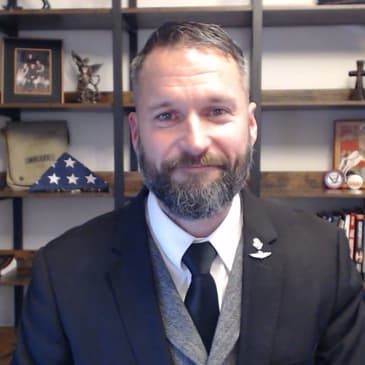
Is America’s Power Grid at Risk? Lt. Col. Tommy Waller USMC (Ret.) Exposes the Threats
In this episode, Tommy Waller, President of the Center for Security Policy, reveals the critical threats facing America’s power grid—from cyberattacks and foreign influence to EMP threats and government policies that put national security at risk. Jenny Beth and Tommy dive into China’s role in U.S. infrastructure, how bad policies have weakened energy security, and what must be done to protect America’s electrical grid from collapse.
Twitter/X: @LtColTommy | @securefreedom | @jennybethm
Website: https://centerforsecuritypolicy.org/
Grid Down Power Up Film: https://griddownpowerup.com/
The Oyster Bed Website: https://www.theoysterbed.com/
[00:00:00] So, transformers, supply chain attacks. We know that right now there's at least one transformer from China that was discovered to have a hardware backdoor in it that would allow someone to remotely shut it off. The point is that we have this grid. It's the most amazing machine that keeps us in life support every day. And there's all these different things that can harm it. And part of our job at the Center for Security Policy is to help both the policymakers
[00:00:27] and even the electric utilities understand what those threats are and just how big of a deal it is that we defend against them. Keeping our Republic is on the line, and it requires patriots with great passion, dedication, and eternal vigilance to preserve our freedoms. Jenny Beth Martin is the co-founder of Tea Party Patriots. She is an author, a filmmaker, and one of Time Magazine's most influential people in the world. But the title she is most
[00:00:53] proud of is mom to her boy-girl twins. She has been at the forefront, fighting to protect America's core principles for more than a decade. Welcome to The Jenny Beth Show. Tommy Waller, thank you so much for joining me today. You are the president and CEO of Center for Security Policy. Thanks for coming on my show. Yes, it's an honor. Thanks for having me. So, Tommy, how long have you been with the Center for Security Policy?
[00:01:21] It's actually just over a decade. I actually was serving in the Marines on active duty. It was something I felt called to do really, gosh, since I can remember, probably four years old, when I first felt the call to serve in the military. And I began that service shortly after 9-11 on active duty as a Marine infantry officer and ground reconnaissance officer and did multiple combat
[00:01:44] deployments, Afghanistan, Iraq. And about halfway through my career, I really felt called. It was a pretty good story. I won't take the whole thing now, but just felt like a God thing, just being called to something else. And I didn't really know what for, Jenny, until the day that I just truly gave it up, 100%. Like, all right, Laura, I don't know why you wanted me to leave active duty, but
[00:02:08] you got it now. You're in charge. And six hours later is when I got a phone call about a job I didn't even apply for at the Center for Security Policy. And like I said, that was just over 10 years ago. And so that's how I ended up here. The last half of my military career, I did retire, which I'd be happy to talk about. It wasn't necessarily by choice. But I served the last half
[00:02:32] in the reserves of the Marine Corps. And this was my civilian job at the Center for Security Policy. Okay. And we'll talk about your not retirement, but leaving the reserves in a minute or two. What is it that you have been doing for the last decade before becoming president and CEO? What all have you been doing with Center for Security Policy? And what does the group do for people who are not familiar with it? Yeah, yeah. Let me just first, let me talk first about
[00:03:00] the Center. And then I'd be happy to talk about, you know, the work that I've done here. So the organization was founded in 1988. So you had members of the Reagan administration, including Frank Gaffney, who founded the organization. Because what they found was in the federal government, even as far back as the Reagan administration, it was often difficult to get the truth about what threatened the republic from inside the government. And then a lot of times, even outside the government, you know,
[00:03:30] you had these different national security think tanks that depending on where they got their funding, it might very well affect their analysis or the recommendations that they would make to the government. And so, you know, let's just say, for example, if you have an organization taking foreign funding, or if they even if they take government grants, and then they feel like they have to just tell the government what the government wants to hear. Or maybe there's, you know, special interest groups,
[00:03:57] companies that can profit off of the policy recommendations that they make. All of those things often are not in the public interest, or at least not expressly in the public interest, right? And so the founders of the organization committed to having the Center for Security Policy, be able to produce this uncompromised analysis, and unconventional solutions to keep Americans safer.
[00:04:25] And that's pretty broad of a mission statement to provide uncompromised analysis and unconventional solutions. But the fact that we don't take funding from special interest foreign parties or government is what helps us do the uncompromised analysis. And that, Jenny, it goes between ideological threats to threats to our infrastructure, right? So to kind of answer your question about when I first came on
[00:04:51] at the Center for Security Policy, a lot of what I was covering down on was to be able to understand and then teach the doctrine of our adversaries. I mean, Jenny, I had just gotten off the battlefield where I faced jihadis, jihad terrorism, and didn't understand what motivated these really, really terribly violent adversaries of ours. And it was the Center for Security Policy at the time
[00:05:17] that had that uncompromised analysis on why that adversary fights, right? The doctrine of Sharia, et cetera. And so that was the initial part of my job at the Center was to be able to understand and then help to push back against the encroachment of that hostile doctrine here in our country and help others to understand it as well.
[00:05:42] That is really interesting how you got involved with it and what you were learning as part of it and how it tied back to the work you did defending the nation as well. It's really quite amazing. Now, Tommy, you went into the military shortly after 9-11. Is that right? Is that what you said? That's right. Yeah, not too long after 9-11. I was in college. You know, of course,
[00:06:09] everybody can remember where they were when those planes hit the towers. And so, you know, I was in college at the time, almost ready to graduate. And, you know, I had actually like I majored in political science with a concentration in international relations and had a minor in Latin American studies thinking if I was going to have any, you know, action, so to speak, it would be against like drug cartels. And of course, 9-11 hits and it was anything but that. Of course, now, I guess, Jenny,
[00:06:38] there's an argument to be made that understanding Latin America and the drug cartels is probably more important than ever given the state of our republic right now. But, you know, when you look at the last two decades and you look at the result of the wars that myself and many other patriotic Americans, you know, fought in, it's very unfortunate that we don't have a lot to show for the sacrifices that have been made. And the reason is because the U.S. government willfully refused to understand those
[00:07:07] adversaries. So it's very difficult to win a war against an adversary that you refuse to understand. And that's something that the Center for Security Policy has prided itself on for years, really for over three decades, is being able to study the doctrine of our adversaries and speak the truth about that to whoever will listen. And so we hope and pray now with the Trump administration 2.0, that there are many more people who are actually willing to listen to that truth now.
[00:07:34] Well, I think that there will be. And now that we have Pete Pegseth in his position, I think that we're going to see that they're willing to listen more to what it takes for us to win wars and to prevent wars from ever starting in the first place because of the strength of our military military and the strength and resolve of the president and the American people.
[00:07:59] Okay, so I want to tie something together and then I want you to explain what it is. So you said that you think part of the reason we don't have a lot to show for this very long lasting war on terror is that the administrations, plural, really were not paying attention to the root cause of the problem. I think that it isn't just what we saw in 9-11, which you're right, everyone who was alive then
[00:08:26] remembers and knows exactly where they were that morning. It also is what happened less than two years ago now, a little more than I guess a year and a half in Israel as well. We're still facing as a world that same kind of ideology, right? Yeah, Jenny, that's right. And that ideology, whether you call it an ideology, just a belief, of course, there's lots of variations of it.
[00:08:55] But the doctrine, the doctrine of Sharia, it requires, it obliges its adherents to participate in what's known as jihad, right? And so, you know, and what is jihad for people who just I've been through some of the the briefings from the Center for Security Policy, but a lot of people haven't they hear the word jihad or they hear Sharia, and they know they're terrorists, but explain it because
[00:09:22] you're right. Administrations didn't know what it is. And also, a lot of Americans don't understand it. Yeah. And look, Jenny, maybe the thing to do is, I mean, I could reference the most authoritative book on Islamic law, The Reliance of the Traveler, which is printed right in Beltsville, Maryland. And I could grab it. I have a copy here. I'll show you and just give me a moment.
[00:09:51] Reliance of the Traveler is an authoritative book on Islamic law. And you can see in this particular copy that, you know, we've studied it. And so when you go to the section on jihad and you go through the definition of jihad, I mean, it says here, jihad means to war against non-Muslims, signifying
[00:10:15] warfare to establish the religion. And then, you know, the book goes through the obligatory nature of it. Now, Jenny, it doesn't mean that everyone who is Muslim subscribes to this doctrine. In fact, my interpreters in Iraq and Afghanistan were working with us because they didn't want to live under this. You think about the collapse of Afghanistan, the terrible sights of so many people just rushing to U.S. military aircraft to try to escape. What they were trying to escape was the
[00:10:44] Taliban. And what does the Taliban believe? And what does the Taliban want to implement? It's this, right? And so and that's the same, Jenny, you talked about October 7th, 2023, the Hamas attacks in Israel. Hamas believes in the same doctrine. They want to implement that doctrine and the doctrine permits them or even obliges them to do many of the things that horrible, horrible, evil things that they did. But, you know, when you think about this topic of what we call evil,
[00:11:12] evil, it's important for us to reflect on, you know, why do we why do we call these things evil? What is it that in our mind tells us? Right. So think, Jenny, think about San Bernardino, California. Right. Tashfeen Malik is a young mother who takes her six month old child and hands it to her mother.
[00:11:37] And she and her husband strap GoPro cameras to their bodies and then they go and they kill her husband's co-workers in the San Bernardino terrorist attack. And so if you kind of think about like that act for a mother to leave their her child motherless and to murder other people, most Americans would say, like, is that good or evil? Right. And I think most people would agree
[00:12:02] it's not good that it's evil. But, you know, if we go back to Islamic doctrine and we go back to this book on Islamic law in the very first pages, you know, in the very first chapter, book a sacred knowledge, the very first page. It says, you know, about the knowledge of good and bad. Right. We think about it with God given reason that it's not reasonable for a young mother to leave
[00:12:28] her child without a mother. Right. Or do the things that we talked about. And what it says is that the good is not what reason considers good, nor the bad what reason considers bad. The measure of good and bad, according to this school of thought, is the sacred law, not reason. And so that helps one understand that the very significant thought process of someone who subscribes to the doctrine
[00:12:55] and really wants to to propagate it and force other people to live under it. That, you know, things things like basic reason are not meant to factor in. It's supposed to be obligation by the law. So anyway, these are things, Jenny, that I had no understanding of when I served overseas. And it helps to understand these things, at least to understand more about the people who want to
[00:13:25] escape it and who are trying to help you and those that are that are trying to propagate it and force it upon others. So I don't know if that helps. It's a long answer to your question. No, it's it's good. And I think it's very important. Now, let's go back to why? Why are you not in the reserves anymore? Well, Jenny, I, I, I kind of told myself when I joined the Marines, I was going to
[00:13:48] serve as long as I could. I would serve until I was no longer allowed to serve so much. I love the Marine Corps. And we reached that point. We reached that point in 2021 during the Biden administration's vaccine mandate. And so I was in command at the time. I was the CEO of the Reserve Force Reconnaissance
[00:14:11] Company and just had a bunch of wonderful, incredible Marines that that I served as their commander. And when the mandate came out, you know, it I was very concerned about it from a medical perspective. I will admit that I will credit my wife for being very highly educated about just the overall pharmaceutical industry and vaccine protocol from everything from, you know, childhood vaccines to
[00:14:41] these sorts of things. So I kind of had an understanding of that, that world of kind of big pharma. And I also had an understanding of regulatory capture. And I'm sure at some point in this discussion, we're going to get into this as it pertains to our critical infrastructures, the U.S. electric grid, how our grid that we can't live without is regulated. I have witnessed the topic of regulatory capture.
[00:15:06] So I was predisposed somewhat to being concerned from those perspectives. But there was also a really significant ethical, moral and legal perspective about it as well that was extremely worrisome. And so if you look back at that period of time, you know, August of 2021, Pfizer got FDA approval for
[00:15:31] their, you know, comirnaty version of the vaccine, which had not been produced. And the next day, Lloyd Austin, you know, puts out what was a lawful order at the time. It was, hey, you will inoculate the force with an FDA approved vaccine. If you're a commander like me, I can't get an FDA approved vaccine. It hasn't been made. The only thing available is an emergency use authorized product or EUA vaccine, right? The Pfizer BioNTech, the Johnson & Johnson, et cetera, Moderna. And the law,
[00:16:02] Jenny, the law, as I'm sure you know, specifies that if it's emergency use authorized, it's experimental. The person has to, they have to have what's called informed consent. They have to consent. They have to say yes. They like, they have the ability to say no. And so what happened is in this situation, a couple of things that I didn't realize at the time that I've reflected upon afterwards that are,
[00:16:28] that are really worrisome to me that need to be corrected. The first is that the process by which this vaccine mandate was laid out was one that was really effective at harvesting data, harvesting the data on the strongly held religious beliefs of our U.S. military members, right? If you think back, it was like, hey, don't worry, there's going to be a process for religious accommodations.
[00:16:56] And there was a very highly organized methodology by which service members were able to document their strongly held religious beliefs in an effort to request to the headquarters Marine Corps, for example, or the other service branches request a religious accommodation. This happened across a lot of businesses as well. And that didn't occur to me until later that that was a very effective way.
[00:17:22] If someone wanted to know the strongly held religious beliefs, if they cared about that, that was a really good way to get that data. And once we gave that data over, all of us, right, I sat down and look, I'm Roman Catholic, I went through the catechism of the Catholic Church, and I went through and produced a very well articulated argument for why this violated a number of the tenets of my faith. And it also illustrated exactly how it violated the law,
[00:17:48] how me as an officer would violate Title X U.S. code, I would violate my conscience, all of these things. And the result was that all of us in the United States Marine Corps, at least, just about all of us had blanket denials issued to us. And the date that it was issued, this blanket denial of the religious accommodations, the Marine Corps, what they did is they sought to inflict moral
[00:18:16] injury where they could, in addition to the denial. So, and this is just an observation, obviously. I don't know the hearts of the commandant at the time. But what they did is they issued that blanket denial on November 10th, 2021. What's November 10th? It's the Marine Corps birthday, right? Happy birthday, right? Blanket denials across the force. The next thing the Marine Corps did
[00:18:42] is they, what they did is they made it such that for the young Marines who would be separated, administratively separated. In the Uniform Code of Military Justice, or UCMJ, there would have been two codes, administrative codes, that would have been fitting for this, right? Refusing inoculation or refusing medical treatment. Jenny, what the Marine Corps decided was to use the code for
[00:19:06] commission of a serious offense. It's a misconduct code, which would then allow commanders, if they wanted to, to strip the honorable characterization of service from those service members, which would then, of course, potentially have negative effects on their ability to get employment, to get educational benefits. Jenny, there were so many young Marines who were treated so poorly with this mandate. It's absolutely devastating moral injuries inflicted upon them. And that was the ones that were kicked out.
[00:19:36] There were a lot of moral injuries inflicted on those that chose to stay, right? And a lot of people didn't want to take this and had a lot of different calculus. Me, I was blessed to have a civilian job in the Center for Security Policy. And so I was able to retire. You know, I just, and in fact, I will say at least some people above me in the chain of command must have been looking out for me or didn't want to make it a big stink. They let me change command. They let me pass it off to the next commander before
[00:20:05] they issued the guidance that any unvaccinated commander in the Marine Corps would be immediately relieved. So they kind of waited until a few hours after I got out the way to do that. And I'm grateful for that. I didn't get court-martialed or anything, but for the next year when I tried to join units, I couldn't. I was refused. I had to drop to the Individual Ready Reserve. And in fact, the last time my family tried to visit one of the military installations to see
[00:20:31] the Hall of Heroes, the memorial for fallen Marines, we weren't allowed on base at the time. So, you know, for my wife who's sacrificed 21 years, you know, that's what we remember, you know, and that's exactly what President Trump, I think, in his heart seeks to redress. Yeah. And not allowing you to go there for those kinds of ceremonies, it's insult. It's adding insult
[00:21:01] to injury. It's offensive, especially to people who have been literally willing to lay down their lives for our freedom, like you. Yeah. And Jenny, look, my story is just a fraction. I look at it. There are so many more stories that are so much worse. I mean, look, I feel blessed that I got a chance to serve for as long as I did. I feel so blessed that I have the opportunity to work for the Center for Security Policy, you know, throughout that time and still
[00:21:31] today. And but also feel a calling to help try to redress the things that happen. One of the, you know, and there's so many more people that need to be commended besides me, right? Not, I mean, I'm just a small, tiny little, tiny little player here. But the active duty service members that stood and sacrificed, right? You think about people like Commander Rob Green, U.S. Navy,
[00:21:55] right? He wrote the book. In fact, I have a copy of it here. It's called Defending the Constitution Behind Enemy Lies. He's like, and, you know, my wife the whole time was like, you should write a book about this. I'm glad I didn't because Rob's book, he wrote a book way better than I ever could about the constitutional aspects of why the mandate was a violation of our oath of office. And then you
[00:22:24] think about other people like Dr. Teresa Long, Lieutenant Colonel Teresa Long, you know, who was the courageous whistleblower, one of courageous military whistleblowers. There are others who, I mean, they risked their careers, reputations on active duty to speak the truth about these things. And so, Jenny, one of the things that we're recommending right now to the Trump administration,
[00:22:48] you know, to whoever will listen, is that a presidential commission be stood up answering to the president to investigate the worst infractions that occurred throughout this mandate and just adequately hold accountable some of the worst offenders. Because we're really concerned that there's not going to be a large return back into the ranks of the U.S. military without that,
[00:23:13] right? You think about that, that the amount of injuries that have been inflicted, moral injuries on those that were kicked out, moral injuries on those that were forced to take it and who stayed in, and even the physical injuries. We think about the people who have died, who have been, I know, just, I know dozens of people personally who were injured. I know, had heart attacks within days, you know? So anyway, I could go on for a long time about this. I'm passionate about it.
[00:23:41] So we're recommending as part of the corrective action that a presidential commission be stood up and to rapidly investigate all the facets of this. Because, you know, down the road, you know, there's probably going to be people who, we already know, there's people who've been injured. And you think about like the Veteran Affairs VA, right? This is service-connected. This is a service-connected
[00:24:07] injury if you had one from that shot. And Uncle Sam should be paying for whatever injuries they inflicted. So those are all parts of why we recommend a commission. Okay. And that makes sense. And I think that's a good call to action and something that people should be supporting because it will be helpful to these military members and families who were so affected by that mandate. And then during the Biden administration, there were other issues too.
[00:24:37] And I, I'm, it's not necessary if you don't want to get, get into it, but we already mentioned throughout multiple administrations, the lack of understanding of the underlying doctrine of the people who we were at war with. And then you have mandates and misguided, um, this misguided need to protect people and to make sure that they are secure, including the men and women who are
[00:25:03] willing to, to die for us. Um, yeah, very bizarre. And then you've got D D E I diversity, equity and inclusion and the pronouns and rainbows on social media for military that sometimes seem like that was more important to the military in the last four years than making sure the men and women are actually prepared and ready and trained and qualified for the job at hand. And I'm not sure if they understood
[00:25:31] exactly what the threats were from China either. All of the above Jenny, you're absolutely right. In fact, uh, I keep reaching for books. Is that okay? That's great. Okay. Let me, let me get a couple more books for you real quick. This is great. So I got a couple more. It's good. Yeah. We'll just add to our reading list. So, all right. So let's, let's go back. Um, cause you, you, you hit me with a lot of
[00:25:56] really good points that we can discuss during that period of time. Yeah. So there was the failure to the willful failure to, to understand the doctrine of our, of our adversaries. And then we handed over Afghanistan. In fact, one of our senior fellows, Robert Spencer wrote the book who lost Afghanistan very, very short, right. Um, but, but just kind of chronicling how exactly we lost Afghanistan well
[00:26:21] before the U S government handed it to the Taliban. Now, one of our board members, Chad Robichaud, absolute American hero during the collapse of Afghanistan, went back to get his interpreter, Aziz. Aziz was his name. Now he's written a book called Saving Aziz. Unbelievable story of heroism. Chad came back not only with Aziz, but many American citizens and 17,000, uh, of our Afghan allies, people who were trying to escape that. Right. So it wasn't the U S government. It was a
[00:26:49] volunteer, you know, Marine with a nonprofit that went and did that. Now you also mentioned a distraction, right. You, where you saw this huge focus on CRT, you know, critical race theory, um, social justice, critical social justice theory is really the big umbrella and all these things fall underneath it. That's right. And so if we look back at like, there was, there was somebody back then, in uniform, a courageous Lieutenant Colonel who chronicled that wrote a book. His name is Matt
[00:27:18] Lohmeyer, Matthew Lohmeyer wrote the book, Irresistible Revolution. And so what he did is he chronicled exactly what you're talking about, Jenny, and how this is a problem in the ranks of the U S military. And what happened to him, you know, forced to resign at like 19 years of service, no retirement. Uh, but look at him now, right. President Trump, uh, has, has, you know, indicated that he's going to be appointed to a very high level in the Trump administration. So,
[00:27:45] you know, that we have this, you know, opportunity for redemption where people who suffered as the victims of, of this persecution now have an opportunity to help turn things around. There is one other thing I want to show you because I mean, look, I, I briefed my, I broke the, I went ahead and decided to break the rules. Um, so to speak, when it came to one aspect of something that we were forced to do, you may remember after, um, January 6th, 2021, that the
[00:28:11] U S military, uh, was forced to do this quote extremism stand down, right. The extremism in the ranks, the material that was provided to us to train our service members. Uh, it was void of any of the examples of the jihad terrorism we talked about before at the time there had been at least six examples where active duty, uh, or, you know, veteran U S army service personnel had either
[00:28:37] murdered their, their coworkers, their fellow service members or sought to do so. You think about like Fort hood and major Nadal Hassan, all of those examples, there wasn't a single example of jihad terrorism in the extremism in the ranks training material, right? So I went through the material exactly the way I was told, but then I also added to it, those materials as well, right. To make sure that my Marines understood. The other thing I did is, is I told them about this right
[00:29:06] here, you know, um, this is the constitution for the new socialist Republic. And I just printed it. I mean, your, your listeners, your viewers, they can go and just, just Google search constitution for the new socialist Republic in North America, right. Authored by a man named Bob Avakian. From the revolutionary communist party. And so at the time, what I recalled was seeing all these
[00:29:31] protests all over the country where some of them were organized by Bob Avakian and the revolutionary communist party, the protests against the first Trump administration. And they have a constitution. I mean, this is meant to replace and supplant the constitution that I took an oath to this copy, this copy of the constitution was given to me by the family, by the parents of an only child who died
[00:30:00] under my command in Iraq. And they told me, they said, Tommy, never forget what he died for. Jenny, I never will forget what he died for. Right. And the reality is that whether it's this other doctrine or this constitution, these things are meant to supplant what I took an oath to defend. And that has been the catastrophic failure of the U S military over the past few decades to understand
[00:30:26] what threatens that constitution. Yeah. And that is what the center for security policy does when it comes to uncompromised analysis. So, and look, we can talk about the unconventional solutions as well, but hopefully that kind of drives home in a number of ways, whether it's, you know, mandates or, or just understanding your enemy kind of the value of our work. Yeah, I think it is so very important. And I'm, I'm very hopeful that president Trump is going to
[00:30:56] clean this out and that the people who he's appointing are going to clean this out in the military. I think it is so important and that we as American citizens owe it to the men and willing, men and women who are willing to step up and sacrifice their lives and their families who are willing to sacrifice their loved ones lives for all the rest of us to be able to, to do the
[00:31:19] things that we do day to day. Um, just the, the life that oftentimes we wind up taking for granted. And, and, and if there is a time of war, the life that we would probably would want to cling to and hold on to. So I'm very hopeful that we can do what those, those men and women and their families need. And that is make sure that they have the tools and the resources necessary to survive and
[00:31:45] to live and to win and, and make sure, and frankly, to avoid, and then we have to do enough other work throughout the rest of the government to show the world that we're strong and we're serious and not to mess around with us. And it, it's going to take someone like president Trump and the people who he's appointing and the voters who gave him this mandate to be able to clean this up. But I,
[00:32:10] my goodness, you know, Tommy, we remember where we were on nine 11, my children were not alive on nine 11 and, and your children were not either. I'm sure. And, and there are people right now who are about 24, 25 years old who either were not alive or were just barely even born when nine 11 happened. So they don't, they don't even know a world, the world that we knew before nine 11, they don't even
[00:32:36] know that world at all. And they're, they're going to struggle with why are we still fighting this war that has been going on since before we were, we were born. So we've got to make sure that we're, we're solving the problems at hand and that we're handing off to our children into the next generation, a country they can be proud of and that they can hold onto and that, that still cherishes liberty.
[00:33:04] Yeah, absolutely. Jenny, you're right. I mean, I have four children on earth, three in heaven. And it's such, I mean, we, we homeschool our kids. We, we, we teach them the truth, right? Everything from their faith to, to American history. And it's, it's super important that the next generation understands, you know, how blessed we are that the founders, what the founders gave us in, in our way of government is so special in 5,000 years of, of history of really just tyranny up until,
[00:33:32] up until this Republic was founded. And, you know, one of the, one of the kind of key distinguishing features of all of the team members at the center for security policy is just, just a unique capability to recognize and counter one word that I think sums up what has happened to our Republic. And it's really been over the course of really probably a hundred years, but, but most significantly over the
[00:34:00] last 50 years. And that word is subversion, right? You think about why are we in a position where we are where the national security establishment is, that's what we call it internally at the center. We call it the national security establishment, right? It's the establishment. How could it lose so catastrophically in relation to the way our nation was founded and what's important with, from the
[00:34:26] perspective of our declaration and the U S constitution. And the reason is subversion. All those institutions have been effectively subverted. And so you think back about people like Yuri Bezmenov, you know, who gives the interview and like, what was that 1984? I mean, it was like the early 1980s where he talks about the ideological subversion in the United States and, and how long it had been going on at that point and how long it would take to reverse. And so we just need to remember that not to lose hope,
[00:34:56] but just kind of be sober about it. Uh, president Trump, as you mentioned, and the people he's appointing are going to, are going to be working as hard as they can and as, as aggressive as they can to, to, to change the course of the ship and in the direction away from, uh, the catastrophe that, that we were headed down, but it's going to take a long time. Right. And that's, uh, that's what we've kind of looked at internally at our center for security policies. Where can we make a difference in helping people understand and counter subversion, uh, and in many of these different ways, as it pertains
[00:35:25] to our, our national security. Um, Tommy, you mentioned, uh, something about the infrastructure earlier and the electrical grid. And I, um, have been briefed on many of these problems by both Frank Gaffney and also by Trent Franks and, and others. So what is the problem? Why should people be concerned? Yeah. Gosh, thank you, Jenny. Thank you for bringing that up. Cause we're, we're kind of going down the
[00:35:52] road of thinking it's only ideology, right? Like we just have to defend against these bad ideas. There's good ideas, bad ideas. Uh, and the reality is, as, as you know, if you, you know, gosh, um, have, have received those briefings from Frank or, or Congressman Trent Franks, who, by the way, is just an absolute hero in this, in this movement of infrastructure security. Yeah. The reality is that we could all, we could get it completely right when it comes to making sure that
[00:36:16] the future Americans, uh, understand the founders and, uh, what they intended for the Republic and that they're rightly aligned with all the virtues, uh, that our founders would have imagined. That could be perfectly, uh, right, righted in a way. And we could still cease to exist as a Republic because we're a modern civilization. And because everything we do depends on our critical
[00:36:40] infrastructure, which all depend on electricity. And so to credit, uh, Frank, uh, Frank Gaffney from, you know, over 10 years ago, having created, uh, a, a big part of the center for security policy focused on that topic, right? Our secure the grid coalition. Uh, and, and so what, you know, Frank sat down with me and briefed me on, on EMP on the threats to the grid, uh, and said, look,
[00:37:06] Tommy, I need you to run this coalition and I'm still doing it today. Uh, focused on protecting that most critical infrastructure. And, you know, Jenny, the good news is that that is a fixable problem, right? Um, at the time, of course, you know, the number of solutions for things like nuclear EMP, for example, it's mainly EMP is. Yeah, absolutely. Look, and I don't know how long your podcast can go, but once you get, we can break it into two episodes if we need to, no worries.
[00:37:34] As long as you've got the time. Okay. So, yeah. So, you know, let's, if we could, Jen, if we, before we go into what is EMP, maybe first just say, what is a grid? Okay. And, and, and most people probably know when, when, by now, now I'll tell you that 10 years ago, when I started, I'd start talking about the grid and people would stop me and say, what is a grid? I think most people understand, but just in case, just to level set, uh, when we say grid,
[00:37:59] what we're talking about is the, that whole system of generation transmission and distribution of electricity, whatever it is, right. It could be generating from a solar panel on top of your house, uh, or it could be a coal or nuclear power plant hundreds of miles from you. The electricity has to be generated. It has to be transmitted. No words has to move over long distances and then be distributed down to its users. The grid is all the infrastructure that does that. So when we say grid and how it's vulnerable, it's vulnerable to a number of different threats,
[00:38:29] both, uh, natural threats from mother nature and man-made threats. Right. And so, um, that could be anything from weather, terrestrial weather, like we've seen before with hurricanes, uh, snow and, and, and polar vortexes. And we saw winter storm Uri in Texas, you know, that, that was a three-day blackout that resulted, uh, in, in over a hundred billion dollars of economic loss. And many, many,
[00:38:54] many, I want to say, I want to say it was like 248 people die in a three-day blackout, right? And that was just cold weather. So you have mother nature and then you have adversary action, right? And on the adversary side, we can go into each one of these if you want to, but I'll just quickly list out that that could be physical sabotage. It's like we saw in Moore County, North Carolina, where the, where there's transformers from shot out. People had a no notice blackout from physical sabotage.
[00:39:22] It could be cyber attack, which we, of course we've seen in the Russian cyber attack, the Ukrainian grid, the same malware is in our grid right now. Unfortunately, um, it could be supply chain attacks. Okay. We know, uh, that right now there are many, many parts of our grid that are manufactured in another company, other countries, right? Uh, millions of inverters for all the solar and wind
[00:39:45] manufactured in China, hundreds of transformers, these huge irreplaceable assets. I say irreplaceable, just very hard to replace it. Because it takes 18 to 24 months to get a new one, right? It did. So when you got that briefing, when you got it, that's what it, you're absolutely right. That's what, that's what it used to take. Um, back when, when Frank and Congressman Trent Franks were, were starting to sound the alarm about the issues like electromagnetic pulse, which we're going to get
[00:40:12] into, uh, these transformers could be ruined by that. And back then it took about 18 months, uh, to get one of those. Now, depending on the size, it's four to six years, the lead times. Yeah. And, and they're, they're almost exclusively made overseas. We have a, we have some of the smaller and medium size that are being manufactured in the United States of America. And don't let me forget, Jenny, we're going to talk about unconventional solutions. We're, we're, we're going to be bringing that back here to the United States if we can with the Trump administration. Um, but you're right.
[00:40:41] So transformers supply chain attacks. We know that right now there's at least one transformer from China that was discovered to have a hardware backdoor in it that would allow someone to remotely shut it off. And that was something that Trump administration tried to rectify, right? May 1st, 2020, Trump passed an executive order declaring a grid security emergency. And, and, uh, and at the time we had about 300 of these Chinese manufactured transformers in the grid. Joe Biden suspended that
[00:41:11] order on his first day in office. We, we checked the numbers in December. It was, it was over 490, uh, Chinese manufactured transformers in the grid. This is a problem. These are things. And so, so we talked about physical sabotage. We talk about cyber attack. Now we're talking about supply chain. There's one more that's, that's not even necessarily hostile, Jenny. We may, we may suffer blackouts because of government policies, U S government policies, right?
[00:41:36] Shutting down base load power generators like coal and nuclear, uh, and, and attaching all sorts of things like EVs to the grid. So you have this huge surge in demand and without the supply, you could literally suffer blackouts and brownouts because of government policies. And when, when you talk about those one more thing, which I think Trump is undoing, but unless we get a law to change it, another president could just turn right back around and reverse it. Um, saying you can't have gas
[00:42:02] heaters and, and gas appliances in a house adds more, more pressure on the electricity side of the grid. So it winds up having to pull even, even it creates an imbalance in the grid, doesn't it? Well, it certainly creates more demand. That's right. Absolutely. And look, anything that can spike the demand can create those imbalances that you just talked about. Right. Uh, and, and look, there's lots of different infrastructures out there, uh, that can do it. Um, and some of which could,
[00:42:32] could do it in a hostile way. There are some of which that I don't really want to talk about on the pump in the, on the public side, but just know that there are other things that we are now right now tracking when it comes to, to spiking of electrical demand in potentially, uh, hostile ways that need to be addressed. Right. So the, the point is that we have this grid. It's the most amazing machine that, that keeps us on life support every day. And there's all these different things that
[00:43:00] can harm it. And part of our job at the center for secure policy is to help, uh, both the policymakers and even the electric utilities understand what those threats are and just how big of a deal it is that we defend against them. And I guess with all of that precursor now, maybe we get into, uh, EMP, are we, are we going to do that? Yeah, let's do that. So it's playing what is an EMP and why do people need to worry about that? And you know, we hear this, I, you, you and I say the
[00:43:27] acronym because we're, we're very familiar with it. E M as in Mary, he as in Paul, it, a lot of people are probably sitting there going, wait, what, what did they say? It's plain what it is. Yeah. So EMP stands for electromagnetic pulse, right? And when we say electromagnetic pulse, most of the time, what we're referring to is nuclear EMP, nuclear, it's actually called hemp
[00:43:55] or high altitude EMP. And it was something that our nation and the Soviets discovered in the 1960s. In fact, we kind of discovered a little bit before that, because we noticed when we started doing all these nuclear tests out in the desert, that when there was, uh, any conductor that came in contact with that blast, with that fireball, it would, it would highly, highly charge that conductor. So you
[00:44:22] remember back when, when they did these nuclear tests, they would build like little mock towns out in the desert and they would connect them together with electric transmission lines, just like we would have cities and they would nuke one of them and see what happened. Right. And what happened is it would highly electrify that infrastructure and would fry the infrastructure at the nearby town. If the fireball touched it, it's called source region EMP. And scientists hypothesized that if they launched a nuclear weapon up in space in the exo atmosphere,
[00:44:52] so like 30 kilometers or higher, that it would also produce some electromagnetic pulse phenomenon. They just didn't know how strong it would be. And what they discovered, it was way stronger than they ever, than they ever imagined. Uh, the United States did the tests out over the Pacific, about eight, 900 miles from Hawaii. Uh, and what happened is a lot of the test equipment got ruined, but from the pulse, from the blast that, uh, and when I say blast, I don't mean like you don't
[00:45:17] physically feel the blast. You don't even hear it. You would see, uh, a, a flash of light and up in space, uh, and then it would sort of fade away. But what happens at that, in that nanosecond, in the nanoseconds from that flash is a pulse is produced and there's three parts of it. E1, E2 and E3, that E1 is the very fast part of that pulse that travels towards earth. It doesn't hurt
[00:45:43] us, Jenny, it would pass right through our bodies, but any conductors, it could surge into those conductors and it can, it can really damage. And in some cases destroy small electronics. And so that's what we discovered. The Soviets discovered the same thing. And the difference is the Soviets, the tests that they did, they weren't over uninhabited ocean like ours. They actually did
[00:46:07] it over what is present day Kazakhstan. And, uh, I'll let you guess to any, any, any thought as to why they would do it over Kazakhstan? Why? I'll tell you, I'll tell you, I didn't know. And by the way, I didn't even know, I'm like halfway through my career at the center for security policy until, uh, one of the guys, um, that I work with that has one of the solutions for this put two and two together. And he actually looked on the map. It was the same exact geomagnetic latitude and
[00:46:37] longitude on the other side of the earth from Washington, DC. Oh, wow. Wow. Yeah. I didn't look again, I was half, I was five years into this before I realized that. I hate to admit it. About what year was it? That was what during the middle of the cold war, right? Yeah. So like 62. Yeah. Um, and so it was called the K test. It was not just one, they did a series of tests. And in fact, the best data on the effects of those, those tests
[00:47:03] were from the Soviet tests because they did it over, over a populated area that had electric infrastructure. And thankfully this, the, they had some Soviet scientists that defected at the end of the cold war and actually gave the congressional EMP commission that data. And so we now know we have the data on what the effect was from those tests. Uh, but, but, you know, this is something Jenny,
[00:47:25] that I briefed Jennifer Granholm multiple times about the insufficient standards of protection of the grid against, uh, both nuclear EMP and solar weather. So we didn't talk about this yet, but there's a component of nuclear EMP that is very similar to a natural form of EMP. So it's probably a good time. I can kind of break that down for your audience to understand what that is.
[00:47:54] So I talked about when that blast takes place in the exo atmosphere and you got the E1 part of the pulse that can kind of fry small electronics. It's not just that part. So there's an E2 phenomenon as well. It's much like natural lightning. We don't worry too much about it because most of our critical infrastructure is protected against natural lightning. There's a third part of the pulse called E3 and E3 is how that, that blast reacts with the earth's magnetosphere. So our earth is surrounded by a
[00:48:24] magnetosphere. And anytime you have a magnetosphere that has movement, it can create electromagnetic energy. So I want your audience to think about for a second, like if they were to start their, uh, they pull, start their lawnmower, right? You've got this, this magnet surrounded by copper wire. You pull that cord, it moves, it creates electromagnetic energy that surges down the wire to your spark plug. The earth's magnetosphere, when it, when a nuclear blast takes place up in space in the exo atmosphere,
[00:48:53] the magnetosphere literally heaves and wobbles, moves. And that movement creates electromagnetic energy that gets induced into the crust of the earth. So you might be looking up and see a flash, but what's happening beneath your feet is what matters. What does electricity do? It always looks for the path of least resistance, right? And so if you're, you know, as your listeners and your viewers
[00:49:17] are imagining this phenomenon, the blast takes place underneath their feet in the crust of the earth, this electromagnetic energy starts traveling through the crust of the earth. And it's looking for the path of least resistance. Well, there's long transmission lines that transmit that electricity. What is it about those transmission lines that makes them able to transmit the electricity? It's
[00:49:41] high voltage. What is, you need high voltage. So it has low resistance, right? And so what happens is that electromagnetic energy is traveling through the crust of the earth and it recognizes the low resistance of those transmission lines and the transformers. Remember the transformers we just talked about? And it jumps up through the neutral ground of that transformer and it travels down that transmission line and it fries what's on the other end of it, right? Which is another one of
[00:50:11] those irreplaceable transformers. And so that is what we worry about. It's called a ground induced current. And Jenny, unfortunately, it's not just a nuclear weapon that can produce that effect. The sun can do the same thing. And I know that if you receive those briefings from Frank and from Congressman Trent Franks, you know that the natural form of EMP, it's called a geomagnetic disturbance, solar weather. The sun produces coronal mass ejections, these highly charged particles that blast out into
[00:50:41] space. And they too can, they can crash into the earth's magnetosphere and produce that same ground induced current we just described and have the same effect on these irreplaceable transformers. And we know that that can happen because it has happened in the past and it took, I don't know, in the recent past, but it definitely took out telegram machines years and years ago. So we know, we know the sun can do that.
[00:51:09] Absolutely. Yeah. Jenny, I'm sure you remember from the briefings yet to what you just referenced, 1859 is called the Carrington event where the telegraph machine started to spark. Some of them were able to transmit while they were not hooked up to any kind of power or battery. And we're told that the entire transatlantic telegraph cable had to be replaced after that. But that was the only infrastructure we had at the time.
[00:51:33] Now you fast forward to 1921, 1921, there was a solar storm referred to as the railroad storm. Why was it referred to as a road storm? Well, because some of the railroad infrastructure actually burned down and it burned down from all the sparks that came from telegraph machines. Same thing, these long conductors, right? And so then you fast forward to 1989, 1989, the hydro Quebec storm, where you had a big portion of the grid in Canada and Quebec that was blacked out
[00:52:02] due to a very relatively small solar storm that occurred in 1989. And so these are real world events that happen. And unfortunately, the standard that's been established by the industry. So we talk about how the rules are made for the electric power industry, that regulatory capture. That's a whole nother subject, which I'm happy to talk about. But unfortunately, the standards that were created by the industry and approved by the federal government are just absolutely
[00:52:30] dangerously and transparently deficient. And Jenny, that's what I poured my heart out to Jennifer Granholm on multiple occasions, provided to the U.S. Secretary of Energy Advisory Board, multiple forms of written testimony to show just how catastrophically low the standard is and how vulnerable we are. And I pleaded with her to take just a portion of the infrastructure bill, the bipartisan infrastructure bill over a
[00:52:59] trillion dollars. You know, Jenny, it would have taken one third of one percent of that bill to fix this problem of ground induced currents. You know, the solar weather problem, the E3 hemp problem, roughly over four billion, one third of one percent of Biden's infrastructure bill to fix that nationwide. You know how much they spent on it? How much? Well, I'm sure I know how much should they spend on it. As far as I know, nothing.
[00:53:27] It's crazy. This is a government that loves to spend money. It almost can never find enough places that it wants to spend money. But when it comes to fixing this potential problem, it it acts like the problem. The problem doesn't exist right now. It is a potential problem, but it is also an avoidable problem. It's an avoidable problem. But but there is certainty that it will happen, like not necessarily the nuclear EMP. I mean, God willing, we can deter enemies. We won't have to suffer a nuclear
[00:53:56] EMP attack. But the sun produces coronal mass ejections all the time. We just don't know when we're going to connect with one. And look, I should say there's no indication that I saw from the secretary level that they took any action or made any investment on protecting the grid against that. I will tell you, though, that there are some places in the country right now where the Department of Energy did invest in the neutral ground blocking technology. Right. Because all you have to do is
[00:54:24] block that current from entering the grid. It's it it's very simple, actually, and it's very affordable. And so there are three places in the U.S. grid right now where those devices are installed. And the government has been getting test data from those devices. I know because I'm in touch with the manufacturer. You probably remember last year there was we witnessed Aurora Borealis, the northern lights, if you remember, all the way down in the south, probably where you're at in Georgia and all
[00:54:53] the way down. Atlanta. Right. And so I was I'm going to tell you, Jenny, I was a little scared. Maybe maybe a Marine shouldn't use the term scared. I was concerned. I was concerned that we might see some blackouts with that. And thankfully, thank God, the strength of that storm was very minimal. But we if it would not have been minimal, we could have seen blackouts. And what happened is I started getting phone calls and text messages from the manufacturer of those devices because they were
[00:55:22] getting amazing pictures. I wish I could show them to you where the engineers drove out to the substation because they saw that the device was activating. It was blocking those currents. Right. Twelve to twenty four hours before any of the government space weather prediction people said that we would feel impacts. They started it started blocking. They drove out to the substation, took the most amazing photographs. And if you edit this afterwards, maybe I can send it so you can put it
[00:55:50] in the video. These amazing, beautiful photographs of Aurora Borealis with the with the transmission substation in front. And that neutral ground blocker was doing its job the whole time. So that's the good news, Jenny. It's a fixable problem. We just got to have the will to do it. OK, now let's look. I think that one thing that we haven't done and I think it's important to do when we're trying to get this problem, we're trying to get this problem solved. People need to understand
[00:56:19] how it can affect their lives like they hear. And I did. This is what I thought, you know, I'm like, oh, well, so what? My phone might not work or, you know, I might not have power. I just didn't understand what a big deal it is. But it's a huge, huge deal. And I have a book to recommend, though. I can't pull it off from behind me. But one second after that book is a fiction
[00:56:43] book. But it is it gives you a real a real sense of what life would be like with absolutely no power in America and in cities and towns across the entire country because diabetics won't get their medicine because the medicine has to be has to be refrigerated. Right. Gas stations won't be able to pump gas because they're connected to electricity. Most of our newer cars, you know, if it's a car in
[00:57:12] the last 10, 20 plus years, they're not even going to work because of all the electronics in it. And yes, it goes on and on. Yeah. One Second After is a really good book to kind of read to be able to envision what it might be like. Right. And William Forsen, Dr. Forsen, I consider him an American hero for having, you know, taking the time to research this and write a fictional book about it.
[00:57:40] Um, now I will tell you that we a lot of times we don't know exactly how bad it'll be without having tested things against EMP. One good piece of recent insight that I learned and I don't have the I don't have the reports that these are things that military tested certain vehicles against EMP. And I was told verbally that some of the more modern vehicles actually survived. And the reason was that, yeah,
[00:58:07] the reason was that, uh, there's so many electronics in these things, uh, that could interfere with each other, that they shield all of them to not interfere with each other. And that that shielding actually made it more resilient, uh, to the type of experience we would have with a nuclear EMP and the E1 pulse. So it's one of those things that you just kind of don't know unless you test. And that's one of the good things about some of the solutions that we are, uh, are promoting to the electric utility industry,
[00:58:34] uh, are solutions that have been tested that, that we know, uh, whether it be on the E1 side or the E3 side of it, uh, that these things have been installed in the grid in, in certain areas that they've been tested and proven. Uh, but to your point for the listeners and the viewers to kind of wrap their mind around it, like, why, why should I care whether my, the grid operator in my state has a neutral ground blocker on its, on the transformers that are vulnerable to this current? Well, because like you said, Jenny,
[00:59:04] imagine for a second going without electricity and just imagine it over time. Right. And I'm not trying to like stoke fear or anything, but, uh, I mean, if you want, we can go over that. Uh, we can go over like, what, what does it look like? Um, over time, but, but one second after certainly, certainly paints the picture. It does. I mean, everything that we, we just take it, we take it for granted and we just don't think about it. You flip a switch and the light comes on,
[00:59:33] you plug your phone in and it recharges. You go to the gas station and you fill up your tank, you plug your car in. If you've got an electric vehicle and you get the energy that you need for it. We, we can't imagine if all of that quit working. I think that maybe the best way to think of it is just think about how disrupted the supply chain was when the world shut down because of COVID and we still had electricity then. Now imagine the entire supply chain being completely disruptive,
[01:00:03] disrupted, and you have no electricity, whether it's in the height of the heat in the summer or the coldest of cold days in the winter and imagine life like that. And I, that's, that's a way to think of it without like just totally scaring everyone. The first time I heard about it, I was in Washington DC. I happened to meet friend Trank said, like I, I ran into him somewhere at a dinner and we just started talking and talked and talked. And then I was awake for like the next 48
[01:00:33] hours going, Oh my gosh, I have to prepare. What am I going to prepare? But, but it, it's alarming. And really then I just was, I thought, okay, well, there's only so much you can prepare because if an EMP takes out a transformer, there's only so much that I can do to be prepared for that devastating, like worst case scenario. But the important thing is how your solutions, explain what the solutions are.
[01:01:02] How can it be one third of 1% to fix this problem? And why aren't they doing it? And what is the solution? Yeah. So a couple of things, um, and I, and I should commend you for having that preparedness mindset. I mean, look, one, one solution, uh, to, you know, in terms of for our nation is just for our people to become more individually prepared, just to know that the cavalry is not coming. If the lights go out, right. It's going to be on you. And so, you know, every single bit of
[01:01:30] preparedness is a good thing for people to think about, right. Uh, it, it becomes difficult when you start to really, if you, the longer the duration outage, the more difficult it becomes to plan for, but every single little bit helps. Like we've talked about Moore County, North Carolina, these are transformers that got shot up, you know, by some bad guys. We don't know who we still, they still haven't caught them. Uh, and by the way, think about how many bad guys are in this country now when it comes to the open borders in the last four years, right? So this is a real possibility,
[01:01:58] the sabotage, but a lot of those citizens in Moore County, they ended up having to like drive to the nearby County to get bottled water and, and, you know, food. So just having a basic, you know, start with like two weeks, start with a month worth of water and food for your family, just basic necessities. And that's a great start. Okay. You asked about the technological solutions, right?
[01:02:26] And so I want to just talk about the narrow, let's just talk transformers to give an example, because that was the one when I said one third of 1% of the, uh, the Biden infrastructure bill that would have protected against ground induced currents, which we described earlier, that can catastrophically ruin those transformers roughly $4 billion. Those are the neutral ground blockers that I mentioned. They don't have to be installed on every single transformer.
[01:02:52] The utility industry can model it to figure out which ones are the most vulnerable and they can install those. That's one, another one. And this is a good news story, uh, Jenny for this, these substations that have these transformers for the E one part of the pulse. Okay. That short part of the pulse. And, you know, we didn't talk about this, but I'll mention it now because it's relevant. It doesn't just take a nuclear weapon to produce the phenomenon of electromagnetic pulse. You can,
[01:03:19] there are localized ways to do it. Radio frequency weapons, right? People may have seen this in some of the movies, right? You think about like oceans 11, they had this, you know, EMP generator, you know, that's, that was a fictional movie, right? But it is absolutely nonfiction that these things do exist, that you can create, uh, a radio frequency weapon or, uh,
[01:03:43] a directed energy weapon. The phenomenon is called I E M I or intentional electromagnetic interference. The same kind of shielding that is done to protect against the E one part of a nuclear weapon can also protect against that localized threat. And I will tell you, Jenny, a lot of utilities are worried about that. They're worried about somebody having, uh, that kind of weapon and driving up to a substation and zapping the control system in that substation, the computers that run the grid and
[01:04:12] then just driving off. And they have no idea why that substation just went down. That's a scary thought. And it's absolutely feasible. And so one of the utilities that has created, uh, a solution to that is center point energy in Houston, Texas. And so they have a, uh, uh, a technology called CIPRTEC EMP, which is, uh, uh, protection system for all those controls and relays for those transformer
[01:04:38] substations that are shielded against the E one part of a pulse nuclear electromagnetic pulse or intentional electromagnetic interference. And in fact, what they found talking about costs, right. Is that if you were to build out a set of substations for your grid and use this technology, it's about a quarter of the cost of a normal substation control system. So you think about when you drive down the road and you see like this electrical substation, a lot of times you'll see a,
[01:05:05] like a little, what looks like a small house, like a metal building inside there. That's the, that houses all these relays and controls. They shrunk it down into this device. That's about the size of a standup chest freezer. And so it's much smaller, it's much cheaper. It's protected and shielded against those electromagnetic pulse, uh, threats. And because it's tiny, it can be elevated to prevent it from flooding. It can be encased in, in ballistic protection, something that's bulletproof.
[01:05:33] Right. Um, and so, and also it can be manufactured on an assembly line. So it's much cheaper. Right. And so these are a couple of examples, uh, Jenny of ways that the industry and other, uh, companies out there who know about the threat have sought to be really innovative in addressing, uh, the threat with solutions. And I'm, I'm glad to say that they've made a lot of progress over the years, uh, to,
[01:05:59] to have these solutions ready. And so, you know, right now, uh, I mean, I'm, I'm headed to, to Austin, Texas next week to go and brief, uh, the, the public utility commission, the people who set the rates for the electricity in Texas, uh, the people at ERCOT who run the Texas grid and many of the leaders of the electric utility, uh, industry in Texas who have assets that are vulnerable to this. I'm going to be briefing them about the threat and about the solution. And, and while the,
[01:06:29] and worked out right now, uh, the, the people who are helping us with that math and the cost estimates for the state of Texas for those two solutions that I just mentioned, right, that at least will protect those irreplaceable transformers for the whole ERCOT grid. You're looking at, and this is just estimates right now, somewhere between $1, uh, and $3 per month on the electricity bill
[01:06:58] for the users. Right. So like, okay, add a dollar or add up to $3 a month to my electricity bill. And I know that the transformers that they can't replace won't go down with a solar storm or, uh, a directed energy weapon, or even a nuclear EMP, obviously nuclear EMP is gonna cause a lot of problems, but at least the transformers are not catastrophically ruined to me. That's affordable.
[01:07:22] Yeah. Right. It's, it is affordable and it's, it's a common sense solution. And I mean, energy does cost money, but if you don't have it, everything, everything depends on it. Everything depends on it. Absolutely. So we, we, we can't afford not to protect it. Uh, but knowing that it's affordable to protect, uh, is, is inspiring, you know, and that's what, that's what I hope to do
[01:07:48] is to inspire people to do it. If people want to help you with protecting the grid, where can they go and how can they do that? Yeah. So, you know, first of all, we're obviously a nonprofit, right? And so, um, supporting the center for security policy to continue doing this work is one really important way. I mean, I, uh, we, Jenny, I've had situations where, you know, companies that can, that can make money, uh, protecting the grid are very pleased with the work that we do. Right.
[01:08:18] And, and, you know, it's well-meaning, but I've had, I've had people come up and, you know, pat me on the back and shake my hand, Tommy, you're doing such a great job. And I shake their hand and I look in there. It's like a, there's a check and I look at the check and I'm like, oh man, you have no idea how bad I need this, but I got to give it back to you. I can't take it. I can't take your money. Uh, because it's, we can't take it. It's, it's for the public interest. So for the public to help us is one way, right? So center for security policy, secure freedom. You type in secure freedom.org that goes to our website.
[01:08:48] Uh, and of course, donating to us, uh, is something that, that will be very helpful in terms of being educated on it. Uh, you can sign up for our daily brief at our, at our website. We have an area on infrastructure security. If you live in the state of Texas, for example, we did put up a take action campaign, uh, that will correspond to the work that I'm doing, briefing these lawmakers, briefing these officials. So if you're a resident of Texas, go to center for security policy.org and click on that infrastructure security part,
[01:09:16] uh, and take action there, you'll see it. Uh, but for just the everyday person, one thing that, you know, they don't just take my word for it, right? Uh, we, we helped with the production of a documentary called grid down power up grid down, power up.com, uh, is website. Dennis Quaid is the narrator. Uh, people can get, you can educate themselves there. And there's actually on, on that website, a tab for participate. So regardless of where you live, uh, you can go through
[01:09:41] and take action to, to email, you know, your elected officials. But what I, in my experience, Jenny, oftentimes it, the most impact happens when people like you that like it, you're a great example of this with, you know, the tea party Patriots in it, where you identify the really, um, influential people in certain areas that are really well connected, whether it be politically,
[01:10:04] uh, who, who can actually take this on and make it genuine and not just, uh, an email campaign where a lawmaker gets like a thousand of the same form letters, right? That's, that's helpful for them to know people are interested. Right. Um, but case in point in Texas, I have a gentleman, you know, I don't think he'll mind me saying his name. Don Brown is his name. And he he's, he's retired
[01:10:30] executive used to be a CEO of a, uh, of a tech company and he's taken this on locally. Right. And so what he's done, and this is where I think your network, uh, of, of tea party, uh, professionals that do this sort of thing, wherever you live, we know, I would be happy to work with people who are interested in plotting for your particular state, the right influential plan and strategy for your lawmakers, for your electric utilities, uh, to be able to bring this to them. Right.
[01:10:59] Uh, it's a lot of work, but I'm happy to do it because oftentimes it's the personal relationships. It's, you know, me sitting down with the chairman of a public utility commission and breaking this down for them and showing it to them and them sitting back and asking questions. And it becomes real. It becomes way more real than, than what they might get in a form letter, email, um, or a phone call. Right. So that's probably the way somebody can make a difference. If they're connected
[01:11:27] in their state, uh, they can reach out and we can, we can work with them, um, you know, state by state. So the last thing I'll mention is, uh, one of the other solutions that, that we are, uh, developing Jenny right now is a resilient communities network. So we noticed that a lot of times, especially the federal level, things move so slow, even sometimes at the state level, they move slow. Oftentimes at the County level, people can make a lot of difference a lot faster.
[01:11:54] And of course it's their local community. They want to make a difference. And so we have, what's called the resilient communities network, which is emergency managers and law enforcement and County officials who, who are, who welcome our uncompromised analysis and unconventional solutions. And we, so they will invite us at times to go in for their emergency management conferences and brief all the emergency managers or these law enforcement meetings will brief members
[01:12:22] of law enforcement on not just the grid, uh, Jenny, but even the ideological threats we talked about before. Cause a lot of times they're not getting it from, they're not getting it from the federal government, you know, like Antifa, another book. Yeah. Kyle Shidler, one of our employees wrote the book on Antifa well before 2020. Can't tell you how many law enforcement organizations want that knowledge, right. About Antifa eco-terrorists. So that's another thing is, you know, if your listeners
[01:12:47] and viewers are connected with their local emergency manager, law enforcement County officials, if they would want to have us come in and deliver those briefings for their law enforcement professionals, their emergency managers, that's another thing that we do. And then we bring them into that network where they are able to, to be able to be connected with other like-minded people at the County level who have a duty to protect their communities. So that gives you a couple examples of, of solutions that we have, um, on how we can help. Okay. And the website is, uh,
[01:13:17] secure freedom. Yeah. Yes. Well, that's, that's right. Secure freedom.org secure freedom.org it forwards right over to a center for security policy. So, okay. Yeah. Now, but I have one more topic to talk to you about. Um, we have done two documentaries on intellectual property rights, especially related to patents. And yeah. And, um, the latest one we did was a couple of years ago
[01:13:41] called innovation race. And it dealt with, um, uh, our patent system compared to China's and things we need to do for our patents. It's hugely important. Yeah. It is. And we can have a different big in-depth conversation about that important issue at a later time, but you have a patent, don't you? You and your brother. We do. Yeah, we do. And real quick, before we get into that,
[01:14:06] uh, I use it, don't leave with that. Um, I will tell you on the topic of patents in China and grid, I won't mention the company, uh, but one of the, these companies that has a really innovative solution that still hasn't been, uh, employed in the United States has told me how they've been getting patent trolled from China to your point. Uh, and the Chinese are manufacturing what it is
[01:14:31] that they invented and they're putting it into the Chinese grid. Uh, and so, so yeah, I just, I had to tell you that real quick because it was on the topic that we just discussed and right. You're, you're an expert. It ties together. It ties together. But, um, I love learning about inventors. And so what, why do you, why do you have a patent? What is it? And how did you come to have this? Sure. All right. Well, Jenny, thank you for inviting me, uh, to talk about this. We didn't
[01:14:57] talk, this is not scripted. So just so you know, cause I, I, the, uh, the little innovative Cajun cookware company, uh, that I own, I always use it to benefit the center for security policy and never the other way around. So I can't tell you how many times I have shucked oysters and I've cooked steak and oysters for people and brief them on all these things, uh, in an effort to educate them. Cause look, um, there's nothing like breaking bread with somebody to get to know them,
[01:15:25] uh, to get to share with them. Right. And so I do that all the time. And I exploit this little company called the oyster bed, uh, for the sake of our national security. Uh, but, but yeah, so, so my brother and I, um, we invented something called the oyster bed. It's one of a few inventions, another one called the state bed. It's a, it's a piece of cookware that allows the user to, to cook charbroiled or char grilled oysters to perfection, uh, without having to shuck them.
[01:15:53] Okay. And Jenny, I will tell you that we didn't invent this product because I don't like raw oysters. I love raw oysters. Like my favorite thing. I can sit there and shuck oysters and tell stories and maybe sip on a cold beer or nice whiskey all night. I love raw oysters, but if I'm going to cook them, I don't particularly want to have to shuck them. Okay. And where we grew up in South Louisiana and many places along the coastlines of our nation, you can buy pre-shucked oysters. You can buy them
[01:16:22] just right out of the gallon, right out of the court. And, uh, and so what we, what we developed was a product that would allow people to be able to cook them to perfection very, very easily, very conveniently. And Jenny, when we, when we put this company together and we thought about the why of the business, you know, we said first and foremost, that it would be to bring families around the table and closer to God. That was number one, right? Cause I should not have survived
[01:16:48] the deployments that I went on. Right. I'm part of a gigantic family. The oldest is seven. And, uh, and this, this idea was actually born out of a deployment. Every time I would deploy with the Marines, my family would all get together. We'd get a bunch of seafood with oysters and crawfish and shrimp and crabs. And so the fourth deployment, we're all together. My brothers and I were all shucking oysters. We can't hardly keep up. We're trying to cook some, we're eating some raw. We
[01:17:14] got all these hungry people. And my mom comes out and she says, man, I got seven kids, you know, she, she sipping on a glass of wine. She's kind of creative, you know, she's got seven kids. None of you guys have ever invented anything. And the lady that invented the redneck wine glass glass is a millionaire and the redneck wine glass for your listeners that never seen it, it's literally just like a Mason jar on top of candlestick kind of thing. It, you know, it's creative. It's cool, but she's like a millionaire. Right. And so she's like, you guys.
[01:17:41] And so this is, she tells us this, this challenge, you know, that she drops right then as we're shucking oysters and my brother, Adam, I got to credit him. He's the one that came up with the idea and the concept. Uh, and, and so, um, he calls me, I'm on the way to head off on deployment. And he says, man, I think I got a name for that. The thing we're going to create called the oyster bed. I'm like, dude, that is a great name. I pulled over on the side of the road and, uh, and, and I
[01:18:09] created the web domain right there. I bought the L I got the LLC squared away with my iPhone. Then I called him back. I was like, Hey brother, I'm gonna be gone for a year. I need you to figure out how to design this thing. Right. And that goes into the patent process, right? The design patents, the utility patents, all the things, the intellectual property. And Jenny, it took three years to go from, you know, that dinner and that idea, uh, to a product. And I'm proud to say that we do have a product. We have a number of products now, uh, at the oyster bed.com
[01:18:37] is a website. Uh, but at the end of the day, what we want to do is bring families around the table and closer to God. And number two, we want to help save our coastlines. Uh, just like I'm trying to save the Republic, uh, with the center for security policy. Um, you know, we, we're losing a lot of our coastlines to, to, to erosion, especially Louisiana loses about a football field every hour and, and oyster reefs, healthy oyster reefs can help. Right. So you look at even the Chesapeake Bay a
[01:19:03] hundred years ago, you could see 60 to a hundred feet down in the Chesapeake Bay. That water was so clear. Part of that was the, just the abundance of oysters. And so what we do is we, we try to incentivize oyster shell recycling. And so like right now, this very month, you know, um, the coalition to restore coastal Louisiana, CRCL, that's a nonprofit in Louisiana is helping with oyster shell recycling and we're promoting the work that they do. And so anyway, it's another topic I
[01:19:30] could talk about for a long time, but for your listeners and viewers, uh, uh, if they, if they're interested, you know, and you know, if you want to splice in our, our little Kickstarter video is 10 years old, but it's heartwarming. It's four minutes. It shows and tells a story. You'll see our whole family, uh, be happy to send you that, but people can go to the oyster bed.com, click on the first video they see and they'll see the story and, uh, and you'll see the products there. And, and I, I don't want to, I don't want to promote it too much, but it's, it's a lot of fun
[01:19:59] and it makes a wonderful, wonderful wedding gift. Uh, uh, you know, father's day gift, Christmas gift. Um, but it's, it's just a ton of fun to use. So, um, no, I really appreciate you, you sharing that. And I know I caught you off guard with it, but I was, was doing a little bit of research on you and I'm like, Oh, this is so cool. It's a really, it's really interesting. And I'm always, I'm always on Kickstarter now looking at, are you really? Yeah. I love looking at all the different
[01:20:26] inventions and then the innovations. I just, and I, I care very passionately about making sure that people who, who patent those ideas are able to keep their intellectual property and own, own the rights to it for a fixed period of time. Well, Jenny, thank you for that. Uh, like I said, I, I try to just be exceptionally careful about it because, uh, at the end of the day, I'm, I'm here to serve the public to keep the oath I
[01:20:51] took. Uh, but I also, I love serving some good food. So I appreciate that. And you know, I have a feeling Tommy that you, you invented that it helped you learn more about intellectual property rights, which helps prepare you for the work that you do at center for security policy. And you know, a lot about the supply chain now in manufacturing. And that also helps you figure out what are the
[01:21:14] things we need to do to keep America safe, to help make America great again. And so it, it all ties together because that knowledge and experience you have helps help, help make you the right person to be able to, to do this role after Frank. Well, Jenny, thank you for mentioning that, uh, that, that is, it's, it's good for me to hear that, right. Cause, uh, cause I always feel guilty if I'm promoting my, my company. Now, look, I will tell you this. My brother has another, another thing.
[01:21:42] He's, he's, he's such an idea guy. So it's not ready for public, uh, debut yet. I think you will absolutely love it. And, uh, so maybe that'll be a future episode. All right. If you, uh, if you want to know about that, he's got a whole new company, uh, and a whole new little thing that's going to be, uh, that's going to be great, especially for children, uh, when it comes to them learning about the coastal estuaries and bringing them, uh, to the Lord actually. So. Well, great. I would love to do
[01:22:10] that later. So Tommy, thank you so much for joining me today. Thank you for educating our, um, viewers and listeners on what you do at center for security policy, teaching about EMPs and everything that goes into that and how we can help, how it protect and secure America. I really appreciate it. And I appreciate the sacrifices that you and your family made for our Liberty. Thank you. Jenny, thank you so much for having me on. It's an honor.
[01:22:40] The Jenny Beth show is hosted by Jenny Beth Martin, produced by Kevin Mooneyham and directed by Luke Livingston. The Jenny Beth show is a production of Tea Party Patriots action. For more information, visit teapartypatriots.org. If you liked this episode, let me know by hitting the light button or leaving a comment or a five-star
[01:23:05] review. And if you want to be the first to know every time we drop a new episode, be sure to subscribe and turn on notifications for whichever platform you're listening on. If you do these simple things, it will help the podcast grow and I'd really appreciate it. Thank you so much.