
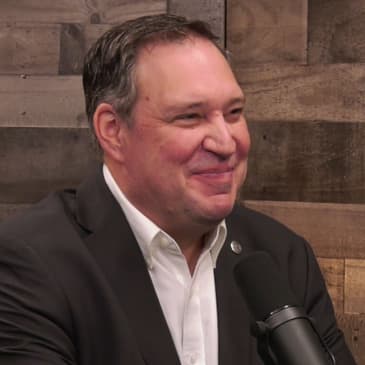
In this episode of The Jenny Beth Show, Jenny Beth sits down with Andrew Langer, Director of the CPAC Foundation’s Center for Regulatory Freedom. Andrew delves into the complexities of healthcare policy, intellectual property rights, and the unintended consequences of regulatory overreach. He shares actionable insights on increasing the supply of doctors, reforming telehealth policies, and ensuring continued innovation in America. Additionally, Andrew discusses his passion for cooking and competitive barbecue. Tune in for a thought-provoking conversation that blends policy expertise with personal passion. Don't miss this engaging episode featuring one of today's leading voices in regulatory freedom and healthcare innovation.
Twitter/X: @Andrew_Langer | @JennyBethM
[00:00:00] Donald Trump kept regulatory growth at an unprecedented 1-3% per year for his presidency First is 10%. Versus almost 10%, right? So that's unprecedented in the entire modern history of regulation. Biden has grown the regulatory state by an additional 50% over Obama, and just under 15% per year.
[00:00:21] If we stay on the same path we're on now. We will be at $7.5 trillion in the regulatory cost by 2030. Keeping our republic is on the line, and it requires patriots with great passion, dedication, and eternal vigilance to preserve our freedoms.
[00:00:39] Jenny Beth Martin is the co-founder of Tea Party Patriots. She is an author, a filmmaker, and one of time magazines most influential people in the world. But the title she is most proud of is Ma'er to her boy girl twins.
[00:00:53] He has been at the forefront, fighting to protect America's core principles for more than a decade. Welcome to the Jenny Beth Show. Today we have a very special guest, Andrew Languars, a director of CPAC Foundation Center for Regulatory Reform.
[00:01:09] Andrew is a longtime advocate for free market principles and limiting the governments involvement in our day-to-day lives. In this episode, we deep dive into the challenges and complexities of healthcare policy, intellectual property rights, in the unintended consequences of regulatory overreach.
[00:01:26] Andrew shares his insights on how we can increase the supply of doctors, reform, telehealth policies, and ensure the innovation continues to thrive in America. Plus, we'll discuss his passion for cooking and competitive barbecue. Stay tuned for an engaging and informative conversation with Andrew Languars.
[00:01:46] Andrew, thanks so much for joining me. You were working on many projects and we've known each other for several years. We got to know each other really as Obamacare was moving through Congress, and you're still fighting socialized medicine.
[00:01:59] Oh yeah, so about a year ago I went on board with the, what does now call the Conservative Political Action Coalition actually their foundation to run their Center for Regulatory Freedom? And was also involved in their coalition against socialized medicine.
[00:02:12] Very recently was asked to take over as executive director of that as well. I mean, it's important. It's a situation in which we obviously never solved the healthcare problem in America. Largely because we didn't focus on the issue itself. Right, the underlying issue.
[00:02:26] No, we talked about insurance, not healthcare. Exactly. And that's the fundamental difference here. As I used to say, I could give everybody Andrew Languars health insurance and it wouldn't mean anything. Wouldn't be worth the paper.
[00:02:38] It was pretty long because we can't actually provide the health care that's out there. And so as a result, everything has gotten worse in terms of the healthcare environment. So it starts with the idea of the supply of doctors that we have in America.
[00:02:51] There's a massive gap between the number of doctors and the number of patients that are seeking those doctors. It's a classic resource economics problem. And you and I both know that the only way you can drive down price in the face of
[00:03:03] increase in consumer demand is by increasing the supply of that medical care. And that's what we need to do. So it's part of what the Coalition and Get Socialized Medicine does. Focus is a lot on pharmaceuticals.
[00:03:13] We've got a big fight right now that we can talk a little bit about having to do with intellectual property. But yeah, it's a battle that never ends. Well, let's talk about that because I always like talking about intellectual property and patents. So wouldn't it that fight about?
[00:03:27] So it's really interesting back in the early 1980s, Senator Dolm and Senator Evan by of Indiana. So a Democrat in a Republican, they got together because they realized that research institution is they were not really taking advantage of federal grant money.
[00:03:42] So the reason why was because if you got federal grant money and you were research institution, you couldn't turn around and patent whatever ideas, whatever inventions, whatever innovations came out of that research. So they passed an act of 1980 called the buy-doll act.
[00:04:01] And that said, essentially, even if you receive federal seed money for your research institution, you can turn around and patent that and reap all of the benefits. And it's spread massive amounts of medical innovation over the last 43 years, 44 years now of the buy-doll act.
[00:04:18] And it's interesting because about 24 years ago, maybe 25 years ago. A couple of scholars wanting to deal with a couple of progressive scholars, wanting to deal with the issue of prescription drug prices, they wanted to use a codosal of the buy-doll act, something called March in.
[00:04:38] Which basically says as the access that if a patent lies fellow, if a research institution or anybody else doesn't actually take advantage of their patent and develop it, the federal government can march in and take the patent away.
[00:04:53] Now here's the thing to understand that in the 44 years of the buy-doll act, this is never happened, right? Because essentially, if you're a research institution and you discover something and you patent it but you really, you patent it but if there's nothing there then there's
[00:05:08] no investment in it. What's the whole point? So these patents lie down but nobody goes after them because nobody else is doing it. So this one scholar at San Francisco State and another one who we now understand his work
[00:05:22] was being funded by Soros as well as the German government. By the way, this week is we're recording this. I don't know when this is going to be released. There's a house hearing into foreign governments funding efforts to undermine the US patent system.
[00:05:37] So they came up with this novel idea of using the March in provision of the buy-doll act to take patents if someone deems the price for the innovation, the price of the drug is too high.
[00:05:51] The federal government can march in and take that patent and turn it over to somebody else or allow for generic companies to produce it and so it completely undermines the system. And so what's weird about this? So 25 years, the theory was immediately rejected by the patent trademark office.
[00:06:09] There was a hearing on it they said no, this is not the way it works but undeterred the folks pushing this theory has spent the next 20 years going to use the pond marching it down the field until waiting until the Biden administration comes in.
[00:06:25] And weirdly enough, this is all under the auspices of the National Institutes for Standards and Technology. They offered up draft guidance a couple of months ago and we're right now as we record this waiting for them to come up with their guidance we're expecting and which we're
[00:06:40] expecting them to turn around and say, we're going to undermine the buy-doll act, we're going to allow for march in to be used to take drugs or whatever inventions if we deem the prices on the market are too high. And let me just add one more.
[00:06:53] Well, for the price on the market not just not using it. No, yeah that's what I'm saying. So we use the buy-doll act the market provision they reinterpreted so that if someone deems the price for the market price for a drug is too high then the federal government
[00:07:07] can come and seize the patent turn it over to other folks to manufacture. And to add to this, it's not just conservatives. It's not just libertarians. Not just free market limited government folks who are gasped at this.
[00:07:21] Even President Obama's former director of the patent and trademark office, the gentleman named David Capos, he is said, marching in buy-doll was never intended to be used like this and this will fundamentally up in the system.
[00:07:34] In its constitutional constitution as you have an exclusive right to your inventions. Well, you do first for a certain period of time. Right. And we've said that's 20 years in America when you patent. Yeah, with pharmaceuticals it's usually a 12-year exclusionary period which is a little bit
[00:07:49] different and then the generics can come and take over. But it doesn't say you have exclusive right to your patent for a certain amount of time unless you get too much money for it. And here's what they're hinging on.
[00:08:00] They're hinging on the idea that the initial investment was with federal dollars. So it's all, that's the thing. It's a situation in which again, the whole purpose of the buy-doll act was because before there was no innovation being done for anybody who had was receiving this federal money
[00:08:19] because they couldn't recoup the investment. There was no incentive to do it. Right. But now we're going to completely undermine that incentive. You just caution avation again. Right. That's exactly it. You might have a benefit for 12 years with pharmaceuticals as the ones that are patented right
[00:08:33] now today run out. But then people will be less likely to patent and show their invention to the world. And let me add to this that then the only folks who do recoup the benefit are people
[00:08:43] like, you know, George Soros who, as I said, is behind this an O for in governments whose pharmaceutical industries might also, whose generic pharmaceutical companies might want to come in and do these things. It is, it is an insane approach to getting at this issue. Right.
[00:09:01] The option would be in a true free market society. If the federal government really wanted these patents, we'll just pay for them. Right? Not that we want that. Not that we want them to engage in this.
[00:09:13] But do the right thing if you want to buy out the remainder of a drug's exclusionary period then go then buy it out and therefore the folks who are doing the important research and spending the money on research and development. Taking all of the risk, they're made whole.
[00:09:29] But this, this just is in the, is in the same way of looking at it. And there are a lot of problems with the pharmaceutical industry. I always feel really uncomfortable when I defend their rights to patents and intellectual property.
[00:09:42] You can't really don't like the pharmaceutical industry all that much. But they also have the right to intellectual property just like anyone, any other company or individual that's like any other exercise of a, of a constitutionally protected right.
[00:09:55] We may not like the way that someone is exercising that right, but nevertheless we protect their rights to do it. That's right. So I'm glad you're doing that. And there will be so many unintended consequences to this that I think people can't even imagine right now.
[00:10:07] But I've talked to enough inventors that I can imagine quite a few, I've heard inventors say you'd be better off putting your invention in a box and like a file cabinet and locking
[00:10:16] it away and never letting the world see it and having to fight the, the P tab right now. This is this, the essence of public policy today right. The idea of we don't look down the road at the unintended consequences of doing things.
[00:10:32] Whether it's climate policy you know at the federal level or the various state levels, you know, you've got California right now that is California is undertaking an effort to change the standards for diesel train engines right? So freight for freight trains.
[00:10:50] If they do this, it changes the rest of the industry around the country. Everybody else has to adopt these standards and of course freight travel for, you know, freight transportation by train is a very cost effective and environmentally friendly way of doing things.
[00:11:04] But excuse me, California wants to set the standard for everybody else and will again up in this industry and the unintended consequences will be more things will go by truck. You know, things will, there will be more pollution anyway. That's that's what's going on.
[00:11:19] It will be some train large train train depots in, I don't know what they're called. But in Arizona and Nevada and and Oregon where you get changed the engine. Right. That's that's we have them you may you may want to have an end to the night.
[00:11:34] I've, I don't pretend to know sort of yeah, intricacies of this and the feasibility, but right. That's the issue is that it becomes overly complicated accidents can happen all of those things. That's crazy. Now what else are you doing in the coalition against socialism medicine?
[00:11:51] Yes, so so I this is one of the things that I want to focus on is this issue of increasing the number of doctors in America. Okay, medical care providers generally, right?
[00:12:00] The issue it's it's part of it is redefining who can practice what kinds of medicine and how, you know, especially in areas of basic, you know, primary diagnostic care. You know, we have to be producing more doctors which means we have to look at medical
[00:12:16] schools and the number of medical schools in America and how we go about increasing the number of medical schools. The other part of this is increasing the number of of residency billets that are out there, right?
[00:12:26] Because we could increase the number of of med schools and therefore the number of med students. But if you don't have graduate medical education, you know, it means nothing because you need folks to do a residency program.
[00:12:37] And that is there are lots of ways you have to skin that cat, lots of things you have to do. But issues of things like dealing with certificates of need at the state level, the idea, I'm sure your listeners and viewers may not be familiar with this.
[00:12:50] But if you have a new medical innovation or a new medical business or service that you want to, you know, introduce a new in a state or community, in many states, you have to apply for a certificate of need.
[00:13:03] Demonstrate that there's a need for whatever good or serve to the hospital. Right? And all of the other entities around you, all of the other hospitals, all the other clinics, all the other doctors, they can have their say.
[00:13:14] And so if you're going to upend their business, well, they can say no, we don't want this. So we need to deal with certificates of need. We need to deal with telehealth and telemedicine, the ability.
[00:13:26] If you have a medical license in one state, you should be able to practice medicine in another state. But the very least by telemedicine. So if you're a doctor in Atlanta and you have extra time on your schedule, not that you would.
[00:13:39] But let's say the you do and you want to moonlight and provide services via telemedicine to somebody in rural Idaho or Montana or Wyoming, you should be able to do that.
[00:13:47] Well, and if you're, say, a doctor who's a young mom, you need that so you can go home in the evening and take care of your children and then you still can earn some money after their they've had dinner. Absolutely 100%.
[00:13:57] And then getting to things like pharmacy benefit managers and that whole, you know, the interplay, the folks who are the intermediaries between the pharmaceutical companies. Again, in other word, Nestle defending pharmaceutical companies, but the intermediaries between
[00:14:10] the pharmaceutical companies and consumers who are the ones who are sort of picking and choosing the prices and how things get marketed. That is a huge problem in terms of drug prices that are out there.
[00:14:22] So things like that, and this is the coalition against socialized medicine, the name may be changing. I don't particularly like being against things. I like being four things, but for the time being it's the coalition against socialized medicine. Sometimes you have to be against things.
[00:14:35] You've got to define what you're against. Well, I think that's true, but it's, I think it's better at least contextuality to define what you're against in the context of what you're for. Yeah. Yeah. So against socialized medicine and for patient choice, patient freedom. Yeah, those doctor patient relationships.
[00:14:51] Absolutely. Yes. You are doing a lot of, we talked about some of the potential regulations when you're just talking about the patents, but what other work are you doing on regulations? Because that's kind of where you specialize. Oh, that's my great passion. I know that sounds strange.
[00:15:09] It is. But it's been my, it's been my, it's been my passion. You like it though. Well, if you don't always say it's exactly what my wife said. I, when you know years and years ago, I was reading something to her section out of a book
[00:15:20] called The Triumph of Politics by David Stockman, talking about philosophy and talking about the different approaches to sort of changing people's attitudes. And David Stockman points out, and this is written in what 1983-1984. He was the head of Reagan's Office of Management and Budget.
[00:15:35] He talks about what the left tries to do in terms of changing people's demands. And he says, this is always the bloodier, more violent process. I'm paraphrasing it here. And I read this passage of my mind, like this is, this is amazing. I'm my wife so called glad.
[00:15:50] Oh, God, somebody's interested in this. Yeah, the regulatory issues have been near and dear to my heart for many, many years. Stemming from the work that my father used to do, my dad's an environmental scientist focusing
[00:16:02] on occupational safety and health issues and the assessment of risk in terms of determining public policy. So we talk about issues of unintended consequences of regulation. Part of the reason why we're really bad at that is that we never assess the risk of things that we're doing.
[00:16:18] We never talk about whether or not something is a real problem or a phantom problem. It is climate, Joe Biden just recently said in Europe that climate change is an existential threat more worse than nuclear weapons, nuclear war.
[00:16:34] And you, right, you sit there and you think about that and you're like, well, is it really? I mean, as opposed to other things, and of course the problem is, okay, I'm reminded of something else. One of the, the guide posts of my personal political public policy philosophy.
[00:16:51] 1992, just a Sanjadeo conner writing for the Supreme Court wrote, the Constitution protects us from our own best intentions. It divides politics among sovereigns, so you know, different levels of government and perishes of government precisely so that we might resist the temptation to concentrate
[00:17:08] power in one location as the expedient solution to the crisis of the day. This driven posture doesn't say this is, this is me summarizing. Crisis driven policy is always bad policy because it's so hard to undo.
[00:17:21] And we know that if you don't realize it, look at what happened with COVID. 100%. And there was, it was every bit of it was crisis driven. Crisis driven? No assessment of actual risk when anybody tried to assess risk they were dismissed in
[00:17:34] poo poo to call it conspiracy theory. Yes. And as a kid, that was his bread and butter was sort of talking about risk and the assessment of risk and how risk got to drive policy. Now, his bailiwick was a specialist policy.
[00:18:18] And I know a specialist tends to be a major taboo out there. But the reality is that if you encapsulate a specialist, especially a particular kind of a specialist called crisis tile, it's relatively harmless.
[00:18:30] If you breathe in a specialist dust on a daily basis and you smoke, I mean even if you just breathe in, but if you breathe in an annual smoke, you're definitely going to get sick.
[00:18:39] If you breathe in dust for many, many years for your career, you're probably going to get sick from some asbestos related disease. But for the average American, it's not. And my dad points to all sorts of things now.
[00:18:49] It's funny because the EPA moved this year to ban crisis tile asbestos. The problem is that crisis tile asbestos is used in filtering to make chlorine. I was going to say, chlorochist to make chlorine, which is used to purify water.
[00:19:07] So if you make it harder and more expensive to purify water, you make purified water and water purification more expensive than the drive things up for consumers. And again, the unintended consequences of doing things.
[00:19:19] So that's a lot of what I'm doing now as director of the Center for Regulatory Freedom is thinking about these issues. Last summer, great example. Again from the EPA, the EPA seems to be behind a lot of these things.
[00:19:32] EPA moved to ban something effectively, but they don't call it a ban. They change the exposure level permissions of something called ethylene oxide and you set the threshold so low that effectively bans it. Now the problem is that ethylene oxide is used to disinfect medical devices.
[00:19:53] And you cannot have a major medical procedure in America without at least one piece of equipment in an operating theater being disinfected with ethylene oxide. But EPA never went to the medical community, they never went to the chemistry community.
[00:20:08] They never said, hey, we're going to go about doing this. Just somebody had it in their head. We need to ban ethylene oxide on an even no-ye. And they do these things. And again, the unintended consequences of the risk. Nobody is out there breathing in an ethylene oxide.
[00:20:23] Nobody is out there doing things. And so the idea that they would move to effectively ban it when it really isn't causing any risk while on the other side, the risk of harm from not being able to use it as
[00:20:35] it basically it's uses as disinfectant when you can't use heat or alcohol on whatever piece of equipment and there are lots of things you can't let gauze for instance. You can't disinfect gauze with alcohol or heat because you'll burn it up.
[00:20:49] So anyway, so that's the kind of work that we're doing comprehensively. And I'm sorry, if you don't want to Jeremy or Bob Philobus. We as a movement are really good at certain aspects of regulatory advocacy.
[00:21:05] Whether it's big ticket items or certain organizations get involved in certain areas with regulation, whether it's the tech side of things or the environment, energy, et cetera. When you're talking about things like the power plant rule or the cafe standards or what
[00:21:25] have you, we're really good at those things. But there are roughly 3,000 separate rule makings in a year and nobody can keep track of everything. And in this environment, the new buzzword amongst the left, you don't hear it very often.
[00:21:42] But in the policy walkiesphere, it's called the whole of government approach. We have an ideological goal. We want to upend religious freedom in America. We want to deal with energy issues. We want to do, we want to engage in this kind of work policy or transgender policy.
[00:21:57] We want to deal with life. They don't just deal with it in one agency. We deal with it in a whole multitude of agencies and we couch an online which is that very few people can understand it. It's these small little rule makings.
[00:22:09] Very few people are keeping track. The next part on these things. I'm an expert on these things. But I can't keep track of everything. But the point is, we need to do a better job at that and do a better job at coordination amongst the groups.
[00:22:23] One of the problems we run into for instances, we have a rule-making that comes out. We don't notify our allies about what's going on. And if we do, we don't provide them with the resources to do anything about it.
[00:22:37] Or if we provide them with the resources, their resources that are completely unusable. So when we do a set of regulatory comments, we create a set of grassroots comments. We don't use it. We don't go full bore with everything but we create a set of grassroots comments.
[00:22:52] But we also create a set of comments for our coalition allies. I'll give you an example. Last summer, I got a call from... I can say our colleague, our friend, Phil Corp. Phil Corp and me. Yeah, I gave him my podcast. There you go.
[00:23:06] So Phil Corp and me says, hey, are you tracking this rule-making? It's not really rolling, but this proceeding at health and human services about child care tax credits. I'm like, no, I'm not because maybe we should try our good friends with independent women's form.
[00:23:21] Turns out they weren't tracking and Phil said to me, you know, if they increase the tax credit, that may seem like a good thing, but it's going to make childcare actually more expensive, right? Because if you subsidize one group of people, you increase demand when you increase demand
[00:23:33] as a place-day's constant, as we just said, the price goes up. And so, well, that makes perfect sense. So we go to IWF. They're not working on it either. It's not on their radar screen.
[00:23:42] So I say, you know, something-I've got a little bit of time, I will write the comments. I will do the economic analysis. And then I sent my model comments over to Phil and over to IWF. IWF did their own comments, Phil used our comments.
[00:23:58] They both used our comments, and Phil was kind of shocked. He's like, really? I can just use these in one. Yeah, absolutely. That's what they're there for. So that's the point in that all of these things, especially when you have smaller organizations
[00:24:10] that have a handful of staff, they don't have the bandwidth, providing them with the resources so they can file comments. We generally rely- when we're dealing with regulations on the model we use up on capital
[00:24:21] health, which is to create coalition letters and coalition letters can be important and helpful. But the more comments that go into the docket, the better. And we know that it's not supposed to mean anything substantively, the more comments
[00:24:35] that are in a regulatory docket, that's the file folder that- the regulatory proceeding has. But we know that when you go back up to capital Hill, invariably get asked, well, how many people file comments, pro, how many people file comments against? It's a PR thing.
[00:24:50] So we just need to be better at that coordination sort of understanding. So that's a lot of the general work. And then I'm also running new cost analyses and the numbers are striking, but I don't- OK, we'll talk about that in a minute.
[00:25:05] Going back to the comments on regulations, isn't it correct that the federal government has to respond to each comment? So you also become a cog in their wheel, the more comments that you put in. Right, so it's technically- they have to respond to every unique substantive comment.
[00:25:24] So if a bunch of people are saying the exact same thing in a handful of different ways, they don't respond to everybody in that way. But if your organization says one aspect of it, my organization says something else, fills organizations says something else, can we add to it?
[00:25:39] Then yeah, they have to respond to that preset. Now, the key thing though is that if you do file what of the multitude of comments and the comment itself is substantive, but EPA or whatever agency, I don't want to focus just on EPA.
[00:25:54] But if the agency ignores the point that a bunch of folks are making, it's not just the initial organization that files that comment, that can then challenge the rule. Anybody who gets their- gets over the finish line can turn around and challenge it if
[00:26:07] something that they raised in their comments isn't addressed in the final rule. So it's a process. It starts with before the rules proposed, making sure that the agencies are aware of what they're doing especially in regulatory reform friendly entities when the rule gets proposed,
[00:26:26] filing comments and making sure that you say something substantive in those comments, and then challenging the rule down the road. We have to be very, very strategic about those things. Okay, and then when you were talking about the whole of government approach, that is something
[00:26:42] that we're seeing in the Biden administration over and over and over. One area that most grassroots activists are probably familiar with is that Biden did an executive order in 2021 that said that every government agent, anyone who comes in contact
[00:27:00] with a government agency basically has to be offered a voter registration form. They have to be informed about how to vote, how to register to vote and be helped to vote. If you, they want to.
[00:27:14] And so we're seeing that when people encounter an Obamacare exchange or their or Medicaid or, you know, we think of it with the DMV. But it could be with any of the healthcare agency, DHS or Department of Veteran Affairs or other things that you may not even imagine.
[00:27:34] They're all having to now they're going back in and offering voter registration for and other items. That is a simple example that has a massive effect, but you're seeing it with other. Oh yeah. Yeah. Really good example on religious freedom, for instance.
[00:27:53] The Biden administration, actually, before I get to that, let me just say on the issue of the voter registration side of it, wouldn't it be great if a future free market limit government president comes in and says, you know something?
[00:28:05] No, we're going to undo this because we think it's stupid and creates voter fraud. But how about if the problem in America is that there are certain people who can't get voter ID or can't get identification, we're going to go the other direction.
[00:28:18] We're going to say if you come to a government agency and you may contact with them, we're going to have you go. We're going to help you get an identification so you can go out and take advantage of these services. That's where that takes care of that problem.
[00:28:31] But I'm religious freedom. So we know that they don't like religious freedom in this administration. So it's things like the Department of Education doing a rule making harder for organizations on college campuses that are religious or oriented to exercise their free speech rights on those campuses.
[00:28:47] We're going to change in the guidelines for how higher education institutions are dealing with those at health and human services, going back and changing the standards by which a doctor who may be pro-life can refuse to perform abortion related services.
[00:29:03] The Trump administration had a wonderful rule on that sort of expanding how that goes about. And then it goes to things like the National Park Service in their plans for revamping the William Penn Homestead in Philadelphia, Pennsylvania, removing the statute of William
[00:29:20] Penn who was an icon of religious freedom. That's what it is. Now, the last one is insubstintive but it certainly gets into sort of the woke ideology and how that that is being translated.
[00:29:31] It's the same thing with at the VA, the VA person who decided that they weren't going to that they didn't want to allow the famous World War II kiss poster or up in Denali National Park, the National Park Superintendent, whoever the staffer who goes and complains
[00:29:48] about the American flag claiming that it was too noisy, which I don't understand. So all of these things are being done and some of it's not necessarily coordinated at the top, the religious freedom stuff I think is but some of it is also the message
[00:30:02] that gets sent from the top. We're looking for this, give you an example, the state level real quick because it's set it out there, recently Maryland Governor Westmore issued an executive order on climate policy to bring Maryland to net zero.
[00:30:16] Literally in the first substance of a section he says the whole of government approach, every agency is going to be involved. They, he said the quiet part out loud. And how is this financially impacting everything? Well, right, okay. So all right, my numbers have changed which is good.
[00:30:33] So I've been, I, but this is, and I'm in the process of working on a white paper on this. The contrast couldn't be more stark. So Barack Obama is president. The regulatory state doubled in his eight years from $1.1 trillion annually in direct
[00:30:48] costs to about $2.2 to an quarter trillion dollars. That translates into a growth every year in the regulatory state by about just under 10%, 9.5%. Donald Trump comes in and I was admittedly a Trump skeptic, right? Donald Trump goes out and makes this grandiose claim.
[00:31:07] I'm going to have two regulations out for everyone that I produce. I'm like, I don't know if that's possible. I don't know if he achieved it. Here's what I do know. I do know that Donald Trump kept regulatory growth at an unprecedented one third of 1%
[00:31:21] per year for his presidency, right? First is 10%. First is almost 10%. Right? So that's unprecedented in the entire modern history of regulation. But even George W. Bush, who was supposed to be anti-regulation, the regulatory state
[00:31:34] still grew under him, more than under Donald Trump, we're going to get to why this is important in the long term in a second. So I had been assuming, so my bad assumption, assuming that Joe Biden had kept to the same regulatory tempo as Obama.
[00:31:50] So when I was running the numbers, I thought that right now we were at about $3,000 of a trillion dollars and increased regulatory cost. And our friends at Advancing American Freedom come out and they have new numbers that are
[00:32:03] saying that it's solid, research that they've done, that it's $1.3 trillion added, which means as you run the numbers, Biden has grown the regulatory state by an additional 50% over Obama, just under 15% per year. So we're now at about $3.63.7 trillion annually. We've a lot should come in.
[00:32:28] I'm not the word advocating about elections, but if we stay on the same path we're on now and we keep growing the regulatory state by just under 15% per year, we will be at $7.5 trillion in direct regulatory cost by 2030.
[00:32:45] If we go back to having it, it'd be about one third of 1% per year, it's going to stick around just over three maybe a little under four. And that's just in direct regulatory cost real quick, Jenny Beth.
[00:32:59] We know that for every dollar and direct regulatory cost there's a $19 multiplier and lost opportunity cost. What that means is when we measure mandates, right? When we measure lost employee time, we're only looking at how much we pay them.
[00:33:13] We forget that that employee is productive for an entity. So that employee, we may be paying them $20 an hour, but they'd be making a company $100 an hour, small business $100 an hour. When we take a thousand dollars out of a business to do some environmental mandate, if
[00:33:34] a pizza shop has to pay $30,000 for a new oven, because we don't like natural gas or coal-fired ovens to go with something else, that's money that they can invest in the productivity and the growth of the business down the road. That's a lost opportunity.
[00:33:51] So to economists, Dawson and Cedar out of Appalachian State in North Carolina State, they came up with this. They looked at it and essentially the conclusion is $19. So it's not $7 trillion or $7.5 trillion in 2030. It's like a hundred and never do math on the earth.
[00:34:12] But it's over 33 trillion dollars. $33 trillion in lost opportunity. And I know that cushions sent into to humanity. There we go. There you go. Thank you. So let me just say this again. Go down. So under Biden, it was about 10%. Good job, it was 10%. And Robamos, about 10%.
[00:34:31] Under Trump, it was one third of a percent. So 0.333%. Yeah, that's right. So basically almost zero. Almost zero. You like when you round that, it rounds to zero or not because it's not even 0.5. That's exactly right. And then under Biden, it's 15%. Almost the same.
[00:34:48] The average is what around 7.7. And a half percent maybe. Yeah, probably. I think that's a fair fair estimate. I haven't done that but yes. That's just insane. Right. That's insane. Even with like a zero percent in there, the average is still so high. That's crazy.
[00:35:07] So you know, that's just it. It's a situation in which and because we don't pay attention in the world. We should or can even. They're allowed to get away with these things, right? And it's never, sorry, it's not never because big, let's say major rules.
[00:35:23] The so-called major rules are vitally important. But invariably, it's these small rules and it's things that are couching regulatory ease that you don't understand that they're able to get through it and becomes as I said many
[00:35:38] many years ago and others have said it becomes death by a thousand pinpers. You know, the small businesses in America. I've never worn the small business regulatory growth numbers, but that's beside the point. Well, you can do that for your right people.
[00:35:47] Yes, that's what I guess is I'm sort of formulating these things. Oh, I'm not even sent this to you in the criminals because I ran the employment numbers yesterday. So it was a really great organization we've worked with in the past called the Phoenix Center.
[00:35:59] And they did a really innovative, cost per regulator study in how much every bureaucrat cost the American economy and how much it costs in jobs. Fun. Yes. What they decide? And so when they reran their numbers in 2017 using 2015 numbers, the regulatory state at
[00:36:18] the time cost America about just under three million jobs. So you run those numbers now right and we're things to stay in today. Right now the regulatory state is costing about five million jobs. Maybe a little more. And again, remember what President Trump said over the weekend, right?
[00:36:35] And he's correct that most of the job growth that we've seen are jobs that are not going to working class Americans, they're going to folks who may not be here legally. You know, to use the political correct term.
[00:36:45] But again, continuing on the path of 14% per year, that means by 2030, the regulatory state is costing the American economy just under 12 million jobs. All of this stuff has an impact. We can't pretend that it's a, which by the way, that's the whole point of regulations. Right?
[00:37:02] For the left to say that regulations are costly American economy and jobs. And I want to double back on something with regards to Biden and executive orders. The whole point of regulations is they're supposed to raise the cost of doing something that,
[00:37:14] that the bureaucrat or the person pushing the regulation doesn't like so that it becomes less costly to do what they want you to do. Right? We find you. We do this. We make it spend this money on this. We make it spend this money on this.
[00:37:31] That's a very important thing. We do that. We don't do risk assessment well. But we used to at least do semi-decent cost benefit analyses when it came to regulation. Now, we could, you know, differ on on things.
[00:37:46] But last year the Biden administration finalized new guidance out of the White House. They don't care about costs anymore. All they care about is benefits. And they can manipulate the benefits numbers, right? The can talk about future benefits.
[00:38:02] They're including benefits to other countries like I should be paying for the regulatory benefits of other countries. Or I should be paying for regulatory benefits that accrued other countries.
[00:38:11] Well, and we could do that if groceries weren't costing so much more every time that we went to do that. If we chose to do that as a country, but not if it's forced upon us, that's not charity. That's coercion.
[00:38:24] And remember that in terms of reaching these goals that they want, let's assume for a moment that climate change was real and that climate change was made made. Let's just make this assumption for a second.
[00:38:35] The only way we're going to deal with it is to innovate and invest in technology on the market and let the market decide where people want to go. But we can't do those things if our nation's being hobbled economically by these other regulations.
[00:38:49] It's wealthy nations that can prioritize environmental protection and its poor nations that can't, which is why by the way, the poor nations don't prioritize this protection.
[00:38:57] And why all of this baffle garb about climate change policy in the United States is meaningless because other nations are just ignoring it outright. Yes. Well, and that is when you talk about the cost jobs, well when you have the environmental protection agency and the in OSHA,
[00:39:17] coming in to companies and having so many regulations that it makes it difficult if not impossible to make a profit manufacturing in this country. Then your only choice, if you still want to be a business is to outsource it somewhere where the it costs less to manufacture.
[00:39:39] So then you're doing business somewhere, Americans aren't getting paid anything because it's not happening in America. And the regulations they don't, don't may not. I don't want to say a blanket statement, but from what I've seen, they don't do anything at all to protect the environment.
[00:39:58] They're polluting way more than what we would think is okay. And it, yet you can't even afford to manufacture in this country.
[00:40:05] Well, I mean, let's look at the green tech industry, right? And the reality is, so let's assume for a moment that we should be moving in the right, moving in that direction on things, but we're not mining the materials here.
[00:40:18] Right. So we're mining them using slave labor and places that don't have the environment. And essentially exporting all of our environmental externalities to these countries and that doesn't, that doesn't help them. And then, of course, we have the other problems that that accrue here.
[00:40:34] The reason why the Rust Belt occurred, it's not just because of sort of the, well, part of it is the collapse of the American oil market and going, you know, and sort of dealing with dealing with.
[00:40:45] But, you know, in 1971 we had, and to 1973 we had three of the major seminal pieces of environmental legislation. The Clean Air Act, the Clean Water Act and the Indian Drain Drain Species Act. And so it essentially started to make American businesses less profitable, right? Not that everything, everything.
[00:41:02] So should be about profit though. I think profit is a good motivator for things and innovation. Let's remember that pollution is waste. Well, without profit, business is doing its thing in business.
[00:41:10] But, but and also remember that pollution is waste. So one of the ways you save money as a business is by finding ways to reduce more of the resource that you're doing.
[00:41:20] But we didn't, we sort of upended these industries and so you have, you know, heavy industry in Ohio and Pennsylvania and West Virginia, right? This is what West Virginia is dealing with and has been struggling with the, the going after of the cold industry in America.
[00:41:36] And so these things have consequences and we can sort of blindly sit by while the left says there are no consequences to this. Well, and right now that it seems like that is a lot of what is happening. Right.
[00:41:51] So you said a few minutes ago that you were kind of a Trump skeptic, but then you went and looked at these numbers. Did that make you less of a Trump skeptic?
[00:41:58] 100%. I mean, that's just it. It's one of those things where would folks sort of ask me about this issue and get not to election here here. But the regulatory issues are to me the most important issues, right? That's what's going to motivate me.
[00:42:10] Let me take a step back also and say that when President Trump started appointing the right people into positions. I breathe much, much easier. And what set him aside from other politicians was he actually moved to deliver on the promises that he made.
[00:42:28] Right? You know, you'll have a politician who come in and, oh, and I now remember what I wanted to say before. Yeah, I have a politician come in and promise to be derregulatory and then they'll do very little in terms of that deregulation.
[00:42:40] But I will say, then Trump comes in and he actually starts delivering on it. And that's not what a politician does. You know, he meant what he said and said, but he meant. And again, I say, did he deliver on the two out one in?
[00:42:53] I don't know, but I do know that from that he at the very least, he kept regulatory costs growth near zero as near to zeroes you can get. But one thing I was going to say before on this issue of sort of regulatory posturing and things like OSHA.
[00:43:12] The, the, the, one thing that the George W Bush administration did right was they were finding ways to make it to make it in a business as legitimate business interest to comply with the law.
[00:43:26] And one of the things that they did was they did what was called OSHA consultation where an OSHA inspector would come in and would do an inspection with the, the idea being you wouldn't get dinged with violations. Unless they were particularly egregious.
[00:43:42] And then, and then if they did find violations, they would give you time to correct them. Then they would come in and inspect again.
[00:43:51] And if everything was corrected, they would give you a certification that you could then turn around and give to your workman's company insurance company and you get a major discount on your workman's company insurance. That's a cooperative approach to things.
[00:44:02] And I know folks will say, well, you know, the ocean's vector comms and it's high up from the government on them here to help.
[00:44:07] But at the very least, it, it gets rid of the adversarial relationship and creates one that benefits the workers produces better safety and produces better for the bottom line of the business. And of course, Barack Obama came into office and got rid of that. It's crazy.
[00:44:23] Of course, they got rid of it. It's just crazy. Well, because it comes down to being counting, right? Because the left and leftist approach to regulatory policy is all about how many enforcement actions are we filing? How many people are we going after?
[00:44:37] You know, it doesn't matter what the end result is whether or not the problem is actually being solved. Right. And that's what happens when you work for the government, the metrics are numbers in shuffling papers oftentimes rather than to justify a job. Right. Yes. Exactly.
[00:44:59] Rather than with a business, as I said a second ago, if you're not making a profit, you don't see a business. So there's a much more streamlined approach to what matters. So you also like to cook a lot, right? Yeah.
[00:45:16] So I would imagine that changing the gas tubes from regulations probably you did not let me talk two things about the gas stove issue. And and also by extension the gas furnace issue. So yeah, obviously I cook on a gas stove.
[00:45:29] I've cooked on cook tops before I hate cooked tops each year. I will remember anyway, I'm sort of a peek into my marriage. I don't know, we remodel our kitchen and my wife for whatever reason wanted us to get a glass cooked stock stove.
[00:45:42] They look better and then I discovered I couldn't use any of my heavy cast iron and it's like okay, well now I have a stove that I can't use. And then I made the mistake of putting a warm cookie sheet down on a warm glass cooked top stove.
[00:45:55] Where do the wise never do that because they will fuse together? Oh yeah. Yeah. Yeah. I learned that. I was just over like two weeks when I had to get the cook top replace. So I set that aside. Um,
[00:46:08] I had an epiphany I was walking through my neighborhood about a month and a half ago. Thinking about the ban on gas stoves, the ban on gas furnaces, et cetera. And I, I, I'm walking my one of my dogs actually both dogs.
[00:46:21] And I hear somebody's emergency whole home generator kick on. I walk by. I don't have one. I thought about getting one. But the point is that I look that I said, it not interesting. There's a gas line that runs to this whole home generator.
[00:46:36] It makes perfect sense because gas transmission is very simple technology. Doesn't require an electricity to get the gas flowing to your house. It's just a pipe. But what happens if we move away from gas appliances? What's the point of having gas line transmissions?
[00:46:52] And if you have no gas line transmissions to your home, if you have an existing, well obviously, if you have a home generator or if you move to an area where you want to install a gas powered
[00:47:03] whole home generator, it's not going to make economic sense for the gas company to run the line to your house. So all of all of us on all these folks who want to engage in this emergency preparedness, they can no longer do so.
[00:47:13] Again, the unintended consequences of regulation nobody else is thinking about. I don't even think the gas generator industry is thinking about the impact that this would have. But yeah, this gets into consumer choice. It gets into issues of of increasing expenses for people.
[00:47:28] Right. And that's that's what's going to happen. You know, the other part of gas of gas stoves is they go less expensive to run than electric stoves. I do a better job.
[00:47:39] Well, and if you have an older home, your home may not if you are forced to replace it because you can't get a gas stove on the market anymore. You may have to change the electricity going into your house because your home can't handle the load.
[00:47:53] Literally had a conversation yesterday as I was filling an electrician called it and said, yeah, it's two to $3,000 up grade the electrical panel in your house. If you're converting over like this, I mean, you know, again, you the added it.
[00:48:05] You just might, I'm wondering if you just recently had to do this. No, I didn't have to do it, but I was talking to someone who was repairing my air conditioner and he was like,
[00:48:13] I didn't know what I do. And he's like, they're trying to give her any gas stoves and do you know what's going to happen? How much money that's going to cost and just going on and on and on.
[00:48:21] He's like, that'll wind up being a $10,000 repair for people and people down this road. They can't even afford that. I understand. And yet the answer as well, we will give subsidies. We will give rebates. Never. It never winds up evening out.
[00:48:36] And it doesn't help the people who are in need of particular points. Well, and if you give subsidies and rebates, we understand what happens when you're printing more money. It just winds up costing everyone somewhere else. 100%. Right. So it's just, it is an absolutely awful thing.
[00:48:52] Yes, that's the end, the unintended consequences. It all comes back to that. Now, I understand that you've won an award for barbecue. Yeah. So did you do that outside? Oh yeah. So we have a thing in our family.
[00:49:10] It doesn't quite stem from this, but for folks to sort of understand the personality. My daughter, my younger daughter when she was a plant a college, had to do a college essay in which she had to come up with a new unit of measurement.
[00:49:24] And she came up with a longer. And the longer is the amount of time it takes before you get interested in something until you jump in feet first whole hog and get it over your head. And I could only to explain hers.
[00:49:37] But for me and my brothers, it was my brother and I started to just play around with a smoker. And then my younger brother, my middle brother said, we should do competitive barbecue. We should do this. I'm like that. Sure. I done it once before.
[00:49:52] And so we started competing. And we wound up, I wound up winning in one of our very early competitions. We won first place for ribs. Wow. Yes. Very proud of my rib recipe.
[00:50:02] But the problem is he then said, and again, he and I have two different approaches to things. I'm very food science oriented. He tends to be very textual which is fine sort of. And he watches what the masters are doing. He says our bar our ribs are good,
[00:50:16] but they can be better. And we completely broke down the recipe and the technique. And we've never been able to win since. So we're sort of going back and chasing this. Yeah, it's a thing. It's interesting because with competitive barbecue, almost all barbecue competitions are
[00:50:31] done under something called the Kansas City Barbecue Society. And they have very specific standards for how the various entries are supposed to be judged and the techniques you use. And so creativity, there's some creativity that's involved.
[00:50:46] But usually you're competing to get to whatever the exacting standard of the KCBS judges are. And that's really hard to do. So it's not about like, wow, I didn't do that. We all, everybody likes fall off the bone ribs.
[00:51:00] We all cook our ribs generally to fall off the bone. The problem is if you cook till fall off the bone and your KCBS barbecue judge picks up a rib and the bone slips out of it, you're disqualified.
[00:51:11] You get no, so you have to be really hit almost fall off the bone but not quite. That's what the exacting standards are. But I love it. I do all the cooking at home. I always have a unfaceted by food science.
[00:51:23] You know, why things do what they do? You know, it's, um, it's helped me in order to lay. I took classes. This is now all over 25 years ago. Took classes with a Georgia native, surely career as a food scientist. She wrote a book called Cookwise.
[00:51:41] And I was fortunate to take a couple of days of cooking classes with her and talking about food chemistry and the physio chemistry of things. And it opens up your mind in terms of how you get things done. And I loved it. It was great.
[00:51:55] So what's your favorite things to cook? Sorry. Fried chicken. Yeah, but I've been on a massive diet. So I haven't had fried chicken, let alone my fried chicken in a bit. But yeah, I pride myself on my fried chicken. Do you like biscuits with your fried chicken?
[00:52:11] I do like this is my fried chicken. I don't normally make biscuits just because it tends to be a bit of a thing. But I do fried chicken mashed potatoes and green beans is sort of a go-to for me.
[00:52:22] I'm all in on that. I do like a good pot pie. I'll make that. And then yeah, not competitively. But in terms of the barbecue competition, I made my first pastramy three four years ago. And that I love making. That's fun. You know, a good Texas style,
[00:52:43] I was going to know that's not the same as pastramy. But those kinds of things. My ribs, I'm, as I said, I'm good at. But yeah, it's with the dieting. It's been interesting because I'm doing the Hokito thing.
[00:52:56] And I love, I love savory carbs more almost than sweets. So not having the potato or the rice or what have you as noodles has been really tough. But getting experimental with that has been good and sort of, you know,
[00:53:13] figuring out what to do to make stuff taste good. That it still keeps me on the path of righteousness in terms of the diet. Yeah, and the healthy. Yes. It's important to do.
[00:53:25] My cooking, well, we wouldn't even talk about cooking at the moment with the travel that I do for work. Sure.
[00:53:33] But the cooking that I did, especially as my kids were growing up, was cook once and big huge batches and freeze so that we could pull a back out. And it would be fast in the middle of the whole.
[00:53:45] And I would be patient on that, which was I would usually spend Sunday and Monday. I would cook, I'm sorry, Sunday night I would cook Sunday and Mondays meal. And then Tuesday night we had a Sunday leftovers, Wednesday night we'd have Monday leftovers.
[00:54:00] Thursday would usually be something very, very simple. And then Friday we would normally go out and grab something or bring something in. So it would all depend. But that was, that was the way that I would do it. The big transition of course is we're now empty nesters.
[00:54:12] We're cooking for four, then cooking for three, then cooking for two has been interesting. And now that I've just gotten really used to cooking for two.
[00:54:21] Now I've got both kids at home for a little while for the summertime and that again becomes I can't figure it all out. So well, that's what freezing food is good for. I'm going to put 100% without it doubt. I would cook about.
[00:54:35] Eat 10 different dishes and stock them in the freezer. And then in the course of a month, we only ate at twice. Sure. And then I didn't have to cook it again like for two or three months. So I was cooking that much at a time.
[00:54:48] That's a good way to do it. Yeah, it's, you know, for us, we've never had a big enough freezer for that. We've never had a freezer in the garage, which we probably should have. So we wouldn't believe I've learned all sorts of tricks with the pot bags.
[00:55:02] But then you're pulling it out. Like maybe you've got a bag of chilliers, spaghetti that is frozen in a one gallon Ziplot bag. And then you want to heat that up fast.
[00:55:12] Well, you need a gas stove and a big huge frying pan to put it in so that the surface gets hot quickly. You can flip it over. I mean, I could get dinner done in 15 minutes if I had to. That's a good thing.
[00:55:22] So for me, it's again, it's sort of with the schedule. Like the other way, which is free stuff in Ziplot bags. And then I have what's called an immersion circulator. So if I get you, I prefer to see you just pop it in. He did that.
[00:55:31] So I'll make, I make curry. My family loves like a chicken curry. And I'll do that and then we'll have to oversize. We'll reheat the sous vide stew, etc. Yeah. This is good. Very good. Well, it's been great talking with you today. Thank you.
[00:55:44] And where can people go to learn more about you or to follow your many podcasts? Listen, the best thing to do is to go and follow me on Twitter or X whatever it's called now. I don't even know. At Andrew Underscore Langer is the best way to go.
[00:55:56] Because that everything that I'm doing is usually up there. You can go and Google things like Andrew and Jerry Save the world with lunch hour podcast or swamp secrets. So those are the three that I'm doing swamp secrets, which is a regulatory podcast.
[00:56:06] Andrew and Jerry Save the world. And the lunch hour podcast, which frequently is recorded in the same studio we're recording in here, which is really nice. That's a deep dive interview show. And that's always a fun one to do.
[00:56:17] But yeah, the work that I'm doing for CPAC, whether it's the Coalition, and socialized medicine or regulatory stuff, go to CPAC.org. Lots of places. But you can all find that on Twitter. That's the best place. Very good. Well, thank you so much for joining me. Thank you.
[00:56:31] The Jenny Beth Show is hosted by Jenny Beth Barton, produced by Kevin Muniham, and directed by Luke Livingston. The Jenny Beth Show is a production of Tea Party Patriots Action. For more information, visit TeaPartyPatriots.org.
[00:56:48] If you liked this episode, let me know by hitting the like button or leaving a comment or a five star review. And if you want to be the first to know every time we drop a new episode,
[00:57:01] share it a subscribe, and turn on notifications for whichever platform you're listening on. If you do these simple things, it will help the podcast grow, and I'd really appreciate it. Thank you so much.