
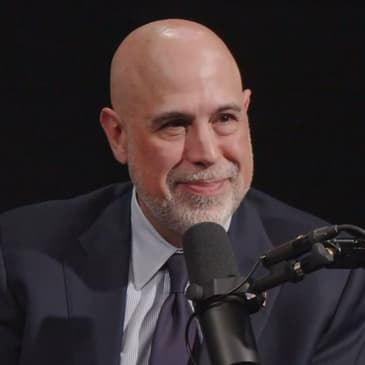
In this episode, Jenny Beth interviews Brian Kennedy, a seasoned national security expert, to discuss the critical threats posed by Communist China. Kennedy delves into America's vulnerabilities in missile defense, the potential devastation of an electromagnetic pulse (EMP) attack, and the economic dependencies highlighted during the COVID-19 pandemic. He also explains the mission of the Committee on the Present Danger: China, emphasizing the urgent need for a robust national defense strategy and domestic production of critical goods. Tune in to gain a comprehensive understanding of the national security challenges and strategic measures necessary to protect America's future.
Twitter/X: @BrianTKennedy1 | @jennybethm
Website: www.presentdangerchina.org
[00:00:00] . They haven't woken up to communist China even after COVID-19. And part of our job, we think at the committee, is to explain to Americans just what's at stake here. This is not about economic competition. This may well be about our national survival.
[00:00:17] Keeping our republic is on the line and it requires patriots with great passion, dedication and eternal vigilance to preserve our freedoms. Jenny Beth Martin is the co-founder of Tea Party Patriots. She is an author, a filmmaker and one of Time magazine's most influential people in the world.
[00:00:35] But the title she is most proud of is Mom to her Boy Girl Twins. She has been at the forefront fighting to protect America's core principles for more than a decade. Welcome to The Jenny Beth Show. Brian, thank you so much for joining me today.
[00:00:51] So you really are a national security expert? Well, I always bristle at the term expert. Well, the experts kind of ruined the country during COVID. Right. Yeah, experts have not been doing a great job at things. So I'm always talking to people at the level of common sense.
[00:01:07] I'm an old guy. So I say I have experience in these things. But Americans don't like the Americans are rightfully concerned about experts these days. That's right. So how did you get so much experience with national security?
[00:01:21] You know, I worked I started at the Claremont Institute back in 1989. So a long time ago and spent many years working on California politics and American politics. And one of the issues that we really got into was missile defense and the fact that we don't have a national
[00:01:39] defense against a ballistic missile launch from today Russia or communist China or Iran. We might be able to stop a limited attack from North Korea, but Americans go to bed at night thinking that they're defended from from missile attack when in fact, they're not.
[00:01:56] And I and colleagues like Frank Gaffney and others have went around the country for years trying to explain to Americans that they're not defended. And it's a real indictment on Washington DC and the fact that these so-called national
[00:02:09] security experts have left us vulnerable all these years to such a horrible thing as a nuclear attack. So what is the Claremont Institute? Do you explain that to people who may? Yeah, yeah. That yeah, we're going to go back into the missile.
[00:02:24] Yeah, Claremont Institute is a we're never really crazy about the phrase political think tank. You know for many years we would often say if anybody could figure out what a think tank does let us know that way we can tell our mothers.
[00:02:38] But we went around educating Americans about why America is a good country and its explicit mission and still around today run brilliantly by a young man named Ryan Williams not so young actually anymore, but a great guy.
[00:02:54] And it has a group of scholars and its purpose is to recover the principles of the American founding and to make those principles preeminent again in our politics. Remember you probably don't remember but like 40 years ago the conservative movement was not focused on the American founding.
[00:03:13] It was anti-communist. It was pro, you know, Western civilization. It saw problems with liberals, but it didn't really know what it was for and the thing it was for were the very principles or should be for were the principles of the
[00:03:27] American founding and it was Claremont really that embraced that had been studying that for the better part of a half century and made those ideas matter again in American life. President Trump gave it gave Claremont in 2019 the National Humanities Medal and it
[00:03:47] was only the second research institution of its kind to ever to ever receive one. I think Hoover was the first and then Claremont was the second and it was really because of for a half century it defended the ideas of America that we all hold so dear.
[00:04:02] It's amazing. Good work with that. Now you just said that the national security experts have left us vulnerable when it comes to missile defense. What would you what would missile defense look like like to the average person who's not a national security expert? What does that mean exactly?
[00:04:27] Look we have enemies today and they include communist China most specifically but there's also Russia and there's also Iran. They all three have nuclear ballistic missiles that could be launched at the United States today if we were attacked we couldn't do anything to stop that attack.
[00:04:48] We could respond by using our nuclear weapons against them, but we would still suffer the attack and it could be something like an EMP attack where they explode one of these nuclear weapons over the center of the country and knock out the power of the entire country.
[00:05:05] You know last week there was a these solar storms and there was some disruption here and there but it mostly didn't cause any damage. You get an electromagnetic pulse attack of the kind that both China Russia
[00:05:19] and Iran could launch and all power will go out in the United States not to be turned back on full stop right that you know under that scenario 300 million Americans could die. Okay, there are people who are listening to this right now like my sister
[00:05:37] maybe and others and I was trying to explain this to her last summer and and other people over the years because the first person who really taught me about this was former congressman Trent Franks. Absolutely great and after I listened to him for like three hours one night.
[00:05:57] I went back it was in Washington DC and I went back to my hotel room and I was awake the whole rest of the night going oh my gosh, this is really bad. So it's lame first an EMP is an electromagnetic pulse right and how can
[00:06:14] a nuclear missile knock power out? How do we know that can happen and how I would people die from that because I think people don't it's hard to fathom this all great questions. Well, when you explode a nuclear weapon it creates something called
[00:06:32] the Compton effect where the gamma rays are are spreading and the thing that it will impact or not it'll impact common circuitry. We won't feel it but the large transformers throughout the country there's about 150 of them that are absolutely key those would
[00:06:53] absorb the electromagnetic pulse and would destroy them. And so the very thing that distributes the power throughout the country would be destroyed and so it's a phenomenon that was discovered when we first had nuclear weapons and as strategic doctrine goes it is
[00:07:14] believed I mean these things are not widely discussed in public, but if we ever dig it into a nuclear war with the Soviet Union were they with us they would have launched an EMP attack first their first missile would have been over the United States to explode
[00:07:29] an EMP weapon knock out all of our power and so we're left not being able to communicate with each other. Iran could do that today if they launched a ballistic missile from a ship off our coast and used it that way China could do
[00:07:46] the same thing you knock out power in America, you know, the water is not running. It's pumped electrically your refrigerator stores food. It's going to go bad and insulin insulin for those people who require that so but we would quickly run out of food
[00:08:06] stuffs and we could figure out ways of getting water but between the medicines and the food stuffs we built a modern economy that were absolutely requires electricity. There's no more podcasts. Right, right and there's no there's no more, you know,
[00:08:23] as I say running water, you know refrigeration the kind of things that a modern society absolutely needs we're not going to be able to communicate with one another. You know a lot of cars won't turn on if they did they're
[00:08:36] going to run out of gas the gas is pumped electrically. I mean, there'll be there'll be a real disruption to the to the US economy. Again, this is a worst-case scenario. It's kind of dystopian. There's a lot of dystopian novels where these kind of
[00:08:51] things are alluded to Newt Gingrich from here in Georgia wrote a whole novel one second after right about these kind of things and again it it sounds like science fiction and so people tend to dismiss it and it's a worst-case scenario, but it's also given the weirdness
[00:09:07] we are living through today. I mean who would have thought that we would have shut the country down over COVID-19 right? One second after it was actually written by the man who co-writes the novels with right and I think newt did a four-order something.
[00:09:23] Yeah, I think that's right and I remember I read that and I remember reading in it that the report about EMPs came out on the exact same day or in the same week as a 9-11 report and people didn't pay attention. It just got lost.
[00:09:37] I think William Fortune, I think was the guy's name. Yes. And of course the 9-11 report talked all about how it was a failure of imagination. 9-11 right? Right. Okay. And so as a practical matter we're living in a world where our enemies have an imagination
[00:09:55] and our enemies we may have reached a point where our enemies want to destroy us not just marginalize us as it were but outright destroy us and I don't think I don't think America's national security experts have adequately considered that we spent the better part of two decades
[00:10:14] fighting wars in the Middle East post 9-11. And so a lot of the energy went toward that and it didn't go toward preparing this country for superpower conflict of the kind I'm describing or simply, you know again worst-case scenario
[00:10:32] a lot of what I deal with is worst-case scenarios but partly we do it just to highlight the fact that you know our enemies don't think in these terms. I mean the first time I went and talked about missile defense was in I think it was 1998
[00:10:48] and I went to Alaska with a group of national security experts because first of all the Chinese ambassador had said to a US ambassador that the US ought not to interfere with Chinese Taiwanese relations because the United States values Los Angeles more than Taipei.
[00:11:14] This is this was said to Ambassador Charles Seward in the United States and many people took that to be an overt nuclear threat. And you should take it as a nuclear threat and later, you know Congress had issued a report saying that oh no every every you know
[00:11:36] America is fine from missile attack. Footnote with the exception of Alaska and Hawaii which could not otherwise be defended from the sort of crude missile defense we had had and of course the Alaskans went crazy. Of course they did.
[00:11:52] I mean are we not part of the United States too? So we let a delegation up to Alaska and the Alaska legislature actually issued a resolution calling on the president to defend Alaska from a nuclear attack. And again, we don't have one for the country.
[00:12:10] It seems outrageous to people. We're living in a very dangerous time. You know if you listen to I and my colleagues from the committee on the present danger China, you would think that no one in Washington knows what they're doing.
[00:12:23] But as I say there are some good people in the country, but they've been focused on in our judgment the wrong things. Well, I don't I think that they could listen to your committee on the present danger in China or to doctors in the country or to several
[00:12:41] others, you know people like our group has been worried about government spending and at some point you're like does anyone know anything and DC is completely disconnected. Where are they spending the money on? They're spending too much and on the wrong things. Right. Right.
[00:12:58] So I think that people listening to this podcast are going to be like, oh yeah, there's a lot that people don't understand. So you did you you are very experienced with missile security and in defense and now you're doing the committee on present danger and on China.
[00:13:21] First Woody, what is a committee on present danger? Is there a historical significance to it and then what are you doing with that? Yeah, no, it's a great question. By the way, like I have no special interest in missile defense other than we need it.
[00:13:35] Right kind of like we need electricity. You know, we need to be defended. We need to have locks on our doors. I always looked at missile defense as a way of illustrating to the American people just how misguided their government was when
[00:13:49] it came to the bleeding obvious, right, which is we have nuclear weapons. Why wouldn't we have a national missile defense? The Russians had a national missile defense. Doesn't Israel have Israel has a national missile defense much smaller in a different context, but yes, but the reason there was
[00:14:06] a committee on the present danger. There was one in the 50s late 40s early 50s and then one in the 70s and then one today the reason that happened back in the 40s and 50s and you'll appreciate this giving your experience with the Tea Party
[00:14:21] Patriots is is these things in Washington don't happen by themselves. It takes someone encouraging them pushing them educating the public in order that people in Washington do the right thing. The Committee on the present danger in its earlier iterations were national security experts writers thinkers, you know
[00:14:43] novelists, you know labor leaders, etc. Who thought that we were inadequately understanding the Soviet threat after World War Two and that if we were going to challenge them, we needed to have an adequate military and ballistic missile force to do that. And so that was its original purpose
[00:15:02] in the 50s back in the 70s. You saw the America was in a bad way in the 1970s. Jimmy Carter was president in a lot of scholars and national security experts generals. Anti-communist let's say they saw the Pentagon and the Carter administration inadequately understanding the Soviet threat.
[00:15:25] There were team B reports that tried to highlight this but then someone said why don't we get going again the Committee on the present danger in order as a group to illustrate to the American people in an authoritative voice exactly what the problem was.
[00:15:42] Reagan joined that committee in the Committee on the present danger not as an observer but as an actual member. Ronald Reagan we have to remember was a very smart guy who actually took national security very seriously. He gets elected president. They issue a bunch of reports hold a
[00:15:58] bunch of meetings. He becomes president. He takes 45 members of the committee with him to the Reagan administration. Fast forward to today in the committee this Committee on the present danger China is now five years old and it was started by myself and Steve Bannon and Frank Gaffney
[00:16:19] because we saw in the Trump administration you know and we were supporters of the Trump administration but we saw that there were voices within the Trump administration that were soft on China and that they were not adequately backing President Trump's you know get tough policy on communist China
[00:16:38] and so we were holding meetings and there was writings and webinars and all sorts of public seminars. That people would go to to simply illustrate for this generation our existential threat which is communist China that people people in Washington don't take seriously and you would
[00:16:58] think they would take them seriously but much the same way America did not take Imperial Japan seriously before World War Two. They don't take communist China seriously and there is this large body of of business leaders. Let's call them and others that
[00:17:15] simply think that well we trade so much with communist China. They buy our debt. We invest in their companies that you know will never go to war and so we're not going to prepare for war with communist China and so we're not building a military to
[00:17:32] deal with communist China even though preparing for war for us. It certainly appears that way. Okay, I didn't mean to interrupt you but yeah no no no this is I mean they are preparing for war with us and in 2019 you might recall when President Trump was getting
[00:17:49] tough with communist China. One of the key things that he tasked his administration with including like Robert Lighthizer was to stop the theft of intellectual property and they were stealing roughly 600 billion dollars a year of intellectual property at 6 trillion over the last decade and Trump basically put
[00:18:09] his foot down and said that's not going to happen anymore. Well it was in May of 2019 that communist China responded with okay you're telling us you know we're first of all we don't do that communist China said and we don't do it and we now declare
[00:18:26] a people's war on the United States totally under reported in this country, but they declared in people the People's Daily their communist newspaper a people's war where they were telling their own people that sacrifices were going to have to be made because of economic relations with the United
[00:18:46] States within six months of that COVID-19 was spreading throughout the world within six months of that COVID-19 America was in lockdown and within six months of that there was an American election held because of COVID-19 through mail and balloting and the President Trump who was a
[00:19:05] populist president who normally campaigned by going to all these big public rallies couldn't do that anymore or not do it adequately. And so communist China in their people's war in my judgment and my colleagues not only used COVID-19 is like a bio weapon against us but changed our
[00:19:23] politics and today Joe Biden is president because of it. Okay, go back to what you were saying. So we weren't we are not preparing I wanted you to keep talking. I'm going to come back and ask you questions, but you were saying we were not preparing
[00:19:40] for war with China and and you were elaborating on that before I interrupted you. Yeah, well, we're not preparing for war with communist China because none of our generals in this won't sound crazy to anyone. They don't want to fight a land war in Asia,
[00:19:57] right? Famous sort of a famous formulation. No one wants to fight a land war in Asia. We have we had the experience in Korea and that was not so pleasant and that was with the communist Chinese of course, right? But communist China thinks of itself as the
[00:20:13] master race. It thinks of itself as being the ultimate rulers of this planet and so they're going to prepare for war with us. We may not want to prepare for war with them, but they're going to build a Navy that can challenge the United States. They have more
[00:20:31] ships than we do. They're building more ships than we do. They have fifth generation fighter aircraft. They have nuclear weapons of a very sophisticated variety. Widely under reported. I mean, there is this idea that America won the Cold War and have fought wars in the Middle East and
[00:20:53] are today were, you know, invincible. The Chinese don't subscribe to any of that, although American generals do. They think of us like the hegemon who stride the world, able to do whatever it is we want to do. We've not fought a peer competitor since
[00:21:10] one could argue World War II. And so we're not preparing for war. The Pentagon does war games where they simulate a naval war between the United States and China. In the last decade, we've not won a single war game when they do that. The Pentagon simulates?
[00:21:29] They do war games, these computer, tabletop war games where they use real people and computers and they figure out, okay, China invades Taiwan. We do this. There's a blockade. We do these other things, right? In the last decade, when we the United States,
[00:21:50] or let's just put it on the Pentagon, when they do those war games, the United States loses. We have very sophisticated ships that run out of munitions, destroying the onslaught from communist China, right? How many Americans know that? Nearly none, right? Because communist China is a
[00:22:09] trading partner. If you listen to, you know, the Chamber of Commerce and our elected officials do not take this at all seriously. Joe Biden by all accounts is is compromised in a number of different ways every day that goes by we're getting new revelations about
[00:22:29] his son Hunter's business dealings with communist China. And I mean the Biden family at minimum has received over 30 million dollars from communist China over the last decade. And the news the news kind of dismisses that as you know, right-wing conspiracy fodder and we don't take them as
[00:22:52] seriously as we should and it's a it's a bit of a national scandal that we know. I read the book which I can't remember the name of maybe it's a hundred-year marathon by Michael Pillsbury Michael Pillsbury 100-year marathon and my head kind of exploded when I read it
[00:23:10] and I just was like, oh we're not a national security expert at all. Like I have gut instincts because I was a teenager in the Reagan years. So, you know, my gut instinct is to to have a strong military and to defend yourself and to be stronger
[00:23:27] than others piece through strength. And I read that and I just it's it's a little overwhelming when you start thinking about the problems with China and I've talked to elected officials on Capitol Hill and I've talked to some who are part of the select subcommittee or
[00:23:48] the select committee on the Chinese Communist Party and they said you just need to understand we have good relations with them. So we're investigating things but we can't just completely unwind from from from China and I was thinking, okay and I understand that and
[00:24:05] there's merit to it and I can't just say oh, we'll throw a wrecking ball at that. You're completely wrong. So I understand they have a valid point with that and then I'm sitting there thinking yeah, but I read Michael Pillsbury's book and I just think we need
[00:24:19] to at least be prepared a little bit more than we are when we're dealing with China and that's what your your whole work is dedicated to right now, isn't it? Yeah, it really is just trying to wake Americans up to the simple fact that
[00:24:33] we don't have free trade with Communist China and not at all. I think I think we looked at Communist China as if I mean this is the obvious point Pillsbury is making right in 100 year marathon and I highly recommend that book and I think Pillsbury is essentially saying
[00:24:49] we thought if we had good economic relations with Communist China, they were going to become just like us right there. They were going to their people would have jobs their people would make money. They would reach middle-class prosperity and with middle-class prosperity will come the desire for political
[00:25:07] freedom. Well, it turned out the first part happened. They got jobs. They made money but the desire for political freedom wasn't there and we essentially exported our manufacturing base to Communist China over the last 30 years and it's worked out very well for Communist China. They've
[00:25:30] been cut. They become like a manufacturing platform for the United States and the world were a 70% consumer based economy and a lot of our goods are made in Communist China and they're made at a lower cost so that the Wall Street Journal and the you know, the economic
[00:25:49] libertarian say look this has worked out really well for us consumers who want to buy things. It's not worked out so well for the American worker right? The guys on Wall Street are making a killing figuring out how to do these things and the big retail giants
[00:26:06] have made a killing figuring out how to sell things who's not made a killing is the American middle-class because the kind of economic jobs they used to have back in the 40s 50s and 60s even into the 70s where a person could work in manufacturing make it
[00:26:24] into the middle-class buy a home provide for their family send their kids to college go on a vacation retire someday. Those jobs went to China and you know, the American economy did not do a very good job in American society in general did not do a
[00:26:43] very good job in finding the kind of jobs that would substitute for the manufacturing jobs. In some people who haven't been in manufacturing look down on manufacturing. I used to work for a paper company and supported the computer systems at a paper mill.
[00:27:02] So I was in a paper mill right where it smells like sulfur and and I would come out smelling like sulfur and and it was a good day's work by the way. You become very proud that you first you see a tree coming in and
[00:27:20] it comes out as paper. That's pretty miraculous. Actually, it's an amazing process to watch and the people who are working at are so proud of having a job and be able to take care of their family and they may not be able to have a job
[00:27:33] where they're programming computers or where they're working on Wall Street or they're dressing up in a suit every day, but they are doing good work honest work. They're not dependent on other people and when you take that away from them and you said well we can give
[00:27:46] you a welfare program or you can do this or whatever else it might be you take that the pride of being able to provide for yourself away from them and you crush you crush towns. You crush cities. You crush their spirits and it's it's just it's
[00:28:04] bothersome to me and we didn't I understand there's a value in having a lower product a lower price product, but I also just think is so completely wrong to say well if you manufacture in America you have to live by the OSHA rules and the EPA rules
[00:28:21] and all the other the unemployment laws and the tax laws and everything else and you're competing with a country that allows that doesn't do any of that. So it's there's not even if when you said there's no fair trade you're not even they're not playing
[00:28:36] on the same field at all as our companies have to to play play on it's how can we compete with that you can't know we can't you can't we can't and so we've deprived Americans of the dignity of work. Yes of the kind of work. I mean
[00:28:53] there is this idea that America was going to become man you mean not manufacturing based but they would we would be producing the kind of software designing software producing all sorts of high information kind of products that would make a whole bunch of money for Americans.
[00:29:17] Well as you say not everybody can be a computer programmer. No and what do you do with people? So we give people a bad education from K through 12 and then we tell them to go out into the world. But when you go out into the world
[00:29:30] there's no manufacturing job and we restrict people from building new homes right the whole anti-growth policies of the 80s and 90s even to today. We have this you know growing population partly because of just you know natural population growth but also with illegal immigrants and yet we restrict
[00:29:51] the number of homes that get built across the country and we restrict manufacturing. Well this is not a recipe for economic success. We incentivized the best and brightest in America to go into the financial industry instead of creating new things we figured out ways of dividing up
[00:30:12] you know multi-trillion dollar parts of the economy so that investment banks could make money. Now you know I don't mean to be too down on all of that. I mean some of these things can be effective ways of distributing capital. People do invest in these kind of things
[00:30:28] but there was no there's no sensible reason at some point if your trading partner in communist China is itself going to restrict your ability to sell things to them right. It's just I mean so I I don't mean to make an argument simply for fair trade
[00:30:43] but we don't have free trade in this country and I think one of the things President Trump was shooting for was you're going to have fair trade. You're going to let us sell things to you and if you don't we're going to put tariffs on
[00:30:58] and when he thought of tariffs he thought I'm going to incentivize American industry to produce the kind of things that are being made in communist China. And then when COVID happened and we couldn't get penicillin and we couldn't get masks and we couldn't get whatever else because China
[00:31:15] shut down and product wasn't being shipped we realized how dependent we were on their manufacturing and how important we really it is to be able to be somewhat self-sufficient. We teach as conservatives we teach our children to be self-sufficient but we want to be self-sufficient
[00:31:30] and yet our country we aren't saying the same thing about what our country should be. No we let we let 80 to 90% of the active pharmaceutical ingredients get produced in communist China and that alone is a scandal right. Yes. And it was during the back and forth on COVID
[00:31:48] that China said you know if you keep this up we're going to drown you in a sea of coronavirus was a direct quote drown you in a sea of coronavirus and you Americans require your medicine from us. Now to this day have we remedied that? Rosemary Gibson
[00:32:05] who's a member of her committee on the present danger China wrote a whole book about this and she really laid out just what a scandal it is that we're not producing these obvious things that we need here in the United States. We can't build fighter aircraft
[00:32:22] here in the United States without chips made in communist China without parts made in communist China. If there were an EMP we have to get the product to restore those transformers is that transformers or we won't we won't get them in time. But if they're we don't even
[00:32:40] have that in America it comes from overseas as well most of the some come from China some come from North South Korea okay and other places but we don't have them here. I mean again we talk we talk about sort of just how deeply confused this country is
[00:32:57] we thought we could export our manufacturing to communist China including things that are absolutely so essential such as medicine such as these transformers today if you need a new transformer here in Georgia you're going to put one on order you probably already have it on order is
[00:33:14] going to take about 18 months to get it's going to come from China or South Korea and you know South Korea is an ally and a good ally but China is not and so just in the course of things if something is absolutely mission critical to our national survival
[00:33:32] why wouldn't you make it here even if it cost more why wouldn't you make it here from a national security standpoint it makes sense to be able to do that absolutely look remember during COVID we had all you know a lot of our cars you know had
[00:33:47] chips in them so cars were not being built because there weren't enough chips coming from they come from some come from Taiwan but a lot come from communist China so we've exported things we've exported our manufacturing base to communist China and we've not done the common-sense things
[00:34:05] in this country that a smart people would do and look the Chinese figured this out they knew that if we became entirely dependent on them and intertwined our two economies together that they would in effect own us which is why Donald Trump was such a and when he
[00:34:23] was an outlier he wasn't going to allow them to get away with it and so they declared the people's war and that's what we're living through today where did they see the freeze the people's war and drown them in a sea of coronavirus both of those were
[00:34:40] in people's daily you know their communist newspaper but May of 2019 was the people's war declaration and the coronavirus came probably you know May or June when people were really going back and forth about hey did this come from communist China or not and just recently we find out
[00:35:00] yes it came from communist China we knew it came from communist China and our own government was lying to us about it well not Trump no not Trump in his administration not even President Trump right and I think you know one of the things that I think
[00:35:16] we really have to understand is why did communist China do that and what were they thinking and why did our government not respond the right way why you know President Trump was told we absolutely have to do this and this is how dangerous it could be and operating
[00:35:34] purely under common sense he did the lockdowns and he was told that we absolutely could get a vaccine it would be safe and effective don't even get us started on this when everything locked down our organization gave grace during the 30 days the first 30 days and internally
[00:35:52] I was going are we insane what is going on and I said this to people in other national organizations I said we have to do this we have to do this we have to do this we have to do this and then I said the other national organizations
[00:36:12] I said we're about to lock down the country you understand we're about to lock down the country based on what the Chinese communist party did were following their model and based on the failed socialized health care system in Italy and they copied them and it made no sense
[00:36:42] to me at all after I left the paper company I worked for a very large manufacturing company not manufacturing but one of the retail companies in programming in the imports department programming computers for the imports department so I knew before we were locked down I was like
[00:37:09] we're about to have economic problems they're like what are you talking about the economy's booming and roaring and I said China's locked down we're about to have major trouble and they didn't they couldn't even fathom it and I'm like you don't understand we're downstream from China we're going
[00:37:32] to have trouble and I was in people just weren't listening they bought into the fear and it's maddening but we were when you sit there and say well they said it's going to be a sea of coronavirus people will die in a sea of coronavirus and it's a
[00:37:53] people's war that makes me even angrier right yeah and you know I think I think President Trump was being told this thing could happen and that the vaccines are going to be safe effective and right around the corner now if you're told you're going to drown
[00:38:14] in a sea of coronavirus but you're told from our big big you know big pharma that the vaccines on the way I think you know the pressure being put on the administration to keep it shut while the impeachment won and part of the problem with impeachment
[00:38:36] one was that he didn't listen to the experts not that that's why he was impeached but the implication was had you just listened to all of us there's so much smarter and we're now sitting here before Congress talking about how awful you are and you should be
[00:38:54] impeached if you just listened to us everything would have been okay and so then he listened to the experts the experts is you know I think it's important though he doesn't he doesn't I is my sincere hope he quits talking about the vaccines in such a
[00:39:13] positive way because I talked to more people who just think a lot of people been vaccine injured and they know that there's been an economic dislocation in this country all caused by communist China and that the vaccines were not a positive sign President Trump did
[00:39:32] so many great things as president and it was miraculous he got the vaccine done as quickly as he did it's just that he was lied to so much by these companies about what you know about what it wasn't really a vaccine as we know it was experimental
[00:39:50] gene therapy we now understand it was not safe and effective we now understand and if you read these Pfizer documents that you know this is the most important information that we know about what you know about what you know about about what you know about what you know
[00:40:24] about what you know We didn't know. We didn't know. And you do the best that you can with the information you have at the time. In hindsight, it's 2020. But he was also right to say the country should be opened by Easter.
[00:40:38] He was right to say schools needed to be open. He was right to create the system for Operation Warp Speed so that they were moving equipment around the country as it needed to be moved and to clear some of the regulations to allow testing of the vaccines.
[00:41:01] Those things were, those were good decisions. It's simply that at the end of the day, the medicine didn't work the way that they said that it was working. Right. And we put too much stock in all that.
[00:41:16] And I think President Trump had some very hard decisions to be made. And I don't think he was given great counsel during that period. This wasn't going to be a traditional vaccine that would protect us. It was not the nature of the virus either.
[00:41:37] That you know, viruses change and so whatever vaccine we started with is not going to be the one that was going to be appropriate for the vaccine that was being developed. So that was bad. You know, lessons were learned here, but at a pretty high cost.
[00:41:52] Because I still think, I mean, look, America today is broken. That we have not recovered from the lockdown of COVID-19 still to this day. It may take another, it may take Trump getting back into office to really fix the kind of things that are broken today.
[00:42:10] But you simply can't give millions of Americans money to stay home and do nothing but play video games and watch Netflix. And when you do that, besides the financial impact, it also takes away the dignity of work. And it just starts to create problems with unintended consequences.
[00:42:31] It disorients people, right? Really, if I can just stay home for a year and someone will send me money, well, why not five years? Why not ten years? What is money then? It destroys people's understanding of money and jobs and the dignity of work. Right.
[00:42:46] And so we've, we paid a very high price for that. And if you're communist China and you wanted to destroy the U.S. economy and the U.S. dollar and replace the U.S. dollar with their own currency as the reserve currency of the world, doing what
[00:43:05] America has done for the last four years of Joe Biden would be a pretty effective way of doing that. Yeah, and you mean our deficit now is, you know, thirty three, thirty four trillion dollars. You know, there's inflation. We're spending money on it still like there's no tomorrow.
[00:43:22] The Republicans have no appetite to check that, which is a scandal all by itself. It is. And China in their mind is is well on track to becoming the world's preeminent power. And when you say they're on track, don't they have the they had the 2020 plan and
[00:43:40] do they have a 2030 or 2050 plan? And what are their communists? So they have five year and 10 year plans all the time. But no, they have they have a manufacturing plan. They have a but I think I think, you know, like they've said before, by
[00:43:52] 2050, they want to, you know, they really want China to be, you know, the world's preeminent power. By 2027, they've talked about, you know, the take back of Taiwan, which is scary. Right. So, you know, look, they they think America has become morally
[00:44:10] bankrupt. I don't know why they would think that. Right. Unless, you know, just read our newspapers, watch, watch, watch Netflix on any given night. Watch what happens on TikTok or Instagram. Right. Yeah. And of course, they don't, you know, they spread TikTok in
[00:44:24] the United States and they don't let their own children use TikTok because they know it would corrupt their minds. Right. And they would like our children's minds corrupted. But not theirs. And so is that a form of information warfare? Yes. And, you know,
[00:44:43] I said this earlier at this conference that you and I both spoke at the. The Chinese spend annually in the United States, 16 billion dollars on intelligence in influence operations, 16 billion. And what do they do with that? They buy up, you know, all sorts of influence.
[00:45:05] They hire the best law firms in Washington and New York, the best PR firms. They find ways of funding money to journalists, to colleges and universities. There there are, you know, all sorts of institutes they create. But think of 16 billion dollars. What could that buy you?
[00:45:24] And my great concern is that one should expect with absolute certitude that they will try to influence the 2024 election. Why wouldn't they? It's not like they're spending 16 billion annually on intelligence and influence operations. They do that so that they can prepare themselves for deciding presidential elections.
[00:45:46] And we still have in place in 2024 a lot of the things that happen in 2020 when it comes to mail and balloting. And in the seven swing states, states that people argue decide presidential elections, there is still the use of mail and balloting.
[00:46:04] And so I have been briefing a variety of folks and just asking as an intellectual exercise whether or not communist China could produce in those seven swing states, could they have a factory? They have factories in all those states already.
[00:46:19] Right, because they have factories all over the country doing a variety of things, whether it's, you know, producing things, you know, some things here, some things in China, but just distribution warehouses. Could they produce a million ballots in each of the seven swing states?
[00:46:34] And insert those through the mail into the system. We know they have printing presses. We know they have access to the voter rolls. We know they have access to the PDFs of the ballots themselves. We know through artificial intelligence they can acquire the signatures, not that there's adequate
[00:46:52] signature verification going on in the seven swing states, but they could acquire with artificial intelligence the signatures. And if you voted low propensity voters. In those seven swing states, you're not going to if you're if you're trying to steal an election,
[00:47:08] you're not going to vote the people who vote all the time. You're going to vote the people who never vote, but whose names are still on the voter rolls. Right. Could China do that and decide the presidential election?
[00:47:17] And you would just as an intellectual exercise have to say yes. That is certainly possible. OK, if that's possible, what steps are is the intelligence and national security community of the United States taking today to stop that? And the answer is nothing.
[00:47:37] Merrick Garland and Christopher Ray went before Congress yesterday. Or I guess it was a press conference and said that their great concern was the activities of people to either attack election workers or to otherwise suppress the vote. OK, no one I've never heard of.
[00:47:56] And they were citing, you know, people, you know, doing bad things to election workers. No reasonable person would ever want that. Of course, we're going to protect our election workers. That's an obvious thing that we would do.
[00:48:09] How about making sure there aren't people who vote illegally in the country? They don't think that's their job. And protecting us from a foreign power that has an interest in influencing a presidential election, they're doing nothing to stop that. Where is Congress today?
[00:48:29] Ostensibly controlled by a political party who would have an interest in this, the Republicans, making sure that they stop that. And you've heard nothing about that. You heard nothing about that from the China committee, the select committee. You hear nothing about that from the other parts of Congress.
[00:48:47] In defense of. Of both parties in that China committee, I think even when there's bipartisan agreement on an issue and a problem with China, they're not getting a lot of traction anywhere outside of the committee on what's because Congressman Speaker McCarthy created that committee, not to have teeth.
[00:49:10] It didn't have jurisdiction. And it didn't have subpoena power. Important features of a congressional committee. So it was it was performative. It was a show. We even with the show. OK, I understand everything that you said. Even with the show, the things that they're they're highlighting.
[00:49:30] People aren't paying attention to it. The media isn't paying attention to it because it doesn't have the teeth. They can't call people before. If you can't subpoena parts of the government to come before you and explain what you're doing to stop this. Right. Right.
[00:49:45] Whether whether it's tick tock or any variety of of, you know, dangerous things, communist China is doing to us. If you can't call someone from the administration with with subpoena power to testify before you, no one in the press is going to take it seriously.
[00:50:03] If you can't if you can't really dig with subpoena power into the Biden family's potential corruption or real corruption with communist China, press is not going to take it seriously. McCarthy did that on purpose so that this would not be an issue
[00:50:20] because he didn't want to offend all of his supporters in the Chamber of Commerce and big business and Wall Street that are in bed with communist China. They just don't want to be just they don't want to be disturbed. They they really don't.
[00:50:32] That's what it shows you how corrupt American elites are, that they have let the country get to this position where communist China has that much influence on us. So in the work that you're doing right now with the the committee,
[00:50:52] what is the committee on the clear and present danger? Right. That's a committee on the present. I think China, you decided to cut Tom Clancy novel clear and present danger. So it was confusing. Tom. Yes. OK. So anyway, I bungled the title there.
[00:51:09] But in that work, are you on what are the recommendations that you guys are making? Are you making recommendations? How when people listen to this, what can they do? What can the average person do? Because it's really overwhelming. Yeah, no, that's a very that's a very fair point.
[00:51:26] One, we have a great website called Present Danger China dot org. You have like 100 webinars. We've done 180 webinars now. And they're just a fascinating body of work that anybody can go and watch in a bunch of great articles and essays and in books and things
[00:51:45] that have been written about this. But look, there's as you know, there's no silver bullets in politics. No, there's not one thing you can do to where people will say, why hadn't I thought of that before? And now we got to fix everything.
[00:51:59] Politics is slugging it out every day. Right. And it's getting people, first of all, to understand this. Remember, like in the 1940s, it wasn't obvious to everybody that the Soviet Union was a threat. The Cold War took a lot of work to get going.
[00:52:14] Turns out that Americans really needed to focus on that and take it seriously. And it was only when we had the space race and eventually the Sputnik moment where they put, you know, something in space before we did that Americans realized that may be a problem. Right.
[00:52:33] And Americans woke up. They haven't woken up to communist China even after Covid-19. And part of our job, we think, at the committee is to explain to Americans just what's at stake here. This is not about economic competition. This may well be about our national survival.
[00:52:52] And communist China may want to not merely replace us as the world's most powerful country economically, but also militarily. And if they ever get to the point where they want to destroy the United States for some reason, again, it doesn't make
[00:53:10] it may not make sense to the average person. But these are communists. They've killed 100 million of their own people. They've caused 400 million Chinese babies to die in the womb. These are not people who think like us. How have they killed 100 million of their own people?
[00:53:27] Well, during the course of the communist history, they starved, otherwise starved and or killed during their various revolutions within communist China. That many Chinese citizens. And because they're at war, they are fulfilling a communist. Mission to become the most powerful nation on Earth.
[00:53:48] And it's only a matter of time in their minds before they get there. And that's how they think we in America who are so busy, you know, raising our families and doing other things. We don't when we hear all this stuff, we just kind of dismiss it as,
[00:54:03] oh, that's just communist being communist and that's just talk. Well, from their point of view, no, that's a real that's a real desire they have. We have 340 million people. They have one point four billion people. They're a hardworking, creative people that we entirely dismiss. They're a great people.
[00:54:28] They have they have a lot going for them. We look down on them for some very odd reason, as if they're incapable of being the most powerful nation on Earth. We think we won the Cold War. And, you know, I'm personally, I've said for many years
[00:54:45] we didn't win the Cold War because it wasn't a war to be won. You know what I mean? That you win the Cold War. What's that mean? It means the Soviet Union reorganized into Russia. Do we disarm Russia? No. And so they're there.
[00:55:01] They're the sort of a KGB state today doing all the things, bad things they do. We won the Cold War, so called. Did we disarm communist China? Did they become a liberal democracy? No, no. So but we spent 20 years having won the Cold War,
[00:55:18] you know, not building the kind of military and the kind of systems one would need to make sure that you remained through. You know, you remarked on peace through strength. We've lost that peace through strength. Right. If we really had peace, through strength,
[00:55:33] we wouldn't have been attacked on September 11th. Because the other side would have been afraid of us. They weren't so afraid of us, were they? And we fought wars with them in the Middle East for 20 years. I don't know many people who are saying that we won.
[00:55:47] No, no. Not only did we not win, we we have lied consistently to the American people about whether Islam is a religion of peace, which it is objectively not a religion of peace. And so we have lied to the American people. We've confused them.
[00:56:03] We have exported their manufacturing to communist China. Right. It's only through the genius of the hardworking American that we've we have been able to sustain this country and become the wealthy nation we are, which is one reason everyone was so afraid of Donald Trump.
[00:56:25] All the globalists, let's just say, were so afraid of Trump. He wanted to take that energy of the American people and rebuild the American economy the ways it should have been rebuilt so that you had manufacturing. You were building new homes.
[00:56:40] Listen to listen to President Trump's arguments about the future. He talks about building new cities, new great cities. How many people will that employ? A lot. We'll need to spread out as a country. Good. Right. Reduce the kind of urban problems we have.
[00:56:58] And I think Trump's vision for America in terms of growth and expansion and the kind of American way of life that everyone enjoyed. It's wildly popular, and the American people think it's popular. The globalists who want to control our lives,
[00:57:16] including those here in this country, not so popular, which is why Trump is vilified constantly. And one reason why I think the American people have been so loyal to him is that his vision of an America that is a defense of the American way of life
[00:57:37] is something that they desperately want. They don't see it today and they want it. They want it back when he's vilified and he's attacked for the things that he says, like defending the American way of life, defending the workers who were manufacturing workers.
[00:57:55] When he's attacked, one of the things that I said from very early on and we initially did endorse Ted Cruz and then we endorsed Trump and we never backed off of it even at all once we endorsed him, we were in.
[00:58:14] But before we endorsed him, I said, those attacks from the media. They don't understand they're going to make him president. And those attacks, it sounds like they're attacking me. I'm taking their attacks personally. And if I'm taking them personally, I know other like other
[00:58:30] grassroots people around the country or they don't see it as an attack on Trump. They see it as an attack on themselves and the media. And they just don't they don't understand that. And it's because they don't think the way that the rest of the country thinks.
[00:58:46] So they don't understand when Trump is saying those things, that he's actually defending other people in the rest of the country. But he was willing to go to the Iowa State Fair with his helicopter and let people go sit in his helicopter just so they could be
[00:58:58] in a helicopter if they'd never been in one. And he approached everything that he was listening to people and going. I mean, he went to tea party events even. He and he listened to people in the crowd.
[00:59:10] And then in these big rallies, he's even listening to feedback there. So he really is in tune when I see it like the booze and the applause. He he hears the immediate feedback. These are his people. They are his people.
[00:59:24] And he gets a sense of what they want and what they don't want because he is listening to them. He's very unconventional. And like, look, I love Ted Cruz. I think he's a great senator. Yeah. You know, and, you know, it's just that Donald Trump,
[00:59:40] I won't say he's a better man, but Donald Trump is a guy who is a phenomenon in American politics. He's a reality, a successful businessman who's a reality TV star who apparently never missed a WrestleMania like in the last 20 years.
[00:59:56] Now, think of it that way for a moment. A WrestleMania now professional wrestling is entertainment. We all know it's entertainment. Trump would always go. And there are several times when he was like a featured part of the show. And everybody who goes to a wrestling event like that,
[01:00:12] professional wrestling, knows it's not real. But it's it's a show. But here's Trump. He goes and he's part of the show, which is to say, I just like you enjoy the show. Right. We can all have fun here because because what's not to have fun
[01:00:30] at a professional wrestling event. And I think the American people looked at that and they thought he's just like one of us. Right. He goes to a UFC. I've seen him at a UFC, you know, half dozen times because I'm a big UFC fan.
[01:00:43] So he goes the crowd goes crazy in part because he's one of them. Right. And he is in so many ways is an everyday American. And he also I'm not sure if anybody's ever read this a little controversial maybe that he was he did two playboy interviews
[01:01:02] over the years, easily available online. No pictures to be found. Just the interview. But I'd highly recommend them to people. And if you've never read them, read them. Because they asked him in these interviews, they said,
[01:01:16] if you could be anybody in the 20th century, who would you be? And he said, well, I should say Churchill is like in the 90s. So I should say Churchill. But he goes kind of reflects and he says, but I really love
[01:01:32] the glitz and the glamour of Hollywood. I would have loved to have been Louis B. Mayer making those movies in the 30s and 40s. I love the glitz and the glamour. Right. So here's a guy who is a real estate developer
[01:01:45] who talks about Churchill on the one hand and Louis B. Mayer on the other. Is that not Donald Trump? Yeah. It is so transparent that he knows and they ask him, well, will you ever run for president? He says, I'm a busy guy.
[01:01:58] But he goes, it's odd because, you know, I'm I'm, you know, I'm a Republican, but all the Democrats like me because, you know, I have all these business projects and building and everything else. And he for a for a billionaire, he had the common touch.
[01:02:12] And you could see it in his television show The Apprentice. You can see it today in all these rallies that people look at him as a defender of something very American, that he's a very American kind of character.
[01:02:25] And I think I think effectively he is the man for this time. No one has been more courageous politically. He didn't have to do all this. He did it because he loved the country. Right. And and God bless him for it.
[01:02:39] I think our side doesn't even even conservatives don't quite still understand Donald Trump and the importance of Trump. We're on the precipice of losing this country. Yeah, it's not like there's, you know, it's not like this is a close call in any way.
[01:02:57] But more than that, not merely is it a not a close call at Donald Trump is is the man for this time. I say it in a nonpartisan way. And he has the weight of the world on his shoulders. Absolutely, absolutely.
[01:03:08] But to have that kind of courage, that makes you a good man, too. Yes. Right. Our side apologizes for him too much. They should they shouldn't do that. So many of his problems would have gone away if he had just gone away. No, I disagree. OK.
[01:03:23] Or our colleague Steve Bannon sometimes says this. I think the American left realized Trump woke something in the American spirit that even if Trump had not run again, they would have tried to crush him and put him in jail. They want to humiliate him.
[01:03:42] They want him in jail. The. They need him in jail for a separate reason than for what you're saying. They need him in jail, so no other businessman who hasn't been a politician, but is highly capable of running multimillion, if not multibillion dollar corporations
[01:04:03] ever has the audacity to think he could become president. That's my point. They have to send a message that if you try, here's what we'll do to you. Right. That's my point. That even if he hadn't run for president again, they wanted to send a signal to everybody.
[01:04:17] I'm agreeing with you. They want to send a signal to everybody. Yeah, don't do this. And that's why he said he think many of his problems, but not all of the problems would have gone away. Right. Because they had to do that.
[01:04:27] But I think that there are problems that he has encountered and people who support him, who've been indicted, have encountered that maybe some or most of those would not have happened. Those some still would have happened to Trump. Right. Had he just gone away?
[01:04:44] Yeah, no, I think that's right. You know, it's interesting. There's there. It seems to me there's coming a point here where the American left, though. And this is something that the left really should be concerned about. Is there losing legitimacy in the eyes of the American people
[01:04:59] in ways that are very unhealthy in American society? This is not the normal give and take of politics. This is something to the point where people think and this is why, you know, the more they indict Trump, the more popular he gets.
[01:05:12] It's not merely that they think, well, he's our guy. They think there's something wrong here. There's something wrong when the justice system, so-called does this to Trump, that the more popular it gets, the more they try to indict him and the more popular it gets.
[01:05:29] They think there's something. Unjust about the system, he wouldn't be getting becoming more and more popular every time they continue to do more to him. If others didn't think it was unjust. Right. Right. I mean, it's a weird kind of spiral.
[01:05:45] Why don't they just back off and they can't help themselves? No. Unfortunately. But I think I think I'm suggesting that with that comes a loss of legitimacy of our entire system. Right. Yeah. That at some level, people think on the left and the right.
[01:06:03] I mean, not really the right today because of what they're doing to Trump. But I think people on the left in the center are looking at that and thinking, you know, that's not right. Fundamentally, not right to do what you're doing. Right.
[01:06:17] And that should be a great concern, as well as whether or not we can have a fair election in 2024. And that's really that's really the crisis of the country right now that conservatives, properly speaking, should be should be focused on.
[01:06:34] If you don't have a fair election, you're not going to have a country. I I completely agree with that. I completely agree with that. And if you don't have a fair election, you certainly don't have America because the American system and the people who see they have to
[01:06:51] democracy dies in darkness or they have to defend democracy or whatever else. Well, you can't have representative democracy, which is what we have a republic. But at any rate, you can't have that if people can't actually vote for who they want to represent them. It doesn't work.
[01:07:10] And so you have to have those the free and fair and transparent elections. We at Tea Pretty Petriots Action, along with many other groups, have been working very hard to secure elections. And we encourage people to step up and work the polls,
[01:07:28] become a poll worker, become a poll, an election official. And if you can't do that, then watch the polls. It at least is a first step to election integrity. Not everyone is going to be the people who go in and study
[01:07:42] the voter rolls or or understand all of the ins and outs of the election law. But that is something that the average citizen can do. Right. And our election law depends on the average citizen doing that.
[01:07:55] These citizens have a role to be a check and balance on the elections. And then is Ken Blackwell, the former secretary of state from Ohio says we just have to win by such a large margin that it's too big to rig.
[01:08:09] And it's it's hard to fathom that when people are so worried about the elections, we have to do everything we can to secure them. And then you just we have to get the vote out. And so overwhelmingly, that no matter what the shenanigans are,
[01:08:22] they can't overcome the margin of vote difference. Yes, I think that's right. And we say that not as a partisan kind of kind of thing. Yeah, notice they didn't say who would win. Just yeah, yeah. So just just from a common sense point of view. The American. Yes.
[01:08:39] I think that's going to happen. Someone very important called the other day and asked, you know, who I thought would win the election. And I said, well, I think there's a hundred percent chance that the election is going to be that they're going to attempt to steal
[01:08:53] the election. Probably a 95 percent chance that they're going to succeed. But I'd still bet on the five percent. Yeah, that I think the American people are going to realize here what's going on and they're going to do the right thing. And that.
[01:09:08] The real crisis is that the American left doesn't see this. That they really are going to gamble with the security of this country. In ways that are very harmful. If they allow the election to be stolen,
[01:09:25] millions and millions of Americans will think they no longer have a republic. And we don't know where that will take us. No one wants this country to collapse. No one wants violence. No one wants any of the bad things that could happen. Everyone should be against that.
[01:09:44] I certainly am. Yeah, I am. And everybody I know is. That doesn't mean that our enemies are indifferent to this, though. And our enemies will see this as an opportunity to destroy us and divide us. Who do you think China and Russia and Iran and our enemies?
[01:10:03] Don't you think they would like to see us at war with ourselves? I mean, I'm trying to think about it. I mean, I'm trying to think about it. I'm trying to think about it. I'm trying to think about it.
[01:10:12] I mean, I'm trying to argue they will create the conditions where an election gets stolen and foment the kind of civil war that people are warning against. I mean, when the popular culture, there's a new movie out about a civil civil war in this country.
[01:10:28] When the popular culture is portraying this, they're conditioning you in part that this is what's coming. And where are the people on our side by our side, meaning the American side, making sure that doesn't happen? And I think that is the great danger that we're in today,
[01:10:47] that men of goodwill on the American left should be working to have a free and fair election. Period. And it's good for everybody. If if Joe Biden, if he's their nominee, if he has an honest debate with Donald Trump
[01:11:07] and there's a free and fair election and Joe Biden wins and it's absolutely transparent. I don't think anybody in America, if it's completely transparent, people will say, well, OK, well, Joe Biden must have had better ideas. We have a lot more work to do.
[01:11:22] If Donald Trump wins, the American left is going to say, we got more work to do. We better have better ideas. This has been the back and forth of American politics. But when an election can be stolen, then that's not the case anymore. Right. It's not about ideas.
[01:11:38] It's about stealing an election. And that's a bad place for free society to be in, especially, especially when we have an enemy like Communist China. Can you imagine during the Cold War ever having mail and balloting with the Soviet Union?
[01:11:57] Would anybody have trusted that the election could have been conducted fairly with the Soviet Union and mail and balloting? And the ancillary point there is if anybody on the American left genuinely believed Donald Trump was in the pocket of the Russians,
[01:12:16] wouldn't they worry that Russia would steal the election for Trump? Yeah. Of course, no one on the that's just a it's a narrative. Right. And no one on the American left really thinks Donald Trump's in the pocket of the Russians.
[01:12:28] If they did, they wouldn't allow mail and balloting. Right. Right. Or they think they've got it rigged. Right. Now, neither of these things is healthy in a free society. Right. We should have free elections that are absolutely transparent
[01:12:41] where at the end of them, everybody knows who won fair and square. Americans have a passion for fairness. And when you assault that, there's problems. And you're seeing that today. That's why the country is in I think it's in a much more fragile place
[01:12:56] than then and the media would have us believe. Well, I think that the country is always in a fragile place, even though. And I don't mean the country is so fragile, it can fall apart. That's a good point. But we have a republic if we can keep it.
[01:13:13] It was an answer and a challenge. And liberty requires eternal vigilance. So those those sayings have remained over the years. And are part of our lexicon because it is hard to keep the kind of government that we have.
[01:13:33] And if we don't work hard, we can't pass it on to the next generation. And right now, I think we're worried about passing it on to the next decade, not even the next generation. But but I think that that there have been other times
[01:13:48] in the history of our country where the country seemed at a tipping point and in peril. And America somehow comes through sometimes at the very last minute and figures out we've got to get our act together to save our country and to do what's right.
[01:14:05] Now, I hope that's what happens this year. No, I think that's very well said and very observant. During those periods of crisis, we did have a free and fair electoral system or much freer than the one we had in the early period. The system is rigged.
[01:14:23] How many people do you know who say, yeah, I'm not going to vote because the system's just rigged? They're going to steal it. They're going to steal it again. Now, I don't buy in any of that and we can't give in to any of that. No, absolutely not.
[01:14:35] But you do hear it. And it's demoralizing. The job of communism is to demoralize America. And they've done they've done a pretty good job and we're demoralized and we're demoralized. And we're demoralized and we're disoriented. Donald Trump is about the remoralization of America, make America great again.
[01:14:59] That's a remoralizing kind of statement. But it also implies you we used to be great and now we're going to be great again. Right. And that's the thing where you really get the political crisis we're in. That it's fundamentally between one view of the world,
[01:15:16] globalist, pro-communist in so many ways, pro-LGBTQ, you know, the alphabet of all those kind of things. And just a weird kind of embrace of these leftist ideas that are not at all from just from a pure polling point of view popular with the American people.
[01:15:36] You have that point of view and then you have this guy, this business guy, Donald Trump, who wants to remoralize the country, make America great again, get people working, get manufacturing back. And I think that that Trump message is a very popular message.
[01:15:52] It resonates with the American people. His core message is probably a 70, 30 kind of message. Who doesn't want a job? Strong families, good education, et cetera. And so it's a wonder here and we'll find out whether we can have a free and fair election in the fall.
[01:16:13] Well, we have to do everything we can to make sure that we've done our part to secure it through legal means and no way am I suggesting it wouldn't be legal. But go be a poll worker, go be a poll watcher and get out the vote.
[01:16:29] And then the other thing I think that is an action item from this podcast would be to read, well, a couple of things. We mentioned a couple books. I mentioned Pillsbury. You mentioned the one about the health care and the medicine. Yes, Rosemary Gibson. Rosemary Gibson, yes.
[01:16:51] Rosemary's book. And One Second After if you want to stay up for a month, not sleep after you read it. But then also looking at your website. Yeah, presentdayinyourchina.org. And the webinars. And has a great, a lot of good resources on there
[01:17:09] for people who want to learn more about communist China and many of the people we've mentioned are on there. Yeah, look, this is still politics and the more you're educated, the more you're involved, all the great work you're doing.
[01:17:25] I mean, to the extent that we can educate Americans, get them politically active and making sure we have a free and fair election, we can still save this country. Right. As I say, I'm betting on the 5%. That's right.
[01:17:39] And this is still a great country filled with good people. It is. And they want to do the right thing. Right. And we just need to make sure our political system matches that. That is exactly right. Well, Brian Kennedy, thank you so much for joining me today.
[01:17:52] Thank you, Jenny Beth. It's great to be with you and thank you again for all the good work you do. The Jenny Beth Show is hosted by Jenny Beth Martin, produced by Kevin Mooneyhan and directed by Luke Livingston.
[01:18:06] The Jenny Beth Show is a production of Tea Party Patriots Action. For more information, visit TeaPartyPatriots.org. If you liked this episode, let me know by hitting the like button or leaving a comment or a five-star review.
[01:18:23] And if you want to be the first to know every time we drop a new episode, be sure to subscribe and turn on notifications for whichever platform you're listening on. If you do these simple things, it will help the podcast grow and I'd really appreciate it.
[01:18:37] Thank you so much.