
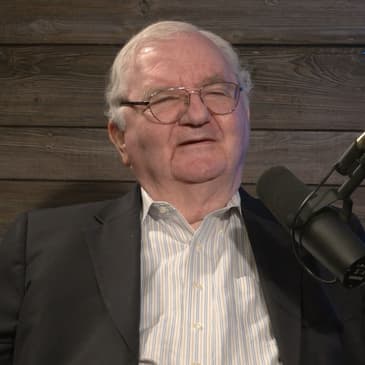
In this episode of The Jenny Beth Show, Morton Blackwell, President of The Leadership Institute, shares his decades of experience in building and sustaining a powerful conservative movement. He discusses the critical role of structured training, youth engagement, and grassroots efforts in achieving political success. Blackwell highlights how training over 310,000 activists has shaped conservative victories and emphasizes the importance of collaboration among conservative groups. His insights provide a roadmap for growing conservative influence in modern politics.
Twitter/X: @MortonBlackwell | @LeadershipInst | @jennybethm
Website: www.leadershipinstitute.org
[00:00:00] [SPEAKER_01]: I aim to build a movement, not an empire. And that is why I am very happy to cooperate with other
[00:00:09] [SPEAKER_01]: Conservative organizations and help them. So the Leadership Institute has just grown extraordinarily.
[00:00:17] [SPEAKER_01]: I founded it in 1979. We have now trained over 300 and 10,000 people.
[00:00:25] [SPEAKER_00]: Keeping our republic is online and it requires patriots with great passion, dedication, and eternal
[00:00:32] [SPEAKER_00]: vigilance to preserve our freedoms. Jenny Beth Martin is the co-founder of Tea Party Patriots.
[00:00:38] [SPEAKER_00]: She is an author, a filmmaker, and one of time magazines most influential people in the world.
[00:00:44] [SPEAKER_00]: But the title she is most proud of is Mark to her boy girl twins. She has been at the forefront,
[00:00:51] [SPEAKER_00]: fighting to protect America's core principles for more than a decade.
[00:00:55] [SPEAKER_00]: Welcome to the Jenny Beth Show.
[00:01:25] [SPEAKER_02]: The New York City is a delegate for Barry Goldwater in 1964 to organizing the National
[00:01:29] [SPEAKER_02]: Youth effort for Ronald Reagan in 1980. Well, it's for his experiences working in the
[00:01:35] [SPEAKER_02]: Reagan White House and his pivotal role in fostering the next generation of Conservative leaders.
[00:01:42] [SPEAKER_02]: See tune to your insights from a man whose lifetime of dedication and strategic prowess continues
[00:01:47] [SPEAKER_02]: to shape American politics. Well thank you so much for joining me today, Morton. I'm just
[00:01:53] [SPEAKER_01]: very excited about this interview with you. I'm very pleased to be with you. I have no
[00:01:59] [SPEAKER_01]: you since you were a spark plug starting the incredible efforts of 29 and 2010 with the Tea Party
[00:02:09] [SPEAKER_02]: Patriots. We were just talking before we got started recording about the New Reagan
[00:02:16] [SPEAKER_02]: and you were a delegate for Reagan before, long before he actually became the nominee.
[00:02:23] [SPEAKER_01]: Can you talk about that a little bit? Well yes like most conservators I was really impressed
[00:02:32] [SPEAKER_01]: by Reagan's speech at the end of the 64 campaign which was televised nationwide and brought
[00:02:40] [SPEAKER_01]: in an avalanche of money so that the gold campaign was lost the election wound up with millions
[00:02:46] [SPEAKER_01]: of dollars that they hadn't spent by the time of the election and people began to consider
[00:02:53] [SPEAKER_01]: Reagan for public office. It took some persuading but California businessmen persuaded him
[00:03:01] [SPEAKER_01]: to become a candidate for governor in 1966 and in 1968 there was a boomlet for Reagan and
[00:03:12] [SPEAKER_01]: a number of states elected Reagan delegates and a whole lot of units to the Republican National
[00:03:18] [SPEAKER_01]: Convention and I was elected a Reagan alternate from Louisiana where I then lived in 1968 to the
[00:03:31] [SPEAKER_02]: you were also a delegate right in 1964 the youngest delegate. I was the youngest elected
[00:03:39] [SPEAKER_01]: delegate for Barrio Water in 1964 and interesting today there are national convention delegates
[00:03:49] [SPEAKER_01]: who are 17 years old who are going to turn 18 before election day but it was unusual in those days
[00:03:57] [SPEAKER_01]: to be a delegate or even a member of a state central committee unless you had gray hair or
[00:04:04] [SPEAKER_01]: none so at 24 I was Reagan's youngest for not to go water as youngest elected delegates.
[00:04:12] [SPEAKER_02]: That's that is so wonderful and you have been active well you're an active you had to be active in
[00:04:19] [SPEAKER_02]: politics before that to be elected delegate right so how long have you been active in politics?
[00:04:25] [SPEAKER_01]: How old were you when you got started? Well my first serious interest in politics was sparked by a
[00:04:35] [SPEAKER_01]: column in Newswick in October of 1958 the columnist that I admired named Raymond Moli
[00:04:47] [SPEAKER_01]: wrote in his column in October of 1958 that the most important Senate race in that off presidential
[00:04:55] [SPEAKER_01]: election year was the effort of the labor union bosses to defeat a freshman senator from Arizona named
[00:05:03] [SPEAKER_01]: Barrio Water and I had seen the name before but I'd never paid attention I started paying attention
[00:05:09] [SPEAKER_01]: and the more I heard the more I liked in 1960 there were a lot of delegates for gold water
[00:05:18] [SPEAKER_01]: elected go water at the end of the roll call he asked all the delegates who would have for him to vote for
[00:05:31] [SPEAKER_01]: for Nixon he said conservatives our time will come we should all get behind Nixon well
[00:05:37] [SPEAKER_01]: frankly I was never a great fan of over at your next and but go water said it so I supported Nixon
[00:05:45] [SPEAKER_01]: for president we started a little student for Nixon and lodge club at Luzianna State University
[00:05:53] [SPEAKER_01]: we didn't know beans about how to organize activities but we did the best we could
[00:06:02] [SPEAKER_01]: and that started me off and in 1961 early in the year friend of mine at LSU got a packet
[00:06:19] [SPEAKER_01]: of material just produced by a new group called in Americans for freedom about how you
[00:06:30] [SPEAKER_01]: that packet and their sample constitution and created a conservative student club at LSU
[00:06:39] [SPEAKER_01]: and in the fall of 1961 we chartered with young Americans for freedom early in 62
[00:06:46] [SPEAKER_01]: I co-founded a college Republican club at LSU and later on in the late spring of 62
[00:06:56] [SPEAKER_01]: I was elected college Republican state chairman of Luzianna not as impressive as you might think
[00:07:02] [SPEAKER_01]: because we was a convention composed of four delegates and a friend of mine and i ran against each other
[00:07:11] [SPEAKER_01]: and it tied two to two on three ballots and we flipped a coin and i won and became college or
[00:07:18] [SPEAKER_01]: a state chairman for and serve for two years and i worked hard at it we went from three tiny
[00:07:26] [SPEAKER_01]: clubs with a combined membership of under a hundred two years later we had 15 college Republican
[00:07:32] [SPEAKER_01]: clubs in Luzianna some of them including LSU with hundreds of members that's very exciting and so
[00:07:40] [SPEAKER_02]: when you first started with the Nixon club you didn't know anything about organizing
[00:07:45] [SPEAKER_02]: and then young Americans for freedom are YAF as some people know them and today Scott Walker is a
[00:07:52] [SPEAKER_01]: chairman i believe of YAF you said of the young Americans foundation okay today young Americans for freedom
[00:08:02] [SPEAKER_02]: is a project of young Americans foundation okay so that organization and then we'll talk about
[00:08:11] [SPEAKER_02]: in a few minutes everything that you've done have this long lasting legacy of training young people
[00:08:17] [SPEAKER_01]: on how to become active well as state college Republican chairman i had clubs out there and i
[00:08:26] [SPEAKER_01]: wanted them to succeed and i had to learn how to organize students myself and i learned by trial and
[00:08:35] [SPEAKER_01]: are mostly there weren't any examples around this that how to do it and in 1965 of the year after
[00:08:48] [SPEAKER_01]: i had finished being state chairman by an extraordinary combination of circumstances
[00:08:56] [SPEAKER_01]: the newly elected college Republican national chairman who was Tom Paukin of Texas
[00:09:03] [SPEAKER_01]: invited me to come to Washington to be executive director of the college Republican national committee
[00:09:09] [SPEAKER_01]: and up until then i hadn't figured out any way that i might possibly get a salary working in politics
[00:09:16] [SPEAKER_01]: i was a conservative activist i i read enormous numbers of fundamental conservative books and
[00:09:32] [SPEAKER_01]: director of the national college Republicans off and on from the summer of 65 through the November 1970 elections five
[00:09:42] [SPEAKER_01]: and a half years and i served as nation executive director under four consecutive college Republican
[00:09:50] [SPEAKER_02]: national chairman wow that's very exciting and you were able to really coach them i'm sure a lot because
[00:09:56] [SPEAKER_01]: you you had done it so i've learned it and that my greatest learning experience with when i was
[00:10:02] [SPEAKER_01]: doing field work for the college Republicans i i spent some time in Kentucky in 67 when they had a
[00:10:10] [SPEAKER_01]: governor's race going i drew up a plan to give to the college Republican state chairman of
[00:10:16] [SPEAKER_01]: Kentucky about how to run what i called a mass-based youth effort for Louis none the Republican
[00:10:22] [SPEAKER_01]: nominee for governor and the state chairman asked the national chairman to lend me to Kentucky
[00:10:31] [SPEAKER_01]: for the balance of the campaign and and that's what happened and i put together a different
[00:10:38] [SPEAKER_01]: kind of youth effort which really was mass-based with thousands and thousands of members quickly recruited
[00:10:44] [SPEAKER_01]: and they did a lot of good work and Louis none who was behind in every single poll up until
[00:10:53] [SPEAKER_01]: election day but creeping forward he won with 51.2% of the vote and people credited
[00:11:01] [SPEAKER_01]: a big youth effort that i had organized so i started in 68 the next year training youth
[00:11:08] [SPEAKER_01]: organizers and i did that through the college Republicans in 1968 69 and 70 my first training
[00:11:19] [SPEAKER_01]: of youth organizers was in the early summer of of 68 20 people in the class many of them
[00:11:32] [SPEAKER_01]: went out to be youth coordinators a young man from Kentucky that i trained in 68 was that year
[00:11:42] [SPEAKER_01]: the youth organizer in Kentucky for the Republican candidate for senate and a marlow cook
[00:11:48] [SPEAKER_01]: and cook one and he hired his youth coordinator on senate staff and he worked there for six years
[00:11:55] [SPEAKER_01]: and then went back home to Louis Kentucky and built his career and that young man was named
[00:12:01] [SPEAKER_02]: Mitch McCall. Wow that's amazing so um and i bet you have so many different stories about the
[00:12:10] [SPEAKER_02]: people who you have gone on to train who have gone on to to do something i've gone through
[00:12:17] [SPEAKER_02]: l.i training and did that before the tea party movement got started and i think part of
[00:12:23] [SPEAKER_02]: the reason that i was prepared to be all of a sudden the movement gets started and we had the
[00:12:29] [SPEAKER_02]: tax-state protest and my goal was to take that moment in time and turn it into a movement i know
[00:12:36] [SPEAKER_01]: earthly idea how to do that but well you you will recall genie bath that once you had begun
[00:12:45] [SPEAKER_01]: organizing your tea party patriot's group that i called you and i said i'm in the business of
[00:12:52] [SPEAKER_01]: training and service how to be effective and i want to help your organization and i'm prepared
[00:12:58] [SPEAKER_01]: to come and do training for as many of your grassroots people as we can recruit and we've been
[00:13:05] [SPEAKER_02]: ever since that's right that's absolutely right and i wanted to take advantage of that because
[00:13:10] [SPEAKER_02]: i'd gone through training with you and then what was called covered-out leadership training in
[00:13:16] [SPEAKER_02]: Georgia um and in the covered-out leadership training it's now called republican leadership training
[00:13:25] [SPEAKER_02]: or something in Georgia be it was named after the former senator who is now dead Paul covered-out
[00:13:30] [SPEAKER_01]: he was a great man covered-out is one of the few politicians that i know of who actually turned out
[00:13:40] [SPEAKER_01]: better and it wants to elected so many of them disappoint us but covered-out was a man who
[00:13:49] [SPEAKER_01]: the longer he served here the higher his regard by conservative movement activist all around the
[00:13:55] [SPEAKER_02]: free his law his death was a great law it it was a great loss and he and newt both understood the
[00:14:02] [SPEAKER_02]: importance of training people and making sure they were building a field team and because i'd gone
[00:14:07] [SPEAKER_02]: through that training and through algebra training and through go pack training even though i wasn't
[00:14:12] [SPEAKER_02]: running for office i knew it was my congressman so we wound up having go pack training in Georgia
[00:14:18] [SPEAKER_02]: when this movement started i was prepared and and ready to be able to help figure out how we
[00:14:24] [SPEAKER_02]: turn it help all these groups and when you reached out it was such a good thing because people needed
[00:14:32] [SPEAKER_02]: that training they had this passion and this love for the country and anger about what was
[00:14:38] [SPEAKER_02]: happening for the country but they didn't know what to do with it and sort of like how you said
[00:14:42] [SPEAKER_02]: they didn't know beans about organizing a lot of them didn't know beans about organizing and needed
[00:14:46] [SPEAKER_01]: that training well every type of activity that you enter into it is different there's a
[00:14:56] [SPEAKER_01]: different vocabulary there are different rules there are different ways to be effective and
[00:15:05] [SPEAKER_01]: we don't have time to make all the mistakes and learn lessons the hard way it certainly makes sense
[00:15:12] [SPEAKER_01]: for conservatives to study the techniques of how to win and some of them are counterintuitive
[00:15:21] [SPEAKER_01]: and elaborate on that how are they counterintuitive well my favorite example is fundraising letters
[00:15:30] [SPEAKER_01]: if you get a room full of conservatives and you ask them which would be more successful
[00:15:38] [SPEAKER_01]: a very good short letter or a very good long letter and the majority will say well
[00:15:45] [SPEAKER_01]: i would rather read a very good short letter well the truth is the trial and error and testing and
[00:15:52] [SPEAKER_01]: testing has demonstrated absolutely that in almost every case a good long letter will be more
[00:16:01] [SPEAKER_01]: financially successful for you than a good short letter but unless you've been told that by
[00:16:07] [SPEAKER_01]: somebody the only way you to learn it is by the school of hard knocks and when you're doing fundraising
[00:16:14] [SPEAKER_02]: and mailing things that can be an expensive lesson to learn you got it um so how you so you went on
[00:16:25] [SPEAKER_02]: you came to Washington DC you worked for the college republicans is the executive director for
[00:16:31] [SPEAKER_01]: five different presidents for four different groups over five and a half years and then i left
[00:16:40] [SPEAKER_01]: in the November 1970 and my salary often on for five and a half years was little or nothing
[00:16:49] [SPEAKER_01]: sometimes it was little sometimes it was nothing i enjoyed every minute of it literally i sometimes
[00:16:56] [SPEAKER_01]: went to bed with unable to afford my minimum supper which was a can of Vienna sausage
[00:17:04] [SPEAKER_01]: but when i left college republicans i had a developed a reputation i developed a training program
[00:17:11] [SPEAKER_01]: that trained youth organizers and who went out and helped win campaigns all across the country
[00:17:17] [SPEAKER_01]: and i was hired in early 71 by the american enterprise institute a conservative
[00:17:25] [SPEAKER_01]: think tank the biggest conservative think tank and DC at the time and i was there director of computer
[00:17:33] [SPEAKER_01]: projects not because i was expert in computers but because they had a program for identifying
[00:17:40] [SPEAKER_01]: conservative college professors and getting data on them and they were recommending conservative
[00:17:46] [SPEAKER_01]: professors to the Nixon administration for jobs and i had just finished five and a half years
[00:17:54] [SPEAKER_01]: i'd worked it with people in every state and lots of college people and if i didn't know somebody
[00:18:00] [SPEAKER_01]: on a campus i knew somebody who knew somebody on a campus so i went to work for them
[00:18:07] [SPEAKER_01]: and it was a fine job i worked with them for a year and a half and in May my friend Lee Edward
[00:18:18] [SPEAKER_01]: introduced me to his friend Richard Vigory all three of us had arrived in DC in 1965
[00:18:27] [SPEAKER_01]: i hadn't low known Lee because he would come in lecture to college republican groups about public
[00:18:35] [SPEAKER_01]: relations for me and i also provided college republican volunteers for all the major
[00:18:41] [SPEAKER_01]: rallies and things that he organized. Lee terrific guy he is not a tall and stature but he is a
[00:18:52] [SPEAKER_01]: towering hero of public relations and and so the New York Times was called Lee Edward's
[00:19:02] [SPEAKER_01]: voice of the silent majority and he set up a luncheon with Richard Vigory who had built
[00:19:10] [SPEAKER_01]: already a massive direct mail operation and had a fabulous reputation Richard Vigory
[00:19:18] [SPEAKER_01]: did not attend conservative meetings he was a reclusive went to work early and worked late
[00:19:25] [SPEAKER_01]: and he didn't go to any of those meetings he was rumored to have behind his desk the giant
[00:19:34] [SPEAKER_01]: faucet that he could turn on and money would pour into the treasury of any group he would take
[00:19:41] [SPEAKER_01]: on as a client but i did not met him we've been the same town had the same principle he had been
[00:19:47] [SPEAKER_01]: the go water campaign as head Lee and I and we hit it off well with lunch Lee Edward Richard
[00:19:57] [SPEAKER_01]: and I to be slater he said morning once you to come back to the Mayflower hotel and have another
[00:20:05] [SPEAKER_01]: lunch with me and he offered me a job and he said morning i've decided to go public as a conservative
[00:20:12] [SPEAKER_01]: leader and I want you to come help me build a conservative movement i'll teach you fundraising
[00:20:18] [SPEAKER_01]: and you can be my political assistant as we start to seriously build a mass-based
[00:20:26] [SPEAKER_01]: conservative movement i took the job and worked for Richard for seven years and what did you do for
[00:20:32] [SPEAKER_01]: Richard well just what he promised he promised that he would teach me direct mail fundraising
[00:20:40] [SPEAKER_01]: which he did and I helped him organize in normal meetings of people who were already
[00:20:52] [SPEAKER_01]: conservative leaders who were who had the potential to be conservative leaders we concluded
[00:20:58] [SPEAKER_01]: that what the conservative movement needed was to dramatically increase the number and effectiveness
[00:21:05] [SPEAKER_01]: of conservative activists and that meant helping existing groups recruit a whole lot more
[00:21:12] [SPEAKER_01]: members and owners it would also required the creation of many new conservative groups
[00:21:20] [SPEAKER_01]: and truthfully some leaders of existing conservative groups were not happy about the sudden
[00:21:26] [SPEAKER_01]: springing up of other conservative organizations but people like Paul Warrick and Ed Fulner
[00:21:35] [SPEAKER_01]: put together the heritage foundation they put together the House Republican Study Committee
[00:21:43] [SPEAKER_01]: the Senate steering committee whiracles particularly prolific he helped create
[00:21:49] [SPEAKER_01]: elect the American legislative exchange council many many other organizations and through the
[00:21:57] [SPEAKER_01]: 70s the number of conservative organizations multiplied the number of big conservative
[00:22:04] [SPEAKER_01]: organizations multiplied we wound up recruiting a theological conservative pastor of at a
[00:22:15] [SPEAKER_01]: television program Dr. Jerry Falwell and Warrick went down with a group of friends of mine
[00:22:23] [SPEAKER_01]: to Lynchburg talk with Jerry Falwell and said we were hoping that he would lead a national
[00:22:34] [SPEAKER_01]: conservative Christian group and he said to Dr. Falwell I believe there is a conservative
[00:22:43] [SPEAKER_01]: moral majority out there ready to organize and a couple of minutes later Falwell said well I
[00:22:50] [SPEAKER_01]: like that I think I'll use that he said Paul said what do you mean he said moral majority that's
[00:22:56] [SPEAKER_01]: what I'm going to call my organization and if and Falwell started involving conservative
[00:23:03] [SPEAKER_01]: Christians in politics and it but up until that time my people young people can't
[00:23:10] [SPEAKER_01]: even conceive of it but up until that time most theologically conservative pastors thought
[00:23:17] [SPEAKER_01]: the politics and the public policy process was not part of their calling and yet Falwell became
[00:23:26] [SPEAKER_01]: enormously famous I think they were probably more people in the United States who could name the
[00:23:31] [SPEAKER_01]: pastor of the Thomas Road Baptist Church then could name a Catholic Arnold I mean and other
[00:23:38] [SPEAKER_01]: theologically conservative religious broadcasters noticed that lightning did not strike Jerry
[00:23:46] [SPEAKER_01]: Falwell and it was successful and it was good and so in the latter part of the 70s there
[00:24:01] [SPEAKER_01]: people who were theologically conservative became active and that enabled us to nominate an
[00:24:09] [SPEAKER_01]: electoral ring and how did that help nominate an electem? Well in political context over time
[00:24:19] [SPEAKER_01]: the winner the winning side is determined by which side has the greatest number of effective
[00:24:27] [SPEAKER_01]: activists and leaders you don't win just because your heart is pure you don't win by being
[00:24:36] [SPEAKER_01]: able to prove that you are right it one side has a greater number of effective
[00:24:42] [SPEAKER_01]: activists on the other side over continued period of time that that side is going to win and if
[00:24:49] [SPEAKER_01]: you are on the side that doesn't study how to win and doesn't increase your activists then you're
[00:24:57] [SPEAKER_01]: to lose no matter how right you are. That is such an important lesson for people to understand
[00:25:04] [SPEAKER_02]: sometimes they get behind a candidate or a cause and they know that that is the right cause
[00:25:11] [SPEAKER_02]: and they just want the answer and they want the solution and they want it right the second.
[00:25:16] [SPEAKER_01]: Well they think if I can prove that I am right then eventually I'm going to win because I'm right
[00:25:22] [SPEAKER_01]: victory will fall into my deserving hands like a ripe fruit off of the tree because I am right
[00:25:29] [SPEAKER_01]: well that is not the real nature of politics if you believe your side deserves to win then
[00:25:37] [SPEAKER_01]: you owe it to your philosophy to study how to win how to organize how to communicate how to raise funds
[00:25:46] [SPEAKER_01]: all the thousands of skills that are necessary to win in government politics and the news media.
[00:25:55] [SPEAKER_02]: And I want to come back to Reagan and we'll do that in a few minutes but let's keep talking
[00:26:02] [SPEAKER_02]: about what you were just talking about. You have made it really your life mission since you were
[00:26:08] [SPEAKER_02]: college to train people on all of those aspects of it so they understand what skills they need to win.
[00:26:16] [SPEAKER_01]: Absolutely I aim to build a movement not an empire and that is why I am very happy
[00:26:24] [SPEAKER_01]: to cooperate with other conservative organizations and help them in various ways new organizations
[00:26:31] [SPEAKER_01]: come up and just like I did with Tea Party Patriots I call them up and say we can help you
[00:26:39] [SPEAKER_01]: you have wonderful committed activists let us teach them how to be effective and many of them say yes
[00:26:46] [SPEAKER_01]: and so the leadership institute has just grown extraordinarily I founded it in 1979 we have now
[00:26:56] [SPEAKER_01]: trained over 300 and 10,000 people it's amazing we've last year we did more than 2,000 separate training
[00:27:08] [SPEAKER_01]: programs we have over 2,600 active conservative or libertarian local club local campus clubs
[00:27:19] [SPEAKER_01]: we have a powerful website that exposes leftist abuses and bias on campus last year we had over
[00:27:32] [SPEAKER_01]: 8 million viewers on that and it's working wonderfully both programmatically and financially
[00:27:43] [SPEAKER_01]: leadership is currently in our greatest period of growth last year we trained 31,000 people
[00:27:52] [SPEAKER_01]: which was a 100 and 7% of the number we trained to previous year and that's 10% of the total number
[00:28:01] [SPEAKER_02]: you've ever trained. That's amazing actually when you think of it that way that 10% from starting in
[00:28:08] [SPEAKER_01]: 79 all the way through the end of 2023. Yeah last year alone we trained more people than we did in
[00:28:18] [SPEAKER_01]: the first 22 years of the leadership institute and we've been able to attract a growing number of
[00:28:26] [SPEAKER_01]: supporters last year we acquired 63,000 new donors with an average first gift of over $70.
[00:28:38] [SPEAKER_01]: Congratulations. And our revenue is growing rapidly 2020 it was 23 million and we're over
[00:28:46] [SPEAKER_01]: new the next year we were 30 million the next year it was 39 million and last year we had a total
[00:28:52] [SPEAKER_02]: revenue of $42 million. That is wonderful and I think there's something really important for people
[00:28:59] [SPEAKER_02]: to understand if they're just getting started your growth is phenomenal and the numbers
[00:29:07] [SPEAKER_02]: 41 million in a year is something you should be so proud of but it took years to get to that point
[00:29:16] [SPEAKER_02]: and it took tireless dedication to a cause that you knew was worthy and you became the expert at
[00:29:23] [SPEAKER_02]: and you were willing to train as many people as possible and not say all of it is mine you wanted
[00:29:30] [SPEAKER_02]: to help other people grow and you did that consistently over years. Well when I decided years ago
[00:29:37] [SPEAKER_01]: that we were going to do a fundraising school teaching direct mail my staff question that we were
[00:29:45] [SPEAKER_01]: already noted for success in direct mail and some of my staff said but born and if we teach other
[00:29:53] [SPEAKER_01]: groups what we know about direct mail then they're going to go out and send letters to the same
[00:29:59] [SPEAKER_01]: base of conservative donors and there'll be competitors and I said repeat for me please
[00:30:07] [SPEAKER_01]: what I thought you is the mission of the leadership institute which is to increase the number
[00:30:13] [SPEAKER_01]: and effectiveness of conservative activists and leaders in government politics and the news media
[00:30:20] [SPEAKER_01]: and if we teach good conservative groups how to be more effective then they're going to go out
[00:30:27] [SPEAKER_01]: and increase the number and effectiveness of the conservative activists and leaders. I confess I went
[00:30:33] [SPEAKER_01]: home and told my wife what we were doing because you're going to teach it well that's why and then she
[00:30:39] [SPEAKER_01]: says more than are you going to teach telemarketing she says if you teach telemarketing I'm going to
[00:30:48] [SPEAKER_01]: divorce you. Oh no why did she say that? She hated telephone market and she got over that she didn't
[00:30:58] [SPEAKER_01]: divorce me but we teach the whole broad spectrum we have a comprehensive school of fundraising
[00:31:04] [SPEAKER_01]: that's four days long which covers every major element of fundraising and it's a little bit
[00:31:13] [SPEAKER_02]: by a little bit by a little bit building over time on and on and on and not giving up and you've
[00:31:19] [SPEAKER_02]: you have seen amazing wins you you were a delegate for Reagan in the 60s you went on to see him
[00:31:27] [SPEAKER_02]: become president but you also have seen presidents who certainly are not conservative not even
[00:31:32] [SPEAKER_02]: Republican and you didn't you just kept going even with all the defeat that you've seen you kept going
[00:31:39] [SPEAKER_02]: how what kind of advice do you give to people who are just starting out? Well in 65 when I came
[00:31:46] [SPEAKER_01]: to DC to be executive director of the National College Republicans every time I drove by
[00:31:52] [SPEAKER_01]: the White House I thought that's where Lyndon Johnson lives he's the enemy and it turns out
[00:32:04] [SPEAKER_01]: that eventually in 1981 I got hired on to Ronald Reagan's White House staff and I was working
[00:32:12] [SPEAKER_01]: in the building so you have to keep your perspective on this and it's not ordinary in that you're
[00:32:20] [SPEAKER_01]: going to win every time and you've got to keep your eye on the ball and when you lose you've
[00:32:31] [SPEAKER_01]: got to figure out what did you do that you could have done better what did you fail to do
[00:32:38] [SPEAKER_01]: and you accumulate knowledge and you accumulate donors frankly even though we try in our schools
[00:32:49] [SPEAKER_01]: emphasize the importance of taking good care of your donors quite frankly most groups with a broad
[00:32:57] [SPEAKER_01]: base of donors do not treat their donors very well and my staff here me all the time I say
[00:33:05] [SPEAKER_01]: I want us to treat our donors better than any other group treats their donors and I drill that into my
[00:33:16] [SPEAKER_01]: staff's minds and I'm not sure that we do that but we certainly try and that has helped us grow.
[00:33:24] [SPEAKER_01]: How do you take care of your donors? Well you have to you have to be as personal as you can with the donors
[00:33:40] [SPEAKER_01]: on a thing as simple as writing a thank you note there are some groups and they're not big
[00:33:47] [SPEAKER_01]: groups but there's some groups that don't even bother to thank their donors and there are other
[00:33:53] [SPEAKER_01]: groups which have a printed thank you note and they write in their blanks in it and say and it's a
[00:34:07] [SPEAKER_01]: much for your contribution of and you add that and there's a printed signature on this thank you note no that's
[00:34:16] [SPEAKER_01]: wrong some people wait weeks before they thank their donors we have a rule here and almost always we
[00:34:27] [SPEAKER_01]: adhere to that rule if when we get contributions come in one day and sometimes we can have a
[00:34:38] [SPEAKER_01]: thousand or three thousand donors if there's been a big mailing our rule is my staff doesn't leave the
[00:34:47] [SPEAKER_01]: office and for laughter they have put into the computer the data relating to every new
[00:34:55] [SPEAKER_01]: contribution so that the next day these donors are mailed a personalized thank you letter thanking
[00:35:05] [SPEAKER_01]: them for their contribution and and most groups certainly don't do that. I think that is right and it
[00:35:15] [SPEAKER_02]: makes me think I need to go make sure we're doing all of our thank yous right with our organization
[00:35:19] [SPEAKER_02]: when we started we were very very fortunate these would a lot of donors who responded to direct mail
[00:35:26] [SPEAKER_02]: initially and I will admit that we it was so many and we didn't have the infrastructure we were learning
[00:35:36] [SPEAKER_02]: how I knew how to organize small groups and how to be active what I didn't know was how to do fundraising
[00:35:42] [SPEAKER_02]: and how to think people and all of the infrastructure related to that and we've had to go back in
[00:35:48] [SPEAKER_02]: established relationships with donors but we're making sure we're much better about it now than we
[00:35:54] [SPEAKER_02]: were when we began we learned a lot of hard lessons and it's amazing how much just a small touch like
[00:36:01] [SPEAKER_01]: a thank you how much difference that makes to people and for people who give more than just a few dollars
[00:36:13] [SPEAKER_01]: so many give you $50 or $100 it is probably worthwhile for you to call that owner and if a
[00:36:24] [SPEAKER_01]: donor gives you a big donation for sure you want to call them and donors are frequently called and
[00:36:34] [SPEAKER_01]: by people who are asking for money and they're the cringe at that but if they've just sent
[00:36:39] [SPEAKER_01]: a thousand dollars into an organization and then three days later they get a telephone call for
[00:36:47] [SPEAKER_01]: the organization they can be pretty sure that the group isn't going to be asking them for money so
[00:36:53] [SPEAKER_01]: they'll get on the phone and you can then thank them promptly so personal business with donors
[00:37:02] [SPEAKER_01]: are important one of the things that we have found in recent years is that it has proved
[00:37:09] [SPEAKER_01]: very effective to us financially to increase the number of development officers that we have
[00:37:17] [SPEAKER_01]: so that we go out and meet with more donors than we used to do and it pays off and some of our
[00:37:29] [SPEAKER_01]: just donors are people who started off with $25 or $50 gifts and then two or three or five years later
[00:37:40] [SPEAKER_01]: they give you a gift for a hundred thousand dollars even though you may not have had any idea
[00:37:45] [SPEAKER_02]: that they could afford to get such a gift and you've had people who've left you in their will as well right
[00:37:50] [SPEAKER_01]: absolutely we're very good at that last week we received a legacy gifts from a person who had
[00:38:03] [SPEAKER_01]: only contributed by mail and not very often and the gift was $1.9 million dollars
[00:38:12] [SPEAKER_01]: but they've been getting our news letters they've had personal contacts we have
[00:38:19] [SPEAKER_01]: telephone town halls we invite the donors to call in and I'll talk with donors and answer
[00:38:26] [SPEAKER_01]: questions that it's a lot to be done and any organization that wants to be very successful financially
[00:38:34] [SPEAKER_01]: needs to be trained on what works and what doesn't work with respect to fundraising so I invite you
[00:38:41] [SPEAKER_01]: to people who are listening to contact the leadership and find out what our schedule of training programs
[00:38:49] [SPEAKER_01]: is we do charge but tuition at these schools but our tuition coming in is currently less than 1%
[00:39:02] [SPEAKER_02]: of our total revenue right and I've seen and I'm sure that you've seen that when you're doing events
[00:39:10] [SPEAKER_02]: if somebody pays a little bit of money it it it helps them mentally be committed to what they're doing
[00:39:18] [SPEAKER_01]: they take it seriously people instinctively think if it's free maybe it doesn't work anything
[00:39:25] [SPEAKER_01]: right and so if you charge them 25 dollars and offer them free lunch at the event
[00:39:34] [SPEAKER_02]: people may come that's right I want to go back to something you were just saying about that I've
[00:39:39] [SPEAKER_02]: noticed as well how some groups get very bothered when new groups pop up instead of embracing
[00:39:49] [SPEAKER_02]: the fact that we were growing as a conservative movement it's just if they're afraid of the
[00:39:55] [SPEAKER_02]: friendly competition and and we are capitalist we are supposed to like competition and
[00:40:00] [SPEAKER_02]: understand that competition can help help you be better and competition improves the quality
[00:40:07] [SPEAKER_02]: of what everybody is doing right I think that is exactly right and also even if they're doing
[00:40:15] [SPEAKER_02]: something then is very very similar to what you're doing when we're fighting such a massive
[00:40:25] [SPEAKER_02]: government overreach it is so large there's no way that even with all the groups across the entire
[00:40:32] [SPEAKER_02]: country whether they're small campus groups or our national groups or somewhere in between state level
[00:40:37] [SPEAKER_02]: county county level whatever it may be there's still aren't enough of us to compete with a federal
[00:40:43] [SPEAKER_02]: government in the growth of the federal government and then the seat and local governments on top of that
[00:40:50] [SPEAKER_01]: well that is true it is difficult however I think it is certainly true the conservative groups
[00:40:58] [SPEAKER_01]: which are funded by voluntary contributions are more efficient in the use of their funds than a
[00:41:06] [SPEAKER_02]: government bureaucrat might be absolutely that it's true and it's good that we have more
[00:41:12] [SPEAKER_01]: more groups coming in I'm all for it but last week we had the school we hold about three times a
[00:41:20] [SPEAKER_01]: year I call it the conservative organizational entrepreneur and it's specifically for people
[00:41:28] [SPEAKER_01]: who have in their mind that they want to start their own group so we come and give them a
[00:41:35] [SPEAKER_01]: two-day intensive course on what to do and what to avoid in building your own organization
[00:41:42] [SPEAKER_02]: I think that's a really good idea and and they need that and we need them to start so it's very
[00:41:49] [SPEAKER_02]: exciting and as I was saying it went through a lot of training before the movement started and I
[00:41:57] [SPEAKER_02]: I am constantly reading and trying to learn more because I think I can always improve
[00:42:04] [SPEAKER_02]: my daughter is active on her campus and she started a conservative club in high school
[00:42:12] [SPEAKER_02]: and she got material from from leadership institute from YAF and from turning point USA
[00:42:20] [SPEAKER_02]: and she's been through training with leadership institute you do weekend trainings for students
[00:42:29] [SPEAKER_02]: and she did one down I think it was in West Palm Beach and she arrived on a Thursday
[00:42:33] [SPEAKER_02]: live location yeah it is a nice location and she said well and there was a scholarship so if
[00:42:40] [SPEAKER_02]: your active leadership institute has scholarships available especially for students
[00:42:45] [SPEAKER_01]: I may have made possible by donors who appreciate what we're doing right and she went to that
[00:42:51] [SPEAKER_02]: and she said mom we start at 7 o'clock in the morning and we are not finishing until 10 o'clock at night
[00:42:57] [SPEAKER_02]: so well you know that's what a scholarship does they're making sure you learn and
[00:43:01] [SPEAKER_01]: when she winds up and she probably already has working in campaigns campaign
[00:43:08] [SPEAKER_02]: hours or at least that bad at least it sometimes I mean there are I know that during
[00:43:16] [SPEAKER_02]: campaign season there is going to be several all-nighters during the campaign season and I just
[00:43:21] [SPEAKER_01]: buckle up and prepare for it. Well don't you think some of the lefties stay awake
[00:43:26] [SPEAKER_02]: late at night working of course they do and one of the trainings that she did
[00:43:33] [SPEAKER_02]: she did it before the dobs decision came out and she wound up being in front of the Supreme
[00:43:38] [SPEAKER_02]: Court with students for life when the dobs decision came out and I noticed that her social media
[00:43:45] [SPEAKER_02]: feed she posted a photo and it was a moment of stay and she posted a photo and she was getting
[00:43:51] [SPEAKER_02]: trolled online and some of the students who had been through the training with her through
[00:43:55] [SPEAKER_02]: your training who were not there jumped in and we're helping defend her social media while
[00:44:02] [SPEAKER_02]: while she was there and I just thought that was amazing and it's just it's that pulling people
[00:44:08] [SPEAKER_02]: together like that you're training them and you're building a network and they're able to
[00:44:11] [SPEAKER_01]: support each other across the entire country. It helps to work and comfort. It really does
[00:44:19] [SPEAKER_02]: um you mentioned that you have a lot of groups that you're active on campuses even so how
[00:44:27] [SPEAKER_01]: what I'll tell people about that they may not be aware. All right well what we're doing on campus
[00:44:35] [SPEAKER_01]: does not really lend itself to a lot of publicity because I decided many years ago
[00:44:42] [SPEAKER_01]: that it was important to increase the number of conservative groups on campus and there are
[00:44:49] [SPEAKER_01]: campuses that have eight or ten different groups that could be called conservative or libertarian
[00:44:58] [SPEAKER_01]: but I said I have for five and a half years the latter half of the 60s and 1970.
[00:45:08] [SPEAKER_01]: I was executive director of the College Republicans and it's a membership organization which
[00:45:13] [SPEAKER_01]: have clubs and the clubs have a month in a given club in a state federation and certainly
[00:45:21] [SPEAKER_01]: in the national organization there are political fights and credentials battles
[00:45:28] [SPEAKER_01]: and fused within the organization and I said I've been through that for five and a half
[00:45:34] [SPEAKER_01]: years with the College Republicans and we increase the number of college Republicans while I was
[00:45:42] [SPEAKER_01]: there from 450 to 911 clubs but I said I don't want to have the job of supervising these clubs
[00:45:52] [SPEAKER_01]: so here's what our plan is every year we do training and we train about 70 people
[00:46:00] [SPEAKER_01]: and then higher perhaps the 25 best of them to start off when school begins in the fall
[00:46:09] [SPEAKER_01]: they visited campuses most often campuses that have no conservative or libertarian
[00:46:18] [SPEAKER_01]: student groups and their hundreds of them still in the country. So they identified by various
[00:46:27] [SPEAKER_01]: means card table on the sidewalk talking to students who walk by their online ways to find students
[00:46:37] [SPEAKER_01]: we find conservative or libertarian students we invite them to come to a meeting and we
[00:46:44] [SPEAKER_01]: preserve the place and tell them where and when the meeting is going to be and when they come
[00:46:50] [SPEAKER_01]: and there may be 50, 70 people that are feel staff are doing their jobs right
[00:46:57] [SPEAKER_01]: and we tell them that we're here to help them start one or more conservative groups
[00:47:04] [SPEAKER_01]: on campus and we say we do not have leadership institute clubs on a campus there are 16
[00:47:13] [SPEAKER_01]: national organizations that have that are conservative or libertarian that have
[00:47:20] [SPEAKER_01]: campus chapters and we pass out packaged at all the students who have come and here's the 16
[00:47:29] [SPEAKER_01]: groups and we ask that you all talk with each other and come up with subsets of you who want to
[00:47:37] [SPEAKER_01]: start a club of one of these national groups you give us your contact information we'll send it to
[00:47:45] [SPEAKER_01]: the national group and they'll almost certainly take you on as a new chapter some of the groups
[00:47:55] [SPEAKER_01]: that are founded as a result of this field work decide not to fill the egg with any group
[00:48:00] [SPEAKER_01]: some of those are few but there are a number of them they'll say we want to have the East Kansas State
[00:48:08] [SPEAKER_01]: conservative club and they want to be independent of their anybody else but we feed hundreds
[00:48:16] [SPEAKER_01]: of new groups to these national organizations many of these groups take advantage of our
[00:48:24] [SPEAKER_01]: training programs about fundraising or communications or political activity but it works
[00:48:33] [SPEAKER_01]: extraordinarily well and each new group gives an opportunity for leadership to develop in that
[00:48:42] [SPEAKER_01]: group and we can use these groups as a pool to recruit for all the 55 different types of training
[00:48:49] [SPEAKER_01]: programs that we offer so it works well it also keeps us with wonderful relations with almost
[00:48:57] [SPEAKER_01]: all of these 16 groups they love us because who else is out there beside their own staff
[00:49:06] [SPEAKER_01]: organizing new groups or so it works very well and we now have over 2,600 of them and in my experience
[00:49:14] [SPEAKER_01]: there are some groups that exaggerate what they have on the ground leadership institute prints up
[00:49:21] [SPEAKER_01]: a directory by state and then by campus and then by group on campus and it this directory
[00:49:29] [SPEAKER_01]: includes the name of the head of the group mailing address and phone number that's smart
[00:49:37] [SPEAKER_02]: well and you don't have to exaggerate you have I mean other groups shouldn't be exaggerating anyway
[00:49:44] [SPEAKER_01]: but but they do one group and I won't mention it one and it's not one of these 16 groups and
[00:49:55] [SPEAKER_01]: frankly it's not a college group but one group that I got two fundraising letters from last
[00:50:04] [SPEAKER_01]: year and a group that I have been associated with in the past and they claimed that they had
[00:50:14] [SPEAKER_01]: 100,000 members and they claimed a certain number of clubs that they had and when you divided
[00:50:26] [SPEAKER_01]: the number of members by the number of clubs was easy simple to do you could do it in your head
[00:50:36] [SPEAKER_01]: they were claiming that each of their clubs has 600 members well I know this organization
[00:50:42] [SPEAKER_01]: if they have three clubs and the whole nation that has 600 members I'd be surprised
[00:50:48] [SPEAKER_01]: but people lie about it it's a human thing to exaggerate you one of the things that
[00:50:55] [SPEAKER_01]: is a clue that somebody is blowing smoke at you is if they claim 100,000 members I mean
[00:51:03] [SPEAKER_01]: one zero zero comma zero zero zero is that realistic nobody know highly unlikely there's a
[00:51:13] [SPEAKER_01]: group that has exactly a hundred thousand members that that's why we printed up a directory of
[00:51:19] [SPEAKER_01]: so when I say have 26 hundred groups I could go up to my desk and hand you a cattle a directory
[00:51:27] [SPEAKER_01]: of these clubs and you could call them and they're actually there and it makes it makes a huge
[00:51:35] [SPEAKER_02]: difference because when you are able to keep up with that information and you're reaching out to the
[00:51:40] [SPEAKER_02]: people who have groups in your in communication with them well you can be more effective it helps you
[00:51:45] [SPEAKER_01]: in so many ways I go visit a donor in Missouri and I tell them how many clubs we have in Missouri
[00:51:55] [SPEAKER_01]: and they say oh well that is very nice and I said here let me show you and I had them the
[00:52:02] [SPEAKER_01]: directory we opened up to Missouri and there are dozens of clubs in the state and I give them
[00:52:10] [SPEAKER_01]: the directory and I invite them if they are interested in a particular campus to call the
[00:52:16] [SPEAKER_01]: cobb leader and that local campus for them credibility is extremely important a lot of people
[00:52:24] [SPEAKER_01]: have been burned yes I groups making false claims and so when they find a group that can verify
[00:52:34] [SPEAKER_01]: what they're claims they think or highly of them more and this is such a fascinating conversation
[00:52:41] [SPEAKER_02]: I want to be able to be sure that we can get all of it in so I think we're going to break this into
[00:52:46] [SPEAKER_02]: two podcasts and we'll be back with the second podcast very soon wonderful the Jenny Beth Show
[00:52:53] [SPEAKER_00]: is hosted by Jenny Beth Martin produced by Kevin Mooney Hand and directed by Luke Livingston
[00:53:00] [SPEAKER_00]: the Jenny Beth Show is a production of Tea Party Patriots Action for more information visit
[00:53:08] [SPEAKER_02]: TeaPartyPatriots.org if you liked this episode let me know by hitting the like button or
[00:53:14] [SPEAKER_02]: leaving a comment or a five star review and if you want to be the first to know every time we drop
[00:53:20] [SPEAKER_02]: a new episode be sure to subscribe and turn on notifications for whichever platform you're listening
[00:53:25] [SPEAKER_02]: if you do these simple things it will help the podcast grow and I'd really appreciate it thank you so much