
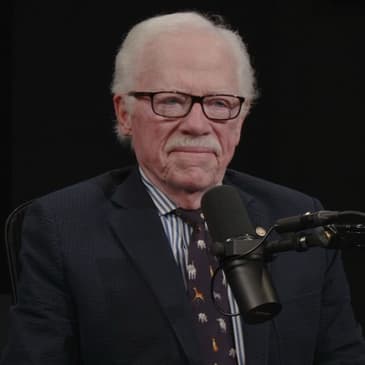
In this episode of The Jenny Beth Show, host Jenny Beth Martin is joined by Bob Barr, the newly elected President of the National Rifle Association (NRA), to discuss the organization's ongoing legal challenges and its unwavering commitment to defending the Second Amendment. Barr, a former U.S. Congressman and U.S. Attorney, shares insights into the NRA's fight against government overreach and the importance of protecting constitutional rights in America.
Barr discusses the NRA's current legal battles, particularly those involving the state of New York, where the organization has faced aggressive actions aimed at curbing its influence. He highlights a recent victory in the U.S. Supreme Court, where the court unanimously ruled in favor of the NRA, emphasizing that government entities cannot use regulatory power to silence organizations' free speech rights.
The conversation delves into the broader implications of privacy and government surveillance, with Barr expressing concerns about the erosion of Fourth Amendment rights in the digital age. He underscores the need for vigilance in protecting personal freedoms against the backdrop of technological advancements that threaten individual privacy.
The episode also touches on the topic of impeachment, with Barr reflecting on his role in the impeachment proceedings against President Bill Clinton and his views on the current state of impeachment as a political tool. He argues that the impeachment power has been misused in recent years, particularly in the cases against former President Donald Trump, and stresses the importance of adhering to the constitutional principles underpinning this process.
Leadership emerges as a key theme, with Barr praising former President Ronald Reagan's strong stance against the Soviet Union and his ability to convey a clear sense of purpose and strength. Barr argues that effective leadership requires consistency and a commitment to core values, qualities that he believes are essential in addressing America's current challenges.
Twitter/X: @bobbarr | @jennybethm
Websites: www.nra.org, www.libertyguard.org, www.bobbarr.org
[00:00:00] Having leaders particularly in Washington who understand that the Second Amendment protects an individual right to keep in bear arms. We still have people in Washington and positions of great power who either don't understand that or don't accept it.
[00:00:46] The NRA is more than a decade. Welcome to the Jenny Beth Show! The NRA is now volunteered on his campaign back in 1994 and learned how to go door-to-door from his campaign staff.
[00:01:23] Bob now serves as a newly elected President of the National Rifle Association, but that's not all. He's the author of three books. He has taught constitutional law, has served at the CIA in the 1970s and was a libertarian party's nominee for president in 2008.
[00:01:42] Those are just some of the highlights of his career. Now let's get right into this fascinating conversation. I'm really excited to be able to be with you and have you here on my podcast today. Thank you!
[00:02:18] And now you are the President of the NRA. How did that come to be? And what do you think of the new position that you hold? Well, first of all, it was great to see you again as always.
[00:02:29] I know you're extremely busy, so taking a few minutes to talk with an old friend is really appreciated. I've been a member as you probably recall with the National Rifle Association going back to the late 90s.
[00:02:42] I've been very much involved in it both during time that I was in the Congress and ever since then. I was asked to step in the position of first vice president a little over a year ago, wasn't something that I had planned, but these things happened sometimes.
[00:03:00] And as any organization that I'm involved with and that I believe in and support when I'm asked to do something, I do it. So I stepped into the role as first vice president. I served in that role for a year and then in May of this year.
[00:03:15] I was asked by the board and voted on by the Board of Directors to serve as president, which brings me to my current position as president, following in the footsteps of Charlton Heston as you recall former president of the National Rifle Association.
[00:03:35] And the NRE has had some challenges with legal actions taken against it over the last several years. How is that going and what are you doing to help resolve this? We have had challenges.
[00:03:50] The NRE faces challenges all the time from left wing government officials and anti gun groups and so forth as you know full well,
[00:04:02] but New York in particular over the last few years has been particularly aggressive both at the state level and at the local level in going after the National Rifle Association.
[00:04:17] The reason the primary reason, Jaybeth, that they're able to do this is because the NRA when it was incorporated way back when in the 1870s,
[00:04:27] it was incorporated in New York. New York back then of course was a very different state than it is now. Now it's very anti-second amendment.
[00:04:36] And the former insurance commissioner, they call it the Director of Financial Services, decided a few years ago in cohorts with the then governor Cuomo to go to banks and other financial institutions,
[00:04:54] and then the state of New York, and said, if you do business with the NRA, we're going to hold that against you. So we sued the state, Director of Financial Services, went all the way up to the US Supreme Court in early this year.
[00:05:12] We were victorious, a 90 decision believe it or not, written by just a soda my or that the state, the state government, a government cannot use its regulatory power to try and silence an organization's exercise of its free speech.
[00:05:33] Interesting sidelight on that case is the ACLU joined us. The other challenge we've had in New York that's taken a lot of time and it's still ongoing has been by Latisha James, the attorney general in New York who when she first ran for that position, I think six or so years ago, said,
[00:05:54] I'm going to go after the NRA which is a terrorist organization and she has been treated her word, trying to put us out of business in trial court in New York, and going on for four years we've been victorious there too.
[00:06:11] Just recently the trial judge denied Latisha James's request not only to put us out of business and seize our assets but to appoint a monitor.
[00:06:23] As you can imagine, a monitor appointed by the state of New York, answer votes of the attorney general would be death by a thousand cuts. So we still have a few loose ends to tie up but in both cases were in a very solid position.
[00:06:37] You think that anything you will be able to tie them up and resolve all of this?
[00:06:45] We're very confident because what the judge said in his ruling just a few days ago he said, look, y'all have made some mistakes but I've been very impressed with the measures that you all have taken over the last several years.
[00:07:00] Some going back even before we were sued by Latisha James to get your house in order to improve your accountability, to improve your compliance, your good governance. These are the things I'd like to see you do but we're already doing them.
[00:07:19] So simply going back to the court and reaffirming that we are serious about good governance and accountability. That's a no-brainer for us, I think we'll emerge stronger even than before.
[00:07:33] And the you said the NRA was originally incorporated in the 1870s so it's 150 years old or close to it is that correct. Just a little bit over.
[00:07:44] Wow and what as president, you have to deal with these legal issues which are extremely important because the organization has to get over that in order to survive.
[00:07:56] What else do you want to do? What is your vision? Why did you decide to go ahead and become the president? What is it that drives you about the NRA? Do all of this.
[00:08:06] Well what drives me about the NRA is the same thing I suspect that drives most if not all of what you do, Jenny Bethan that is love for air constitution. Love for the society that has flourished under our constitution to form a government that we have.
[00:08:24] The rights that are recognized in the constitution, I'd given to us but guaranteed to us rights that are afforded us by our creator.
[00:08:35] And when government tries to limit those rights, particularly the second amendment which is a right that is to keep in their arms that is expressly guaranteed in the constitution. My view has always been if the government can do that then there's really nothing that they can't go after.
[00:08:54] It's very important for me to hold the line on the second amendment and the NRA's ability not only to protect that right but to protect the first amendment, right to express those views.
[00:09:09] And I've been very fortunate to have been re-elected to our board several times since I first got on the board and look forward to continuing in whatever capacity I can to protect those vital God given rights against government intrusion.
[00:09:26] In the government targets an organization like yours or the way that the IRS targeted Tea Party Petriits and other groups in the Tea Party movement.
[00:09:40] One of the things that you realize is your organization may have started out in the NRA's case to defend and stand up for the second amendment. And we started out on more economic issues, fiscal responsibility within the government.
[00:09:56] But when she's targeting targeted by the government you realize that the first amendment is so important and we know that already we want the right to free speech and everyone in America or most everyone appreciates that right.
[00:10:13] The first amendment goes further and it gives us, it doesn't give but guarantees the right to assembling and the right to petition the government.
[00:10:22] And all of those, all of the things that are listed in the first amendment becomes so important because if we can't gather together and we can't express ourselves then we can't do the rest of what the organizations are set out to do.
[00:10:37] Whether it's conservative organizations like the NRA or Tea Party Petriits action or the ECU or the NAACP, we all have to be able to exercise that first amendment right to do the rest of what we set out to do.
[00:10:53] So you really put your finger on probably the most important concept with regard to our Constitution and that is the Bill of Rights.
[00:11:03] The Constitution, of course, sets up the form of our government, the Congress, the Presidency, the Court System, the limitations in terms of those three branches of government. The heart and soul of the liberty that we enjoy in this country is found in the Bill of Rights.
[00:11:21] And you know, one can look at one of those in particular, the second amendment, very, very important in and of itself. Fourth amendment, again, some reasonable searches and seizures, very important in and of itself, the first amendment.
[00:11:36] But they're all interrelated and they all relate to the same principle. And that is that individual rights are paramount and it's the job of our government, not to limit those rights, but to protect those rights.
[00:11:54] And that's the magnificence really of the Bill of Rights and how important it is for people understand such as the ACLU which joined us in our case against the government in New York State to put aside differences that they have with us or may have with other groups.
[00:12:16] And defend the fundamental right to be able to assemble, to petition and to express one's view regardless of whether you agree on everything else. Right, and the ACLU stood by us when we were being targeted as well.
[00:12:32] So we may not agree on a lot but when it comes to that fundamental right, we do. And I, I'm glad that they stood with the NRA.
[00:12:43] I'm sure that was not an easy decision for some of the people in the ACLU because they may not completely agree with everything the NRA does but they understand the fundamental rights and the need to protect them.
[00:12:55] Because if the government of New York can come after the in the NRA then another state government could do the exact same thing to one of the liberal organizations it would just never end and you would have the government trying to to.
[00:13:13] And it's a very important thing to do is to do the exact power that it really doesn't even have to try to destroy groups of citizens assembling together.
[00:13:23] And that was really you said it was probably a difficult decision for the ACLU and believe me it was knowing a lot of what went on.
[00:13:29] At the end of the day the ACLU recognized that even though they are not necessarily the strongest honenish we say at the second amendment.
[00:13:39] They did recognize that what the state of New York was doing to the National Rifle Association in using his regulatory powers to prevent us the National Rifle Association and its members and donors from exercising their constitution guaranteed. They were able to use and express the rights affected everybody.
[00:14:05] So it was a difficult decision internally for the ACLU but at the end of the day they stood for what was right and we certainly appreciate that.
[00:14:16] And I appreciate the fact that they did that as well and I appreciate the fact that when I was testifying before Congress because of the targeting that I went through. I was sitting next to someone from the ACLU and they were defending our rights as well.
[00:14:34] They weren't there on our behalf and didn't join with us in a suit but they still stood for what we stood for and being important to being able to assemble and not be targeted by the government. That's the way the system is supposed to operate.
[00:14:50] It is, that is the way it's supposed to operate and in America we should be able to have differences in disagreements with where their fellow citizens and come together when we agree.
[00:15:01] Be able to agree to disagree and then come together when we agree and it seems like too often these things that that part is not happening but I'm glad it happened in this instance.
[00:15:12] It was a perfect example of how groups can disagree but come together when there is something the government is doing that affects them all. Right, it's very good.
[00:15:25] Now when you were talking about the bill or rights to the minister you talked about we've talked about the first and second and then you mentioned the fourth amendment. We've always been someone who's very protective of the fourth amendment as well.
[00:15:37] Haven't you? Isn't that an amendment that you've spoken out about in the past? It is because people think of properly the fourth amendment as protecting against unreasonable searches and seizures for example.
[00:15:52] But even though the word privacy is not mentioned actually anywhere in the constitution per se or in the bill of rights or in the fourth amendment. The fourth amendment really I think encapsulates the notion that privacy.
[00:16:08] The ability is I and Ransad to protect one's property including one's intellectual and mindful property from being taken away is the essence of a civilized society.
[00:16:23] And the fourth amendment I think more directly than any of the other of the ten amendments in the bill of rights or once it's adopted since then stands for the notion that privacy is central to the notion of ordered liberty that we have in this country.
[00:16:43] And we've seen over the years the government we have kind of this surveillance state right now with technology and it's very it's very alarming when you when you kill it back when you understand technology and understand the fourth amendment that it's a lot of what we see the government doing right now.
[00:17:06] Especially in relation to technology and watching what citizens are doing or collecting metadata of what citizens are doing it becomes alarming. It's it's very disturbing. And even as far back as the late 90s and early 2000s when I was in the Congress on the judiciary committee.
[00:17:26] We try to educate people that there's a price to technology and people like to have their so-called smart phones and access to the internet and their iPads and whatnot and all of the technology by having doorbells with cameras and so forth.
[00:17:45] But a lot of times people don't recognize what they're giving up when they allow those intrusions into their privacy and what they're giving up is access to their lives and their ideas.
[00:18:04] Whether it's through a private company, which really doesn't there's not a big difference usually between a large private company and the government.
[00:18:14] Because because of the interrelationship between these corporate entities, Microsoft for example, government can usually get access to all of that information and data that those private companies gather through all of those technological.
[00:18:33] Advances that people enjoy and share it with who knows what license plate readers that the police like understand the reason for that, but. You know, you have license plate readers and even if your government says, oh we're going to protect that information. We're not going to share it.
[00:18:55] If you look at the fine print in the, you know, the contracts for example between a police agency and the company that is providing the license plate reader technology.
[00:19:08] No, they don't have control over it and you don't know what's going to be who's going to wind up getting that data could be federal government the state government.
[00:19:18] European Union government a lot of this stuff is shared internationally and I think it's important in the work that you do and other organizations are involved in simply trying educate people as to the privacy implications of this technology.
[00:19:35] I completely agree with that and we've done that some over the years from our standpoint of our three core values of personal freedom economic freedom and a debt free future. And I think that it ties very much to personal freedom, it's hard to have freedom is.
[00:19:52] If the government is watching every single thing you do and you have that threat of the government coming down on you at all times. As again, I don't mean to be on a debt of worse here but you are remember I think it's in not.
[00:20:07] I ran out of the shrug but the fountain head toward the end of the book in the trial and the other protagonists is making his arguments to the jury.
[00:20:17] The clear is that if you take away a man's privacy, you gain the ability to control him absolutely and this was a book written back in probably the 1940s or early 50s and it's even more true today with technology.
[00:20:37] It really is and I just think man if the Soviet Union had had the technology available to it that is available today.
[00:20:50] I think even imagine how much worse it would have been for the people who lived in the Soviet Union during that time and we see some of that right now with the Chinese Communist Party and the digital ideas that they have.
[00:21:05] And it's alarming that could happen here in America as well.
[00:21:10] It just up bleeds across international borders. I remember for example back in the with the late 90s I went over to London with a few other members of Congress to talk with some members of parliament over there about some privacy issues.
[00:21:29] And I remember grabbing back to the airport in London noticing cameras along the roadway. And I asked if we had a military aid with us I think I said what else for well those are speed cameras.
[00:21:44] The spec in the late 90s quite a while ago, quarter century ago. And I thought at the time and I think I might have turned to one of my colleagues it was in the car and I said thank goodness we don't have that here in the US.
[00:21:57] Well of course we do. If you look at technology that is developed in other countries where you don't have at least the public awareness and the legal opportunity to challenge what government is doing.
[00:22:10] Almost invariably this stuff sort of bleeds over into our country whether it's from China or the EU or somewhere else. And here again it's difficult to get members of Congress to really focus on this and try and provide some protections in the law.
[00:22:30] Yeah it really is it's something that I think we just have to keep to keep working on and keep educating people on. I think that there were a lot of people during the during 2020 and 2021 as they saw the things the government was doing during lockdowns.
[00:22:50] They became more aware of how overpowering and overbearing a government can be. But we still have to just keep making sure people are aware and that they don't. They don't forget how we have to stand for and protect our liberty or we will lose it.
[00:23:09] On the right it said that you say it your organization is too I've tried to and we do have some good members of Congress that are taking like that. We do every now and then have a good Supreme Court decision that reinforces that but not enough.
[00:23:27] It is a constant battle whether it's protecting the second amendment for example against intrusions or whether it's protecting our privacy through limitations on improper technological usage by companies and by the governments.
[00:23:44] It's a constant battle so I'm just delighted that you know these things I know they're important to you all and I'm glad that you all are out there in the forefront of working on them. Well thank you for that.
[00:23:56] You're the president of the NRA right now you are an attorney that's what you have your degree in you and you've been a member of Congress tell people a little bit about your background that led you to where you are right now today.
[00:24:14] Actually Jenny Beth probably starts when I was a kid you may recall that I grew up in foreign countries my dad was a civil engineer and we would move from country country every year and a half or two years.
[00:24:28] Middle East South America other other areas of the world and our member at an early age even without knowing a lot about our constitution and our government and our laws.
[00:24:42] Noticing that was a lot of military around in these countries and you didn't really have the freedom that I knew inherently as an American citizen growing up with American parents and brothers sisters.
[00:24:57] And learning bits about American history and grade school and junior high in high school I knew that that was that was uncomfortable.
[00:25:06] I mean in here in sense that if you live in a country where there is an omnipresent military presence or police and where you don't have the freedom to do certain things.
[00:25:20] That's wrong so I grew up sensing that that was wrong and then when I came back to the states to go to college and then law school and working so forth it's just reinforced.
[00:25:33] Those things that I sensed inherently as a child that if you don't have freedom to say or do something you're not free. I live in a nice country and you may live in a country where it's safe but safe doesn't necessarily mean free.
[00:25:58] So then going to law school working for the government and then coming down to Georgia many years go to practice law those sort of lessons that I grew up with have always stayed with me.
[00:26:12] And the NRA which I became very active in around the time I ran for Congress back in the 1990s has stayed with me and if anything.
[00:26:24] I'm going to be doing my commitment to those principles has grown even stronger over the years because like you I see the problems with the rise of technology the rise of government power the often unhealthy relationship between big tech and big government.
[00:26:45] And it's just means that we have to be work even harder every single year and it's frustrating. Does every decision that comes out of the Supreme Court is not a good one.
[00:26:59] Congress does or doesn't knew it's not necessarily good but we have to stick with it and fight the good fight day in and day out. That that is so true. You mentioned something just now about safety and how safety is not always it doesn't always provide freedom.
[00:27:17] I over the years have thought that there is a a constant struggle that seems to be a timeless struggle between those who have power and those who don't.
[00:27:28] And there's just this war, this tug of war going on constantly when not those who don't but those who want to be free.
[00:27:36] So you're you're pulling and you want to hold on to your liberty and the people with power and the government are pulling trying to keep the power and then I.
[00:27:46] And modify that and I think it's a three way struggle because there's also this this pull from people who want to be safe. And they are willing to sacrifice freedom to be safe and so you just have this constant three way.
[00:28:04] And it's a tug, a tug of war if you will between those who want liberty those who want safety and those who are in the government and want to hold on to power.
[00:28:14] I just it's when you mentioned that that's something that I thought of and it's it's a it happens no matter what it happens in our generation. It happened in our parents generation it seems like it's a timeless battle.
[00:28:29] I mean it's the it's the essence of government government exists to control our founders recognized that they had studied the sweep of history and governments that are risen and fallen.
[00:28:43] And they understood that so they crafted into the former government that we then ratified with the constitution checks on that. They knew that we couldn't survive and have individual liberty and an anarchic system andarchy.
[00:29:01] So government was essential but placing those controls in the governing foundational document was extremely important they understood that. But I think really in recent years more than in the past where you just put your finger on is extremely important and that is the notion of safety.
[00:29:23] Which, which, in the past, since 9.11 has trumped a lot of other concerns and principles that people have and you know I understand that people do want to be safe and feel safe from terrorists criminals and so forth.
[00:29:40] You can't have absolute safety and be free at the same time.
[00:29:47] And striking that balance is the essence I think of modern society our modern governmental system you have people that want to be safe and are willing to go a lot further than in earlier times perhaps they would have.
[00:30:04] Simply because they know that the technology that they use that people use to make everyday living good is available to terrorists and it makes it easier for terrorists or common criminals to harm people or institutions.
[00:30:25] But we cannot let ourselves be lulled into the notion that we have to be safe no matter what. And it's a false equation and it's a very important one.
[00:30:41] A lot of people are recognized I mean I know that you do, I'm just delighted that you're out there trying to educate people about that.
[00:30:49] Well thank you. You worked before you were in in Congress you worked for government what were the positions that you had and how did that help prepare you for what you did in Congress.
[00:31:00] It's an interesting question because I worked at the CI for a number of years after I got out of college and then after I got my log degree up in Washington DC worked for the agency as we say up there.
[00:31:18] So I know first hand that tremendous power technological power the government has and why it's so important then to be to rain it in and keep it within the limits you know it's bounds because I know just how much power government has from a technology standpoint and that just keeps growing.
[00:31:39] The other position I had with the government before going into the Congress was the U.S. attorney here in the northern district of Georgia pointed by my hero president Ronald Reagan and the U.S. attorney has very, very broad powers in our system of of justice very broad authority and flexibility, prosecutorial discretion.
[00:32:08] So it's incumbent I realized to have men and women in that type of position who really understand that the power that comes with that position has to be tempered with a sense of ethics and morality and fairness and fair play.
[00:32:28] And U.S. attorneys buy in large with very, very few exceptions understand that whether they're pointed by a Democrat or Republican.
[00:32:37] The same can't always be said though about local prosecutors and state attorneys general as evidence by the problems of the NRA is facing in New York where you have a state attorney general and you have local prosecutors and other government officials who are targeting those that they don't like whether it's the NRA or
[00:32:57] former president Trump simply because they don't like them and they abuse their powers. You don't see that nearly to that degree among U.S. attorneys.
[00:33:09] You see it to a larger extent with the U.S. Department of Justice from time to time with the attorney general doing the partisan bidding of the president that the nominated them. The local prosecutors and state prosecutors state attorneys general are of the real problem these days.
[00:33:31] I'm very concerned about what they do to organizations like yours and the NRA because the NRA thankfully we had to wear with all the finances to take them on and beat them.
[00:33:45] But a lot of organizations that government goes after don't have the finances and the legal wear with all to take on the government, which is why it's so important to have organizations out there that can assist.
[00:33:59] I think that's exactly right. The NRA has been around for a long time.
[00:34:04] It has a good fundraising foundation, but if you're a smaller organization or a newer organization or maybe you've been able to be very effective and haven't had to raise as much money or haven't raised as much money as see the NRA has raised when all of that power from the government bears down on you it costs money to defend against and is very difficult to fight uncle Sam.
[00:34:31] It very easily can be a situation where an organization can just be put out of business and no longer even tries to fight because they just can't afford it. And I sometimes see, I think that's a goal of a lot of the targeting that is going on.
[00:34:50] It is entirely goes back to your point earlier that I think I did a program once called the Bob Mars Laws of the Universe. One of Bob Mars Laws of the Universe is that no matter how much power government has they always want more.
[00:35:07] They're always looking to increase it. The IRS is a perfect example. When you are in Congress, you were part of the impeachment against President Bill Clinton. And since then we've seen the impeachment of President Trump and impeachment articles in the House representatives in this administration.
[00:35:31] What do you think of how of what's happening with the impeachment power in Congress right now? Do you think it is an effective tool anymore or is it more has it evolved into something that is a political tool.
[00:35:46] I think it's been cheapened over the last several years, particularly by the way the Democrats used the power to impeach to go out to President Trump with really non-sensical cases. They didn't like a phone call that he had with somebody in Ukraine.
[00:36:06] So some whistleblower comes forward and mischaracterizes it. And boom, you have an impeachment of President Trump.
[00:36:16] Which he won eventually. But in the case of Bill Clinton back in 1998 and then the trial in the Senate in 1999 that impeachment was based on actual fact-based violations of federal laws by Bill Clinton.
[00:36:35] By Bill Clinton as a sitting president. And we had witnesses including, you know, REST MPs, Ken Star, who came before the Congress at great cost of themselves and testified that if the impeachment power that's vested in the Constitution means anything.
[00:36:59] It must mean that if a President violates vital laws such as the laws on the sanctity of testifying truthfully in a court of law, a federal court of law, if that can't be the basis for an impeachment then you might as well not even have it.
[00:37:19] Unfortunately, in recent years with the way Congress, the former Congresses went after Trump, it really has chiepened the principle and the notion of impeachment. You know, you shouldn't impeach somebody because you don't agree with their politics or their policies but where they have violated the law.
[00:37:39] And that can be shown in court proceedings and then in proceedings before the House Judiciary Committee is entirely appropriate. And that's what we did with Bill Clinton.
[00:37:51] When you think of the next few years and we still have an election and we don't know, we don't have a crystal ball. So we have no idea how that election is going to turn out.
[00:38:07] And in 2024 I don't think anyone can predict anything because it's a very unpredictable year. What do you think are the greatest challenges that America faces? And how do you think we can solve those challenges?
[00:38:21] I think a lot of the James Beth comes back to education. People need to both educate themselves as to not only what's going on in government at all levels, but the basic structure of our government.
[00:38:35] We need to do a better job of teaching that to our children. Private schools, by and large to a much better job of that than public schools.
[00:38:44] But the fact that most young people in our country are educated in public schools really places, I think an important burden on public schools and parents through boards of education and PTAs and so forth need to be much more involved in making sure that their children.
[00:39:04] Their children are taught what our government is. Doesn't mean you do a partisan politics it has everything to do with understanding our government, the checks and the balances, the limitations, the history of it.
[00:39:18] So that when they then become a voting age, they understand why this person, why this woman, why this guy should be elected or should not be elected. That is the root cause of a lot of our problems.
[00:39:34] I think it's also important to continue the work that President Trump did with the Federal Judiciary.
[00:39:42] To me, the most important, most consequential steps that President took during his term in office was to place men and women on the Federal Judiciary, not just the Supreme Court, but especially the Supreme Court. They really understand and are committed to the constitutional rule of law.
[00:40:04] And I hope that we can continue that. Then the third thing that I think is very important looking down the road is to have leaders in Washington who are able to properly convey a sense of understanding and being in charge so that our adversaries and other countries,
[00:40:27] not just but most notably China, don't reach the conclusion that they can push us around. You know, go after Taiwan for example and they don't have to worry about us responding forcefully.
[00:40:43] Right now, that I think is a real problem where you have a president and there's been Republican presidents, instead of not doing it, don't do a good job at this.
[00:40:53] Mostly they do, but you have to have a person in the presidency that not only understands the real world out there at the power of politics among nations and so forth.
[00:41:05] And understands that our adversaries like criminals here in this country, they're constantly looking at how that local prosecutor works.
[00:41:16] And a broad our adversaries are constantly looking at the office of the president and the person in the presidency to see how far they can push him or in the future or her.
[00:41:28] And that's very important because we don't have that now and it makes the world a much more dangerous place. It really is a dangerous place right now.
[00:41:37] You mentioned that you were appointed to US attorney by President Reagan and the world when he first became president felt like it was in a dangerous place, much the way it does right now.
[00:41:50] What do you think the things were that he did that were so important to help ultimately in the Cold War?
[00:42:00] I think one of the first things that President Reagan did is he recognizes that a vital part of what of the job of a president is to protect the nation.
[00:42:11] It's not the most important job, the most important job of the president is to protect our liberty at home. But it's vital that the president as the constitutional commander in chief understand the importance of a strong military.
[00:42:27] President Carter didn't understand that or if he did he didn't care. President Reagan did so he made sure that the military received the proper funding right off the bat with his administration and the budgets that he sent to the Congress. He was extremely important.
[00:42:46] The other thing the president Reagan did and he had the ability to convey these ideas like I don't think any president in the last certainly hundred hundred and fifty years maybe has done.
[00:42:59] He was able to convey a sense of purpose and strength to our adversaries, calling the Soviet Union, having the strength and the backbone to call the Soviet Union the evil empire. I'm sorry about what they thought about it.
[00:43:15] To go to Berlin, the epitome of the Cold War with the Berlin Wall that at the time had been in place for a quarter of a century or so. And tell Gorbachev, tear it down.
[00:43:29] Reagan understood the importance not only of putting your money where your mouth is with our military but also conveying that sense of purpose and strength to our adversaries. I think that was, he was, we haven't had anybody like him since and maybe we never will.
[00:43:47] I don't know but he was the right man at the right time and had a great deal to do with the ultimate demise just a few years later of the Soviet Union itself. Which I'm sure when he became president seemed impossible.
[00:44:03] Oh hey, everybody started presumed that the Soviet Union was always going to be there as the Soviet Union. They presumed that the Berlin Wall would always be there.
[00:44:13] No, Reagan had boarded it with that then any other single individual because of the way he was unafraid to stand up to the Soviet Union and call them it exactly they were an evil empire.
[00:44:28] I think that his leadership was truly remarkable and he has such an amazing, such an amazing legacy. And I think that with what you were just saying it makes me think leadership can happen and the right kind of leader can change, can change history.
[00:44:50] And for the better, I mean I guess the leader can also change history for the worse but the right kind of leader can change history for the better.
[00:44:58] And in move a nation to go and accomplish the impossible and John F. Kennedy did that, I think as well by saying we're going to put man on the moon even though it seems impossible and difficult.
[00:45:10] We're putting all of our energy towards doing that. President Trump has done that when he went down that escalator and started talking about the need to secure the border and build a wall.
[00:45:23] We don't have a secure border right now, but he shifted the thinking in America around the need to secure the border. And that's what leadership is really just picking an issue, picking the impossible and seeing we're going to go get this done.
[00:45:40] And doing it consistently, it isn't just that President Reagan said one time oh, the Soviet Union is bad. He was actually talking about it back in the 1960s, when he talked about when he supported Barry Goldwater for president in the 64.
[00:45:59] So President Reagan recognized a true leader can't just simply make a statement and believe it, oh it'll take hold I don't have to worry about it. He hammered away at a consistently over a period of years.
[00:46:15] So that consistency of message, not just the strength of the message, I think is extremely important. And I saw it over and over again when I was in the Congress we'd have an issue that would come up and our leadership would say well have a hearing on this.
[00:46:34] So we'd have a hearing on it and then most members would say okay, yeah, okay we finish with that let's move on to something else.
[00:46:42] Bureau of Crats in government know that they know that if they can stand up there on the hill or sit there on the hill. Take the slings and arrows verbally for a half a day or whatever.
[00:46:55] They can go back to doing whatever it was they were doing because most members of Congress won't follow up on anything.
[00:47:01] It drives me crazy that you see so little follow up by the Congress and by presidents in bureaucrats love it because it just leaves them free to do what they want, which is their interests not the interests of the people.
[00:47:16] That's right and I think that it also then applies to grassroots as well. Grass roots can complain about an issue or work on an issue and in do actually get real change when you when I think about what you said about Reagan from the 1960s until the 90s when when the Cold War really ended.
[00:47:39] It was decades and sometimes no matter how much we want something we want it right right right now just this very minute we don't we can't we can't get it this minute.
[00:47:51] If we don't stick to it over and over and over and over and over and over and over maybe for the course of decades we we may never get it but if we do stick to it it's possible. Sometimes maybe not always but often to achieve your goal.
[00:48:08] I think it is and our here again our founders recognized that our war for independence was doomed to failure if you ask amongst people at the time. You see it in many of the speeches and the writings and so forth.
[00:48:23] It was not a foregone conclusion by any stretch the imagination that we would be successful in our war for independence against great Britain the greatest power on the face military power on the face of the earth at the time.
[00:48:37] But we stuck with it you read the stories and talked about the stories of Valley forge and how close we came to having our military just completely disbanded towards Washington you had to go to Congress and plead with them.
[00:48:56] You provide enough money to buy food for the his troops.
[00:49:03] When Japan first attacked us in December of 1941 it was not a foregone conclusion that we would win that war there were a lot of people that said I just work out an agreement with with Japan all day one is some natural resources over in the part of the world far away.
[00:49:24] You look through the course of history as I know you as a student of history do and one you have to recognize that no matter how bleak things are at the beginning of an endeavor.
[00:49:37] If it's important to win it you have to stick with it you have to overcome the nasares but you have to stick with it over whatever period of time it takes to win and that's difficult particularly.
[00:49:50] And today's age where as you say everybody wants sort of immediate gratification immediate success a accomplish something right away or will move on to something else that's a that's a problem we have to face as parents as grandparents in my case.
[00:50:06] As as business people as teachers and so forth. Who's your favorite founding father to me George Washington and it's difficult I mean you have such a tremendous group of learned men. I mean James Madison and crafting the Constitution the bill of rights.
[00:50:24] You know him along with Alexander Hamilton and John Jay to a lesser degree the magnificent of the Federalist papers that they wrote. But there's something about George Washington both as a military leader and as our first president.
[00:50:42] That to me personifies what you were talking about a few minutes ago in terms of leadership. He understood what it meant to be a leader everything from just how you physically present yourself. To what you say and how you say it and the consistency of what you're saying.
[00:51:00] And I dare say that our country would not have been able to withstand the internal squabbling with the articles, the confederation and the aftermath of that without George Washington there as our leader.
[00:51:18] When we're about to wrap up is there anything that we didn't cover that you want to cover and talk about.
[00:51:27] If I could without getting into partisan politics the importance of having leaders particularly in Washington who understand that the second amendment protects an individual right to keep in their arms we still have people.
[00:51:44] In Washington and positions of great power who either don't understand that or don't accept it.
[00:51:51] And if you have people in Washington I can think of some right off the bat who actually are on record as saying the right to keep in their arms and body and in the second amendment does not guarantee a personal right to own a firearm to protect oneself.
[00:52:08] Then you're always going to have the risk if not the likelihood of anti firearms gun control legislation.
[00:52:20] So it's very important that the questions be asked of people in Washington and who are running for office or reelection to make sure that they understand and are committed to the fact that our constitution,
[00:52:36] the Bill of Rights and the second amendment mean what they say and need to be protected. And why is it important for the personal right to bear arms? Because otherwise it has no meaning.
[00:52:48] If you say well, it's only a collective right for the militia and while we might have needed a militia way back then in the late 18th century we certainly don't now. Nobody is going to overthrow the government or the government doesn't even need overthrowing.
[00:53:08] So we don't need a militia. A militia is just sort of this archaic notion that we don't need anymore. If you buy into that then very quickly all sorts of constraints on the second amendment which applied to an individual would type the firearm they want.
[00:53:28] The firearms in my won't what type of ammunition they might want where they can take that firearm. All of those fall by the wayside if it's a collective right because it's very easy to tell particularly young people now.
[00:53:40] Don't worry about the government, you know we don't need a militia that's just this historic lacrinism. Well I appreciate the conversation today and where can people go to be to follow you on social media to get more information about what you're doing.
[00:53:58] Bob Bard doesn't hide, I mean it's easy to find Bob Bard. I do a lot of work with a group called Liberty Guard which is a small probability organization that started several years ago so people can go to LibertyGuard.org
[00:54:14] Or just Bob Bard.org and I do a lot of writing the same as you do and people can find that out or they can contact me through the NRA. Very good, well thank you so much for joining me today, Bob Bard.
[00:54:26] I'm just really thrilled we have this conversation. The Jenny Beth Show is hosted by Jenny Beth Martin, produced by Kevin Munihang and directed by Luke Livingston. The Jenny Beth Show is a production of Tea Party Patriots Action. For more information visit TeaPartyPatriots.org
[00:54:47] If you liked this episode let me know by hitting the like button or leaving a comment or a five star review.
[00:54:56] And if you want to be the first to know every time we drop a new episode be sure to subscribe and turn on notifications for whichever platform you're listening on.
[00:55:05] If you do these simple things it will help the podcast grow and I'd really appreciate it. Thank you so much.